Violating the code of the Groovy Greeks

It seems like madness to me. An entire civilization, one of the most significant of them all, founded on and fueled by an unswerving belief in a parade of fictitious characters called Gods.

The ancient Greeks had Gods for everything. Zeus the God of the sky, Hermes the God of travelers (we’re big fans), Athena God of war strategy and wisdom (I’m not sure how they put those two together), Hades the God of the underworld (nobodies favourite), Nike the Goddess of victory (and I thought they were shoes) and my personal favourite, Dionysus the God of wine and dolphins.

Wine and dolphins. Of course. Only Oliver and the ancient Greeks know why wine and dolphins have their own God and why they were put together into one portfolio. There’s more. Oliver, who really ought to be granted an honorary doctorate in Greek mythology, has helped me compile a list (see below).

This Pantheon of Gods spurred the ancient Greeks on to great things. Well actually, it spurred the ancient Athenians on to great things. Ancient Greece, we have learned, was not actually one unified country, but rather a grouping of City States who spent most of their time fighting with each other, which ultimately proved to be their undoing. Athens and Sparta were the mightiest and most famous of the two but couldn’t have been more different in their approach to life.

The Athenians were the ones responsible for all that cradle of civilisation stuff – democracy, philosophy, the arts and of course their own fair share of warring. The Spartans on the other hand believed that anything other than warring was a total waste of time. They believed this so much that they enslaved a population ten times the size of their own to do everything they needed done other than warring.

Sparta’s legacy today is mostly found on T-shirts, in shops lining the streets surrounding the Acropolis, which depict one stick figure kicking another stick figure with a caption reading ‘Caution this is Sparta’. The Athenians legacy on the other hand is a mindboggling array of architecture, sculpture, sporting events, philosophy and arts.

In fact, after a week touring the major centres of ancient Greek civilization we were all enlightened by the extent to which the groovy Greek Athenians, and their undying belief in all those Gods, still weave their way into our lives. If, for example, you have ever ‘panicked’ then you can thank, or curse, Pan the God of the wild for the cry he let out in battle with the Titans (monsters in league with Kronos, the father of Zeus… it’s complicated) which was so effective it made them all ‘panic’.

Or if you have ever found anything ‘tantalising’ then you can thank Minos and a few other dudes (Oliver can’t remember the names of the other dudes at the moment – I’m thinking of revoking his honorary doctorate) responsible for passing judgement on humans. Anyway, Tantalus committed some crime or other and was sentenced to eternal life with an unbearable thirst while sitting in the middle of a beautiful stream that would retreat whenever he reached out for a drink. ‘Tantalising’ isn’t it!

There’s more, so much more. Stories which explain ‘echoes’, ‘narcissism’, ‘psyche’ and a bunch of others that I’ve already forgotten. We learnt all this listening to an audio book on Greek Mythology (Oliver listened to it three times) while we drove hither and thither across the scenic, mountainous countryside, mostly from one ancient Greek site to the next.

We started in Athens of course where we visited the Parthenon along with a quizillion other people. So many people visit the Parthenon the Greeks recently doubled the ticket price to help pay for their debt and hopefully persuade Angela Merkel not to kick them out of the Euro club. What could be more electorally popular than making the foreigners pay! And don’t start me on Italy’s ‘tourist’ tax. But I digress.

DSC07357
Just a few tourist euros flowing into the Parthenon

The Parthenon is a shadow of its former self, yet still an impressive sight with all its crazy angled columns and bent lines working their optical illusionary magic. I stepped up on a random rock sitting in the courtyard to take a photo over the heads of the hordes and was rewarded with a whistle blow and a stern reprimand from a plain clothed Greek official. There was no sign, no fencing, nothing to indicate the rock ought not to be touched. It may have been a candid camera thing… I’m not sure.
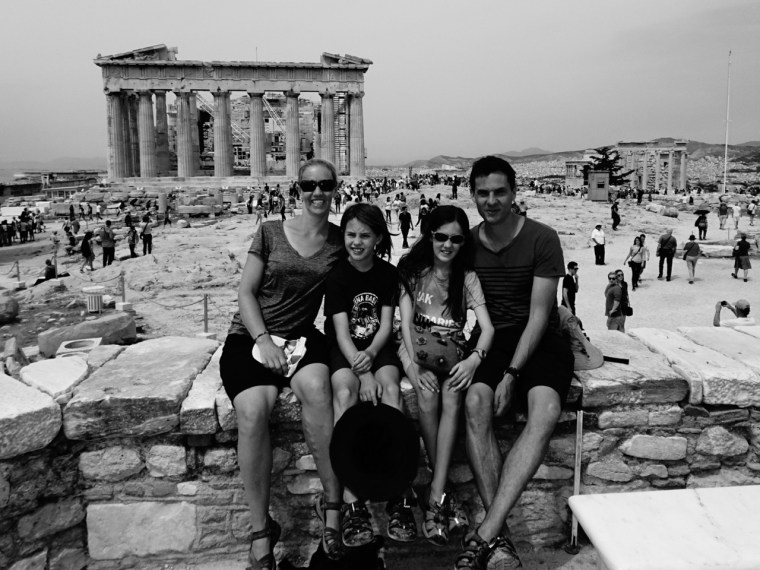
DSC07330
The guy taking our photo somehow made it B&W
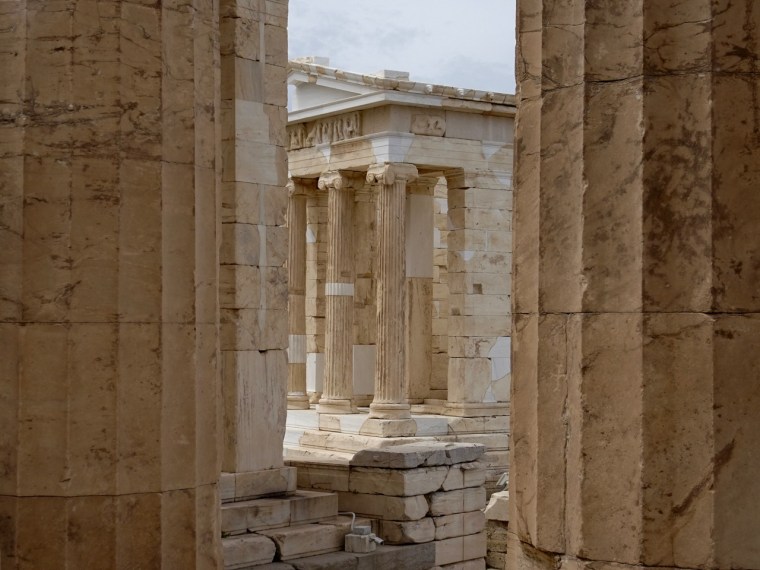
DSC07348
Some of the amazing reconstruction work at the Parthenon

We also checked out the remains of the ‘Temple of Olympian Zeus’ where Oliver got in trouble from another plain clothed official for idly picking up a stone and tossing it at a tree across the empty grass space. After that we all got in trouble for taking a rest by leaning on a wall under the shade of a tree. Once again, no sign or instruction to indicate that this would constitute a code violation. Just a stern look from a bored looking woman who, I rather suspect, didn’t have anything better to do.

DSC07419
Temple of Olympian Zeus with the Acropolis behind

It happened again at the Acropolis museum. We were all busily admiring the ancient artefacts recovered from the Acropolis site when the sculpted image of a man and woman entwined with flailing limbs on the top of a terracotta like teapot caught my eye. I pulled out my camera to snap a photo for which I was rewarded with another stern reprimand from the museum official.

‘No photos!’ he said gruffly. I was taken aback. I didn’t mean to do the wrong thing and I had seen no signs or instructions indicating no photography. ‘Oh, no problems’ I said apologetically. ‘But can I ask why?’. The museum man looked a little puzzled, like he’d never been asked to explain ‘why’ before. I pressed the matter, because I was a little disgruntled and because I was genuinely curious. He explained it was because, ‘people often fall over while taking pictures’. Hmmm.

DSC07384
Inside the Acropolis museum

Despite the overly officious museum officials, the Acropolis museum was excellent. A shiny modern building purposely built to house artefacts from the Acropolis and the ancient Greek Agora (the beating heart of ancient Athenian life, politics, arts, philosophy and religion). As the ‘Horrible Histories’ video we played for Amy and Oliver said, ‘It was where Socrates did most of his talking and impressed everyone who could understand him’. That is, right up until they all got sick of him and made him drink a cup of poison.

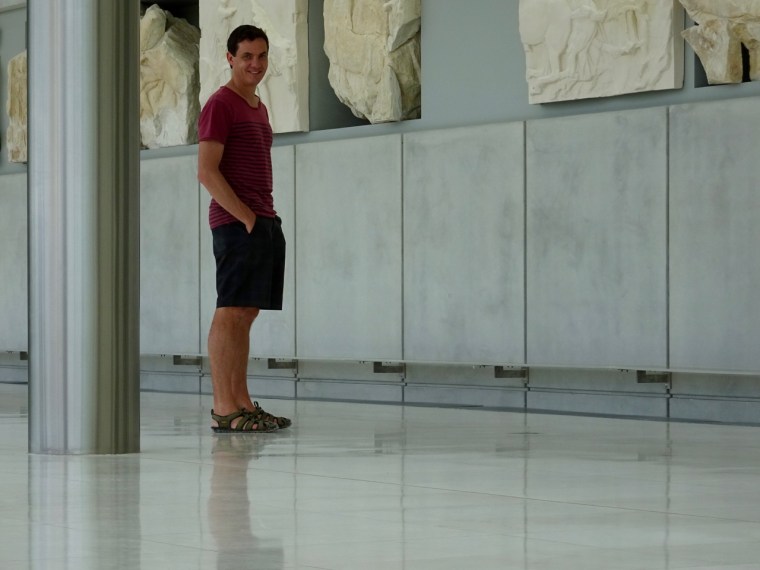
The museum displayed what was left of the incredible marble sculptures which lined the pediment (the triangle shaped eaves at each end of Greek temples) and frieze (the long lengths of marble that sits on top of the columns but beneath the roof) of the Parthenon and much more besides.

It even has space set aside specifically for all the sculptural work of the frieze which was taken (dare I say stolen) by British Lord Elgin in 1801 and which is still housed in London. The Greek Government has been trying to negotiate return of the priceless works since 1980 but the British refuse to yield.  There must be more to it than I understand, but I can’t contemplate any argument which would trump the Greek claims? It’s Greek. Give it back!
DSC07391
Some of the frieze – they recreated most of the missing bits
DSC07512
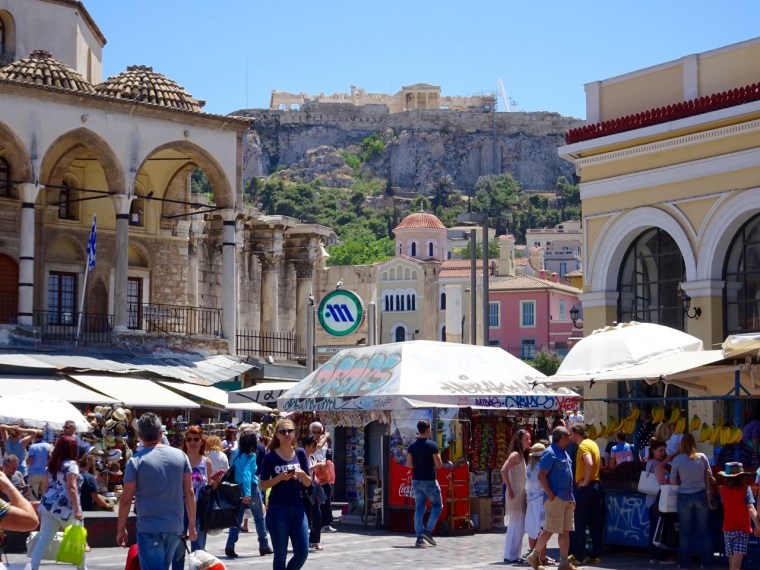
Finding lunch and the metro near the Acropolis

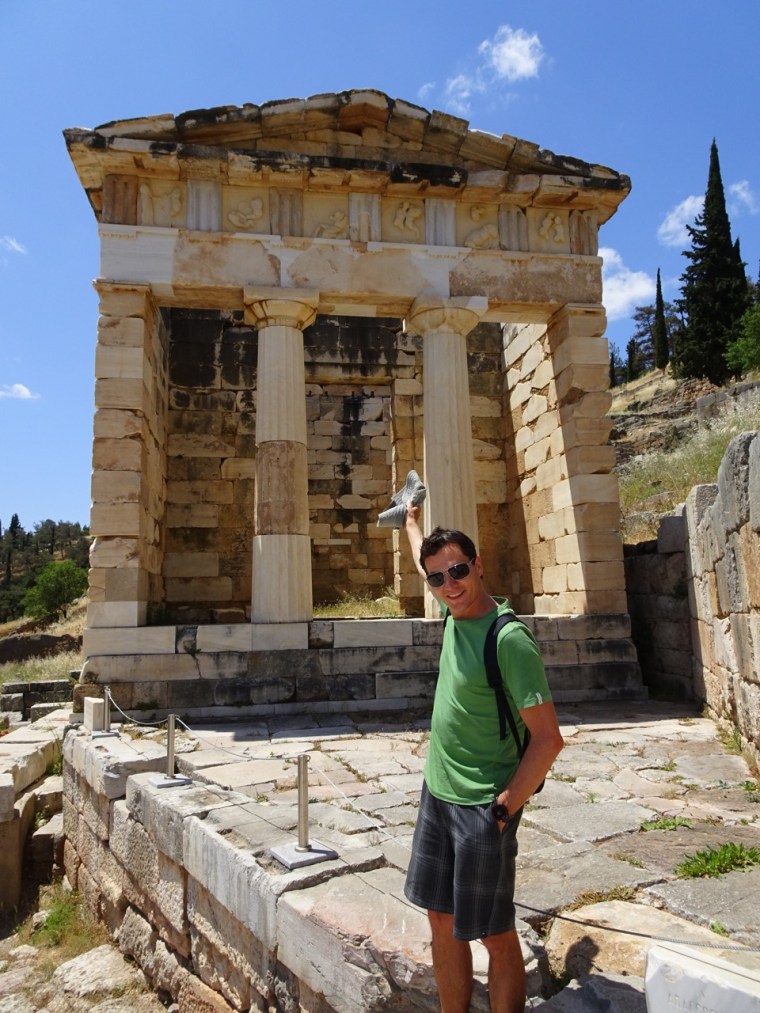
After Athens we hired a car and drove to Delphi, the second most significant ancient Greek site and home of the ‘Oracles of Delphi’. More mumbo jumbo to my 21st century scientifically educated mind and it was therefore astounding to learn about the pilgrimages made by ancient Greeks everywhere to make offerings and have their fortune told by someone intoxicated by ‘vapours’ and who was supposedly therefore articulating the thoughts of the Gods.

The ancient Greeks considered Delphi ‘the navel of the earth’, the centre of everything and was chosen because two eagles set forth by Zeus are said to have crossed paths in the skies directly above.

DSC07567
Looking down on Delphi – the navel of the earth
DSC07531
The reconstructed Temple of Apollo at Delphi
DSC07618
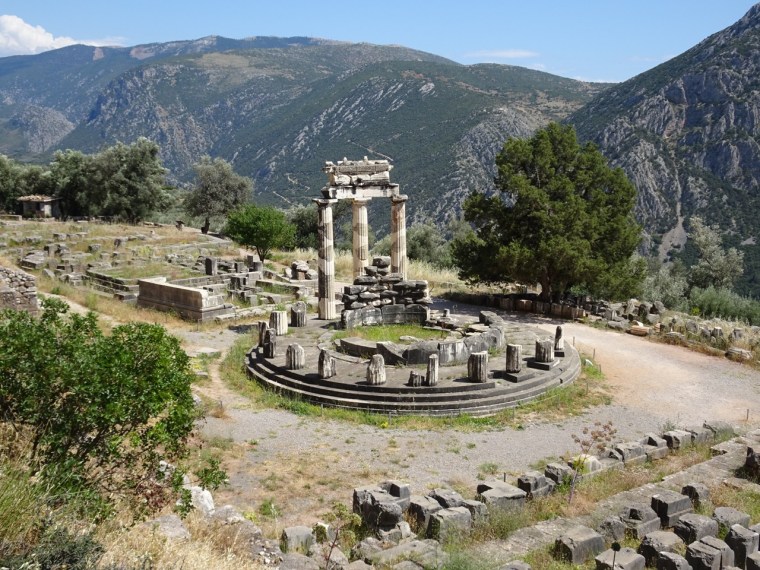
Tempe of Athena –  nearby to Delphi

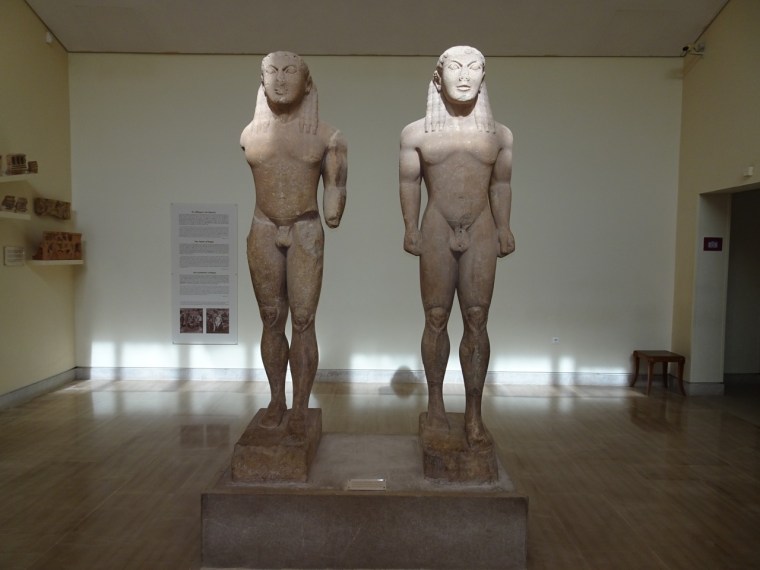
We had made a sport of trying to avoid violating Greek archeological site and museum codes of conduct by this time, but mostly failed. The museum at Delphi houses two larger than life statues carved as a ‘votive’ offering for the Oracles. I asked Emma to stand next to them while I took a picture so y’all could see how big they were, but before I could pull the trigger the museum mafia leapt from their chair and called out across the hall, ‘no posing with the statues!’.
 

DSC07653
No photos with these guys

I turned in stunned silence to survey my assailant. Once again I had seen no signs, no notices and no explanations offered. ‘You can’t pose next to the statues’ she reiterated. ‘Oh ok…’ I said, but once again feeling a little disgruntled and curious I asked ‘why?’. The explanation offered was that it was a rule across all Greek museums, which while no doubt true, still falls well short of a reasonable rationale as far as I am concerned.

DSC07603
Code violation – he had been told elsewhere not to touch the rope!
DSC07469
Schoolwork code violation – no touching the glass apparently!
DSC07507
Code violation – no walking on the grass!!

I’d like to tell you that we reformed our unruly behavior after that, but it’s not true. Amy received a code violation in another very fine museum at ancient Olympia when she tried to take a photo of the very large marble statue of Nike, Goddess of Victory, that 2500 years ago proudly stood upon a 6-meter-tall plinth out front of another Temple of Zeus. Just moments before she had said to me, ‘let’s see if we can get out of here without a code violation’. Afterwards she said, ‘oh reng it’ like water off a ducks back.

Emma took to subterfuge after that, walking a graceful arc through the central hall of the museum where she just happened to walk into a photo I was taking of the impressive sculptures from the pediment of the Temple of Zeus at Olympia.

DSC07903
Code violations don’t make for great photos
IMG_2110
Code violation – statue of Hermes holding Dionysos

Ancient Olympia of course is the birthplace of the Olympic games. It all got started with a single running race in 776 BC but soon grew to include a chariot race, armored foot race, the Pankration (a brutal anything goes except biting and eye gouging fighting match), wrestling and pentathlon. It was serious business in which the victor’s assumed the status of demi-gods and everyone else went home in disgrace. If indeed you got to go home at all. It was brutal competition in which competitors were regularly killed. Women incidentally weren’t allowed to compete or even watch because the men all competed in the nude. If they tried they were thrown off a cliff. Crazy ancient Greeks.

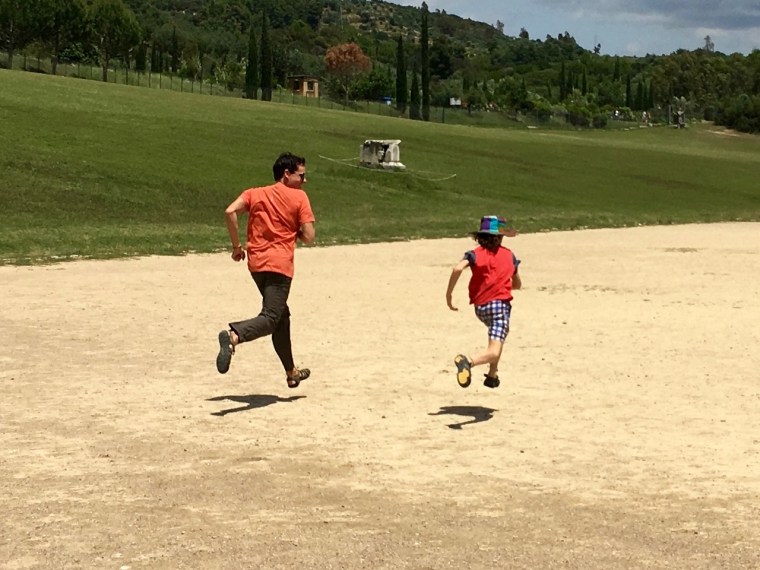
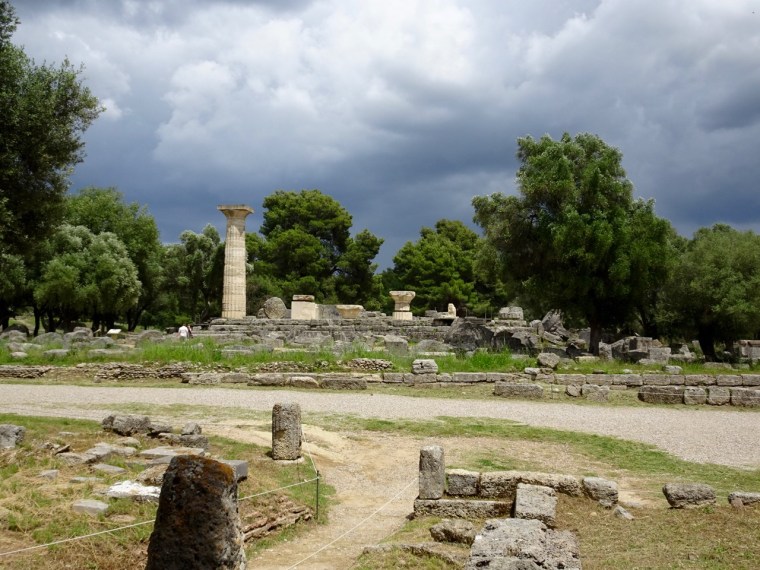
Most of the site requires a fair bit of imagination, but the running stadium was awesome. 192 metres long surrounded by gentle grass slopes that could seat up to 45,000 spectators. The sprints held here were the blue ribbon event of the games just as the 100m is today. Oddly enough we ran the course without receiving a code violation. I beat Amy. Just saying. Emma and Oliver argued for three days straight about who crossed the line first in their race.
DSC07947
Olympia – imagination required
IMG_2148
The start line at the Olympia Stadium
IMG_2149
Their feet barely touched the ground!

Some of Amy and I racing.


The Acropolis, Delphi and Olympia completed our ancient Greek trifecta. We also visited the Panathenaic stadium (birthplace of the modern Olympics in 1896), Flisvos Marina with its collection of obscene motor cruisers, Meteora with its monasteries perched on the top of rocky monoliths, stayed in our first Airbnb, crossed a crazy bridge with a toll that cost the equivalent of $20 Australian dollars and hung out in a Greek holiday haven in a thunderstorm. But I’ll waffle on about all that later.

So far Greece has been an enlightening experience which has left me musing over many things, but mostly about how seemingly intelligent people can become so enthralled, captured, motivated, inspired and driven by belief in figments of their imagination. It is, perhaps, an artefact of that question which plagues us all, though mostly we try to ignore it. How did I get here, and how did here get here?

After musing on this in the odd idle moment here and there I am forced to concede, as Emma maintained all along, that the stories of the ancient Greeks and their gods are a logical and cleverly interwoven explanation of the world and how it works, which in the absence of anything else clearly provided a compelling and perhaps comforting explanation for why things are the way they are.

It is no different, I don’t suppose, in that sense from the creation stories of any other culture. And who knows, perhaps in time Stephen Hawking and his mates will smash a few more sub-atomic particles together in Switzerland and come up with a new unified theory of everything which will render my scientifically skeptical world view just as fictitious as the Gods of the Greeks. In any case, fictitious or not, we have much for which to thank the ancient Greeks and their Gods.

Oliver’s list of ancient Greek Gods (he and Amy also came up the the title for this blog post).

Zeus – God of the sky, Hermes – God of travelers, Hades – God of the underworld, Poseidon – God of the sea and horses, Athena – God of battle strategy and wisdom, Nike – God of victory, Dionysus – God of wine and dolphins, Kampolia – God of sea storms, Ares – God of War, Pan – God of the wild, Aeolis – God of the wind, Oranus – the first God of the sky, Artemis – God of hunting, Apollo -God of sun, music, medicine and prophecies. Hephaestus – God of blacksmiths and volcanos, Demeter – God of Agriculture, Aphrodite – God of love or ‘Luurve’ as I like to say, Nemesis – God of revenge, Iris – God of rainbows, Asclepius – God of doctors (but not medicine because Apollo got that job).

King Garoo

I love the world. Love it. Love how big it is. Love how much there is to see. Love how much there is to do and and all the different and interesting people which make travelling such a joy.

We went grocery shopping in Aqaba the other day. Just looking for lunch supplies. The supermarket was much like any Woolworths or Coles though probably a bit more IGAish than anything else (except with a huge bulk spices section). I flashed a smile at an older local gentleman as we went and so he stopped for a bit of a chat.
‘Welcome Jordan’ he said. ‘Thanks’ I replied. Jordanians seemed to welcome us to Jordan wherever we went and it never grew old.

‘Have you met King Garoo?’ he went on to ask with a quizzical look on his face. Who is King Garoo and why would I have met him? I wondered probably with a slightly puzzled look on my face. Then he held his arms in front of his chest with his wrists hanging limply and started bouncing a little. ‘You know King-ga-roo’ he said again with a little laugh. ‘Aaah, Kangaroo’ I laughed. I wasn’t sure if he was messing with me but regardless he seemed to mean it in good humour.

DSC06201
Amazing spices in Jordanian supermarkets

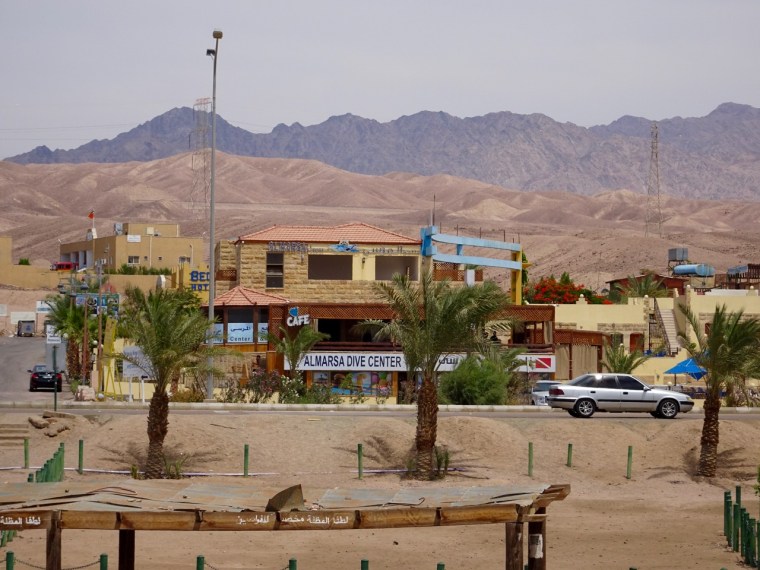
Aqaba, the home of humorous Arabic gentleman, is a short drive down the speed bump laden Kings Highway from Wadi Rum. I’ve never been to a country with such a love of speed bumps. Speed bumps everywhere. Big roads. Little roads. Everywhere. But I digress. Aqaba is Jordan’s south coast. A weekend bolt hole on the cobalt blue, Red Sea. A sparkling stretch of water surrounded by a barren moonscape of hills and mountains.

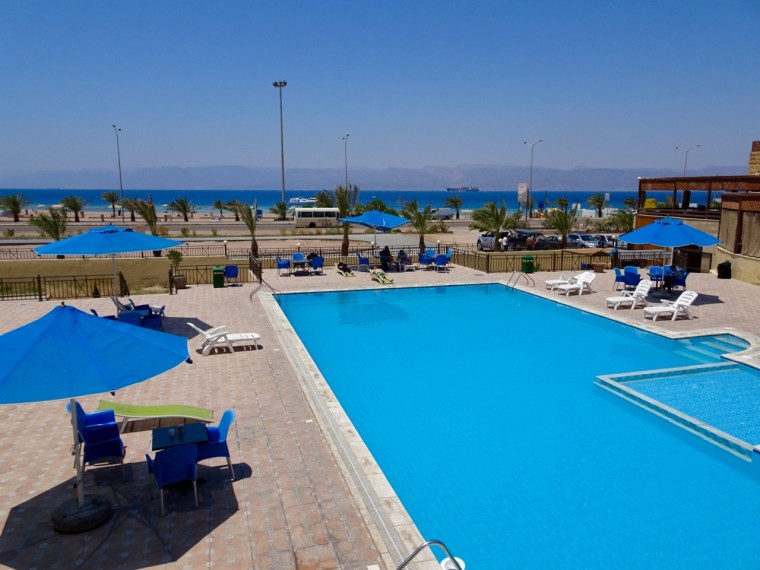
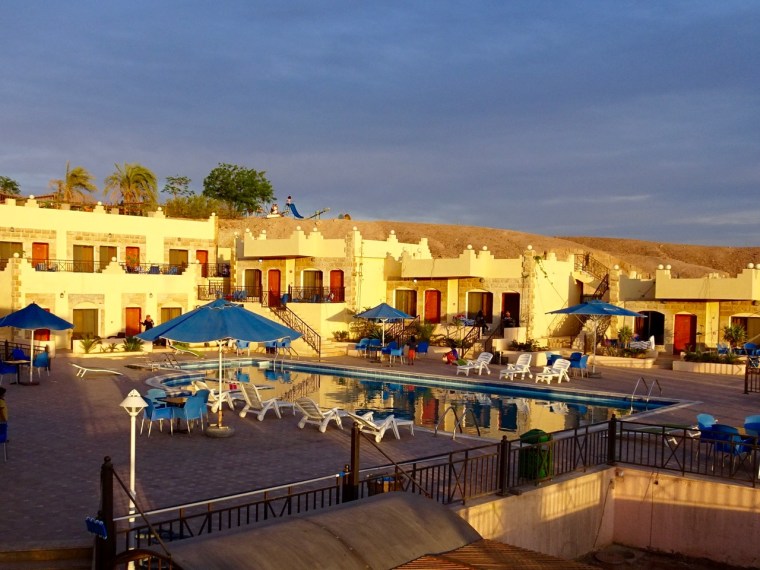
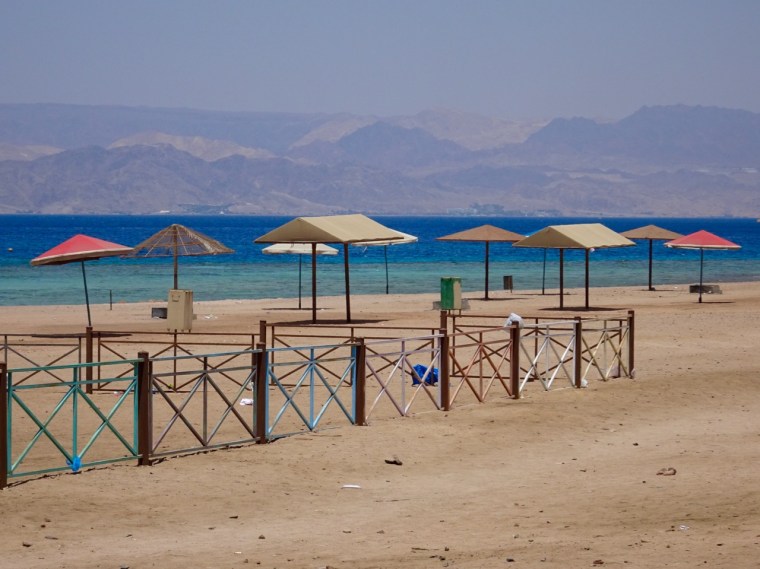
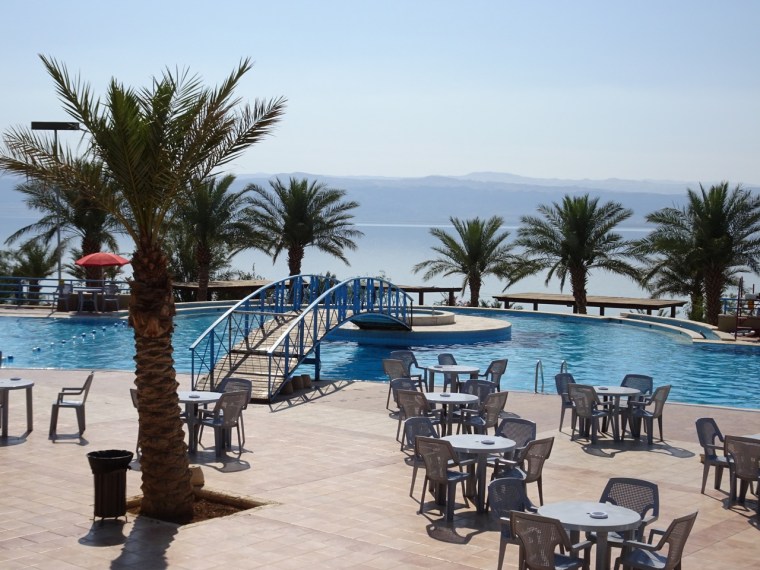
We checked into the Almarsa Village Hotel about 15 minutes outside of Aqaba itself. There was nothing there except for the hotel with its huge blue pool, a few dive centres and the coarse sandy beach-like area across the road. Across the water was Egypt. It’s still a novelty to be peering from where we are into other countries as we travel. Turns out not all the world is its own continent sized country.

DSC07130
Our hotel
DSC07111
View from the pool – that is Egypt over there!
DSC07092
Where we spent a fair bit out our time…

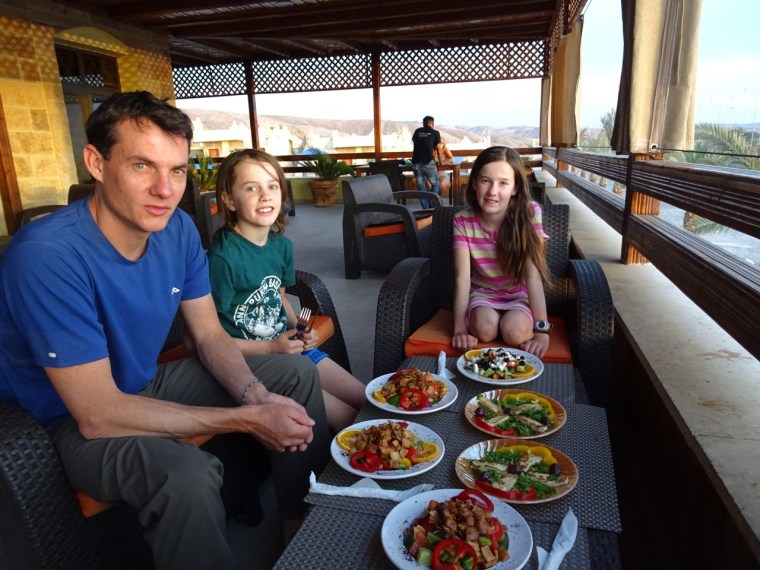
We lazed by the pool for a day and half, reading books, writing blogs and watching with curiosity and mild alarm as 4wds with huge, mounted machine guns drove up and down the road in front of us. We ate at the hotel, because we were too lazy to go anywhere else and because the Fattoush salad was really good. The young waiter there took a shine to Amy. First he mistook her for Italian, then he played songs for her on the sound system (Spice Girls – go figure?) and then told her how soon the boys would be lining up to meet her. I stole a sideways look at Amy. She is growing up, but not that much!

DSC07094
We loved the salads in Jordan

It took a day and half before we could summon the strength to rent snorkels and wander across the road to the beach. You have no idea how tough this travelling caper is! On went the snorkels and out we went into the Red Sea, two by two. It was gorgeous. Like snorkeling off the beach at Ningaloo, coral lines the shores to the North and South. The water was crystal clear, the coral appeared to be in good health and there were loads of fish.

DSC07107
A quiet day at the Red Sea – Egypt in the background
DSC07096
Follow the rope out to the coral

I could have stayed longer, but not on this occasion. It’s curious how even with a year off time drives you on. It drove us up the highway past numerous check points with police toting scary looking rifles. Whatever it is they were looking for, we weren’t it. I did little more than open my mouth, scarcely even said anything, before they smiled, welcomed us to Jordan and waved us on. Perhaps it’s travelling with a family. It changes the way almost everyone relates to you. Or maybe I’m just a whole lot friendlier looking than I was 20 years ago. It could be the grey hairs turning me into a distinguished elderly gentleman, like the one back in the supermarket.

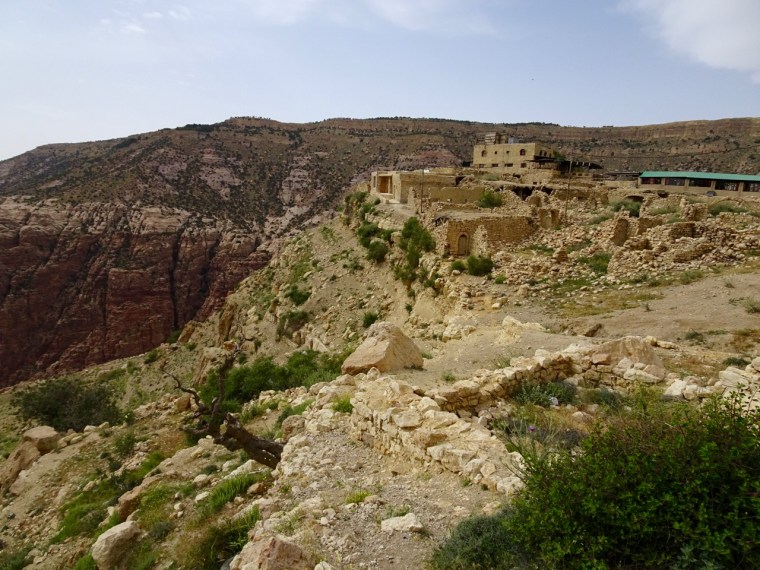
I had to drive carefully heading north, making sure I stayed on the road and didn’t let magnificent views over the Rift Valley distract me and send us all careening off the side of a cliff. We headed to Dana Village, ‘a picturesque cluster of stone cottages huddled together on a cliffside outcrop, Dana Village has rightly become celebrated as one of Jordan’s loveliest hideaways’ (Rough Guides).

DSC07142
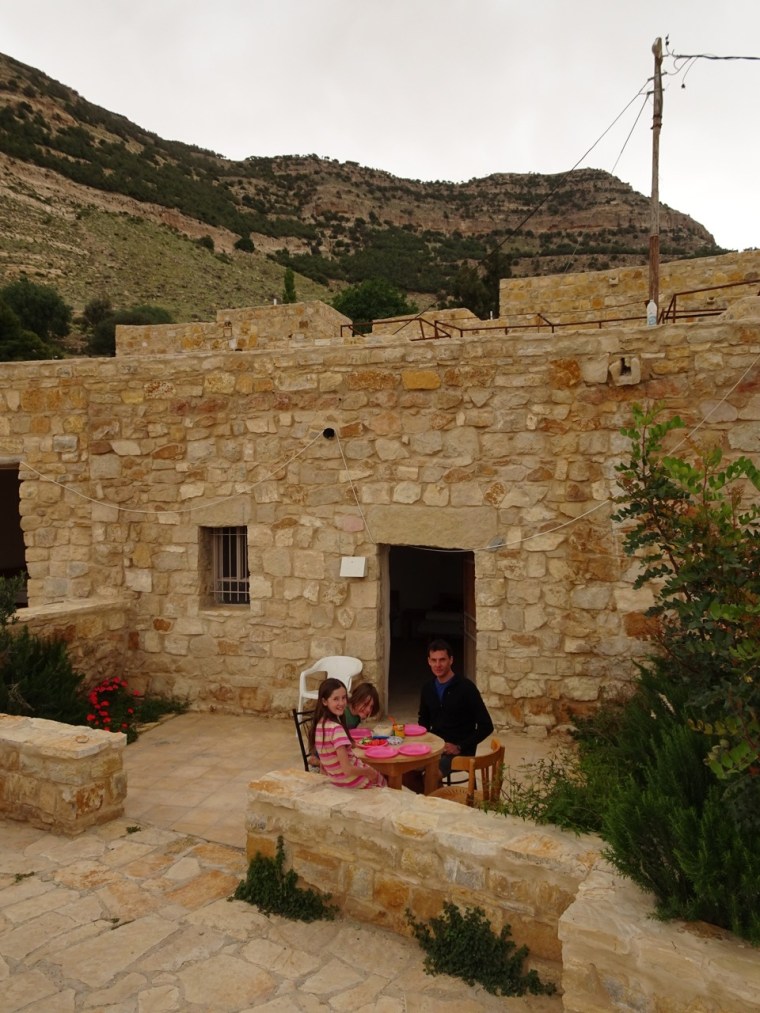
Dana Village – approx 500yrs old
DSC07151
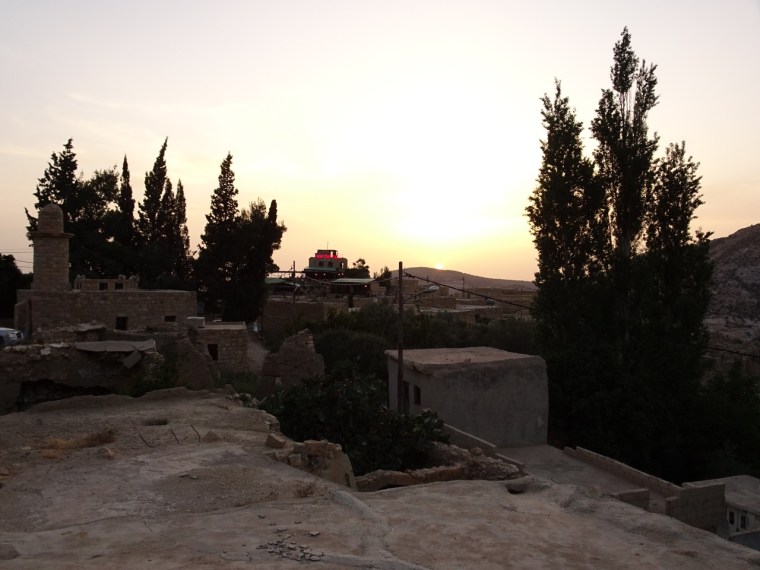
Dana Village sunset

We got there, and I didn’t believe we were there. From the lookout above it didn’t look like a place four Aussies of no interest to Jordanian authorities would hang out. But that’s the thing about travelling, nothing is ever what you expect and nothing is ever as it seems. We stayed in a very cute little stone bungalow at the imaginatively named ‘Dana Hotel’. It looked out over a few crumbling buildings and then into the long steep and deep gorge heading down to the plains below.

DSC07140
Our hotel room – it was really nicely restored inside
DSC07147
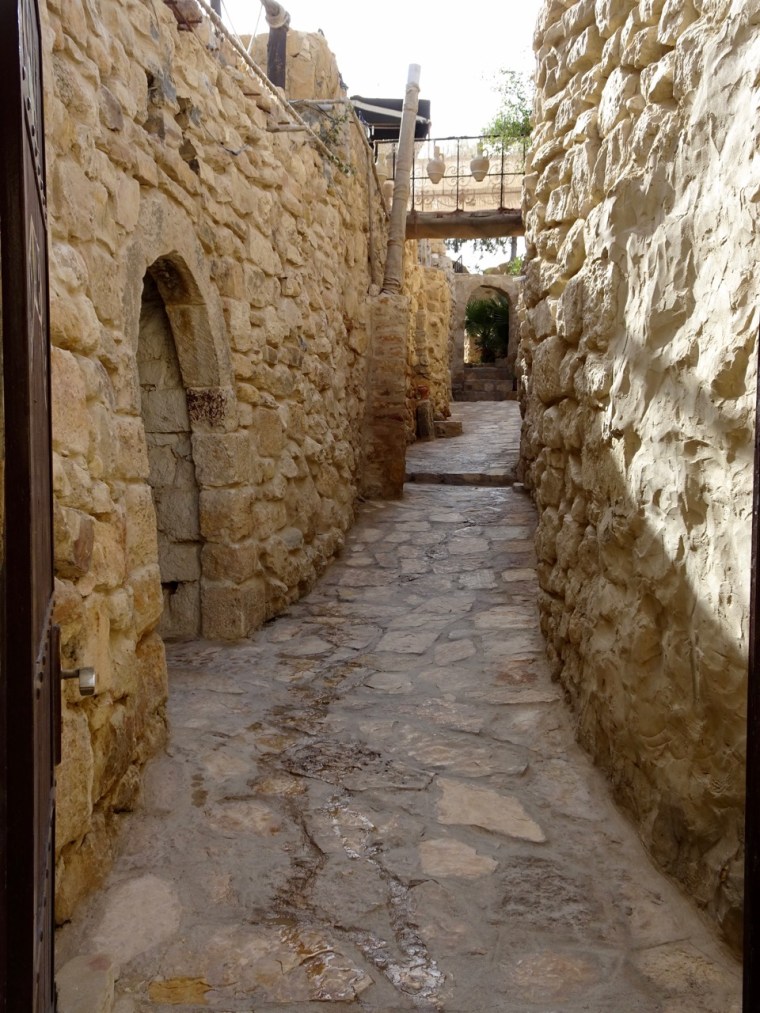
One of the laneways of Dana Village

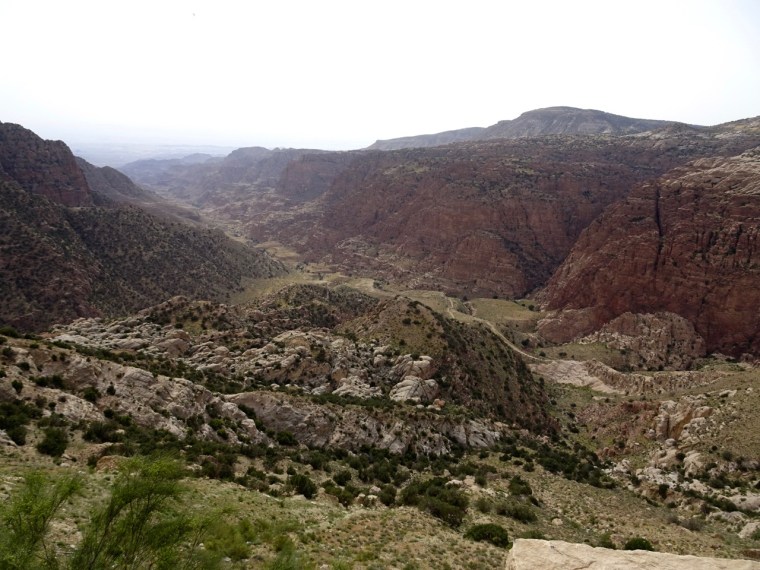
People come to Dana to hike, but we only managed a 1-hour stroll across from the village to the terraced gardens with tall poplar and olive trees. It felt more like Tuscany than Jordan, except for the haunting calls to prayer that sung out across the valley at intervals we couldn’t quite work out. When we weren’t strolling we were reading, doing school work, playing cards (hearts) or eating flat bread and hummus and sipping on more sweet Bedouin Tea. I love sweet Bedouin Tea. It’s so… Bedouin.

DSC07144
The views from our stroll around Dana Village
DSC07156
A cool chameleon-like critter we saw on our stroll

We headed north again from Dana, mostly because east would have sent us into Israel, West into Iraq and we had already explored the south. The Jordanian love affair with speed bumps continued to occupy my attention in equal measure with mental calculations on how to make sure we returned the hire car with zero petrol left in it (as we picked it up) but without stranding ourselves in the process.

The drive was magnificent. If you’re headed to Jordan, don’t go up and down the main highway, its bumpy and uninspiring. Drive the smaller roads they’re smooth and… inspiring. You can’t avoid the speed bumps so don’t try. One valley enroute took 45 minutes to drive from one side to the other. It reminded me of the Flinders Ranges. From a high point at the Al Karak Castle we started a long descent to 400 metres below sea level and the Dead Sea. We covered the science curriculum on the way down with much discussion on air pressure as the sides of our drink bottles collapsed. ‘How come you know everything?’ asked Oliver. ‘It’s a gift’ I replied.

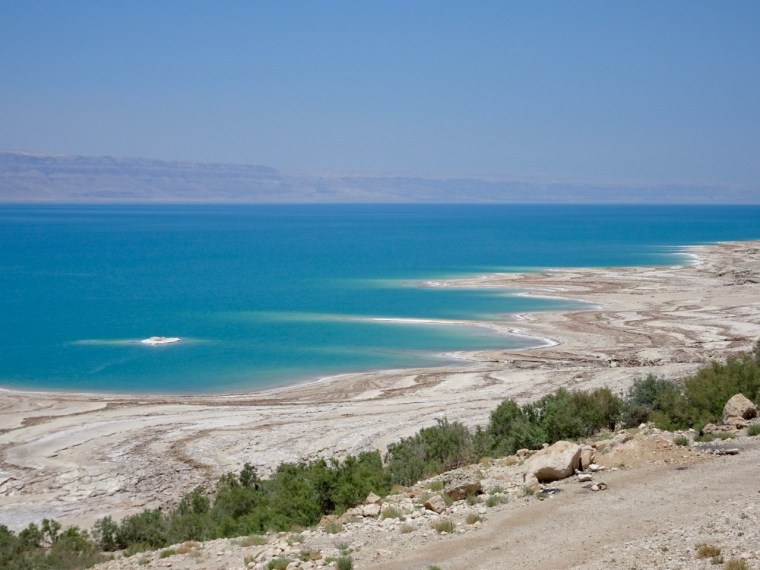
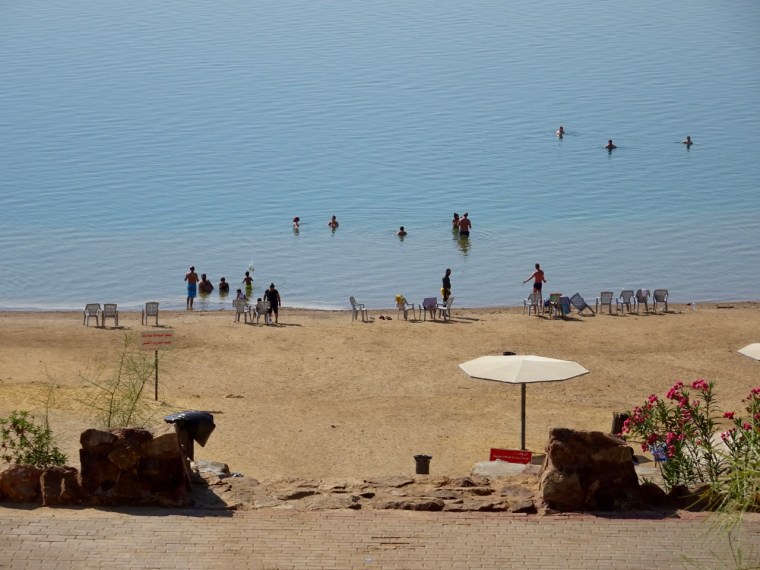
The Dead Sea doesn’t look dead on approach. It looks more like the Whitsundays, except the white sand is salt and there is no vegetation. There is also much to be said for Australia’s approach to maintaining public access to beaches. It’s not entirely clear where to sink yourself into the salty water of the Dead Sea. We settled on the outrageously expensive ‘Amman Beach’ (about $100 for the family). It was only expensive for foreigners though. Apparently India is not the only country to milk tourists for all they’re worth at major attractions. Enough said, otherwise I’ll get started on a rant which will make me grumpy and no one here will enjoy my company for the rest of the day.

DSC07183
The Dead Sea

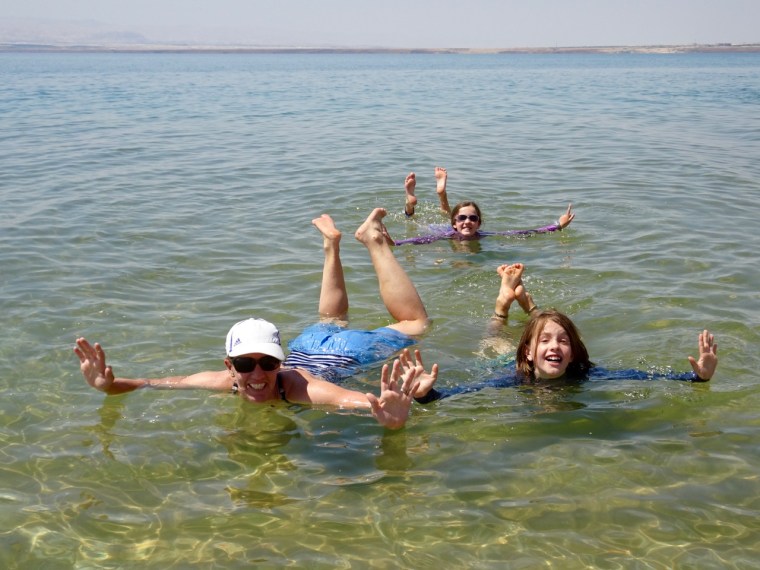
After changing we headed straight for the salty waters. No doubt some of you will have been here yourself and so don’t need me to tell you about the bizarre experience of wading into water where you can’t sink. It’s weird. In really fun way. According to all the laws of physics and nature, unless you kick your legs and wiggle your arms when swimming, you should sink. It’s the way the world works and its not to be questioned. But here… no… as you all know, that’s not how it works.

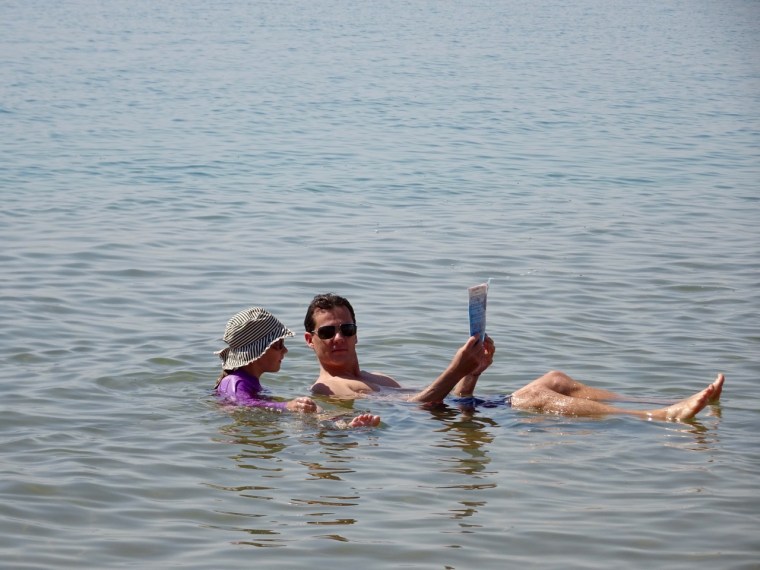
In fact, if you put your legs straight beneath you and your arms in the air, my favourite position for dabbling with the buoyancy effect of a 30% salt load, you bob around with your head shoulders and half your chest comfortably above the surface. Photos were taken, as you would expect, including of me pretending to read a book while floating on my back. The book was really a catalogues for skin care products that I found on the shore. No doubt it appears in the photos of the previous 200 or so visitors to Amman Beach as well.

DSC07225
Amman Beach access
DSC07199
Look! No hands or feet!
DSC07206
Casually reading the cosmetics catalogue
IMG_1819
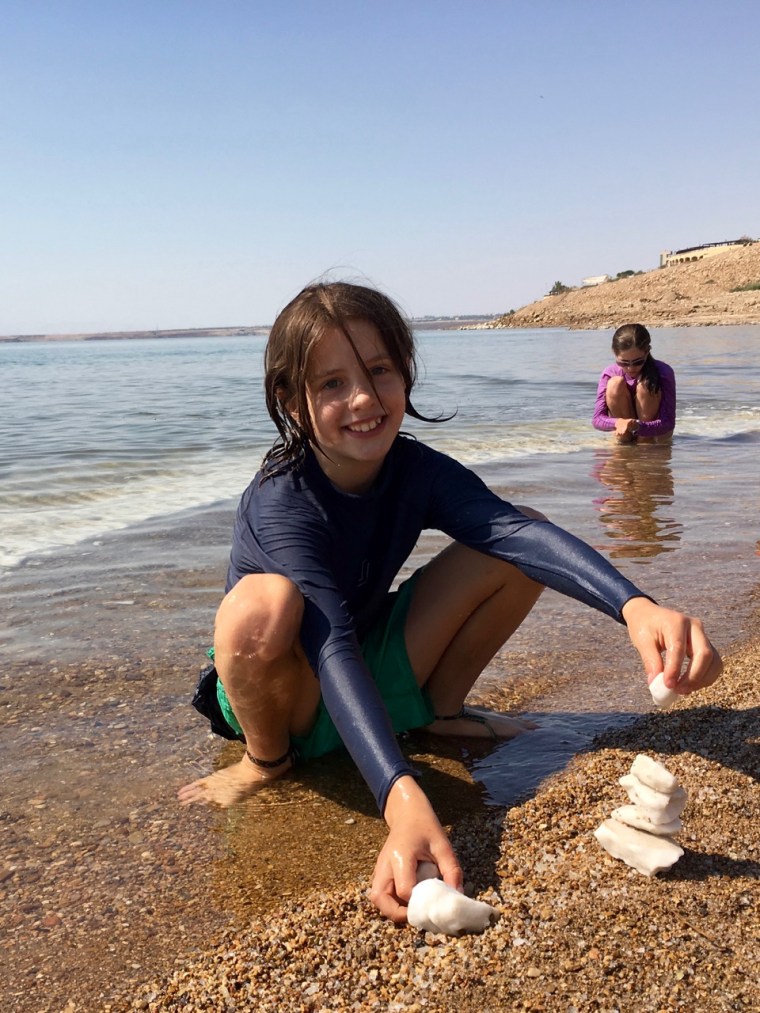
A salt cairn

We rinsed off in the two very large pools which went some way towards justifying the cost of entry to the ‘Amman Beach’ complex. It came as quite a shock when we jumped in and sunk like stones. Fortunately, Amy and Oliver were off having too much fun to ask me why salt increases buoyancy. Something to do with the density of the water no doubt, but I could have been caught off guard and appeared less than omnipotent. Not the look I’m going for.

DSC07218
Probably worth paying the $ for access to the pools

The Dead Sea is only 40 kilometres from Amman and Emma and I were soon grappling with the reality of navigating in a major foreign metropolis without a GPS. It’s only because of Emma’s genius with electronic devises that we are not still stuck somewhere between the fifth and sixth circle (Amman landmarks) and cursing one way streets.

The Lonely Planet website says, ‘Only the brave or the foolhardy would sit behind the wheel in Amman, where driving is complicated by extremely complex roads twisting around the contours of the city’s many hills, and is further made miserable by dense, unpredictable traffic.’ Good thing I read that after we were comfortably tucked up in our hotel room that night.

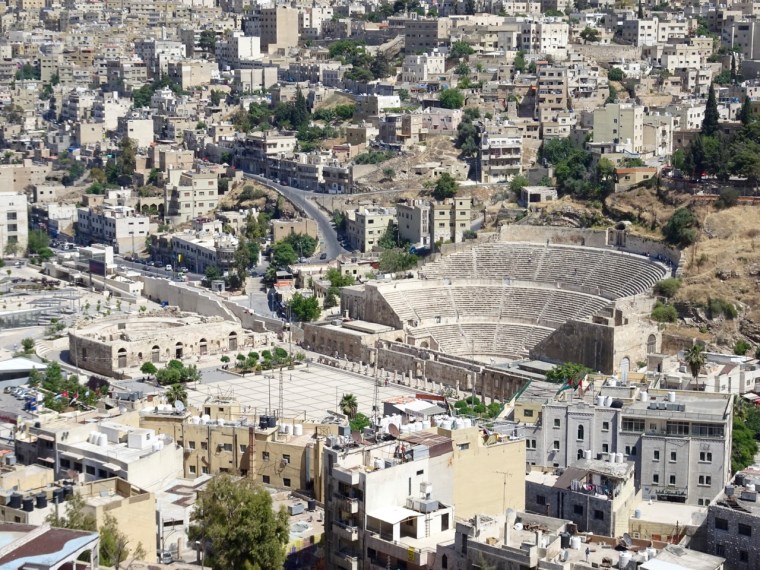
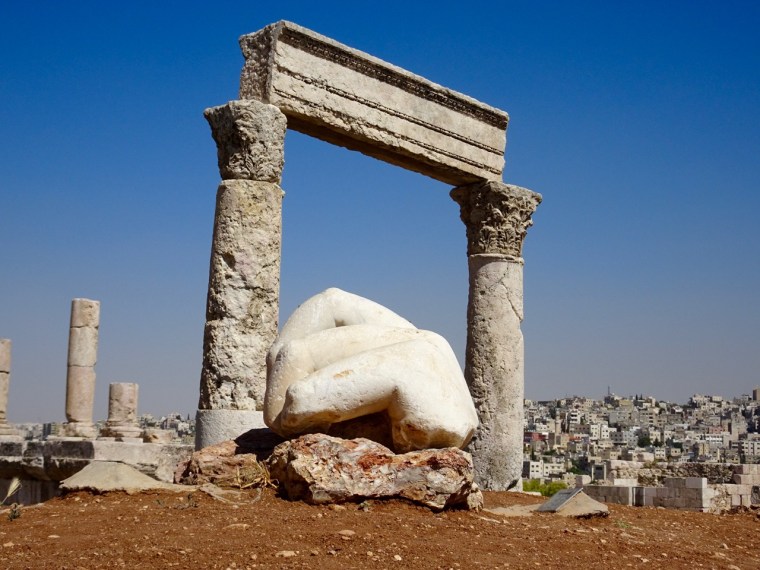
We used our one spare day before heading to Greece to check out sights in Amman that were beyond our reach on our first lap through. There is a huge Roman amphitheatre which we admired from a distance owing to the long list of ancient sites coming up for us in the near future. But we got up close and personal with the remains of the Temple of Hercules perched on a hillock at the centre of town.

DSC07242
Temple of Hercules
DSC07235
Amman’s Roman Amphitheatre
DSC07267
The hand of Hercules (it’s actually pretty small – trick photo)

We used Uber for the first time to get ourselves to the airport the next morning. It was a bargain by comparison to the taxi’s, or at least it would have been had the driver not told us a long sob story about how he made no money taking people to the airport because of all the overheads associated with renting a car to drive etc. We felt bad for him, so gave him a little extra which made it cost about the same as a taxi. Ce la vie.

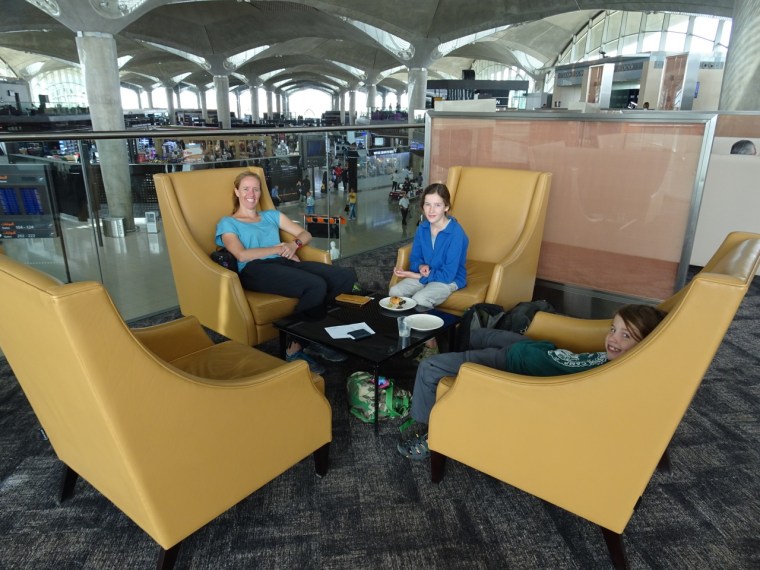
Our last hours in Jordan were spent in the Royal Jordanian airport lounge snacking on olives and yummy bread. It was Friday the 13th, good thing we are not superstitious. Next stop – Athens!

DSC07274
Lounging!

Sipping sweet Bedouin tea

Well now I’m lost, I finally admitted to myself. For the past day and half I had been instinctively endeavoring to memorise cliff faces, track junctions and other markers in the huge, wild, remote, dry and enthralling Wadi Rum – a 720 square kilometre wilderness in the deserts of Jordan.

I had been trying to keep a mental track of where we were because we were headed into more and more remote territory. No signs, no roads, none of the usual landmarks with which to orient yourself. The vast expanse of desert was like a maze. Tracts of gently undulating sand, kilometers wide, formed valley floors punctuated dramatically by massive rocky outcrops, up to 800 metres high. They disappeared off into the distance in every direction. I wished I had a map. I am usually more comfortable knowing exactly where I am.

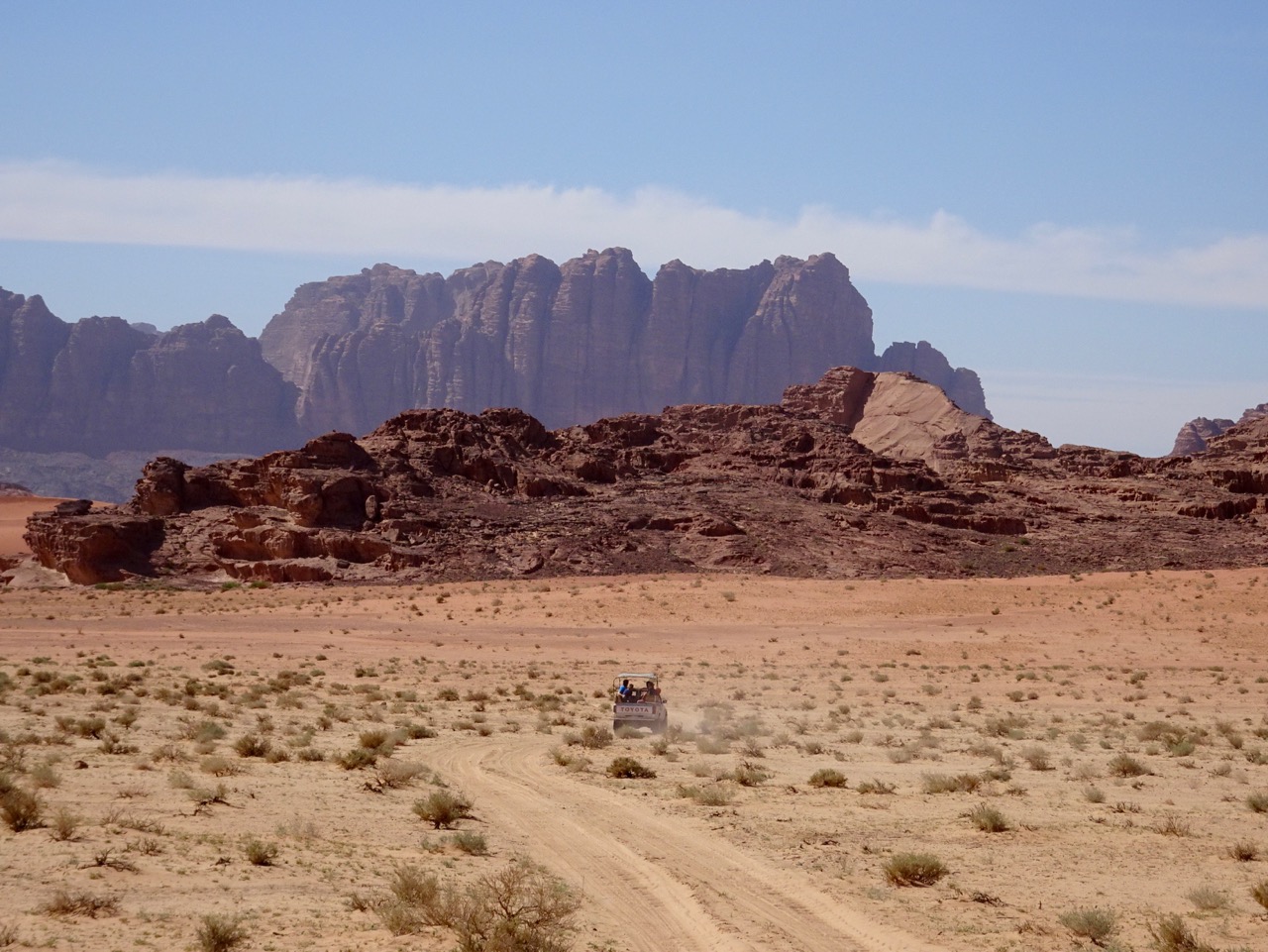
I trusted our guide to know his way around, after-all that was what we were paying him for, but he seemed very young and he didn’t speak all that much English. How many times could he have done this before? The beaten up old Toyota Hilux in which we were riding in the tray back also did not strike me, on first impressions anyway, as the most reliable vehicle in the world. It did have personality though and was comfortably fitted out for carting foreigners around with cushioned seats and a thick blanket stretched across a metal frame overhead to keep us in the shade.

Fortunately for my peace of mind, by the time I conceded that I really couldn’t navigate our way back to where we had started I was also convinced it wasn’t going to be a problem. Yousef may have been young, but he had clearly spent his life growing up with Wadi Rum as his backyard and he never hesitated or faltered in delivering us on our way on this magical mystery tour of the desert.

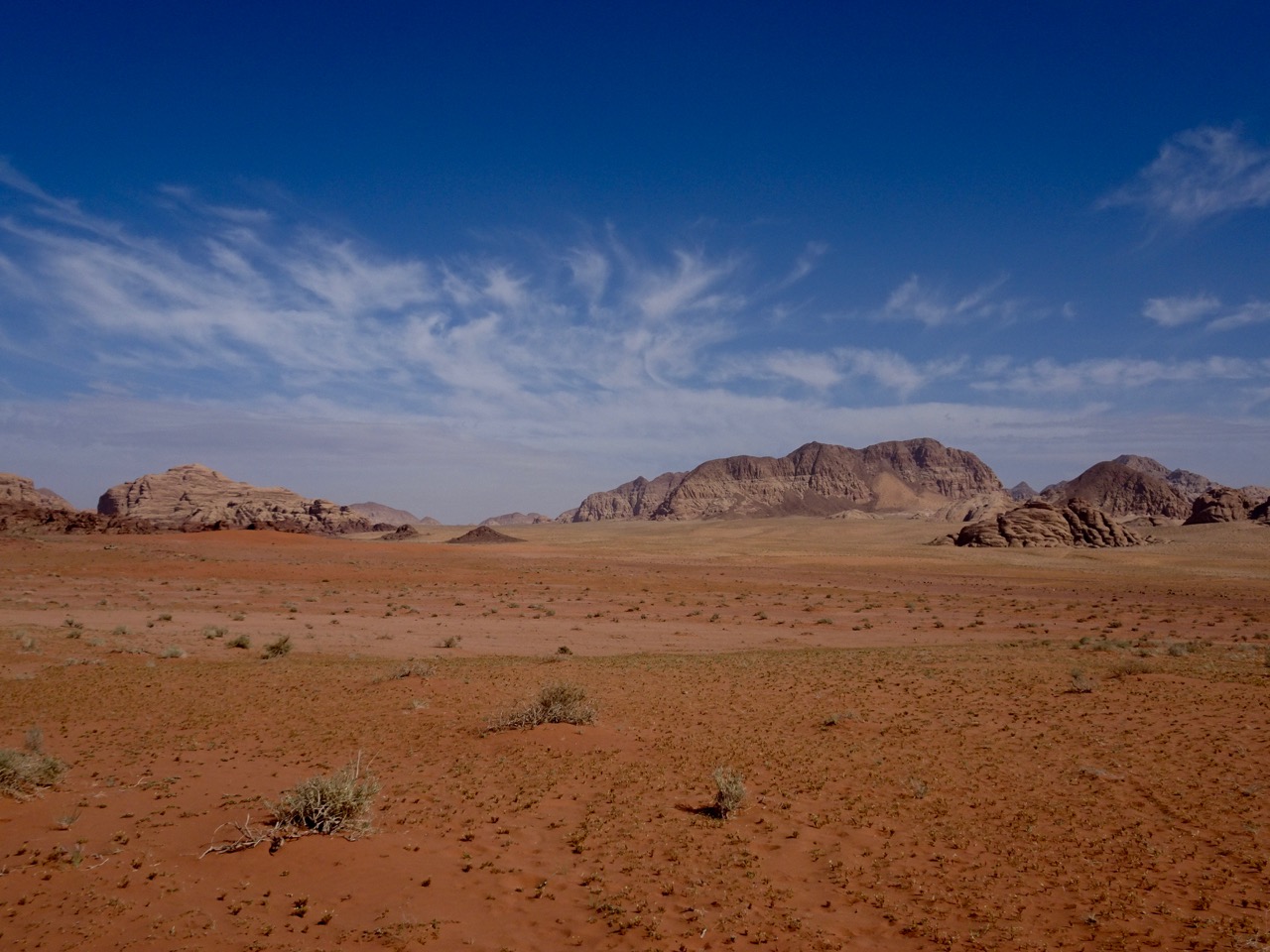
It was a wonderful experience, rich in history, culture, geology and ecology and all in a stunningly beautiful landscape. It’s the colours I love the most. Pastel shades of yellow, orange, red and purple which merge into and out of one another in that wonderful way that only nature can. The desert scene was set off by a deep blue sky and faint tinges of green from the sparse desert plants.

DSC06848
Amazing Wadi Rum
DSC06836
Desert views
DSC06696
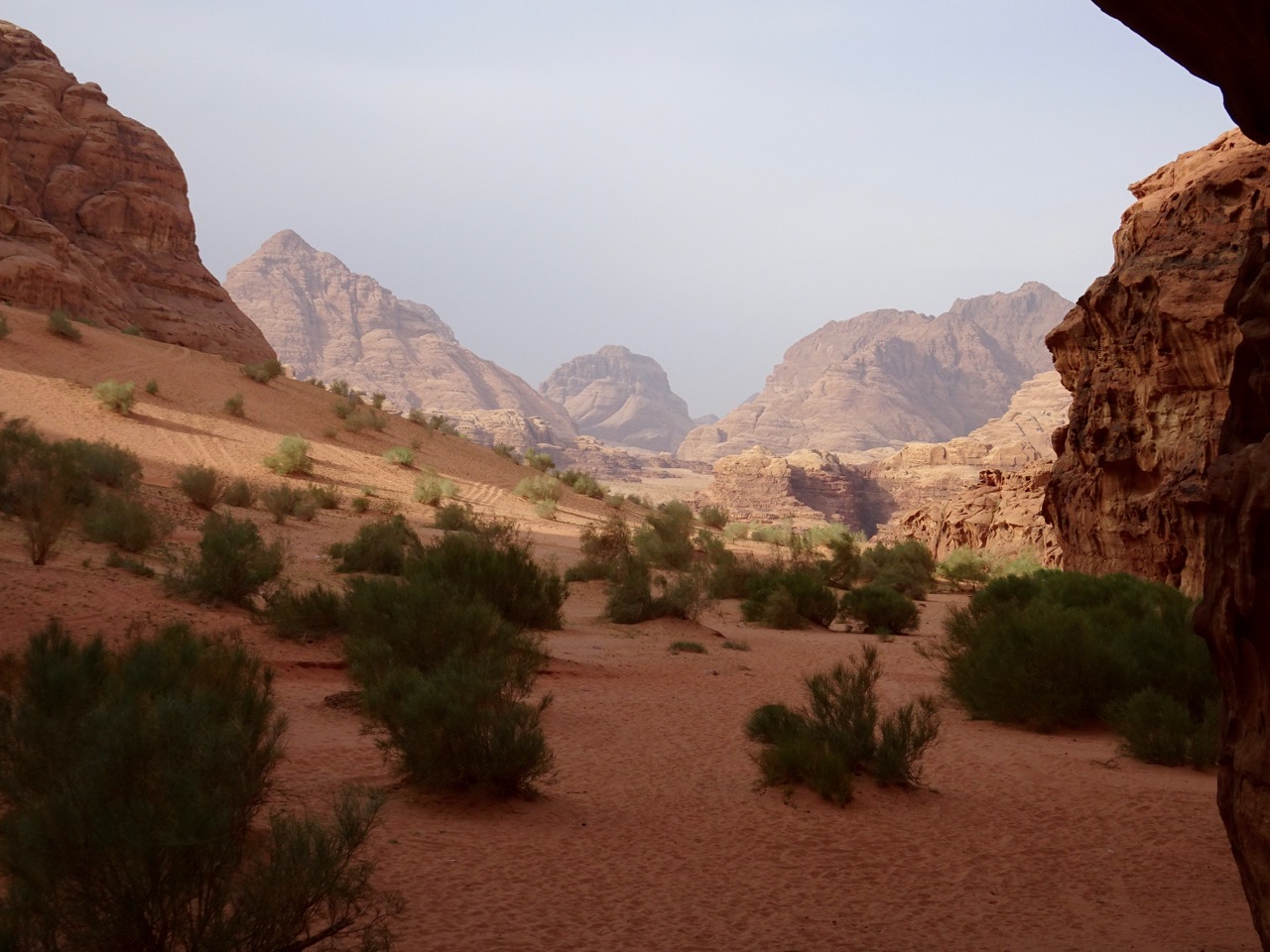
View from inside a canyon
DSC06684
So many colours

It was quiet too. So quiet you could hear the wings of birds tearing at the air as they flew past overhead. Crows were common, circling in groups up above the horizon, or half way up the rock faces and providing perspective to the scale of the rocky monoliths. Swallows and other smaller birds darted around low to the ground swooping like albatross over the waves as they scooped up insects before gaining a little altitude to spot another morsel and swooping down again.

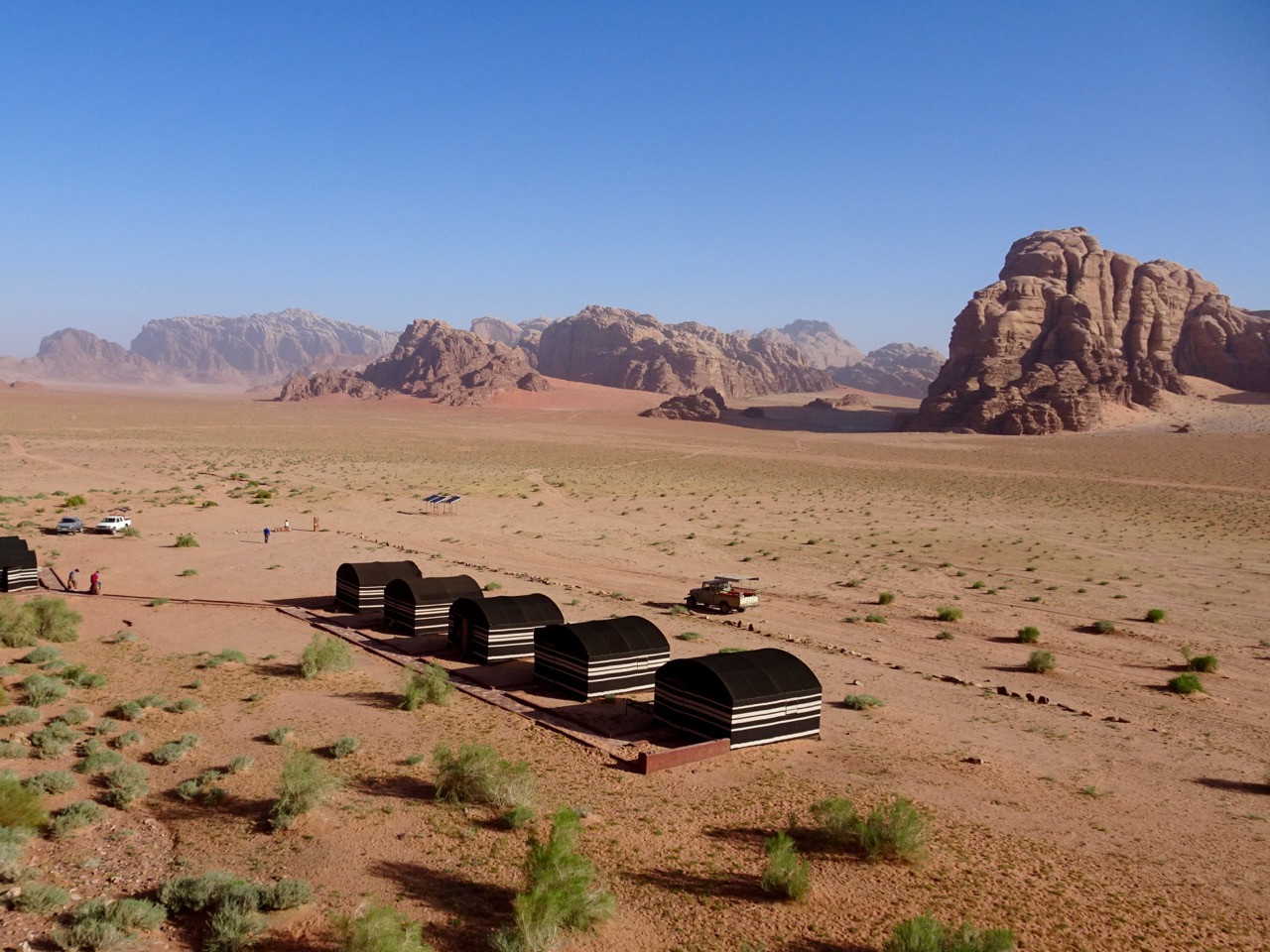
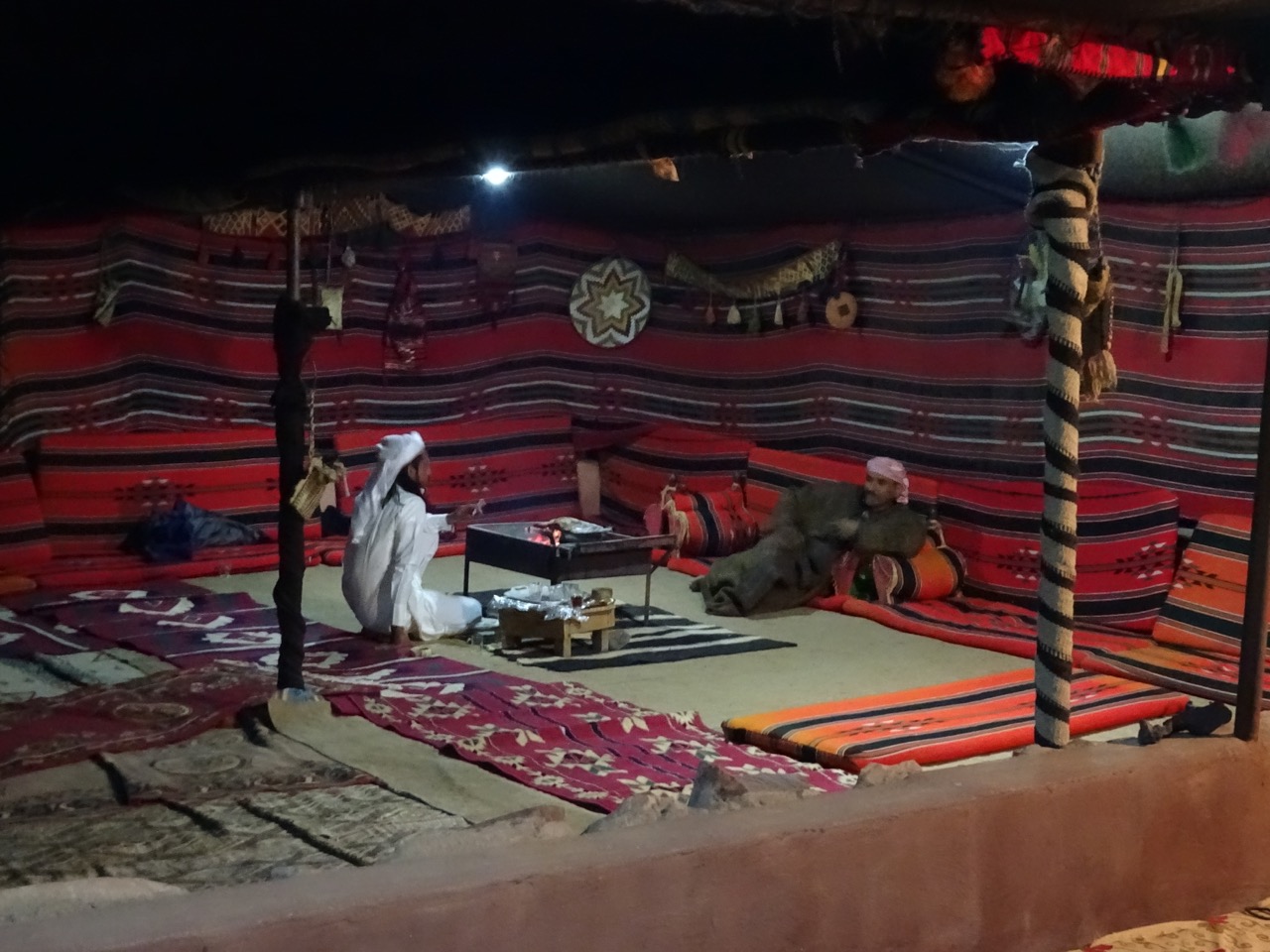
We toured Wadi Rum with an outfit known as the ‘Rum Stars’. The name struck me as more appropriate for a basketball team than the business name of a Bedouin desert tribe, but who was I to question? We finished each day at their desert camp, a series of structures which were not quite a tent but not quite a solid building. Thick black cloth was stretched taught over metal frames providing a surprisingly snug interior, cool in the heat of the day and warm at night. The common area was lined with plush red cushions, with a campfire suspended on a metal platform in the centre of the open sided shelter. A pot of sweet Bedouin tea was constantly on the boil.

DSC06759
Our ‘tents’
DSC06755
At the Rum Stars camp

The hospitality shown us by Yousef and his brothers was far more genuine than I had perhaps expected from a business which sees people like us for a matter of days and probably never again. We listened one evening as Yousef’s older brother, robed in a full length white gown and Arabic keffiyeh (headdress), spoke about his desire to show people from around the world his home. His hope was that all who came to visit would then return to their own homes and speak warmly of Jordan and its people.

The same brother also spoke lovingly about Jordan’s King Abdullah and his progressive attitudes – towards women, politics and education. He contrasted this sharply with Jordan’s neighbours suggesting that while Jordan may be expensive, people were not imprisoned for expressing a political view and that there was nowhere he would rather live. ‘We love King Abdullah’ he said affectionately. I can’t remember an Australian politician invoking that kind of following.

Deserts call to mind barren, inhospitable wastelands of little value or interest to anyone. It’s an unfair and unwarranted reputation. Wadi Rum, like outback Australia, is an enchanting place with more to do than time on offer.

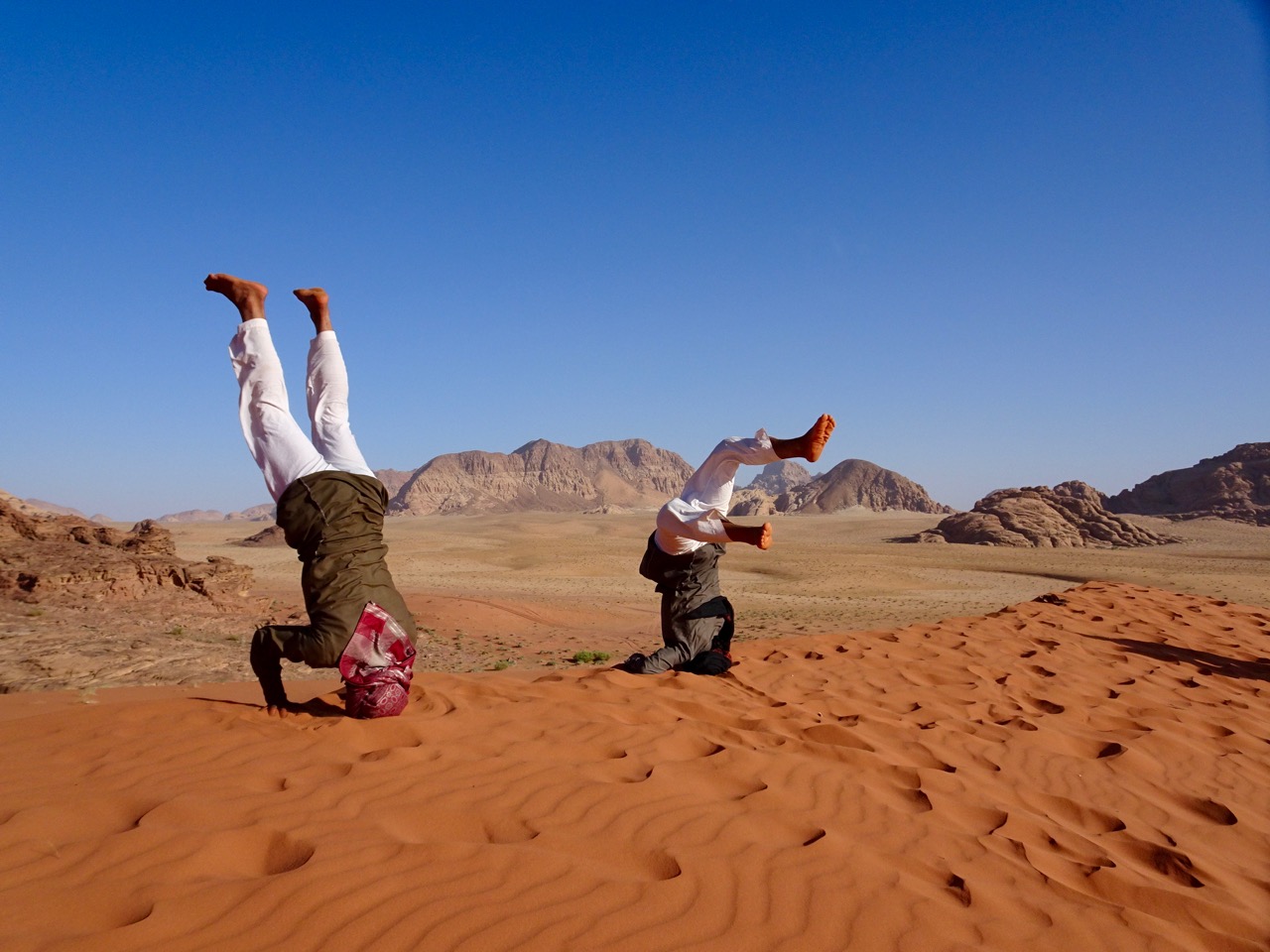
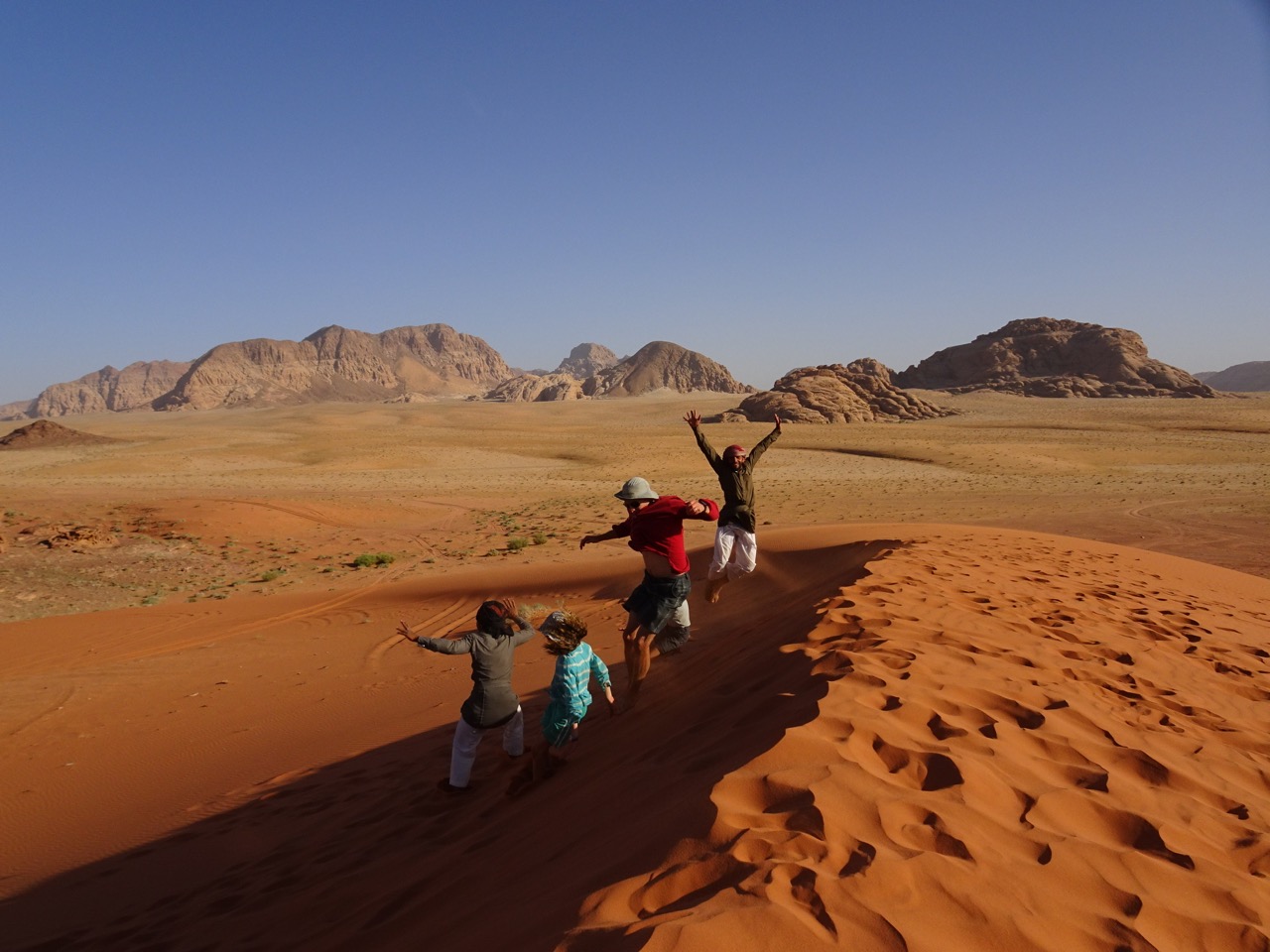
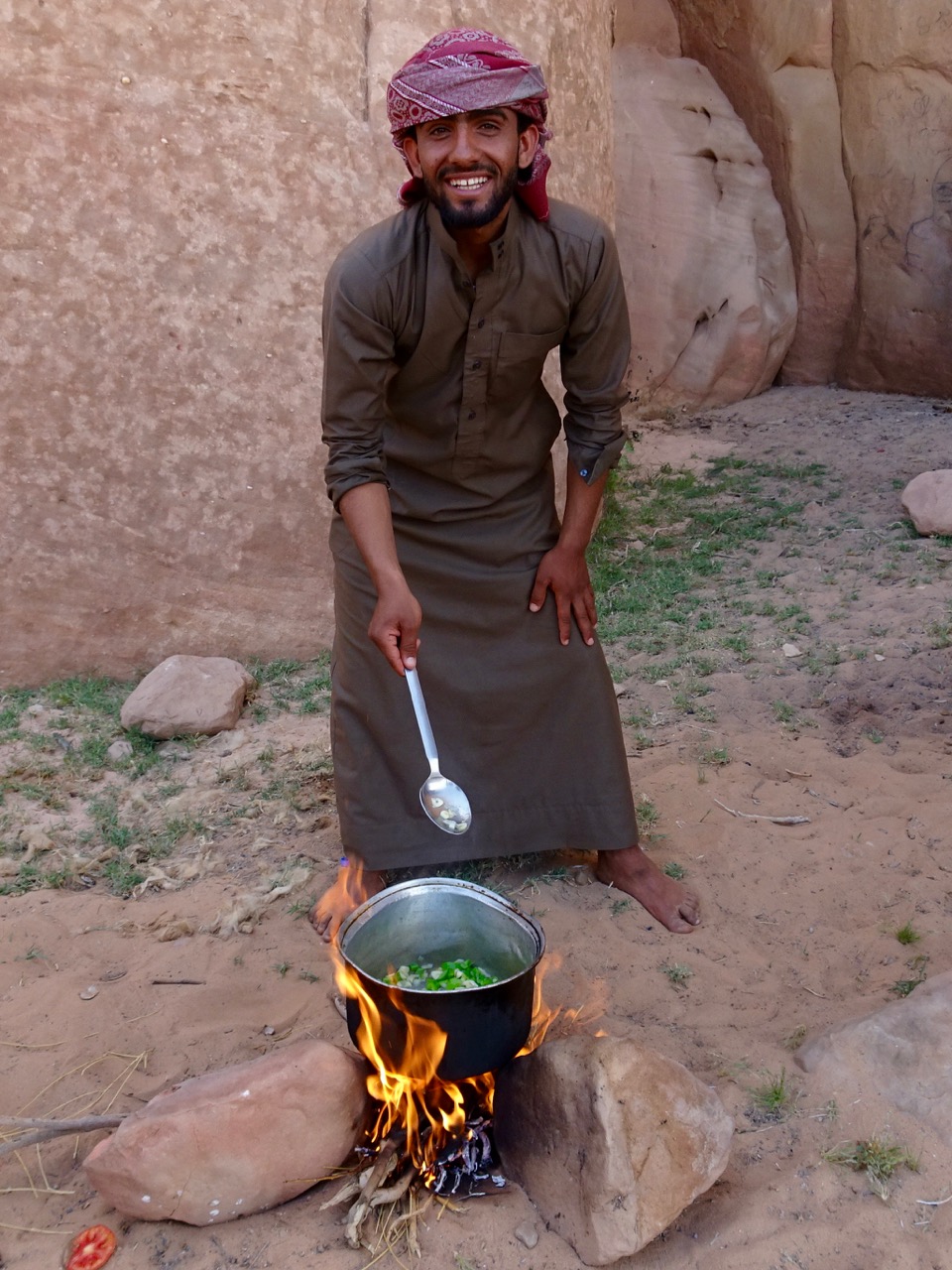
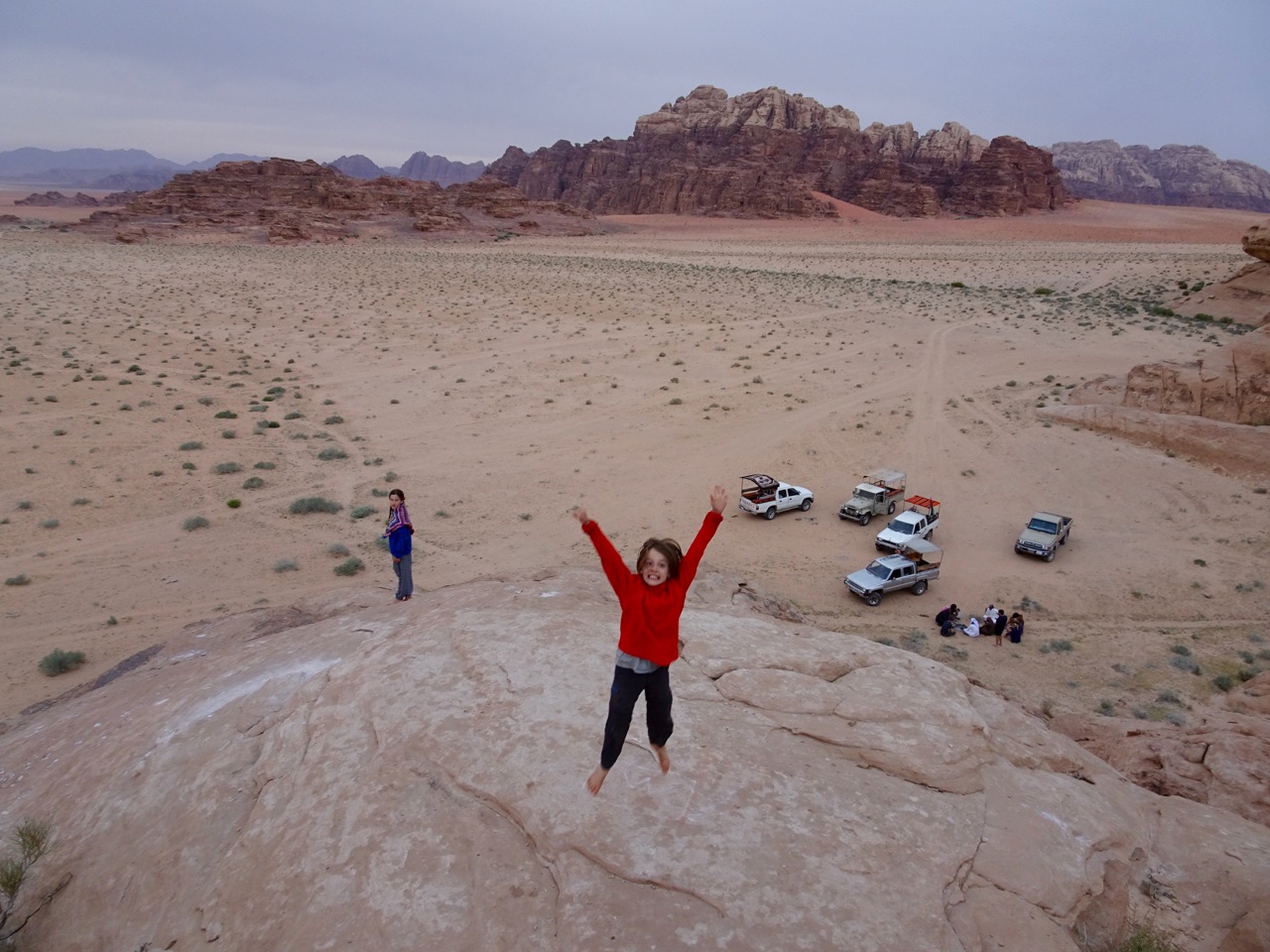
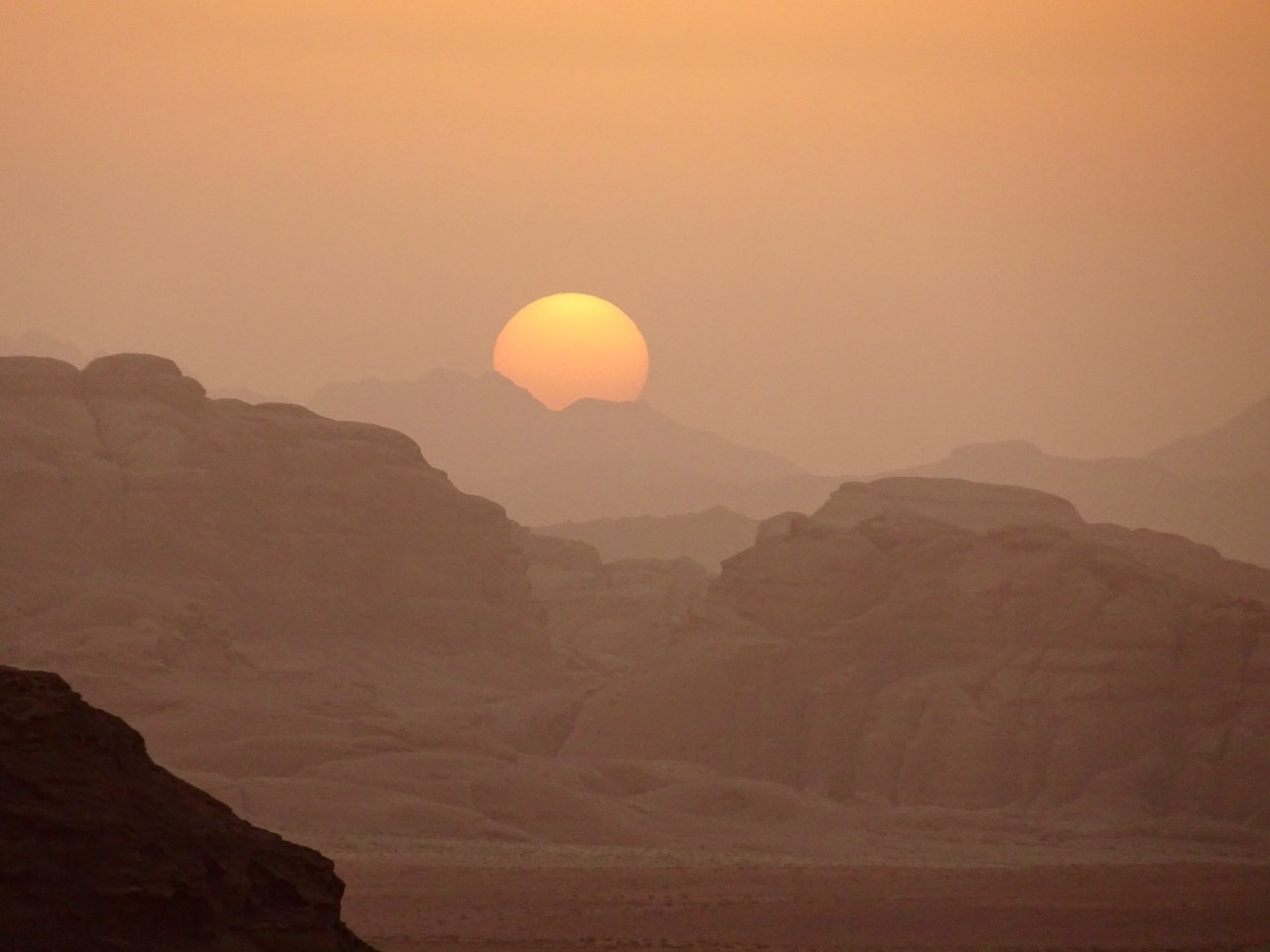
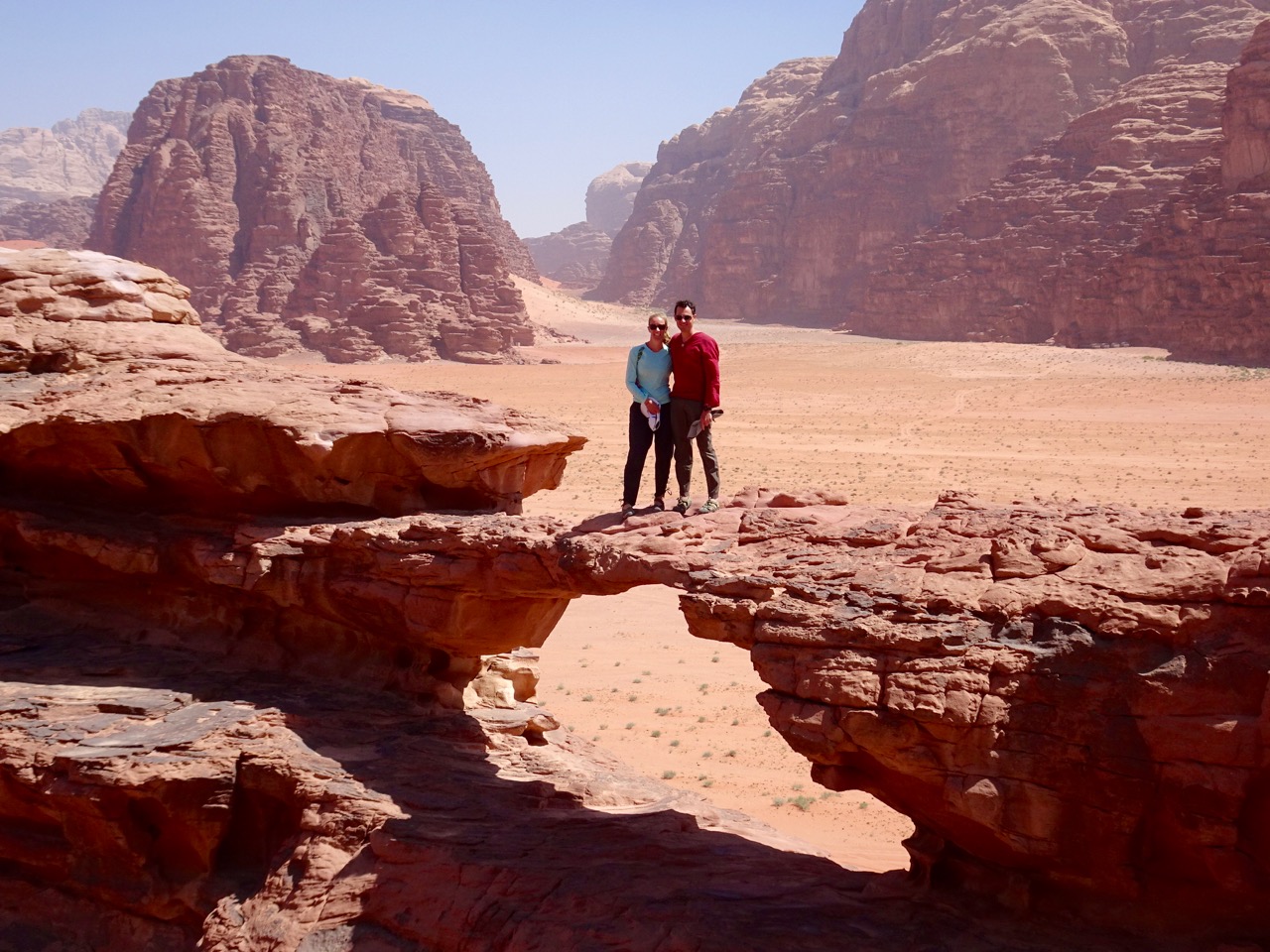
We hiked through canyons, scrambled up cliffs to stand on precarious rock bridges, watched as our guides prepared and cooked meals over campfires at the base of massive rock faces, leapt off the top of red sand dunes, raced across the desert floor at break-neck speed as Yousef tried to outdo his brothers in delivering us and other visitors back to camp. We also soaked in sunsets from high vantage points while Amy and Oliver scrambled up and down the rocks to deliver cups of yet more Bedouin tea.

DSC06905
Our Bedouin guides – always smiling
DSC06917
Or competing with each other
DSC06920
Sand dune leaping – of course!
DSC06826
Starting lunch!
DSC06732
Waiting for the sunset – the Bedouin tea is brewing over a fire below
DSC06943
Bringing the tea to the sunset spot
DSC06960
Desert sunset

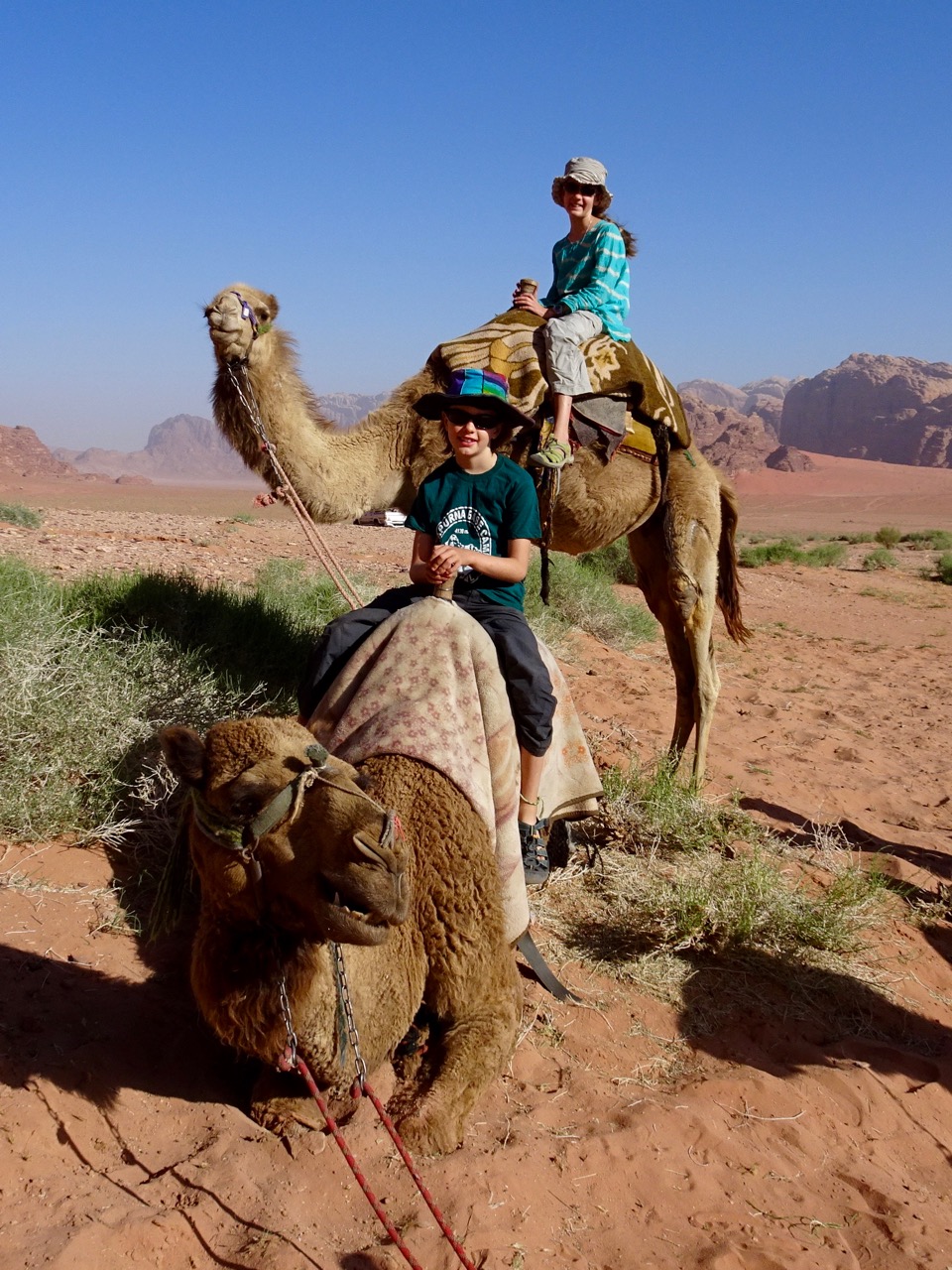
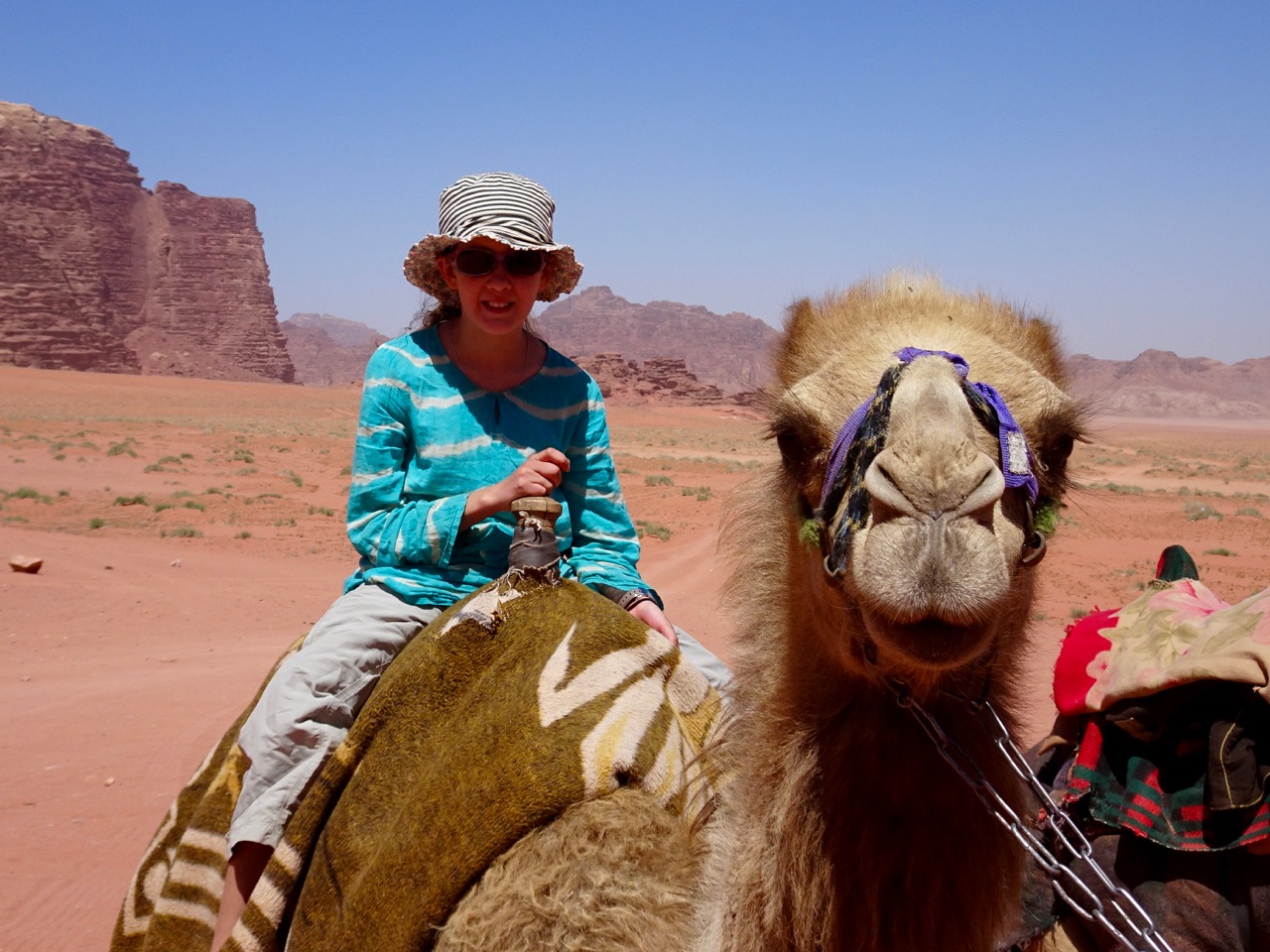
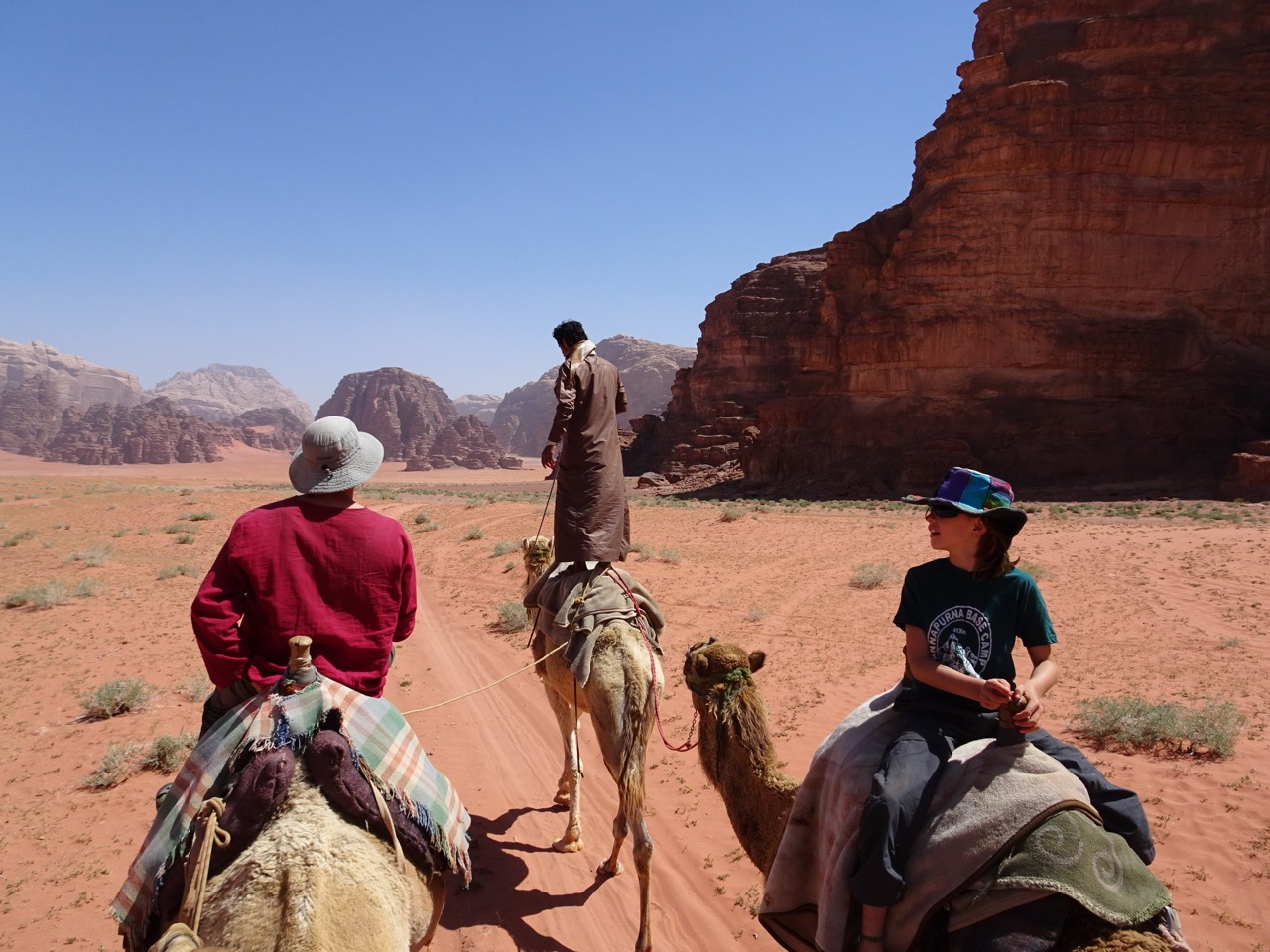
We even spent four hours trekking on camels which was almost, but not quite, too long. It was kind of romantic, and helped evoke a stronger sense of times past. The reality was though that romance came at the cost of a blister on your behind and that made it hard to maintain the dream. We all squirmed to get comfortable on the ungainly but lovable beasties. Oliver found it best to ride backward, Amy and I attempted to imitate the cross legged style used by our Bedouin guide while Emma just urged us to keep going so we got to the end as soon as possible.

DSC06987
Getting ready to go
DSC07047
Excited!
DSC07033
Trying different methods to get comfortable
DSC07043
Another amazing arch

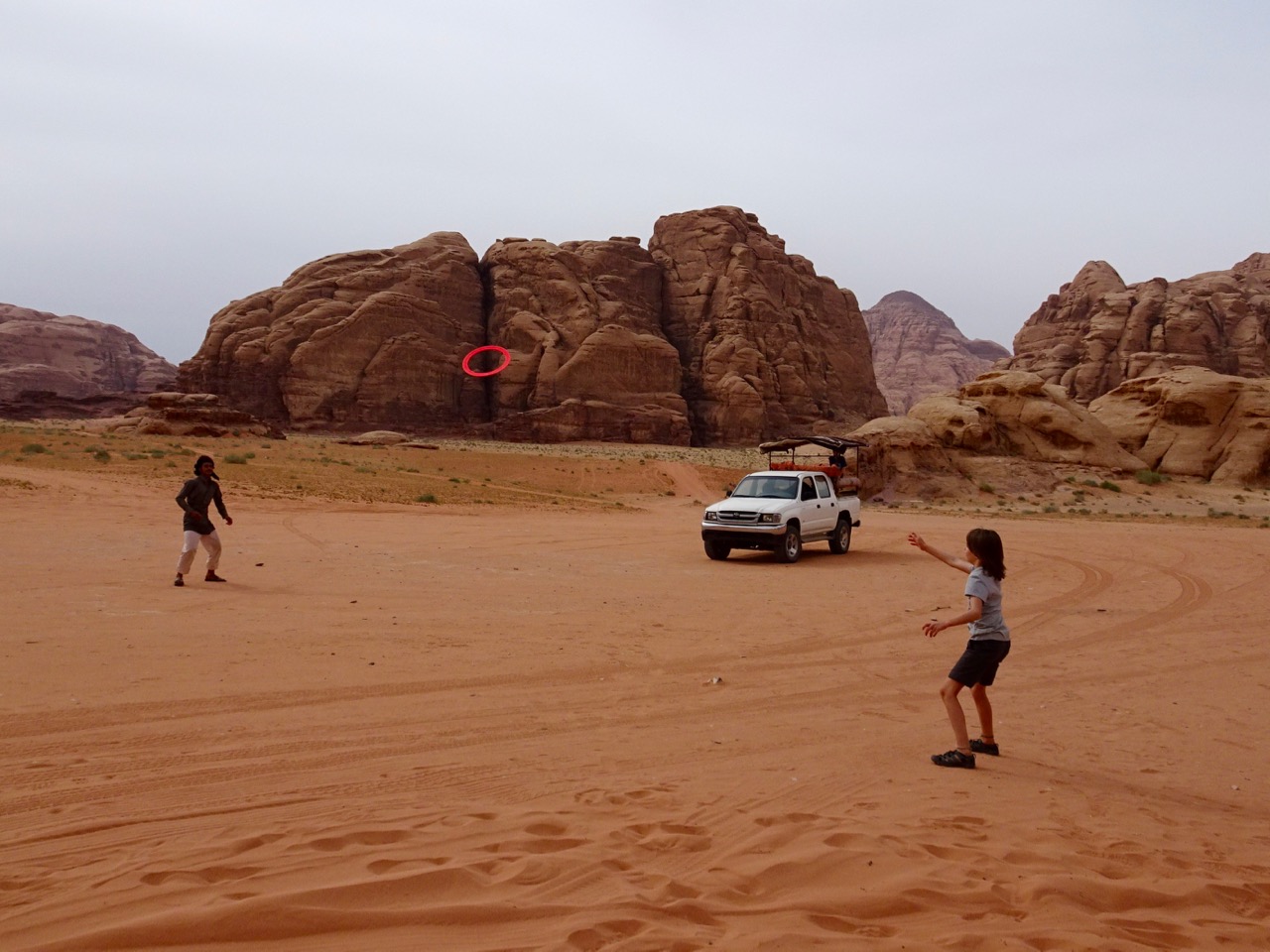
‘I like the desert’ Oliver declared spontaneously as we raced back from our sunset viewing one evening in the twilight. ‘You get to be all dirty’ he declared with a cheeky grin. Yousef seemed to encourage him in this endeavor. Like an oversize school friend, he seemed very pleased when he found a partner in Oliver to play frisbee with at every possible opportunity. They played hard, diving in the sand to take a catch, or to avoid a throw intended more to make the other guy duck for cover.

DSC06670
Frisbee with Yousef
DSC06930
Tormenting his frisbee partners

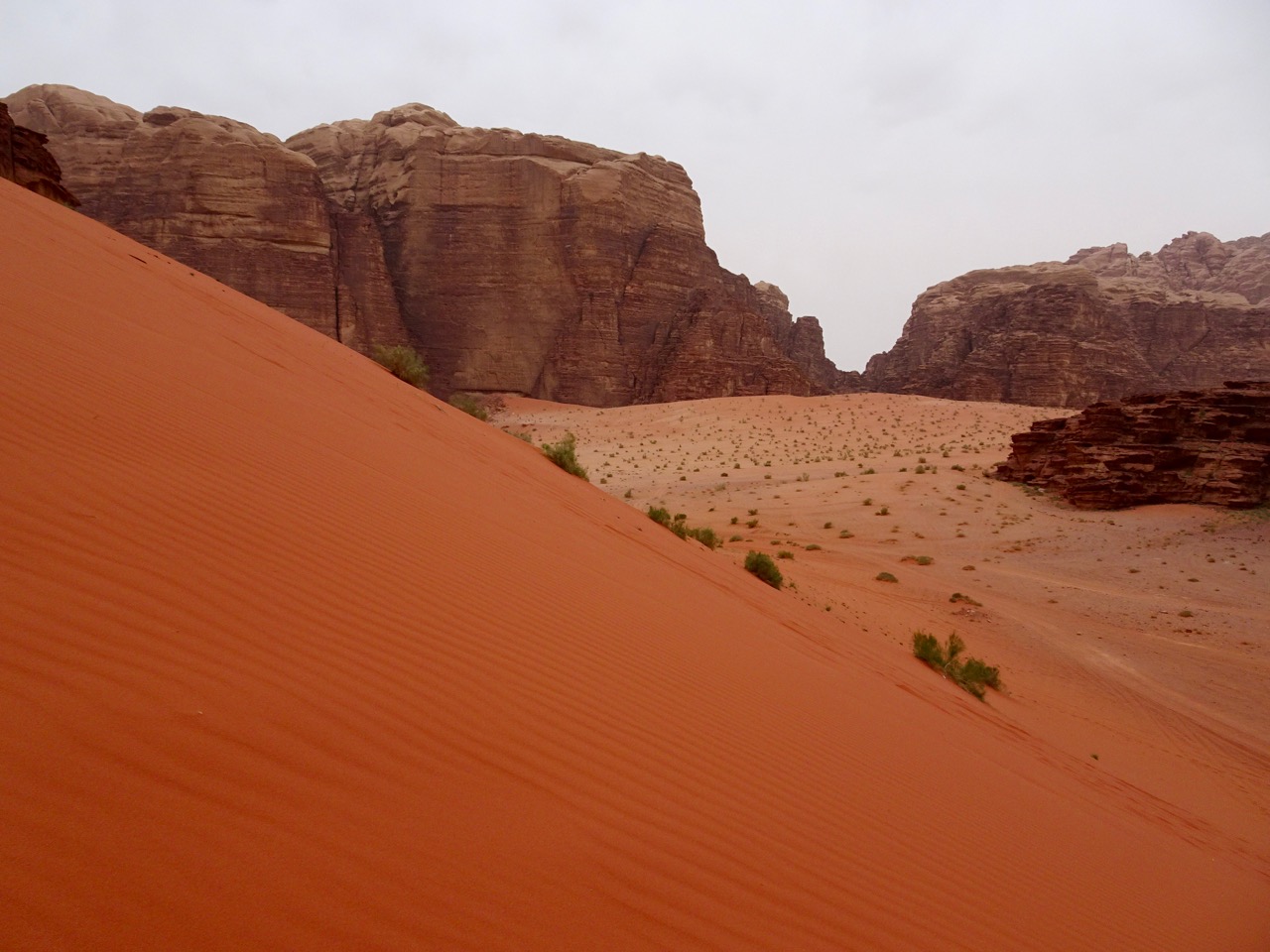
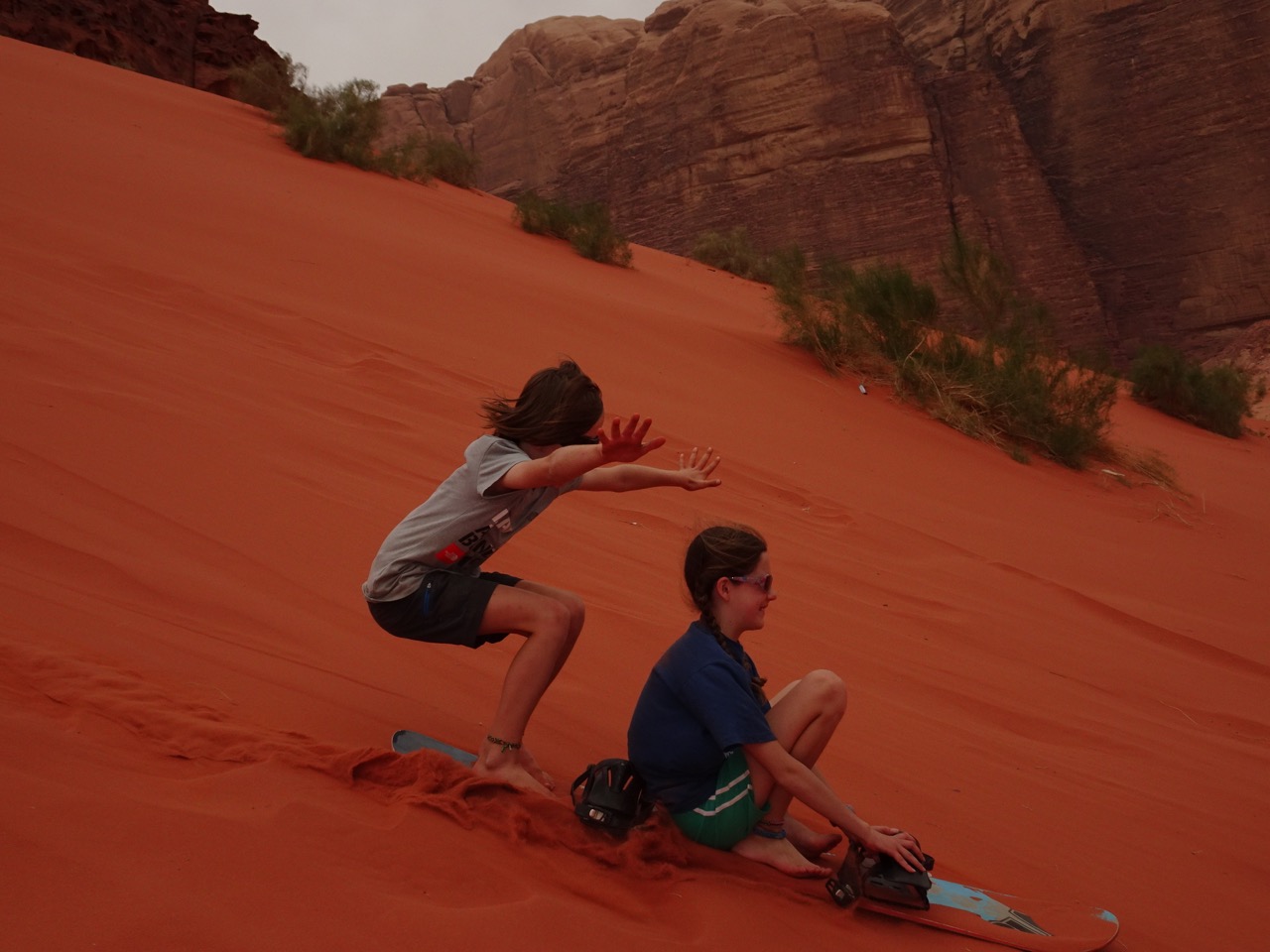
Sand boarding helped everybody get a little grittier too and has been a favourite past time for Amy and Oliver ever since our first adventure on the dunes of Kangaroo Island. I think I’m still snorting some of the sand that went up my nose when I put my feet down to slow Amy and I up before we screeched across a rocky road at the bottom of the hill. Emma took some video of Amy and Oliver careening down the slopes and Yousef snuck up behind us while we watched it back after exhausting ourselves climbing the slope. ‘Did you get me?’ he asked like a kid who didn’t want to miss out.

DSC06617
The sand boarding dune
DSC06629
Amy couldn’t figure out why the board kept going crooked

We also visited places made famous by Lawrence of Arabia, including the remains of his home in the desert and the springs where he apparently took a bath on the 13th September 1917. The springs emerged from the rock about a hundred metres above the desert floor at a line in the rock where sandstone sits atop an igneous base. If you looked closely you could see a horizontal line of greenery contour around various rock stacks where this phenomenon was repeated in other places as well.

DSC06563
Lawrence Spring

In Lawrence’s own words from his book Seven Pillars of Wisdom:

 “so, to get rid of the dust and strain after my long rides, I went straight up the gully into the face of the hill, along the ruined wall of the conduit by which a spout of water had once run down the ledges to a Nabatean well-house on the valley floor. It was a climb of fifteen minutes to a tired person, and not difficult.  At the top, the waterfall, Al Shallala as the Arabs named is, was only a few yards away”.

There is actually plenty of water if you know where to look, enough to support a very long human habitation in any case. According to the dry but informative UNESCO website,

‘Petroglyphs, inscriptions and archaeological remains in the site testify to 12,000 years of human occupation and interaction with the natural environment. The combination of 25,000 rock carvings with 20,000 inscriptions trace the evolution of human thought and the early development of the alphabet.’

We visited three of those 25,000 rock carving sites. I wondered if those who chiseled their marks into the rock all those years ago had any inkling the world would consider their work of global heritage significance in years to come. Probably not. How could you know?

DSC06642
Rock art

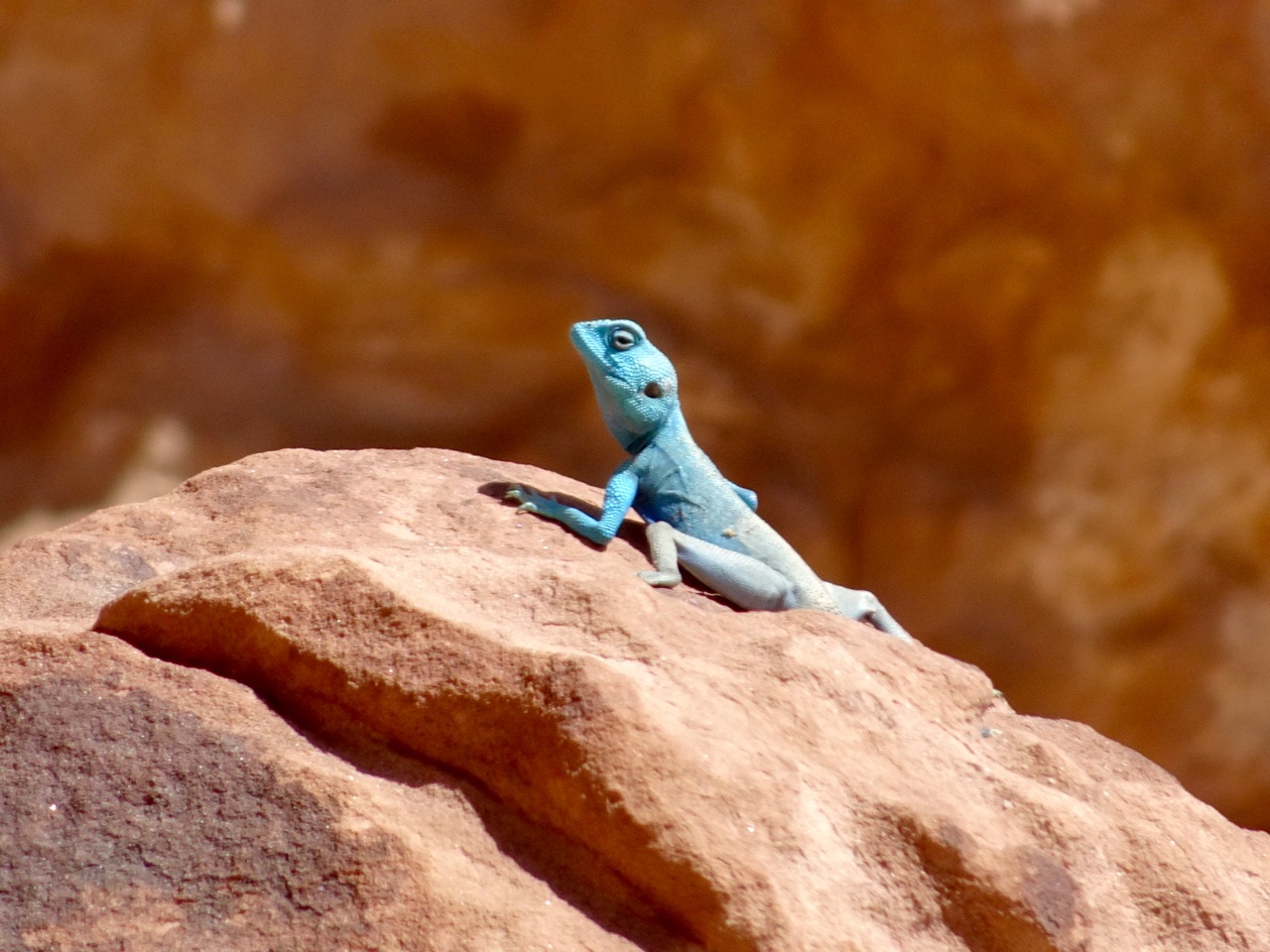
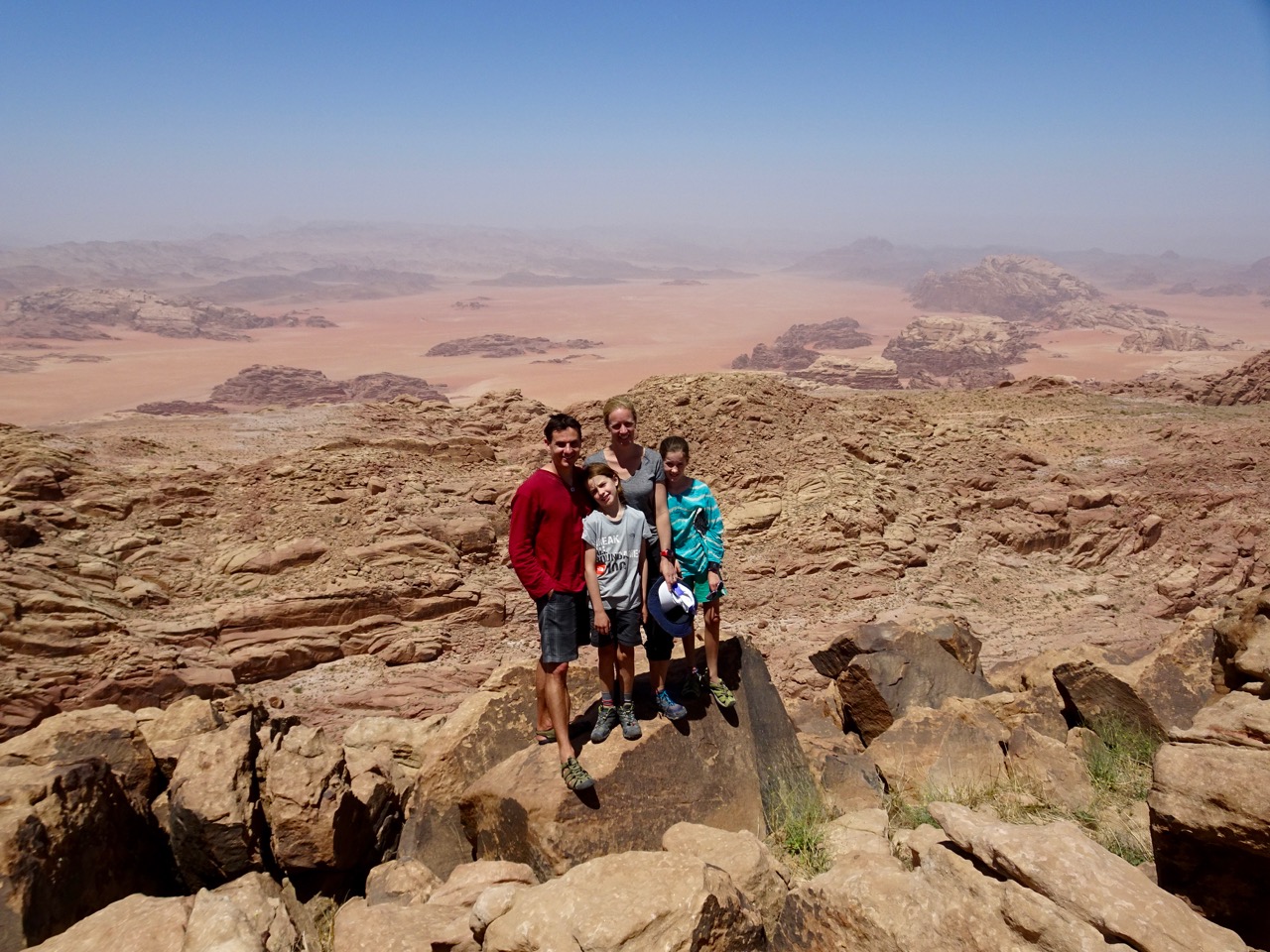
The farthest point of our tour took us to the start of a three hour walk in which we climbed up an unremarkable gorge, scrambled up a reasonably challenging scree slope, across a sun baked plateau before climbing steeply to the summit of a high peak. On the climb we spotted an electric blue lizard (the Sinai Agama) basking on a red rock in the sun. The male turns this wonderful colour during the breeding season which I can only suppose occurs around May each year. The view from the summit was spectacular and we gazed off into the distance and into Saudi Arabia.

DSC06760
Sinai Agama
DSC06778
More views!

Three days slid past and it seemed like it was all over before it had really begun. Amy, Oliver and I were really starting to like the Bedouin tea (too much sage for Emma) and we all could have spent much longer hanging out in the desert. Alas it was time to move on. Aqaba and the Red Sea were just down the road and we were off to trade the red rose desert for the sparkling blue sea.

DSC06901
Our favourite family shot