Pomme fritz mit mayo

‘Pomme fritz mit mayo’. It’s German for ‘french fries with mayonnaise’ and it was a key culinary requirement for our visit to Germany. It’s a German delicacy. Or so I told Emma, Amy and Oliver. German fast food is probably a more accurate description and who eats fries with mayo anyway? I tried it when I was in Bonn for work years ago and had been waffling on about it for some time before we actually reached Germany. You know, as you do.

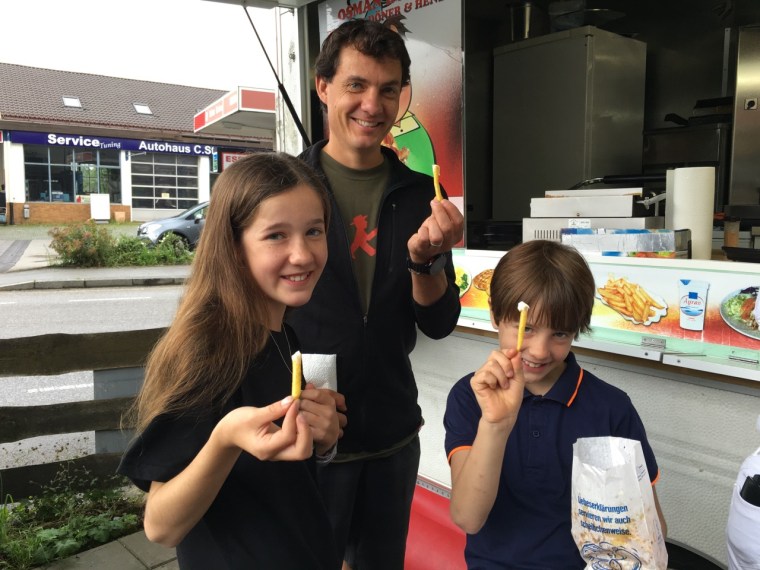
We eventually tracked some down at a curb side kebab caravan in a little town near Bad Feilnbach where we had set up camp for a few nights. I studied German for three years in high school, and was revelling in the fact that I could actually understand the occasional spoken word. I got really into it at the kebab shop by placing our order, one French fries with mayo and two vegetarian falafels, in German.

IMG_2859
Waiting for our German fast food

‘Ein pomme fritz mit mayo und zwei falafel vegetarianish bitte’, I asked stiltedly but confidently. I was clearly understood because the friendly fellow smiled before responding with an onslaught that made it plain my German language ambition exceeded my ability. He was probably just clarifying my order, but I stared back at him blankly as it dawned on me that there is a downside to pretending you can communicate in another tongue. We got our pomme fritz, but we also got three falafels rather than two and one of them wasn’t vegetarian.

IMG_2861
Success!

Germany, and Bavaria in particular, had other culinary ambitions to be realised as well. Bavaria is after all the home of strudel! Am I right? I was so sure. I had been telling Amy and Oliver about Bavarian apple strudel for even longer than the pomme fritz mit mayo. I’d been going on about it so long I think it may even have played a hand in our choice of Bavaria as the second of our German destinations. That and the reputed mountain scenery of course.

You can imagine then my relief when my eyes latched upon two fine looking apple strudels at a bakery in the idyllic little town on Ramsau near Berechtsgaden. It was too good to be true and proof positive of my assertions re the culinary delights of the region. I would have gloated, but I’m better than that. Nah I’m not. I gloated.

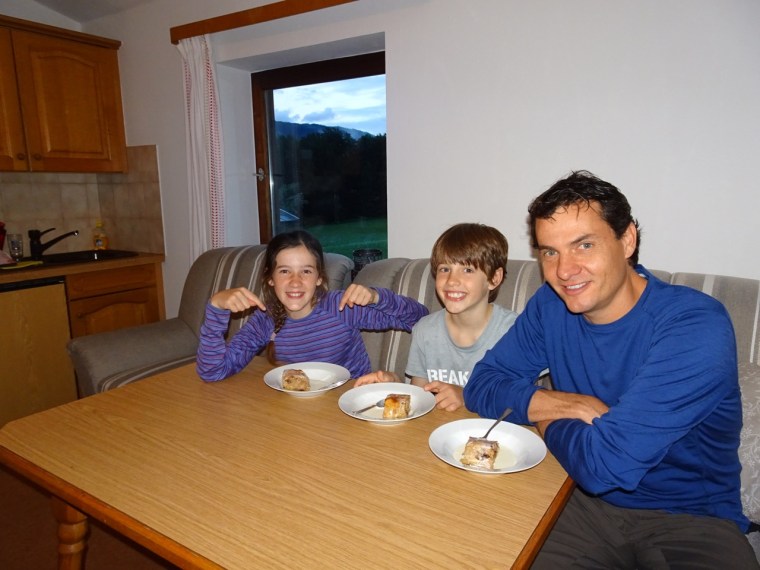
There was nothing to be gained here by botching up the order with poor German so I pointed and stuck up two fingers in time honoured, universally accepted sign language. The lovely lady new exactly what I wanted and strudel was exactly what we got. It was good too, served with healthy lashings of unhealthy cream and wolfed down in the warmth of our little Bavarian apartment on the mountain foothills.

DSC00753
Proper Bavarian apple strudel

We ended up in said apartment because the weather in Bavaria seemed determined to do all it could to make us miserable. Here we were with four days in one of the prettiest parts of the country and it was forecast to rain without relief. It was sunny when we picked up our rental car in Munich, so Emma and I weren’t really worried. Since when has the forecast ever been right four days out?

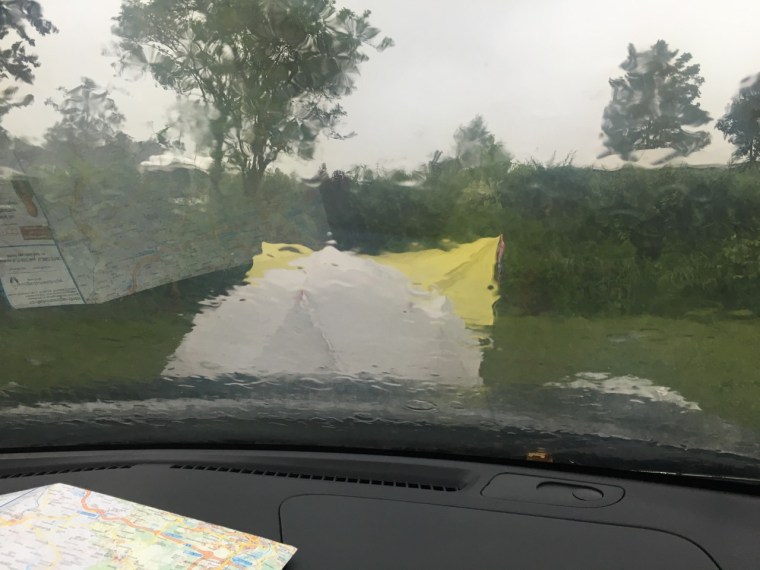
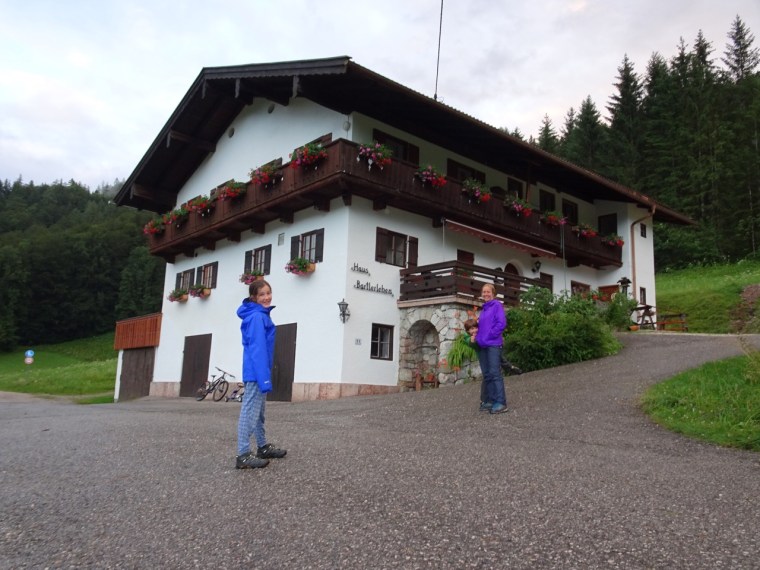
Turns out the German bureau of meteorology really know their stuff and it did rain for more or less four days straight. Which was no good for us. There is only so long before clambering out of a wet tent in the middle of the night and walking through the rain to go to the loo starts to wear a little thin. So after two days of that, hiding in the cooking shelter and reading in the car we gave up and Emma found us a roof on Airbnb.

IMG_2925
Gotta love setting up the tent in the rain
IMG_2868
The view from the driest place to read or blog
DSC00749
The roof we found – an Airbnb godsend

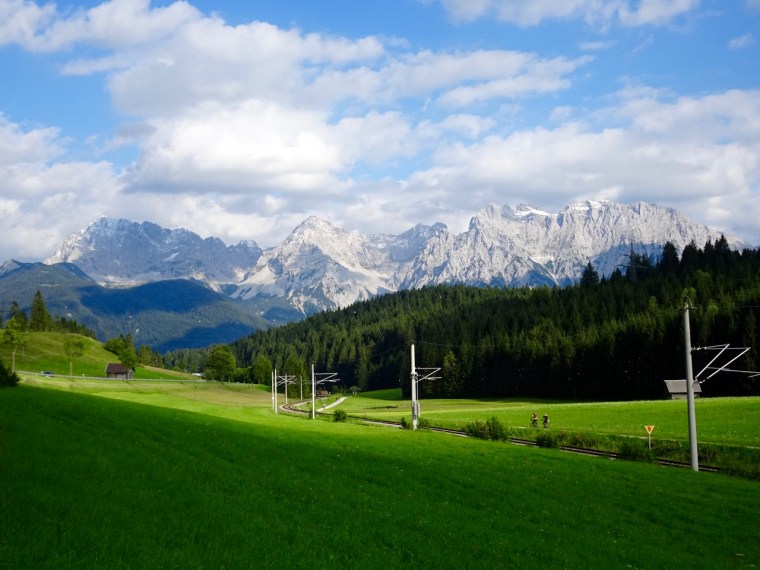
Rain still wears thin after a while, even with a roof over your head, but far more slowly. You can pee in comfort for a start! After that it’s the dampener it puts on your outdoor ambitions that are a struggle to come to terms with. The Bavarian Alps are stunning. Not so high as those across the border in Austria and Switzerland, but just incredibly beautiful, idyllic even and we longed to see it all lit up in glorious sunshine rather than clouded and grey.

The whole place is so neat and green and all the locals got the memo about how to make their homes fit the relevant Bavarian style. Meanwhile the mountains launch themselves up into the air to dramatic effect. There are walks everywhere an endless supply of valleys, ridges, alpine meadows, peaks and canyons to explore. I wanted to walk them all. Really. I wished I could. I wanted a month in our cozy cabin with a new trail to explore every day. It was exhausting just containing my unrealised enthusiasm.

DSC00736
Sto-op raining!!!

Eventually my desire capitulated to the rain. I reconciled the full Bavarian Alps experience to a future to do list and got down to the business of making the most of the few days we had. Because my family is so wonderful, the 8.5 kilometre walk we took up one of the mountain valleys turned into a solid 18 kilometre roundtrip. They marched on, at least partly just for me I’m sure, sensing my desire to know what was around that next corner.

DSC00800
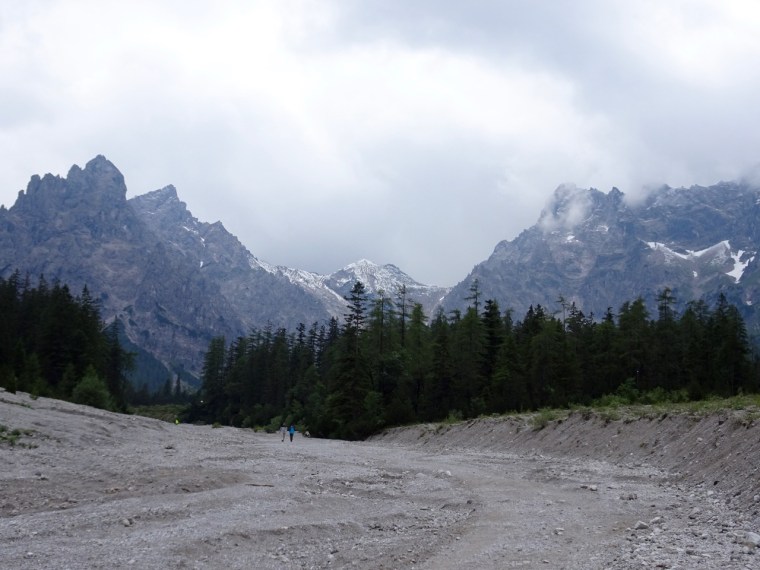
A beautiful hike
DSC00770
The Wimmbach gorge – lots of water (rain will do that)
DSC00785
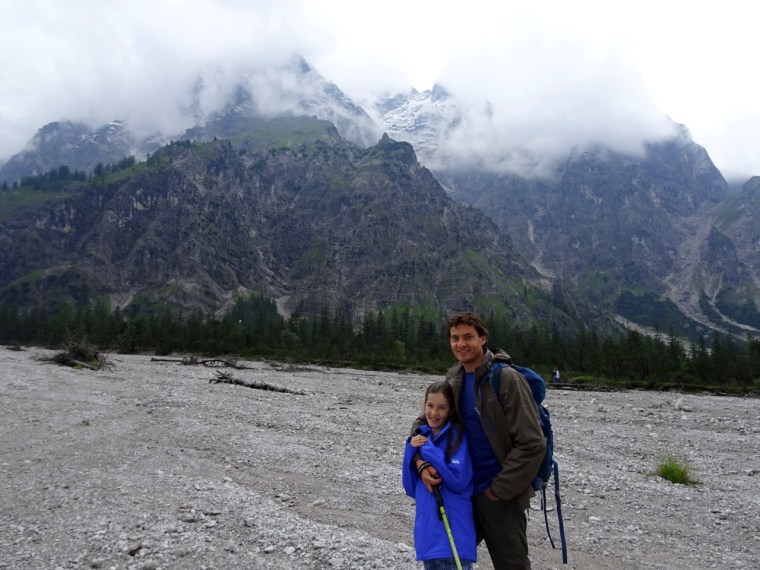
Happy hikers

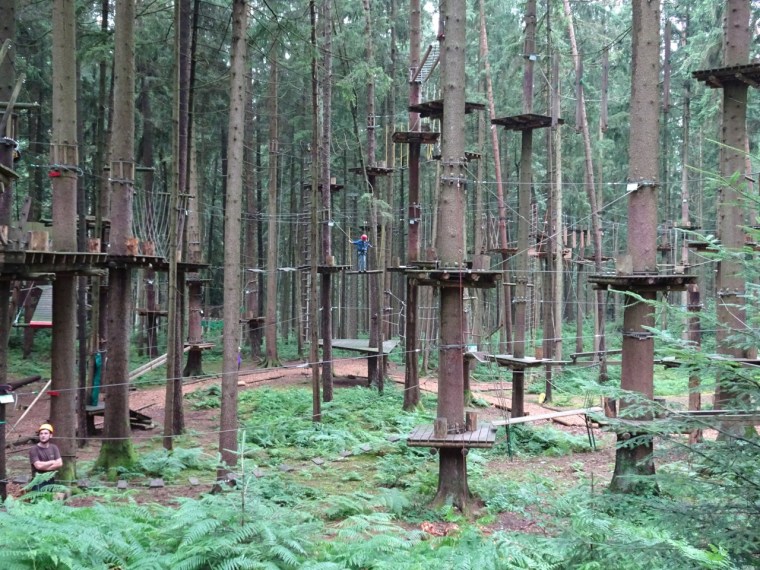
Emma and I had purchased a bit of good will with Amy and Oliver a few days before hand. It was raining so much, we gave up on sightseeing and took them to another high ropes course. They loved the one in Scotland so much they were bursting with excitement at the mere whiff of doing another. This one fortunately ‘was very, very, great’ in Oliver’s words. Emma and I watched on from below, rain jacket and pants on, and wishing we had worn shoes and socks instead of sandals. ‘It’s supposed to be summer!’ is what I wanted to shout to the heavens, but didn’t.

DSC00722
Ready to go up
DSC00707
So many courses to do – we were there for hours

It was still grey the day we had to leave Berechtsgaden and the Bavarian Alps behind. We pulled into a petrol station and purchased an Austrian driving ‘vignette’. Basically an upfront toll. We planned to drive a couple of hundred kilometres through Austria (because we could) to make our way to Germany’s highest mountain, the Zugspitze, all the while hoping the weather would improve. Little did I know that would not be last time I saw that petrol station, but that’s the next story.

IMG_3052
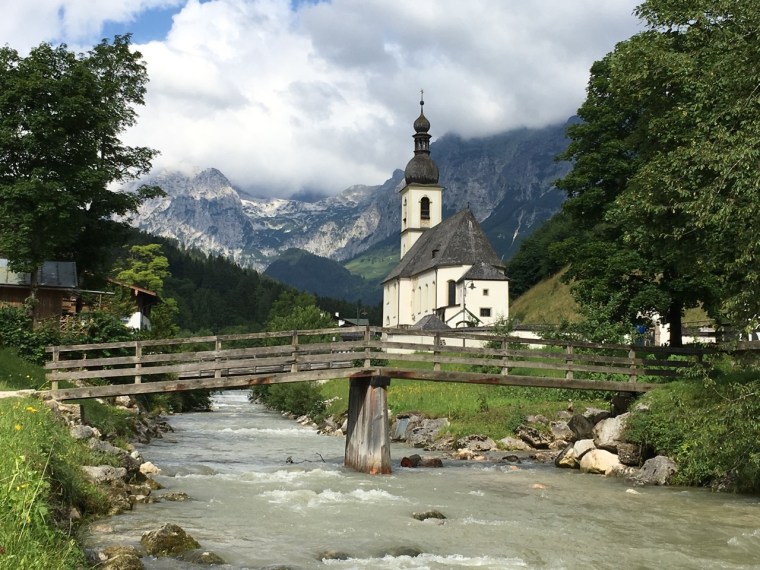
Pretty church near Berechtsgaden


P.S.

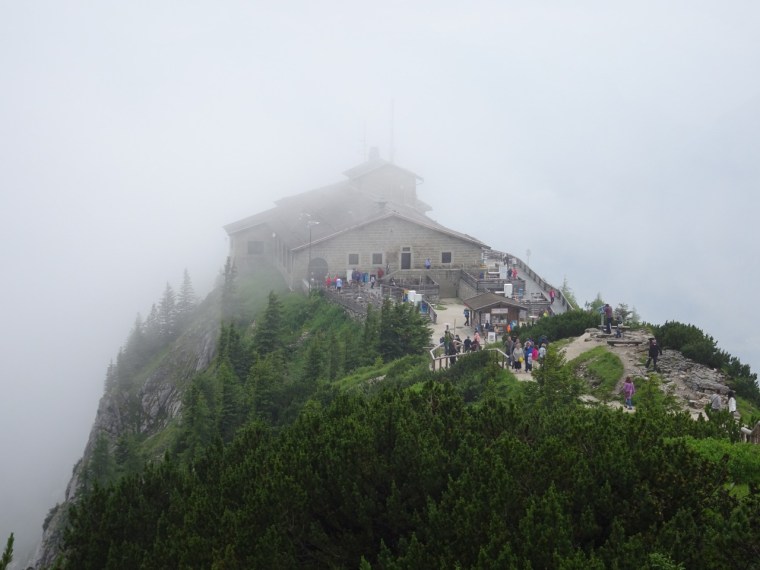
I love to stand in places where history is made – in case you hadn’t noticed by now. Tucked away down in the Bavarian Alps of Germany is a mountain hideaway of the Nazi regime that was only discovered after the war was over. It’s called the Kehlstein or Eagles Nest, a mountain retreat perched precariously upon a ridge 1800 metres above the valley floor and given to Hitler for his 50th birthday.

DSC00824
The Eagles Nest

The same road that he and his cronies drove was the same we climbed up, in a bus with a bunch of other tourists. The 7 kilometre road is only one lane wide with a single passing point at the centre. Precision driving ensures the busses going up and down meet at the middle at exactly the same time. You gotta love the Germans.

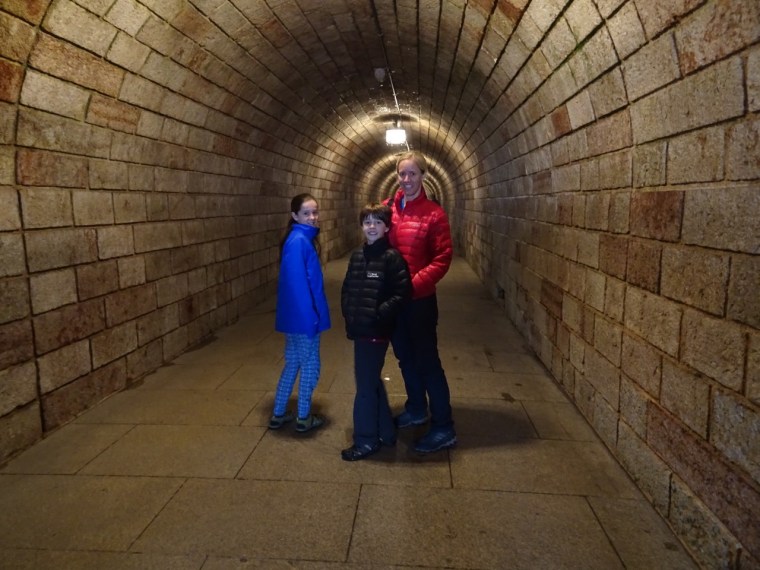
After alighting the bus at the top of the road a tunnel entrance is spotted leading deep into the mountain. After roughly 150 metres the tunnel ends at a small domed chamber which serves as a foyer of sorts for an elevator. The brass lined elevator takes you another 150 metres straight up through the mountain to the heavy set stone building above. It’s the same tunnel and the same lift used by same said persons all those years ago. Isn’t that creepy? It was creepy, but enthralling.

DSC00813
The tunnel – opened 1938
DSC00816
Very orderly yet creepy tunnel

The clouds swirled thick and then thin as we visited, so the views weren’t quite what they would be on a gorgeous sunny day, but we saw enough through gaps in the weather to appreciate what a stunning vista it would present.

DSC00841
Magic views

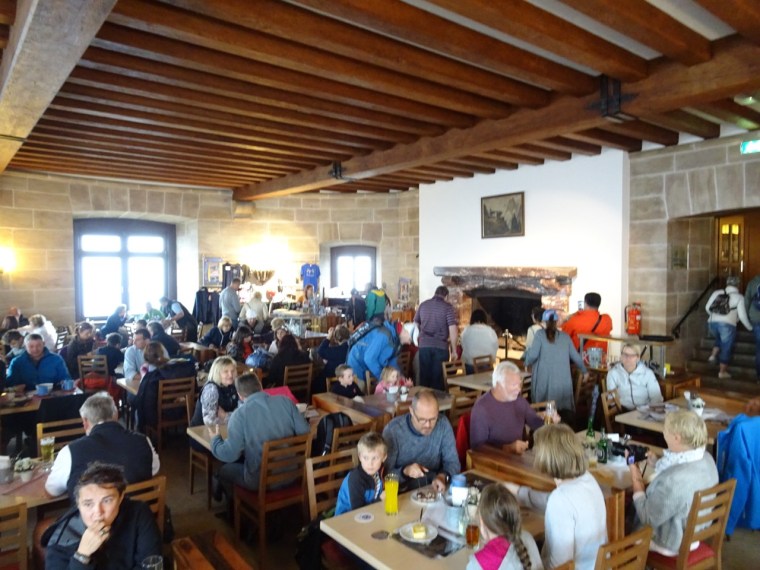
It’s not a large place, but here is the dining hall and rooms where all the heavies of Nazi Germany met and held council. Today it’s a privately run restaurant with hordes of tourists swarming about like it was any other mountain lodge, sipping latte’s and wolfing down their pomme fritz mit mayo and strudel. I like the idea that a place with such a dark past is now the happy domain of any and all comers.

DSC00832
1938 view
DSC00837
2016 view


Difficult heritage

Is there any more helpless sight than that of a train you should still be on streaking away from you as you stand upon the platform at the wrong station? After six months on the road it is possible that Emma and I are getting a little too relaxed when it comes to our travel movements. We jumped on the train in Denmark and got off when we saw a station sign that said Berlin. Except it wasn’t the right Berlin. Sigh.

Fortunately, the station at which we alighted was on the outskirts of the Berlin metro and so all was soon well and we were whizzing our way through town on the ‘S-bahn’ towards our Airbnb apartment. Which we didn’t leave until nearly 2.00pm the next day. It was one of those ‘what’s the rush’ kind of days. Eventually we made it out the door and headed for the only real Berlin attraction Emma and I had stored away in our brains. The Berlin Wall.

DSC00554
A section of the remaining Berlin Wall

The Wall of course is well known, but if you’re anything like me you probably only have a fairly rudimentary understanding of what went on here and why. It’s such a privilege to have the chance to peruse the various museums here and then wander around the sites where history unfolded.

The wall sprung up literally overnight back in 1961 as former allies turned enemies. It was an attempt by the Soviets to stem the tide of people flowing from east to west as people voted with their feet for which ideology the preferred to live within. Families and friends going about their daily lives were irrevocably divided overnight. Footage of people calling and waving to each other over the wall but unable to get to each other is heartbreaking.

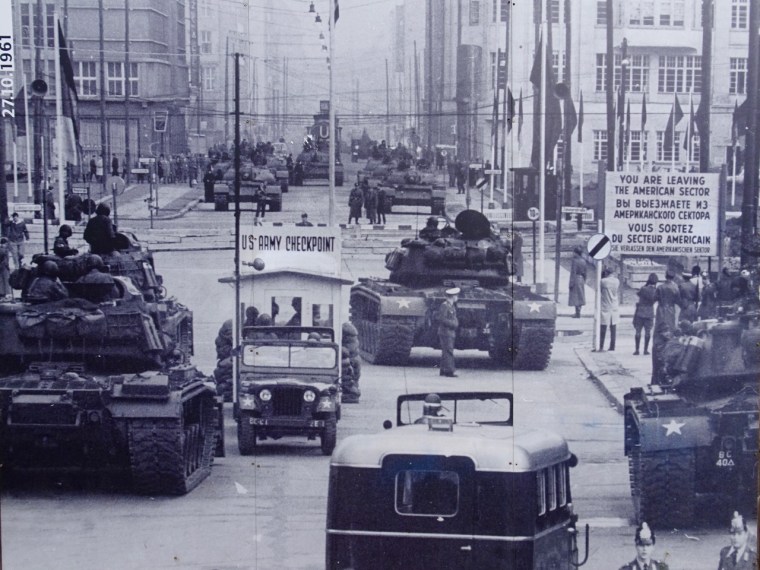
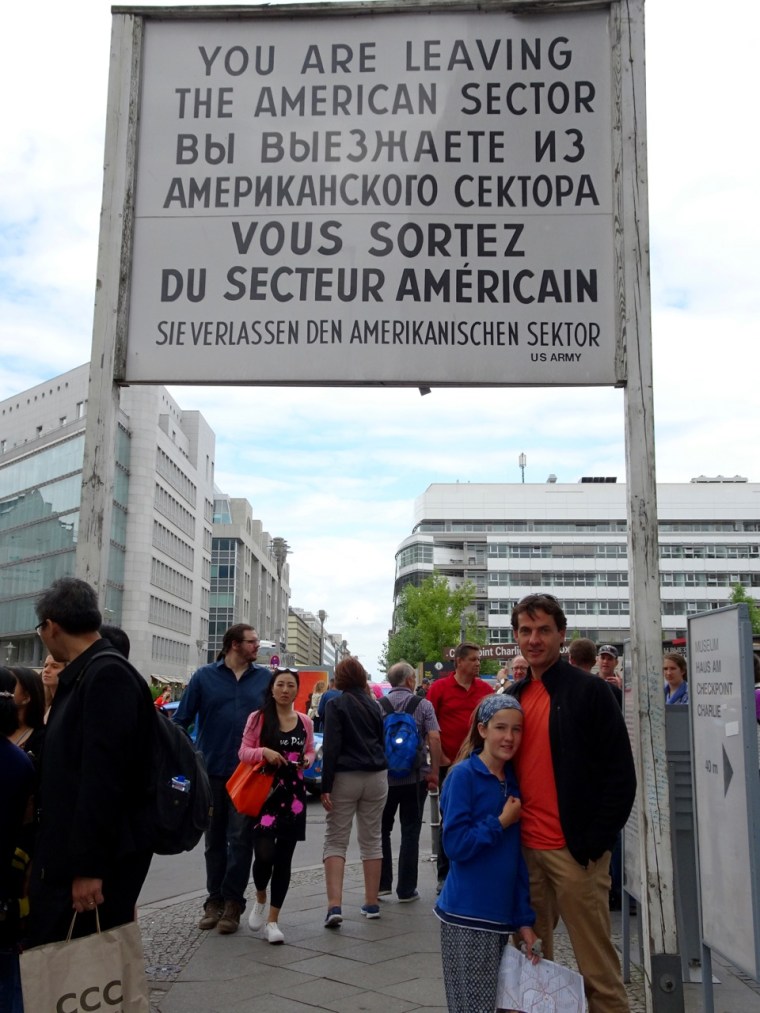
Things got really interesting for a while in September 1961. A dispute erupted over whether East German guards were authorized to examine the travel documents of a U.S. diplomat who thought a night at the opera in the east might be pleasant. The allies didn’t think much of that and rolled a few tanks up to the border at ‘Checkpoint Charlie’. The Soviets responded in kind and each then preceded to stare at each other down their gun sights, a hairs breadth from rolling on into World War III.

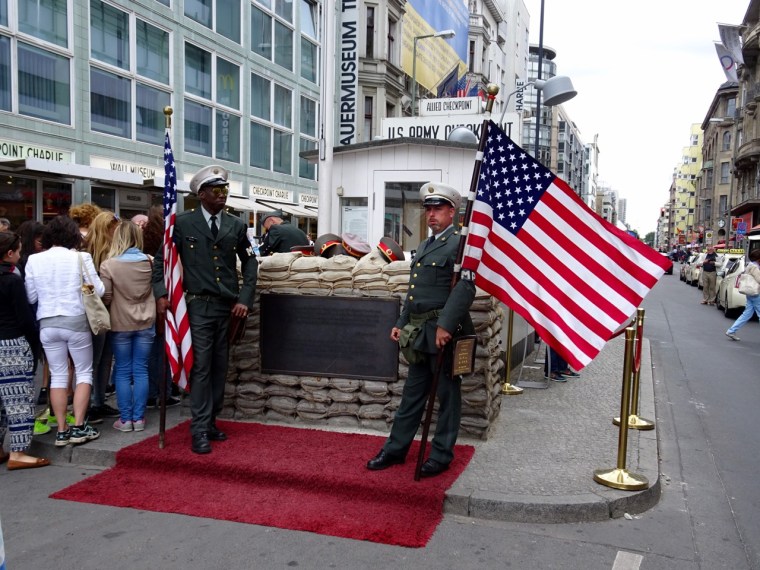
Checkpoint Charlie today is a replica of the original which was dismantled long ago. It has been built for tourists seeking a taste of the Cold War era atmosphere. It works too. Take a look at a photo of the tanks staring each other at the nearby Blackbox Museum, then look down the road at the recreated Checkpoint Charlie and your imagination can do the rest. It’s palpable and fascinating and cheesy all at once.

DSC00598
Checkpoint Charlie with the tanks in 1961
DSC00585
Checkpoint Charlie in 2016
DSC00588
A popular photo spot these days

Equally fascinating is the Berlin Wall itself. Only about a kilometre of the 150 kilometre wall is left, but it’s enough. Enough to feel rather than necessarily understand the impact the division of east and west must have had when it was thrust up in 1961. Of course the wall quickly became the focal point for the clash of ideologies and came to represent the ensuing ‘Cold War’. A large part of what’s left of the Wall is now an ‘art gallery’ decorated with colourful graffiti. Along with much of the rest of Berlin I might add. Graffiti is almost everywhere you go.

DSC00567
Some more of the Berlin Wall
DSC00582
Graffiti across from our local train station

It might have something to do with the fact that the Berlin local government is pretty much bankrupt and can’t afford to clean up the mess. ‘Berlin. Poor but Sexy’ adorns T-shirts across the city. It’s a quote from the previous Berlin Mayor Klaus Wowereit that clearly hit a nerve with the locals. Apparently they owe more than 69 billion euros and the German Federal Government has refused to bail them out. I found Berlin fantastic, but a little scruffy. Maybe that’s why.

We were told if you talk to the locals you’ll find that World War II and the Cold War are chapters in history they would prefer to forget. Hence why there is so little Wall now left standing. Talk to the tourists and you get the feel that a little more Wall wouldn’t be a bad thing. It’s a difficult heritage.

DSC00681
A section of undecorated wall with Luftwaffe HQ behind

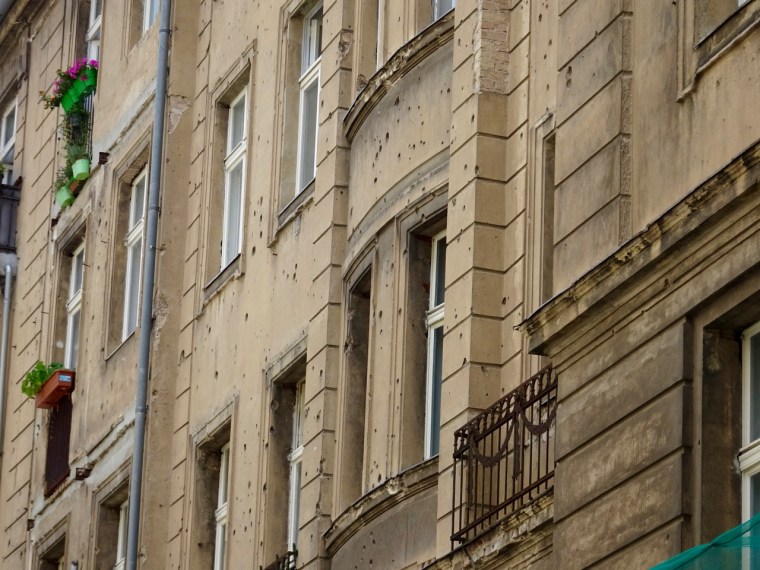
Berlin seems to have more than its fair share of difficult heritage. ‘Paris will always be Paris, but Berlin will never be Berlin’, so one saying goes. It was bombed to oblivion during World War II. 80% of buildings were destroyed and so most of the city is relatively new. A few war era buildings still stand. They’re easy to spot. Just look for bullet holes in the facades. The current owners are apparently keen to knock them down and start again, but the tourists want them left alone because of their historical significance.

DSC00628
Bullet holes

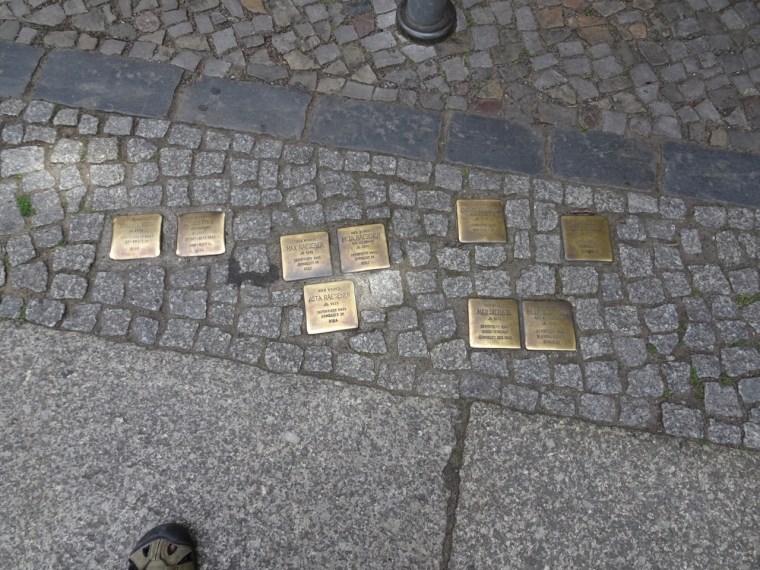
Difficult heritage is in fact almost everywhere you look. On the pavement scattered throughout the city are ‘Stumbling stones’ – little bronze plaques of which there are now 27,000 found all over Europe. Each one has the name of a victim of the Nazi Holocaust and the name of the place where they died. We could recognise some of the concentration camp names. The plaques appear outside the homes of the victims, and the project has become the single biggest Holocaust memorial in Germany. It is one way modern day Germany is seeking to reconcile the past.

DSC00627
Stumbling Stones

Then there is the Memorial to the Murdered Jews of Europe, just a stones throw from the Reichstag (Parliament) building and covering an area of several city blocks. It’s the largest monument to an historical event I’ve come across and is indicative of efforts to put the past to rest.

DSC00642
Memorial to the Murdered Jews of Europe

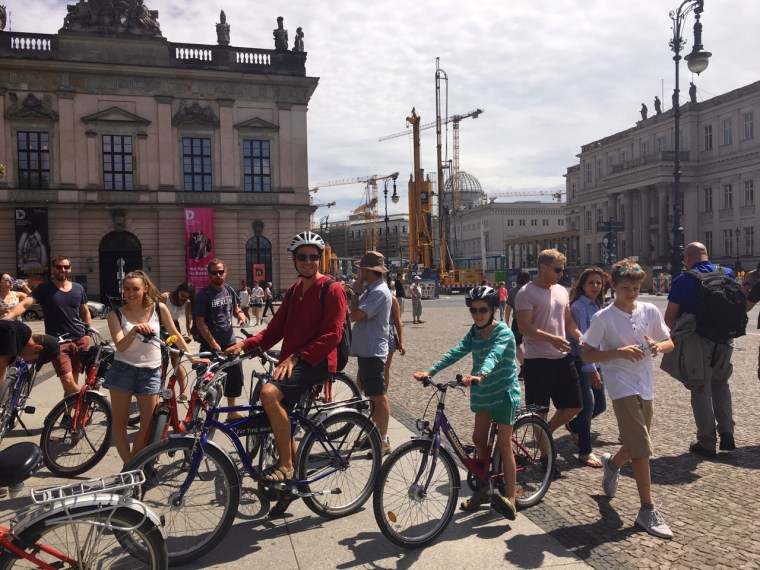
We took all this in on a ‘Fat Tire Tours – Third Reich Tour’ of Berlin. We’d highly recommend it. I love their Mission Statement, ‘Walking is Stupid’. Even if I don’t agree! It covered some pretty heavy history. Enough to totally fascinate Emma and I and enough to introduce the events of World War II to Amy and Oliver, while combining it with bike riding which is just fun no matter what you’re looking at!

IMG_2844
Bike tourists
DSC00621
Berlin’s TV tower
DSC00606
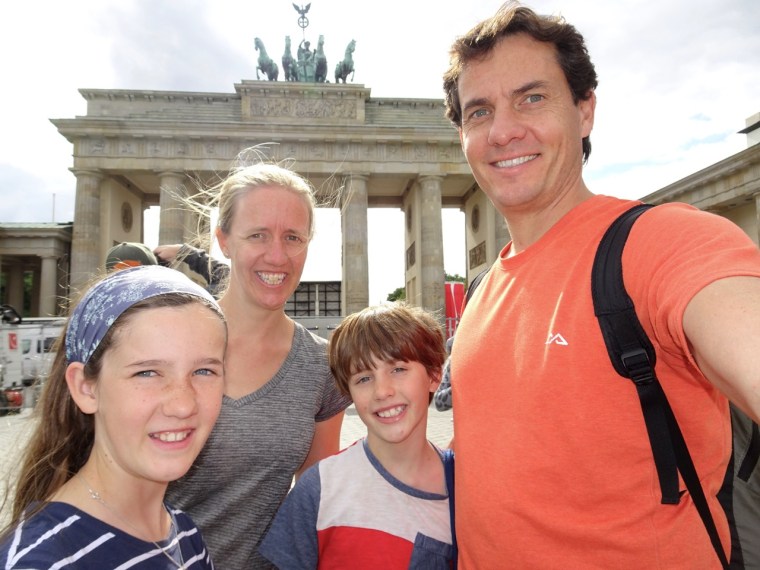
Brandenburg Gate

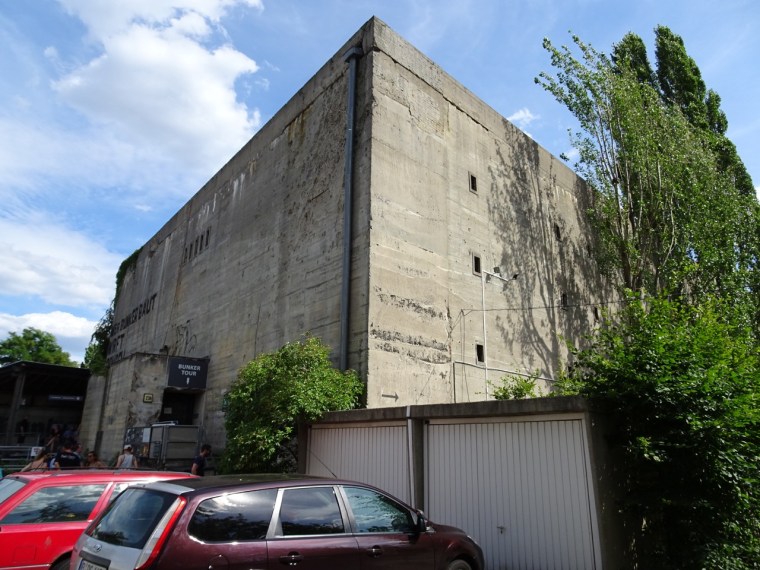
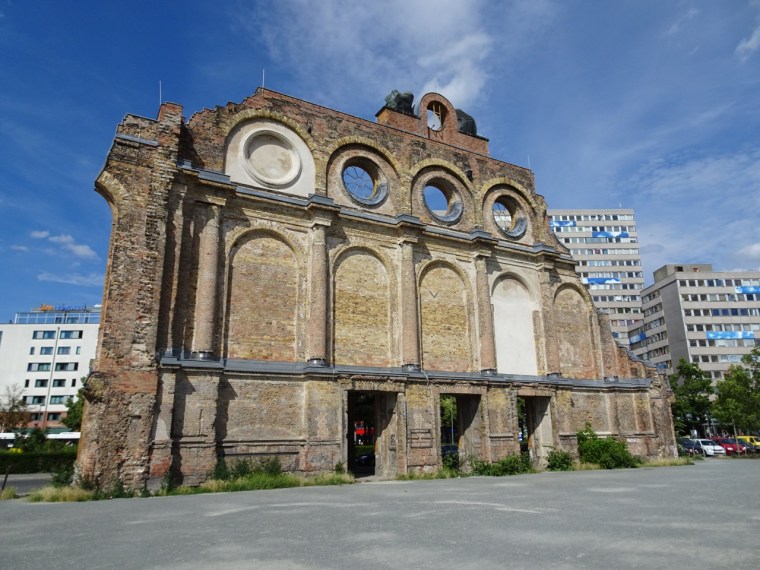
As well as passing by parts of the modern city we would never otherwise have seen, we visited the courtyard where Claus Schenk Graf Von Strausenberg was executed for his failed plot to assassinate Hitler (there’s a movie about it with Tom Cruise called Valkyrie); the still standing headquarters of the Luftwaffe (now the tax office); a pock marked concrete bomb raid shelter with walls four metres thick; the remaining wall of the World War II era Berlin central train station from which Berlin’s Jews (and others like political prisoners) were deported to their horrendous fate; and the courtyard in which the infamous Nazi book burning took place.

DSC00676
Bomb shelter – too difficult to dismantle
DSC00677
Train station entrance wall

The tour finished up at a most innocuous looking carpark. Gravelled, without gutters, unkempt edges and ordinary coppers log bollards. You’d walk right past it over and over again without thinking about it once, let alone twice. It is just plain unremarkable. What lies below however is the bunker in which Hitler and Eva Braun took their lives as the allies closed in on them in the final days of the war.

DSC00686
The carpark above Hitler’s bunker

A skip-bin sits atop the approximate location of the room below where they met their fate and a small, inconspicuous interpretive board marks the site of the bunker complex. It is history not to be celebrated just as it is not to be forgotten. There are other ways to come to terms with the past like the memorial and plaques mentioned earlier.

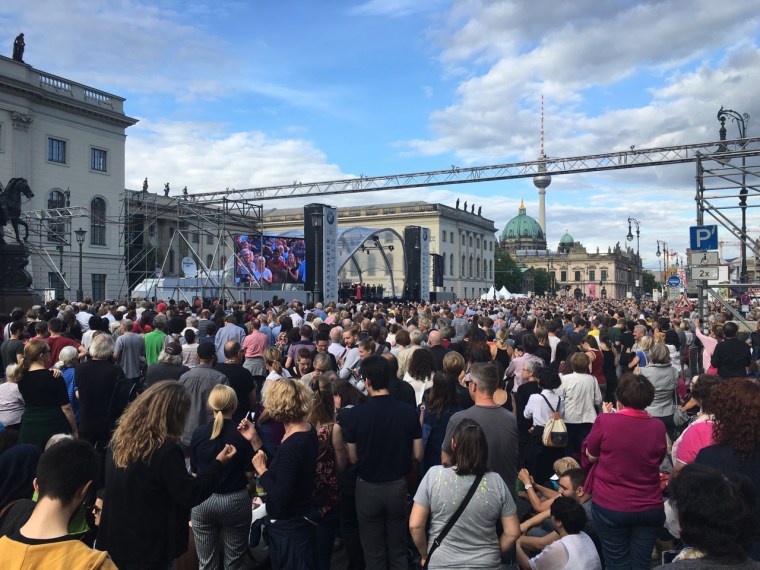
On a cheerier note, the beer in the ‘biergarten’ at lunch time was magnificent. As was the performance by the Berlin Symphony Orchestra, staged free of charge somewhere in the centre of downtown one evening. We parked ourselves on the pavement along with maybe 10,000 others and listened happily while the orchestra belted out Beethoven’s 3rd symphony, feeling very cultured all the while.

DSC00664
Enjoying the German ale
IMG_2833
Enjoying the symphony

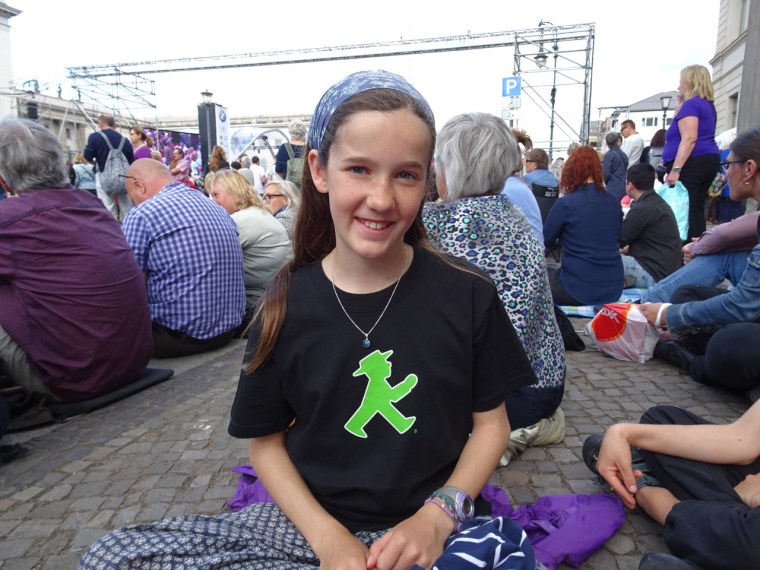
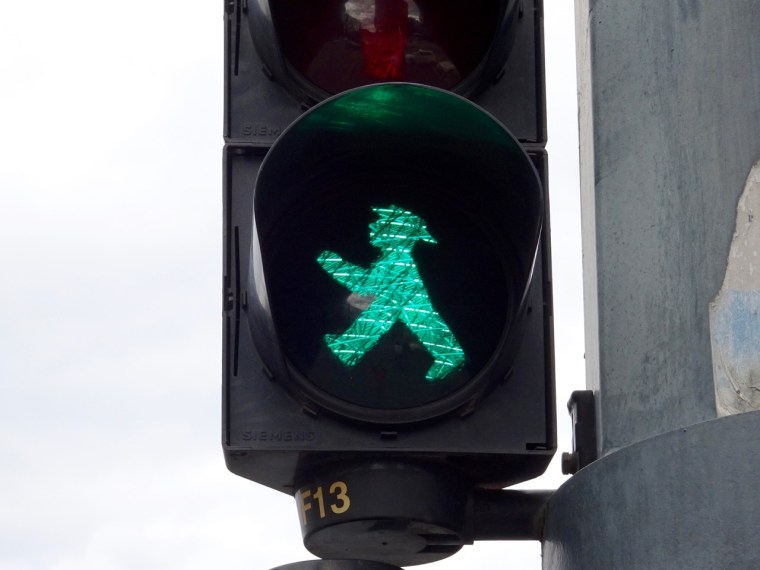
The orchestral performance was just down the road from the Berlin Amplemann shop. The Berlin Amplemann being the pedestrian traffic light symbol used by the east Berliners during the years of separation while the west adopted a much more mundane character. After re-unification the west’s figure took over the city until the more beloved, attractive and just generally better little eastern guy made a comeback. Some clever entrepreneur then went to town on merchandising and you can now buy everything from Amplemann cookie cutters to playing cards and everything in between.

DSC00599
Amplemann
DSC00613
Amplemann fan at the symphony

For years now Amy, Oliver and I have been crossing roads mimicking the pose of the local Amplemann for wherever we were. Emma usually rolls her eyes at us during these times and pretends she’s not with us. The east Berlin Amplemann is undoubtedly the best of them all and so we just had to have T-shirts. I think it’s the first souvenir I’ve purchased in six months.

Berlin is a moving city. So much history, so much of it difficult, and all recent enough to live fresh in the memory. Maybe if you are a resident the Cold War and World War II are not front of mind as they were for us during our three days. We were however told by our tour guide, now a Berlin local, that it’s not too far below the surface either. Time heals, but more time is needed.

Of course there is far more to Berlin than just the Cold War and the Nazis. It’s just that three days is not enough to take it all in, especially when you don’t leave the apartment until after lunch some days. Still, it’s nice to have something in mind for a return visit and our Berlin to do list is almost as long as the London one!


6 months done

Yesterday (7 July) it was six months since we left home. Six months on trains, planes, automobiles and living in hotels, homestays, tents and Airbnb’s.
P1030011 (1024x684)
Leaving home

I remember wondering before we left if we would get sick of travel. If living out of a suitcase would wear thin. If we would get homesick after a time. If we would tire of moving from one place to another. I worried about having enough money to complete the journey and about one or all of us getting sick. I dreaded the thought that something might happen to Amy or Oliver. I even wondered, on occasion, if the world might disappoint. That after going to all the trouble of taking time from work, packing up the house and taking Amy and Oliver out of school we would discover there is nowhere better than home.
When I read that list again, it’s a wonder we went anywhere! So how do my worries stand-up against reality? Well, as of yesterday I can honestly say that my wanderlust has increased not diminished. I would dearly love to spend more time almost everywhere we have been and I feel no compulsion to return home. Yet. Homesickness then? Nope. None. I think the same can be said for Emma, and if you have just read that then it survived her editing and must be true!
DSC09171
Tracing our path

The picture is a little greyer for Amy and Oliver. Amy misses her friends and all of our extended family, jumping at every chance to put in a Facetime or Skype call. She also recoils a little at any fanciful suggestion that one year of travel be stretched to two. Which is not to say she’s not enjoying the trip. In Amy’s perfect world I think you would all be along with us for the ride! Oliver has changed over the last six months from being a bit unsure about it all to one of travels stronger advocates. ‘Go home! Are you kidding!’. I’m sure I’ve heard him say this from time to time.

DSC06195
Amy working on a Skype call in Kathmandu airport

As to other concerns, there is no rational reason that anyone is any more likely to become ill out here than at home nor any reason why peril is more likely to present itself here than there. The last of my worries however, that the world might disappoint, was surely the most ridiculous. Talk about going out of your way to find something to worry about!

Everywhere we go presents new fascinations; historic, natural, culinary or simply in the subtle differences in the layout of a supermarket. Australia is a wonderful place. It’s a fine part of an even finer tapestry which is, as they say, altogether more than the sum of its component parts. Oh yes, and so far we are a bit under budget, which means I am now starting to relax.

Having said all of that, we are changing as we go. The edge has come off our eagerness. There is no need to rush out the door. Every time it opens the view is different and dealing with that sometimes means lingering a little longer in the hotel room each day doing ‘normal’ stuff. Time is needed to process experiences and for more mundane activities like making bookings, reading books, preparing and doing school work, writing blogs and postcards and, you know, banking.

DSC03485
Schoolwork and blogging with friends in Thailand

We are changing in other ways too. You think you know your partner and your children, but I’m not sure you really do until you live with them 24 hours a day 7 days a week for months on end. At home little irritations can be glossed over because they happen five minutes before everyone heads out the door and goes their own way for 8 hours. By the time you regroup, the matter is long forgotten, but not necessarily dealt with. On the road, little irritations can become a major rub, if they are not soothed beforehand.

DSC09358
Togetherness is 4 people in here

We each have our anxieties and personality quirks. Of our foibles, I have a propensity to worry and overanalyse, self-evident perhaps from my admission re concern that travelling the world might disappoint. I can also get overexcited about things on occasion which has a tendency to drive everyone else nuts.

Emma can be anxious and controlling when it comes to matters of our collective health and safety and has a reasonably short fuse when it comes to hijinks and silly noises. Amy is very wary of the unknown and can find the days which involving moving from one accommodation to the next somewhat stressful. Oliver has a tendency to make oddly irritating noises from time to time, a perfect match for Emma, along with a highly developed sense of justice.

There were times earlier in this trip when the mix of these lead to… tensions. Back in South East Asia I recall at times wishing that we could all be more co-operative and cohesive. Little feuds would sometimes become tiresome and unvoiced irritations gnawed around the edges. Thrashing out home-schooling arrangements was a fairly constant battle which didn’t really help. It was like nobody expected we would actually go through with it and if it was ignored hard enough it would just go away.

We’ve moved on for the most part. After six months on the road I think it would be fair to say each of us has developed a much healthier respect for the others ‘buttons’ and is inclined to push upon them less often. Oliver is a case in point with a notable transition from agitator to happiness enforcer. ‘No, no, no grumpies’ he would often say with a waggle of his finger whenever a sniff of tension was aired.

School work too, is no longer the battle it was earlier on. The constant debates about journal writing which dogged our early months on the road have largely gone. It’s still not Amy or Oliver’s favourite activity, but they have come to accept it has to be done. Of equal, if not greater value, than bookwork however are the many discussions we embark upon into the history and happenings of the regions through which we travel.

IMG_1052
Amy’s schoolwork 

It is a marvellous thing to be there to help fill in some of the blanks when Amy and Oliver embark upon a line of genuine, curious questioning about what we’ve seen or what’s going on or why things are the way they are where we are… or were… These discussions are not branded ‘school work’, so the conversations can go on for quite some time with focus and thought. We have covered various aspects of global economics, politics, history, geology, geography, ecology, languages and relative merits of various forms of societal organisation including democracy, monarchy, communism, capitalism, socialism and recently fascism as well.

There is no doubt in my mind that Amy and Oliver are developing an appreciation for people, places, cultures, religions and history that would be impossible to replicate from home. So, for that matter are Emma and I. I sometimes feel like we’re on a field trip for world history, with each place we visit filling in detail or blanks from fragmented pieces of information gleaned over the years from who knows where.

DSC08949
We filled in some gaps in our Roman history

To the extent this is the case for Amy and Oliver, in their own way, book work becomes the stuff of how to translate thoughts and understandings to paper, and crunch the numbers for your pocket money given different exchange rates and work out if that gelato represents anything approaching ‘value for money’. Learning about the world happens by osmosis, in sights and sounds, through books shared and conversations that seem to go on for hours when it really is time to go to bed.

IMG_2662
Buying cucumbers at a Danish market

It is interesting too, standing apart from the business and preoccupations of the people who dwell in the places we visit. I recognise myself in the faces of tired looking commuters on metro trains across Europe. Bored, but resigned to their daily fate. I wonder if they know how much of their experience they share with others the world over, or whether they are lost in their own internal wrangling. I wonder, if they wonder why they do it? I wonder what are they working for and what’s going on in their lives?

In most places we have freedom by virtue of the countries we live in, but how many people actually exercise that freedom and how many unconsciously follow the paths and norms handed out by tradition and social imperatives? How many ride the metro each day because an alternative is hidden from view? Then I wonder how much of what I do and have done is also shaped by tradition and social imperatives and how much a matter of conscious choice? I rather suspect more belongs in the category of the former rather than the latter.

When we first started travelling for long periods in 2011, I felt guilty. I felt like taking time out was shirking my responsibilities and, to a degree, that travel was the domain of the retired. Responsibility to whom was not clear nor consciously questioned. We had saved enough money to support ourselves without being a burden on anyone else, at least for a time, so what responsibility was not attended to? And who is to say that you have to be retired to see the world? Where did the notion that work is the absolute imperative come from and how is it perpetuated? These things I ponder.

And ponder we will for a little longer yet. We’ve seen so much and done so much already and we’ve only visited fourteen countries. Aren’t there more than 200? I wonder what is coming next?