Omens on the Amalfi

‘I’m not sure if I want more gelato. Someone fetch me a cat! I’ll spill its guts and check its entrails for omens’. I called this a little more loudly than I intended as we walked through the little Italian village of Erchie to our apartment on the Amalfi coast. There was a cat disappearing through the door of the little store where we occasionally bought supplies. I hoped the owners weren’t listening as I looked for a beast for the slaughter.

We had just returned from a drive exploring the towns of Amalfi, Positano and Ravello. Emma had been reading us all a book about the ancient Romans when we got stuck in traffic, something of a problem in this part of the world.

The Romans of old were a superstitious Gods fearing lot, a bit like the ancient Greeks. They concerned themselves deeply with what mood the Gods were in, particularly before making major decisions. Like whether to go to war. Or in our case whether or not to have gelato on a Wednesday afternoon. The mood of the Gods could be discerned through omens which came in many forms, including the entrails of slaughtered animals. I lacked the services of a professional omen reader to interpret the entrails of my cat but figured I could work it out. How hard could it be?

Quite hard apparently, as the people of Pompeii discovered in 79 AD. Any reliable omen system surely should have seen the catastrophic eruption of Mount Vesuvius coming. You know the story. It was a lovely morning and the good Roman citizens of Pompeii were going about their business when Mount Vesuvius blew its stack in a rather impressive way, ejecting molten rock and ash 18 kilometres into the atmosphere.

It was an explosion beyond superlatives. The people of Pompeii looked up, saw a column of smoke and ash stretching kilometres into the air and then went back to their business because they had no notion what a volcano was. You see now the flaw in the omen system. Someone missed a mighty big mood swing on old Zeus’s behalf and shortly they were going to pay the price. Within 24 hours the whole city had been buried beneath 7 metres of pumice, ash and other pyroclastic goodness, which was bad for them but good for us because it was like the whole town was wrapped in glad wrap and put in the fridge until we came to take a look.

We made a decision to visit on the first Sunday of the month when entry is free. Free entry being a good thing when staying on the Amalfi coast in Italy where everything else is the opposite of free. We got there early, half an hour before the gates opened, in the hope of avoiding the crowds. Instead we arrived just in time to line up behind countless busloads of people from a massive cruise liner that had pulled into Salerno that morning. Guess we should have consulted a chicken[1] before picking our day.

DSC08781
Waiting with a few of our friends at Pompeii

So many people visited Pompeii that morning we later learned that they shut the gate at 11.30 and wouldn’t let anyone else in until 2.30 because there was no room. Which is saying something because Pompeii was once home to 10,000 people. The weight of visitors took a little bit of an edge off the visit but every now and then we found a quiet spot on a side street and soaked in the atmosphere. We sat down to lunch in one such place, sitting on a tall gutter at the corner of a cobbled Roman street, well preserved buildings providing some shade.

DSC08832
Lunch amongst the remains of Pompeii

As we munched corn crackers, cheese and tomatoes it occurred to me that 2000 years ago, in this very spot, on these very stones, in this very place, all hell broke loose as the reality of the volcanic eruption literally rained down from on high. Rocks the size of footballs smashed buildings and pumice and ash quickly buried the lot. My imagination ran away with me and I could just see terrified people hurrying up and down the street looking for shelter with nowhere to hide.

DSC08795
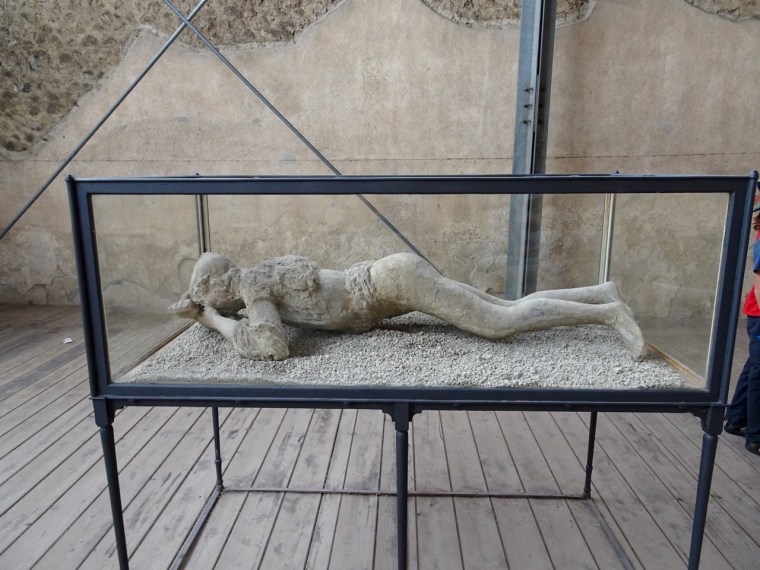
Tragic casts made from the rock remains showed how people died

And then a lady speaking in foreign tongues and waving a purple crocheted dinosaur atop a stick lead a tour group past and the spell was broken. At least for a while. We found another spot where the view up another side street framed the conical shape of Mt Vesuvius in the background, only a matter of kilometres away. I had a moment then too. I could just imagine the view all those years ago when the eruption was in full flight.

DSC08855
Mt Vesuvius towering over Pompeii

It was a little scary. Vesuvius is still active. The most active volcano in Europe and it will erupt again, only now it is surrounded by a population of over 3 million rather than the 10,000 at Pompeii and Herculaneum back in the day. The hope is that the modern day omen readers, scientists with seismographs, can provide 3 to 4 weeks warning before it happens.

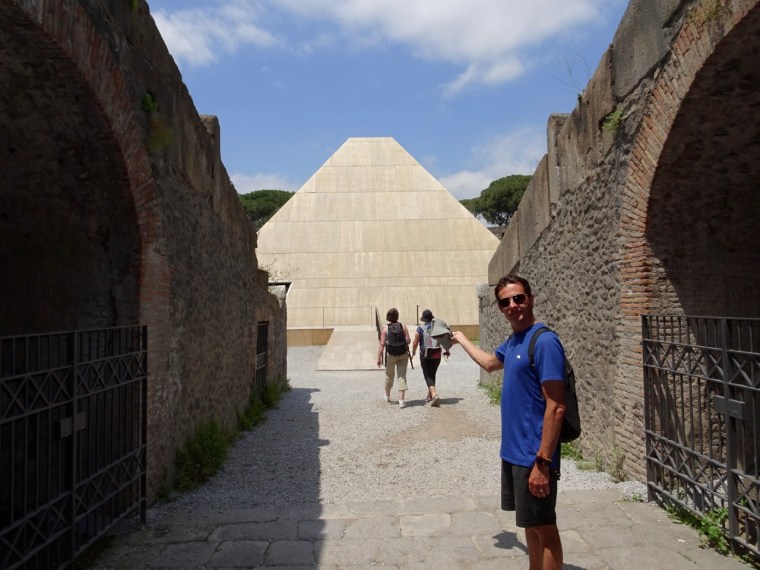
My other favourite spot was the very intact gladiator amphitheatre. We walked out onto the arena through the very tunnel where so many walked to glory or an horrendous death and stood in the very spots where the vicious contests unfurled. My imagination ran away with me again. It was enthralling and would have been even more so if the Italian authorities hadn’t deemed it appropriate to build a whopping great wooden pyramid shaped museum in the middle of the arena. ‘Why there?’ I asked myself, but there was no reply.

DSC08869
Why?
DSC08857
Where the gladiators battled

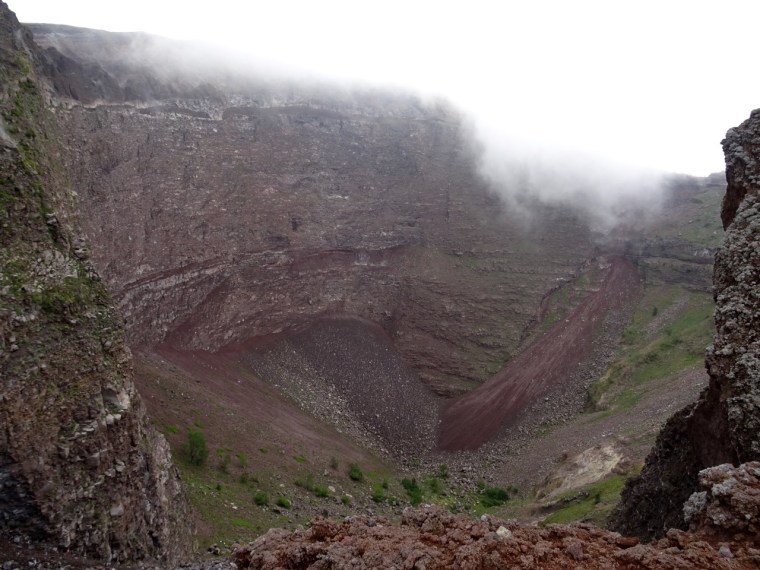
Italy is a marvellous country, but methinks they could do with some assistance when it comes to presenting their amazing historical sites. We paid forty euros to visit Mt Vesuvius, which was also amazing with stunning views of Naples, the Mediterranean and deep into the plugged up Caldera of the volcano. But for forty euros ($60 AUD) there’s not so much as a water closet for the bazillion visitors that come every day. Instead you pay another euro to stand in a queue to use one of six port-a-loos!

DSC08462
On the way up Mt Vesuvius
DSC08484
Looking in the top – there were a few areas where ‘steam’ was coming out
DSC08472
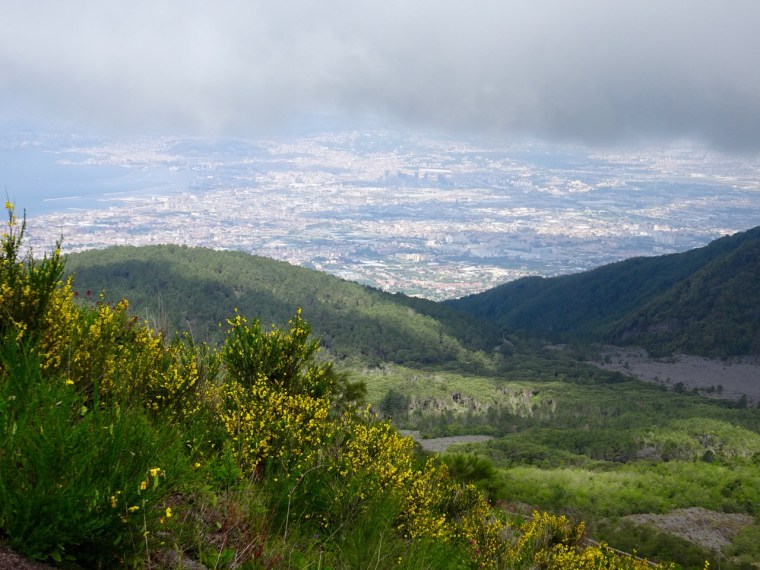
The huge city of Naples below Mt Vesuvius, it would be a big evacuation

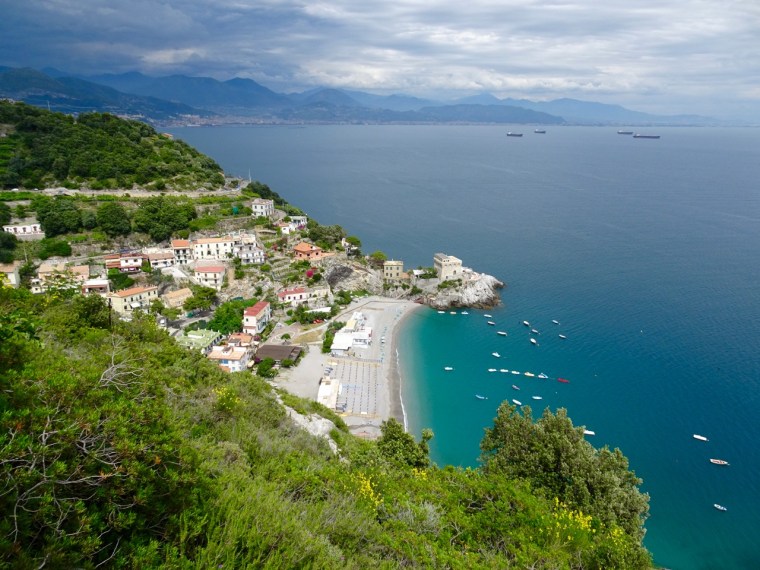
I don’t get it, but that sounded very much like a grumpy old man rant. Let’s move on. Think of somewhere peaceful… I know. Erchie, our home on the Amalfi Coast. We loved Erchie, a tiny little Italian village nestled on a stony beach between soaring craggy hills right on the Mediterranean. The water was crystal clear and beautiful shades of blue and green.

DSC08432
Erchie from above
DSC08347
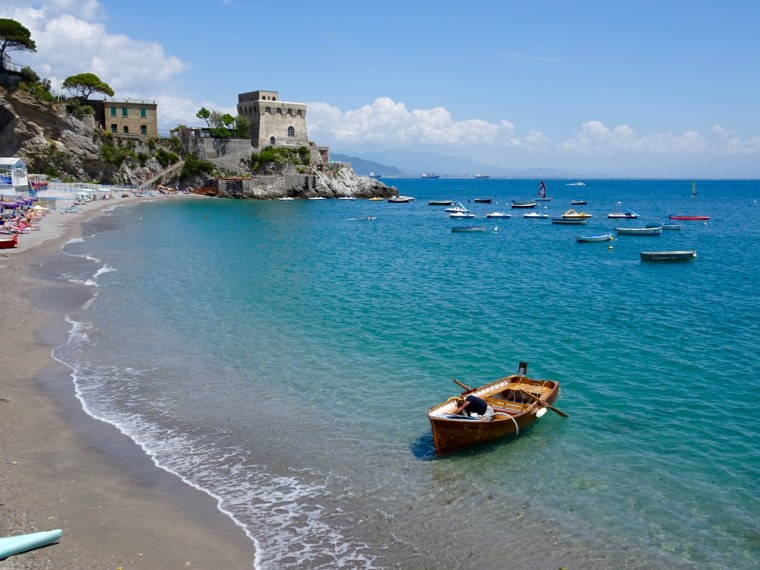
The beach

Our apartment was just 30 metres from the beach at the western end of which was an imposing ‘quadrangular bastion of medieval origin, built by Charles I of Anjou in 1278’. In the little bay a dozen or more colourfully painted wooden row boats bobbed up and down their moorings from the wake of ferries and cargo ships which plied the waters further offshore.

DSC08879
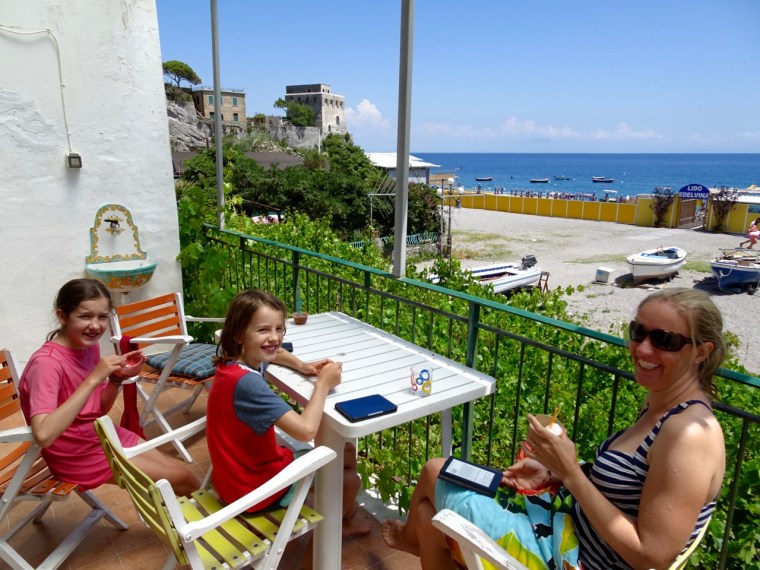
Enjoying gelato and books on the balcony after a swim!

The Amalfi Coast is one of the busiest in Europe, but happily for us the tourist busses don’t call into to Erchie. It’s an Italian secret and a very atmospheric and relaxing place to spend some time. It was just so… Italian, quiet during the week and busy on the weekends as folk from Naples came down to relax under the umbrellas of the privately owned beach front or sit on the pebbled shore of the public walkways which found a little room in between them. There is much to be said for Australia’s public access to beaches.

DSC08345
10 euros to sit in here!

On about five of our ten days we went absolutely nowhere. We had breakfast on our little balcony overlooking the water, made our way down to the beach where Amy and Oliver paddled around on the windsurfer board that came with the apartment and read books in the sun. There were tiny grocery stores and even a gelataria a short walk away when we needed to top up our supplies or indulge our senses. It was very pleasant, although the dodgy Wi-Fi caused me some anxiety. Wi-Fi, I need Wi-Fi!

DSC08583
Fun and games


On the other days we explored the broader Amalfi coast which is every bit as fabulous as its reputation suggests. It is just stunning. How else can I say it? It’s stunning. Quite one of the prettiest stretches of real estate I’ve seen. The coast jumps abruptly up from the sea rising to over a kilometre in height and its steep craggy cliffy hills are laden with terraced groves of lemon trees, interspersed with the remnants of what I presume to be native vegetation of shrubbery and umbrella pines.

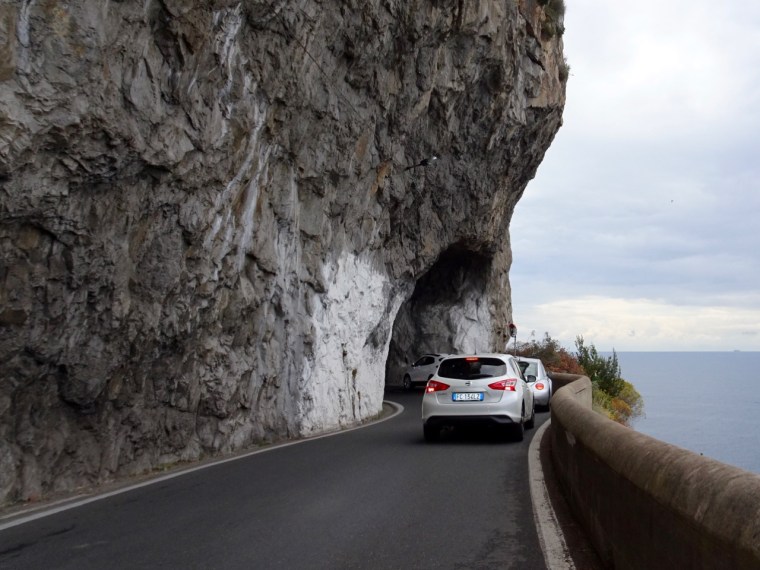
Towns and villages cling to the headlands and ravines that sit amongst it all, connected by a thin ribbon of road that has no right to exist in this vertical landscape. The road contours its way around the cliffs suspended by pillars and posts and ducking through tunnels through the mountainside often to emerge straight on to bridges over high ravines.

DSC08521
Impossible road and tunnels
DSC08681
The thin ribbon of road

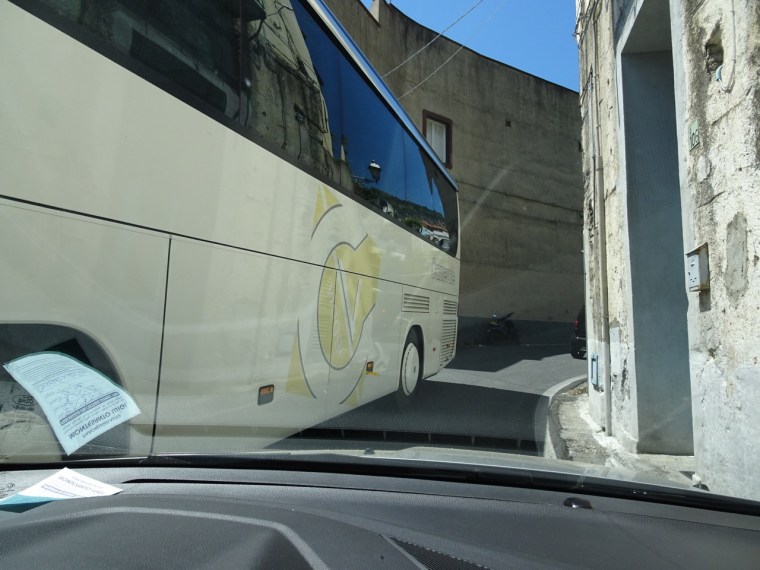
The whole place is quite spectacular, and totally impractical. There is just not enough land to go around, with the road itself barely wide enough to fit two passing vehicles. That however doesn’t deter countless tourist coaches or local busses which clog the bitumen strip. A thirty kilometre drive from Erchie to Positano can take hours and more than a few nervous moments praying not to be tied up on the travel insurance roundabout due to damage to the rental car caused by an accident in which you are stationary!

DSC08388
We put our mirrors in and wished we had made offerings to the Gods
DSC08395
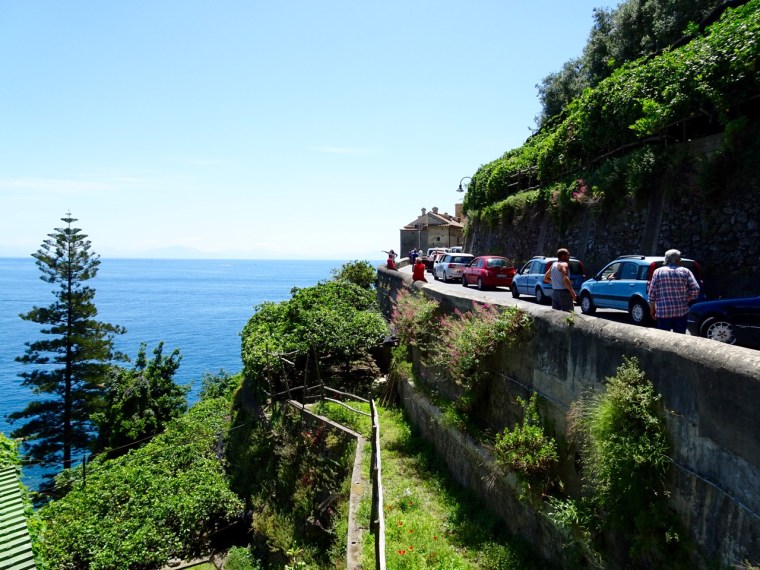
Not such a bad view when you’re stuck in traffic


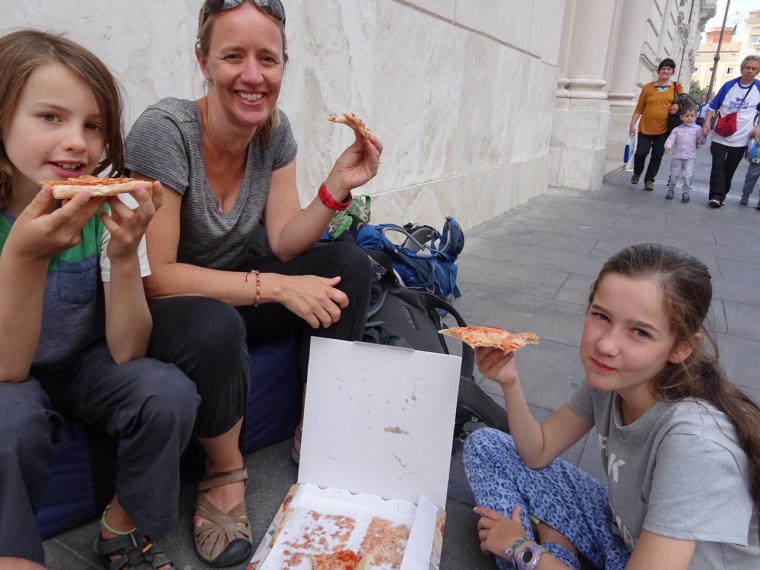
Getting out of the car to look around is a whole other challenge. If you can find a park, then you’ll need a second mortgage to put your car in it for any length of time and so find yourself racing through town in search of overpriced pizza which you wolf down before racing back to your car to avoid being booked for staying too long by the parking inspector you saw circling like a shark when you arrived. That about sums up our hour in the gorgeous town of Ravello one afternoon!

DSC08549
Walls of flowers

There is however a more pleasant alternative. High above the main Amalfi strip is the little town of Bomerano where relatively few people venture and the parking is free. Bomerano is also the start of the ‘Path of the Gods’, a 7 kilometre trail with breathtaking views over the Amalfi coast, no need to rush and lungful’s of honey suckle and lemon scented air with every step you take. By what magic Emma discerns the internet omens which lead us to such places I will never know but I love her for it!

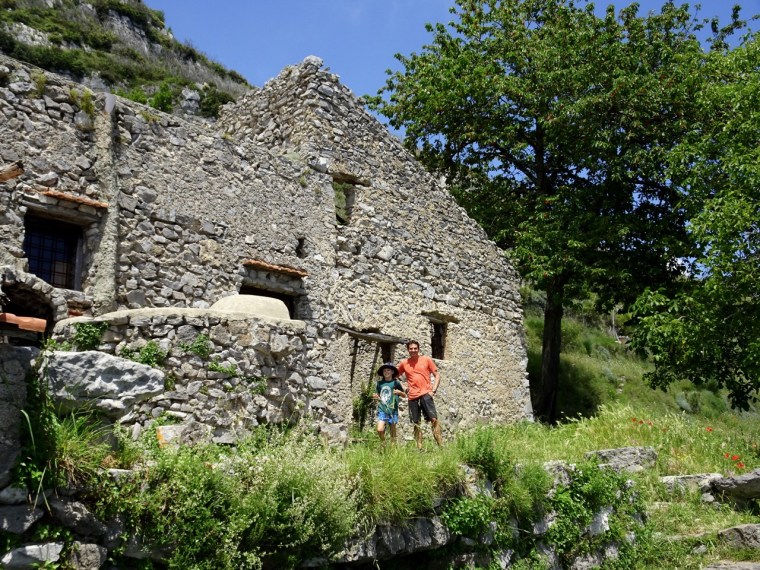
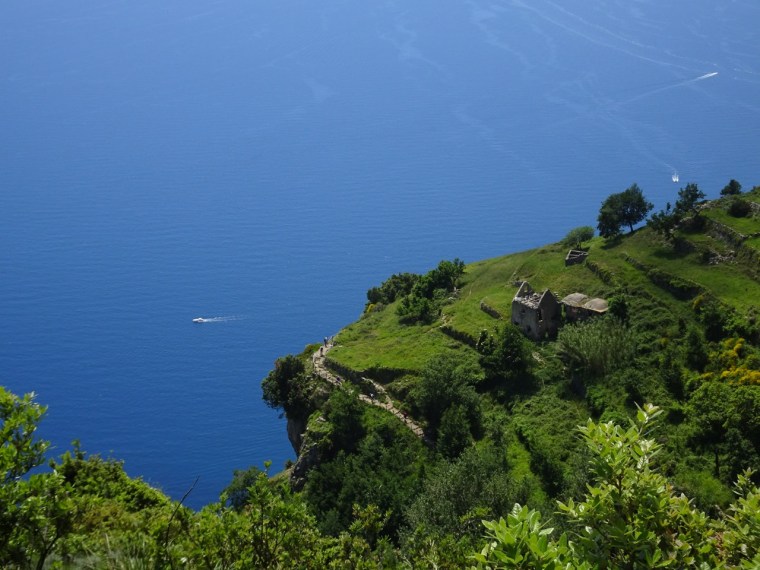
We spent 4 hours, maybe a bit more, strolling 12 kilometres from Bomerano to Nocelle and back. It was quite the highlight of our time, gazing down upon the beautiful coast littered with magnificent motor cruisers and yachts, across wildflower strewn meadows at the foot of cliffs and tumble down little farming houses and up the coast across Positano towards the island of Capri.

DSC08753
Path of the Gods
DSC08758
The poppies were beautiful
DSC08756
Greg is considering buying this for a Grand Designs episode
DSC08748
See the path down there? Amazing!
DSC08619
Wildflowers everywhere
DSC08730
The crew with Positano behind
DSC08634
Spectacular scenery


For those that are interested, I never did catch that cat and so I had to make up my own mind whether the Gods would smile upon a late afternoon gelato. I think however they must have been well pleased because the gelato was smooth and creamy and really oh so good.

[1] To consult a chicken, place food before it. If it eats, then the Gods are pleased and you should do whatever you were going to do (chickens were generally consulted before going to war). If it doesn’t eat then woe betide, you should go back to bed. A Roman sea commander once consulted a chicken without an appetite before heading into battle and went into battle anyway. He got trounced. Which just goes to show you should always trust chickens.

Non ancient Greece

Greece wasn’t all about the ancients. I was excited just to be there. ‘Look’, I whispered in Amy and Oliver’s ear during our first supermarket outing. ‘Real Greek people!’. Amy and Oliver sighed, pushed me away and told me to stop being silly, but I’m not sure they really meant it so I also pointed out the Greek wine, the Greek Olives, and well, anything I laid eyes on which I figured was also Greek by virtue of being in Greece.

The supermarket was a five-minute walk from our apartment, the first we’d booked through Airbnb. It was on the tenth floor of a building which overlooked the hill where the marble for the Parthenon was quarried. It was also just a short walk from the metro which delivered us downtown each day.

Amy was nervous about catching the metro to begin with. It made me think how all of us find anything new uncertain to begin with. She didn’t know how the metro worked, how we would know which line to catch and how we would know when to get off. How could she? So she hung close and asked many questions. After three rides however, metro travel had become the highlight of her day. With the possible exception of Greek food, which also quickly became a hit.

Gyros, filled with tzatziki, tomato, lettuce and chips, became our lunch of choice each day with Greek salad Amy and Oliver’s favourite dinner. They particularly loved the olives. ‘It’s going to be hard to go back to Australian olives after this’ Oliver told me. Yep we’re breeding little foodies.

IMG_1993
Our lunch regular – surely 2 weeks worth won’t kill us

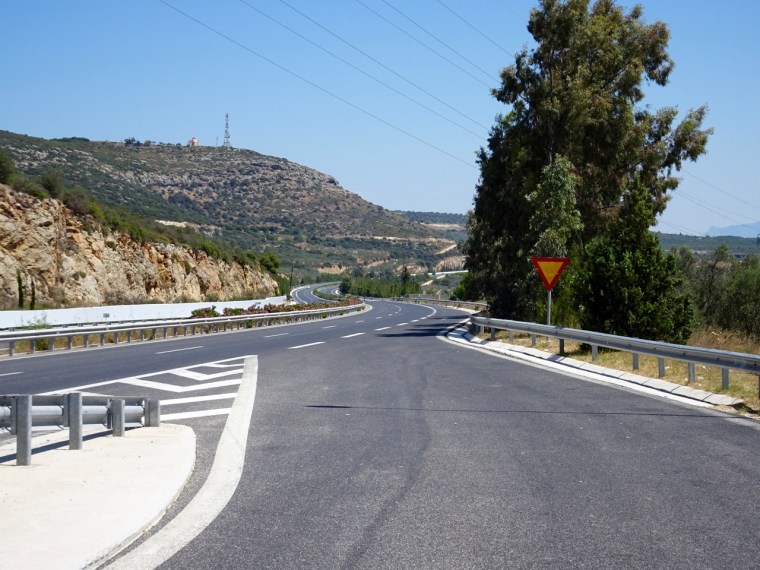
We had a rental car dropped off to us when we were done with Athens and hit the open road. Which really was open. I couldn’t help wonder where everybody was. Magnificent toll roads wend their way across Greece and from our limited observation hardly anyone uses them. The 300 kilometre drive we took from Olympia back to Athens included 6 toll gates, at an average of 50 km apart, and a total cost the equivalent of $30 Aussie dollars. Maybe that’s why the roads are empty.

DSC07965
Not a car in sight on the toll roads
IMG_1997
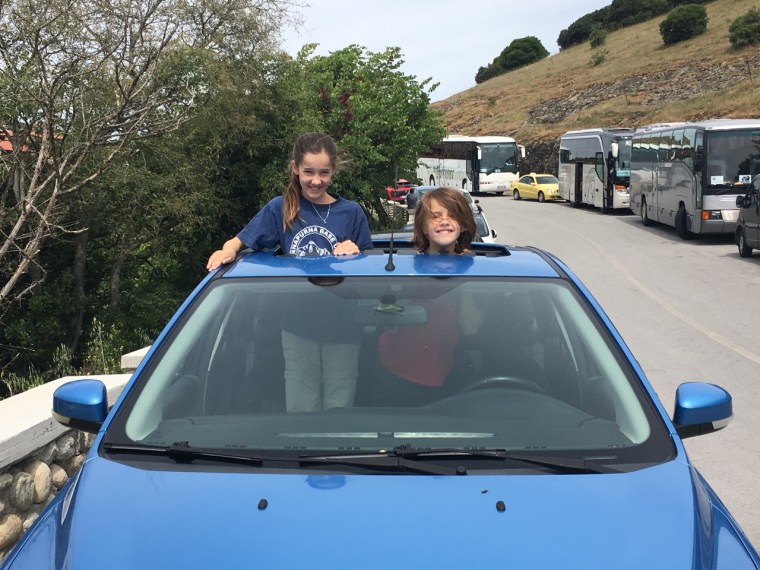
Woohoo a rental car with a sun roof!

That however was nothing compared to the bridge (the Rion Antirion) we crossed coming down the west coast. It is a grand affair to be sure, quite one of the more impressive looking spans of road I’ve seen so we anticipated a toll would be associated. I handed over a 5 euro note to the lady at the toll booth. I thought the sign said 3.2 euro so I anticipated my fiver should cover it, but she glared at me angrily clearly thinking I was making some bad joke. I soon realised my subconscious had blotted out the one in front of the three.

Thirteen euros plus change to drive across a bridge! I still haven’t recovered from the shock. Neither have the Greeks, because other than us, there was no-one on the bridge. Can you blame them? The Greeks must all use the car ferry instead, which we would have too if we knew it were an option.

IMG_2022
After the shock we remembered to stop for a photo of the AU$20 bridge

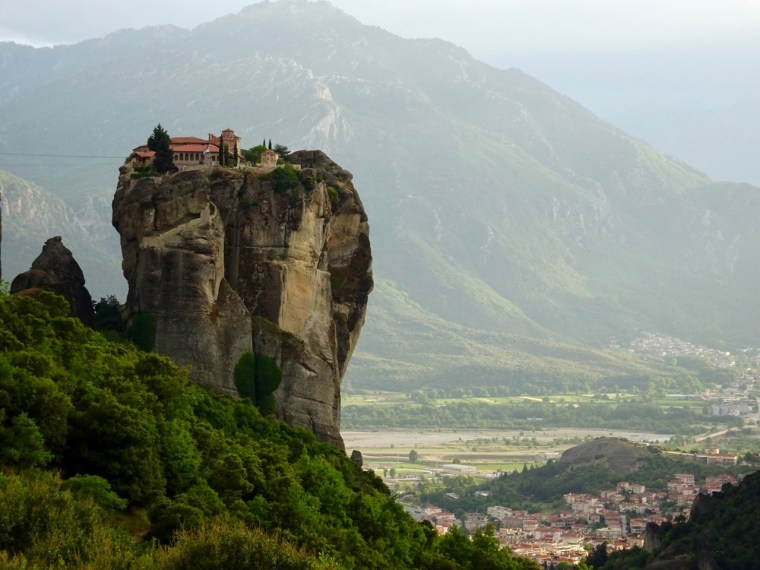
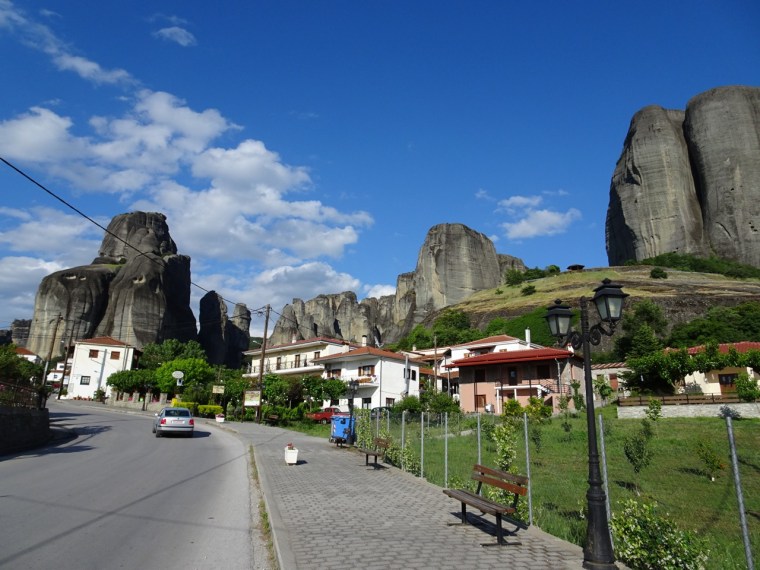
All these tolls took us to Meteora, a place I first saw many years ago on a screensaver with a beautiful picture of a monastery perched precariously on the summit of a towering rocky plinth. Back then I had no idea it was in Greece, but I loved the picture. Reality was as good if not better than the screensaver.

DSC07709
Almost exactly like the screensaver

There used to be 24 monasteries perched on the rocky crags of Meteora. Today there are only six. They were built back in the 14th Century when the Byzantine Empire and the Turks were slugging it out for supremacy in this part of the world and the monks needed somewhere to hide lest they be caught in the cross fire. Just how they first climbed these towers before hauling up the makings of their homes I never did find out. Though I suppose desperate times call for desperate measures so the monks quickly took up rock climbing until one bloke could let down rope.

Once they were up and had constructed their homes on high, removable ladders, ropes and pulleys were used to climb up and down and keep everyone else out. A story goes that when curious visitors asked how frequently the ropes were replaced, the monks’ stock reply was ‘when the Lord lets them break’. I wouldn’t want to be the monk on the fraying rope who accidentally missed yesterday’s prayers.

DSC07785
A replica folding ladder

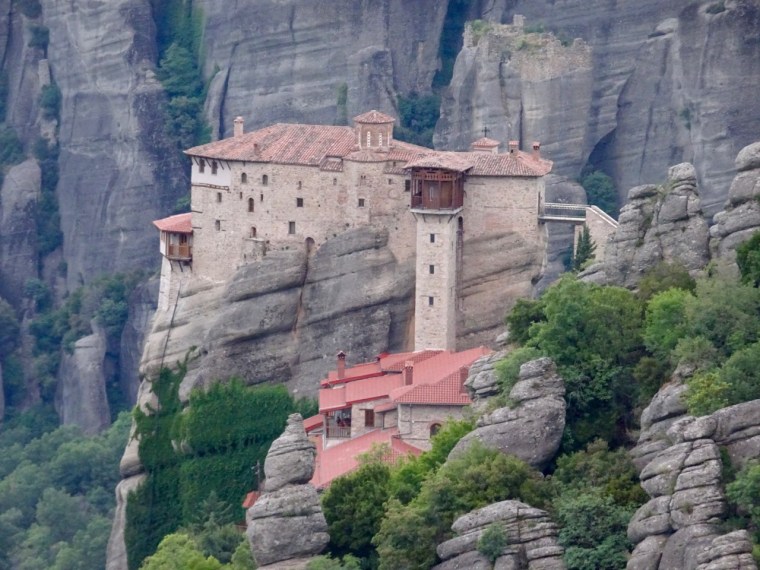
Moni Agias Varvaras Rousanou was my favourite monastery. In fact, I could have lived there very happily if it didn’t require me to become a Greek Orthodox nun. This monastery had many of the ingredients I require in a house. Stunning views from a lofty elevated position, fun walkways and bridges making a dramatic entrance and a beautiful walk through a forest to reach the front door. That’s right I’ll settle for nothing less than a UNESCO world heritage listed property!
DSC07715
Greg’s favourite – the stairs are a modern day addition
DSC07731
Greg’s favourite from a different angle
DSC07759
Greg’s favourite from another angle!
DSC07823
Greg’s second favourite monastery

These days the monasteries make their money by charging folk like us 3 euros each to take a look around their lovely homes. We obliged them twice but I think I preferred the view from the outside. The Greek Orthodox artwork that adorns the interior (no photos allowed) is something of a downer, portraying some of the most horrific scenes you could imagine and a few you couldn’t.

Men hung by their ankles being flayed alive, crucified, having their heads crushed by large stone hammers, decapitation after decapitation and so many more imaginative and horrible ways to die covered a good half of the chapel walls and ceilings. It made me shiver. I don’t understand what purpose it serves either despite 9 years at a Catholic boy’s school.

Apparently the frescoes ‘…mark a key stage in the development of post-Byzantine painting’. Now there’s a universe of knowledge I know nothing about. It is somewhat less than cheery and not a place I cared to linger – though I found it hard to tear myself away. I guess I don’t really have what it takes to be a nun, or even a monk for that matter.

The monasteries do a roaring trade. Bus loads traipse through each day and it is clear that the monks and nuns are doing very well out of it. These monasteries may have been built a long time ago, but there doesn’t appear to be anything old about them or any expense spared in their upkeep and expansion. I couldn’t help but wonder if there wasn’t a more charitable use for the proceeds. I feel however that I am now in danger of making some comment I’ll later regret, so here’s me putting a sock in it.

The thing that surprised me most about Meteora was that the Monasteries made an already impressive natural environment even more impressive. It is unusual that a man-made structure should work to enhance a natural scene, but the rocky crags of Meteora are undoubtedly all the more wonderful for the buildings perched atop them.

DSC07668
Our base for monastery exploration – Kastraki
IMG_1430
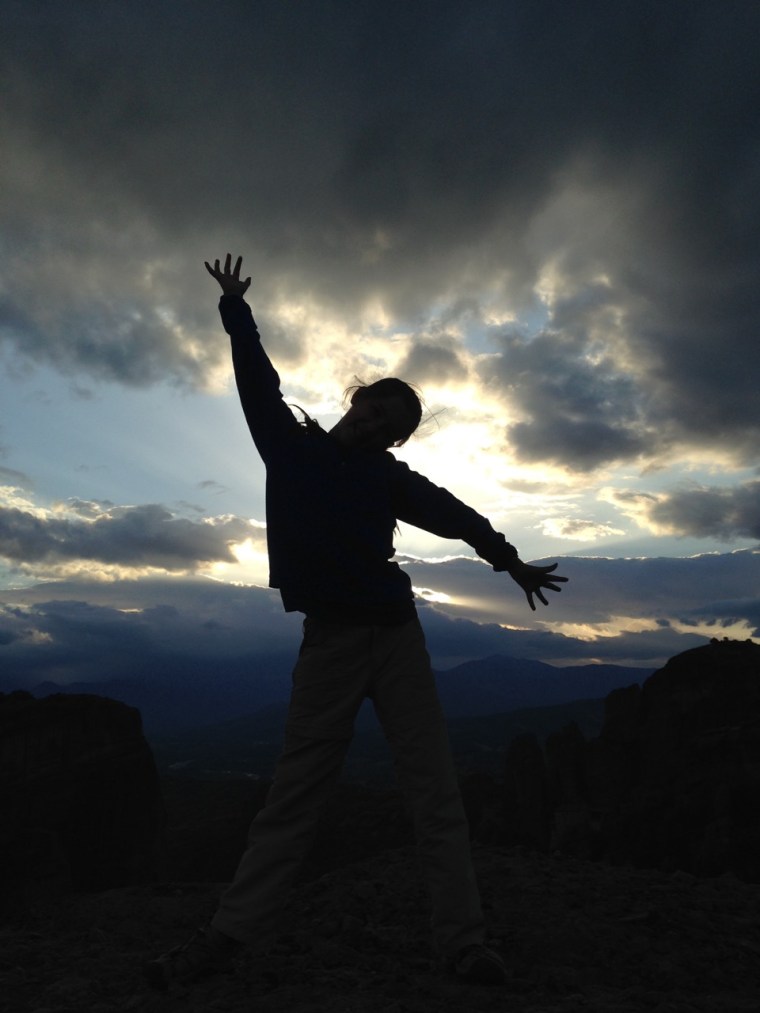
Amy having fun at sunset monastery viewings

No visit to Greece is complete without a visit to the Greek Islands and for some time we were deeply disturbed (ok that may be an overstatement) about how to decide which Island to visit. As ever, each decision to visit one place rules out ten other options. In the end we decided to visit Santorini, probably the most famous island of them all, because if we didn’t I’d get home and still being wondering about it. There was a risk however that it wouldn’t live up to the hype.

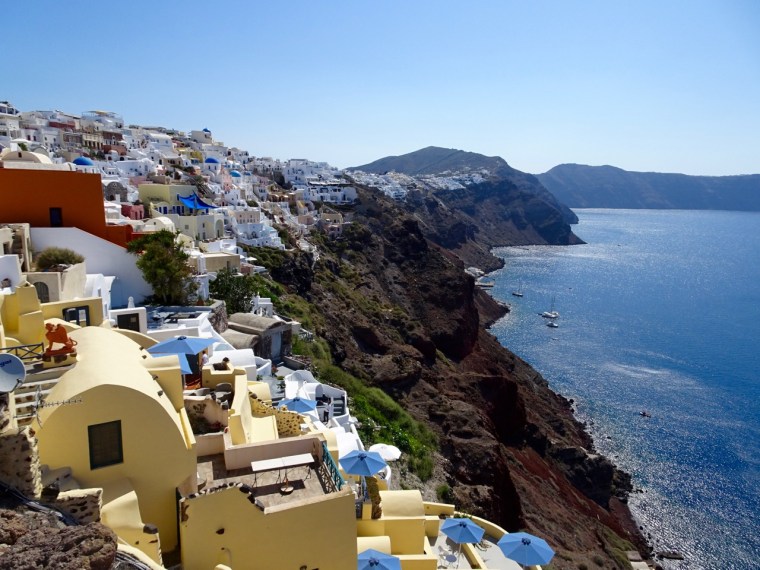
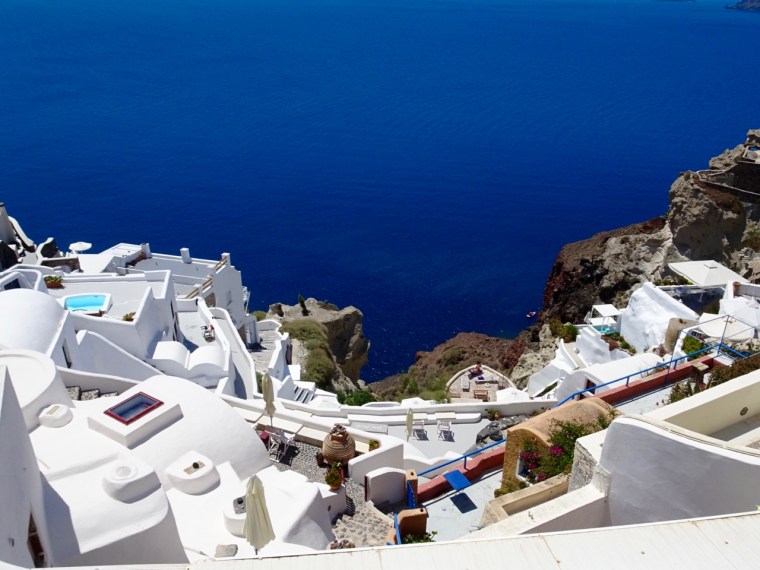
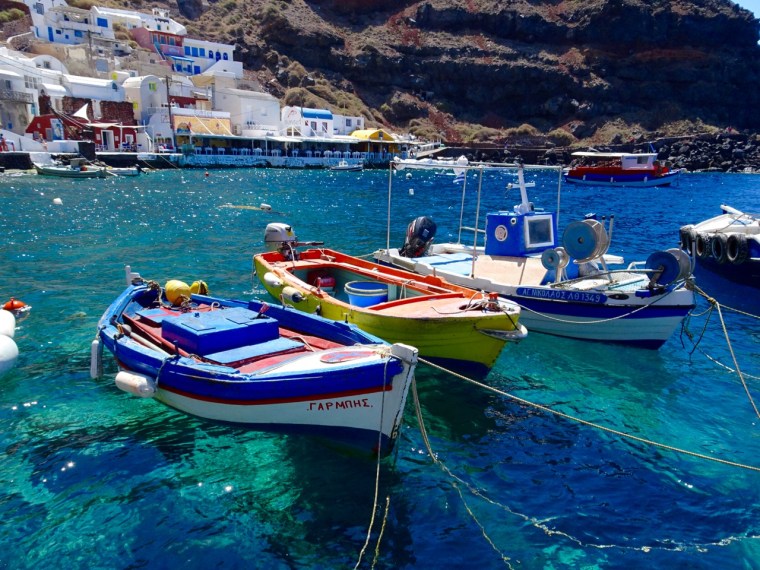
We needn’t have been concerned. Well I needn’t have, such things don’t bother Emma. It’s a skill she possesses which I lack. Santorini is the remnant of a very large volcano which last blew its stack in a serious way in 1645 BC. Perched atop the rim of the caldera overlooking the very blue Mediterranean are the towns of Fira, Fira Stefani and Oia. The caldera is special, but it’s the tangled mass of white walled laneways, buildings, walkways, bridges, overpasses, underpasses, terraces and shimmering swimming pools which make it spectacular.

DSC08142
Oia
DSC08145
Looking back from Oia
DSC08212
Beautiful colours
DSC08125
We had to go out each night to watch the sun set
DSC08052
The wind was cold some evenings

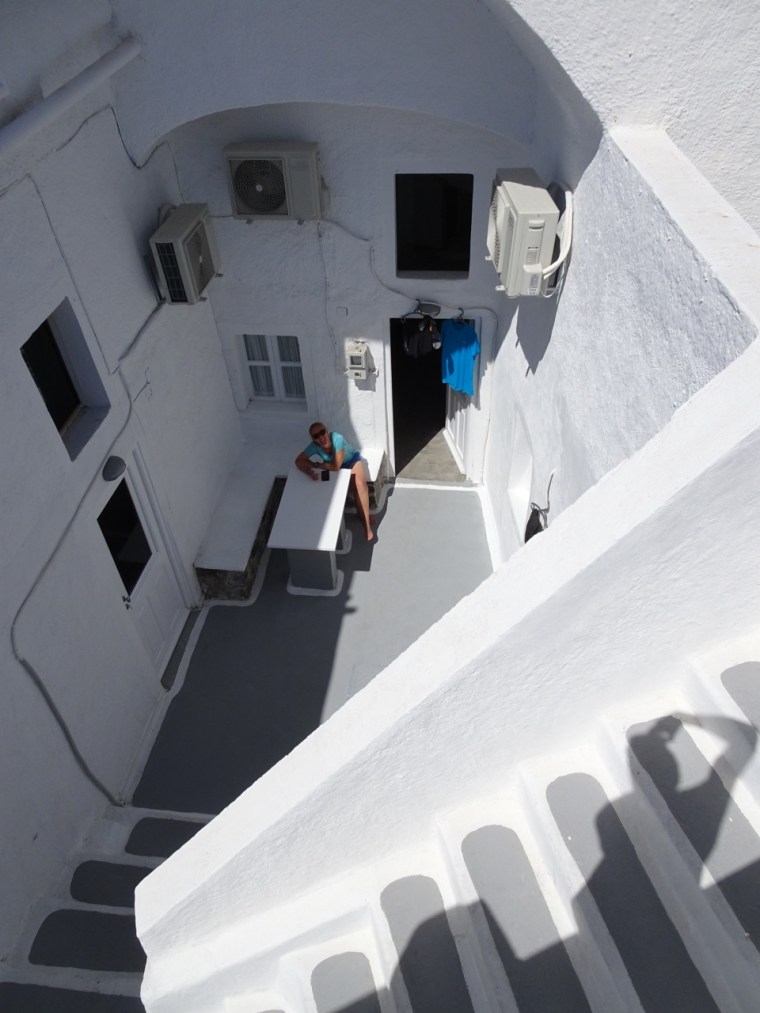
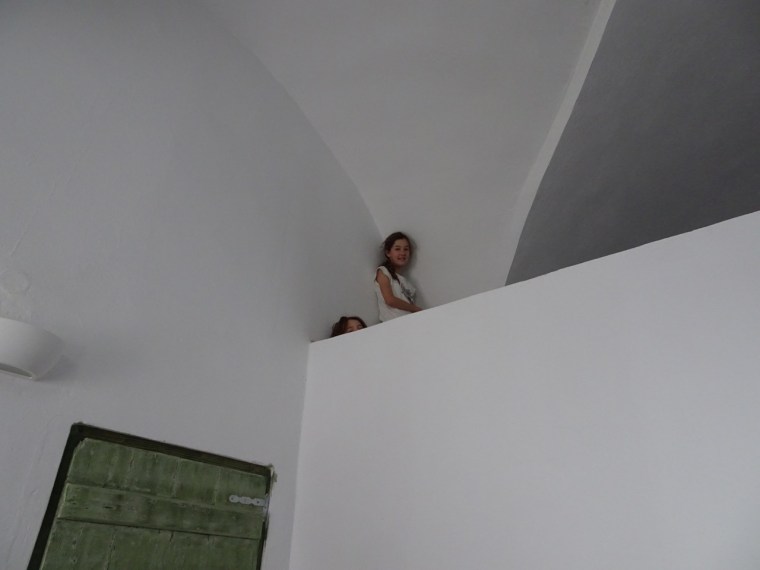
You couldn’t plan it and the randomness is a sight to behold. It’s just so… fun. And the brilliant white finish contrasts so beautifully with the deep blue of the Mediterranean and the splashes of colour added by potted plants, vines and flowers. We stayed in our own white walled apartment which was also architecturally fun, without a single straight line anywhere to be seen. It felt more like a cave and now I want one. Makes our house seem so boring!

DSC08218
The courtyard of our apartment
DSC08117
Home cooking – essential with crazy eating out prices
DSC07998
The solid shelving made for good play areas

Corrado, our host, reminded me of Gerard Depardieu being as he was of Italian descent. He came to Santorini for a weekend eight years ago, went home and sold his finance business and has been here ever since. Now there’s an idea…

Life on the water far below mostly included the coming and going of cruise ship after cruise ship, all of which pulled in for less than a day to disgorge their passengers in the morning before soaking them up again in the afternoon. In the meantime, the hordes spend obscene amounts of money at glitzy jewellery and tourist shops which make up a significant portion of the human habitation on the caldera. Up to 30,000 people a day will pass through from cruise ships at the height of summer! Glad we hit the shoulder season.

DSC08000
Cruise ship parking in the middle of the volcano

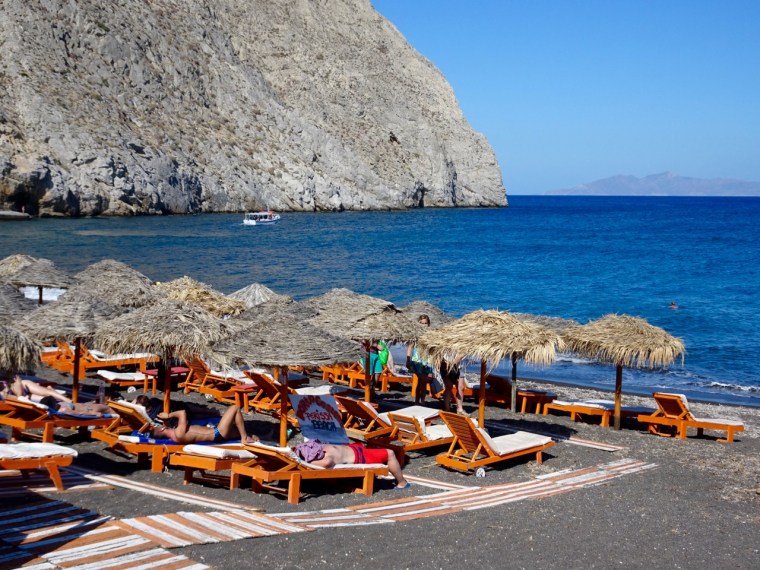
When we weren’t gawking at the view we were off exploring the rest of the island which soon became limited to swimming off the black sands of Perissa beach. It was novel having black sand instead of the usual golden yellow variety and just as pretty in its own unique way. I however was more interested in the people watching.

DSC08167
We walked down a lot of steps for this amazing view
DSC08202
Such clear water
DSC08115
Perissa Beach
DSC08037
Volcanic ‘sand’ at Perissa Beach

I am forced to admit I still haven’t come to terms with the ‘selfie’ phenomenon sweeping the globe. It amuses me greatly. We watched one woman at Perissa spend a solid 30 minutes standing in the water taking photos of herself with her selfie stick. I called it the selfie sprinkler, long arm extended, snap and twist just a few degrees then snap again. Continue in a circle until you’ve gone a full 360 degrees, and then just keep on going around and around as long as you like. Nine to ten rotations should do it. Afterwards you can go and sit on a deck chair and review the four hundred photos you just took of yourself (with apologies to all those selfie lovers out there).

Amy and Oliver thought it was hilarious too. Or maybe it was my description of the selfie sprinkler which they could occasionally be seen mimicking thereafter. I wanted to take a photo for you, but Emma rightly pointed out that wouldn’t have been appropriate.

So that, together with the afore written tales of our experience with the ancients, was Greece. I’d come back in a flash. Gorgeous country with so much to see and do. Next time, I want a yacht and three months to hop from island to island. Yep the itchy feet are still itching.


Violating the code of the Groovy Greeks

It seems like madness to me. An entire civilization, one of the most significant of them all, founded on and fueled by an unswerving belief in a parade of fictitious characters called Gods.

The ancient Greeks had Gods for everything. Zeus the God of the sky, Hermes the God of travelers (we’re big fans), Athena God of war strategy and wisdom (I’m not sure how they put those two together), Hades the God of the underworld (nobodies favourite), Nike the Goddess of victory (and I thought they were shoes) and my personal favourite, Dionysus the God of wine and dolphins.

Wine and dolphins. Of course. Only Oliver and the ancient Greeks know why wine and dolphins have their own God and why they were put together into one portfolio. There’s more. Oliver, who really ought to be granted an honorary doctorate in Greek mythology, has helped me compile a list (see below).

This Pantheon of Gods spurred the ancient Greeks on to great things. Well actually, it spurred the ancient Athenians on to great things. Ancient Greece, we have learned, was not actually one unified country, but rather a grouping of City States who spent most of their time fighting with each other, which ultimately proved to be their undoing. Athens and Sparta were the mightiest and most famous of the two but couldn’t have been more different in their approach to life.

The Athenians were the ones responsible for all that cradle of civilisation stuff – democracy, philosophy, the arts and of course their own fair share of warring. The Spartans on the other hand believed that anything other than warring was a total waste of time. They believed this so much that they enslaved a population ten times the size of their own to do everything they needed done other than warring.

Sparta’s legacy today is mostly found on T-shirts, in shops lining the streets surrounding the Acropolis, which depict one stick figure kicking another stick figure with a caption reading ‘Caution this is Sparta’. The Athenians legacy on the other hand is a mindboggling array of architecture, sculpture, sporting events, philosophy and arts.

In fact, after a week touring the major centres of ancient Greek civilization we were all enlightened by the extent to which the groovy Greek Athenians, and their undying belief in all those Gods, still weave their way into our lives. If, for example, you have ever ‘panicked’ then you can thank, or curse, Pan the God of the wild for the cry he let out in battle with the Titans (monsters in league with Kronos, the father of Zeus… it’s complicated) which was so effective it made them all ‘panic’.

Or if you have ever found anything ‘tantalising’ then you can thank Minos and a few other dudes (Oliver can’t remember the names of the other dudes at the moment – I’m thinking of revoking his honorary doctorate) responsible for passing judgement on humans. Anyway, Tantalus committed some crime or other and was sentenced to eternal life with an unbearable thirst while sitting in the middle of a beautiful stream that would retreat whenever he reached out for a drink. ‘Tantalising’ isn’t it!

There’s more, so much more. Stories which explain ‘echoes’, ‘narcissism’, ‘psyche’ and a bunch of others that I’ve already forgotten. We learnt all this listening to an audio book on Greek Mythology (Oliver listened to it three times) while we drove hither and thither across the scenic, mountainous countryside, mostly from one ancient Greek site to the next.

We started in Athens of course where we visited the Parthenon along with a quizillion other people. So many people visit the Parthenon the Greeks recently doubled the ticket price to help pay for their debt and hopefully persuade Angela Merkel not to kick them out of the Euro club. What could be more electorally popular than making the foreigners pay! And don’t start me on Italy’s ‘tourist’ tax. But I digress.

DSC07357
Just a few tourist euros flowing into the Parthenon

The Parthenon is a shadow of its former self, yet still an impressive sight with all its crazy angled columns and bent lines working their optical illusionary magic. I stepped up on a random rock sitting in the courtyard to take a photo over the heads of the hordes and was rewarded with a whistle blow and a stern reprimand from a plain clothed Greek official. There was no sign, no fencing, nothing to indicate the rock ought not to be touched. It may have been a candid camera thing… I’m not sure.

DSC07330
The guy taking our photo somehow made it B&W
DSC07348
Some of the amazing reconstruction work at the Parthenon

We also checked out the remains of the ‘Temple of Olympian Zeus’ where Oliver got in trouble from another plain clothed official for idly picking up a stone and tossing it at a tree across the empty grass space. After that we all got in trouble for taking a rest by leaning on a wall under the shade of a tree. Once again, no sign or instruction to indicate that this would constitute a code violation. Just a stern look from a bored looking woman who, I rather suspect, didn’t have anything better to do.

DSC07419
Temple of Olympian Zeus with the Acropolis behind

It happened again at the Acropolis museum. We were all busily admiring the ancient artefacts recovered from the Acropolis site when the sculpted image of a man and woman entwined with flailing limbs on the top of a terracotta like teapot caught my eye. I pulled out my camera to snap a photo for which I was rewarded with another stern reprimand from the museum official.

‘No photos!’ he said gruffly. I was taken aback. I didn’t mean to do the wrong thing and I had seen no signs or instructions indicating no photography. ‘Oh, no problems’ I said apologetically. ‘But can I ask why?’. The museum man looked a little puzzled, like he’d never been asked to explain ‘why’ before. I pressed the matter, because I was a little disgruntled and because I was genuinely curious. He explained it was because, ‘people often fall over while taking pictures’. Hmmm.

DSC07384
Inside the Acropolis museum

Despite the overly officious museum officials, the Acropolis museum was excellent. A shiny modern building purposely built to house artefacts from the Acropolis and the ancient Greek Agora (the beating heart of ancient Athenian life, politics, arts, philosophy and religion). As the ‘Horrible Histories’ video we played for Amy and Oliver said, ‘It was where Socrates did most of his talking and impressed everyone who could understand him’. That is, right up until they all got sick of him and made him drink a cup of poison.

The museum displayed what was left of the incredible marble sculptures which lined the pediment (the triangle shaped eaves at each end of Greek temples) and frieze (the long lengths of marble that sits on top of the columns but beneath the roof) of the Parthenon and much more besides.

It even has space set aside specifically for all the sculptural work of the frieze which was taken (dare I say stolen) by British Lord Elgin in 1801 and which is still housed in London. The Greek Government has been trying to negotiate return of the priceless works since 1980 but the British refuse to yield.  There must be more to it than I understand, but I can’t contemplate any argument which would trump the Greek claims? It’s Greek. Give it back!

DSC07391
Some of the frieze – they recreated most of the missing bits
DSC07512
Finding lunch and the metro near the Acropolis

After Athens we hired a car and drove to Delphi, the second most significant ancient Greek site and home of the ‘Oracles of Delphi’. More mumbo jumbo to my 21st century scientifically educated mind and it was therefore astounding to learn about the pilgrimages made by ancient Greeks everywhere to make offerings and have their fortune told by someone intoxicated by ‘vapours’ and who was supposedly therefore articulating the thoughts of the Gods.

The ancient Greeks considered Delphi ‘the navel of the earth’, the centre of everything and was chosen because two eagles set forth by Zeus are said to have crossed paths in the skies directly above.

DSC07567
Looking down on Delphi – the navel of the earth
DSC07531
The reconstructed Temple of Apollo at Delphi
DSC07618
Tempe of Athena –  nearby to Delphi

We had made a sport of trying to avoid violating Greek archeological site and museum codes of conduct by this time, but mostly failed. The museum at Delphi houses two larger than life statues carved as a ‘votive’ offering for the Oracles. I asked Emma to stand next to them while I took a picture so y’all could see how big they were, but before I could pull the trigger the museum mafia leapt from their chair and called out across the hall, ‘no posing with the statues!’.


DSC07653
No photos with these guys

I turned in stunned silence to survey my assailant. Once again I had seen no signs, no notices and no explanations offered. ‘You can’t pose next to the statues’ she reiterated. ‘Oh ok…’ I said, but once again feeling a little disgruntled and curious I asked ‘why?’. The explanation offered was that it was a rule across all Greek museums, which while no doubt true, still falls well short of a reasonable rationale as far as I am concerned.

DSC07603
Code violation – he had been told elsewhere not to touch the rope!
DSC07469
Schoolwork code violation – no touching the glass apparently!
DSC07507
Code violation – no walking on the grass!!

I’d like to tell you that we reformed our unruly behavior after that, but it’s not true. Amy received a code violation in another very fine museum at ancient Olympia when she tried to take a photo of the very large marble statue of Nike, Goddess of Victory, that 2500 years ago proudly stood upon a 6-meter-tall plinth out front of another Temple of Zeus. Just moments before she had said to me, ‘let’s see if we can get out of here without a code violation’. Afterwards she said, ‘oh reng it’ like water off a ducks back.

Emma took to subterfuge after that, walking a graceful arc through the central hall of the museum where she just happened to walk into a photo I was taking of the impressive sculptures from the pediment of the Temple of Zeus at Olympia.

DSC07903
Code violations don’t make for great photos
IMG_2110
Code violation – statue of Hermes holding Dionysos

Ancient Olympia of course is the birthplace of the Olympic games. It all got started with a single running race in 776 BC but soon grew to include a chariot race, armored foot race, the Pankration (a brutal anything goes except biting and eye gouging fighting match), wrestling and pentathlon. It was serious business in which the victor’s assumed the status of demi-gods and everyone else went home in disgrace. If indeed you got to go home at all. It was brutal competition in which competitors were regularly killed. Women incidentally weren’t allowed to compete or even watch because the men all competed in the nude. If they tried they were thrown off a cliff. Crazy ancient Greeks.

Most of the site requires a fair bit of imagination, but the running stadium was awesome. 192 metres long surrounded by gentle grass slopes that could seat up to 45,000 spectators. The sprints held here were the blue ribbon event of the games just as the 100m is today. Oddly enough we ran the course without receiving a code violation. I beat Amy. Just saying. Emma and Oliver argued for three days straight about who crossed the line first in their race.

DSC07947
Olympia – imagination required
IMG_2148
The start line at the Olympia Stadium
IMG_2149
Their feet barely touched the ground!

Some of Amy and I racing.


The Acropolis, Delphi and Olympia completed our ancient Greek trifecta. We also visited the Panathenaic stadium (birthplace of the modern Olympics in 1896), Flisvos Marina with its collection of obscene motor cruisers, Meteora with its monasteries perched on the top of rocky monoliths, stayed in our first Airbnb, crossed a crazy bridge with a toll that cost the equivalent of $20 Australian dollars and hung out in a Greek holiday haven in a thunderstorm. But I’ll waffle on about all that later.

So far Greece has been an enlightening experience which has left me musing over many things, but mostly about how seemingly intelligent people can become so enthralled, captured, motivated, inspired and driven by belief in figments of their imagination. It is, perhaps, an artefact of that question which plagues us all, though mostly we try to ignore it. How did I get here, and how did here get here?

After musing on this in the odd idle moment here and there I am forced to concede, as Emma maintained all along, that the stories of the ancient Greeks and their gods are a logical and cleverly interwoven explanation of the world and how it works, which in the absence of anything else clearly provided a compelling and perhaps comforting explanation for why things are the way they are.

It is no different, I don’t suppose, in that sense from the creation stories of any other culture. And who knows, perhaps in time Stephen Hawking and his mates will smash a few more sub-atomic particles together in Switzerland and come up with a new unified theory of everything which will render my scientifically skeptical world view just as fictitious as the Gods of the Greeks. In any case, fictitious or not, we have much for which to thank the ancient Greeks and their Gods.

Oliver’s list of ancient Greek Gods (he and Amy also came up the the title for this blog post).

Zeus – God of the sky, Hermes – God of travelers, Hades – God of the underworld, Poseidon – God of the sea and horses, Athena – God of battle strategy and wisdom, Nike – God of victory, Dionysus – God of wine and dolphins, Kampolia – God of sea storms, Ares – God of War, Pan – God of the wild, Aeolis – God of the wind, Oranus – the first God of the sky, Artemis – God of hunting, Apollo -God of sun, music, medicine and prophecies. Hephaestus – God of blacksmiths and volcanos, Demeter – God of Agriculture, Aphrodite – God of love or ‘Luurve’ as I like to say, Nemesis – God of revenge, Iris – God of rainbows, Asclepius – God of doctors (but not medicine because Apollo got that job).