The Meseta was not as advertised. For those who haven’t heard of the Meseta, let me explain.
The Meseta Central is Spain’s vast, high-altitude central plateau, covering over 210,000 square kilometers across the interior of the Iberian Peninsula. More specifically for us and the few hundred thousand peregrinos that pass this way each year, it refers to the 200 odd kilometres between Burgos and Astorga, on the other side of León.
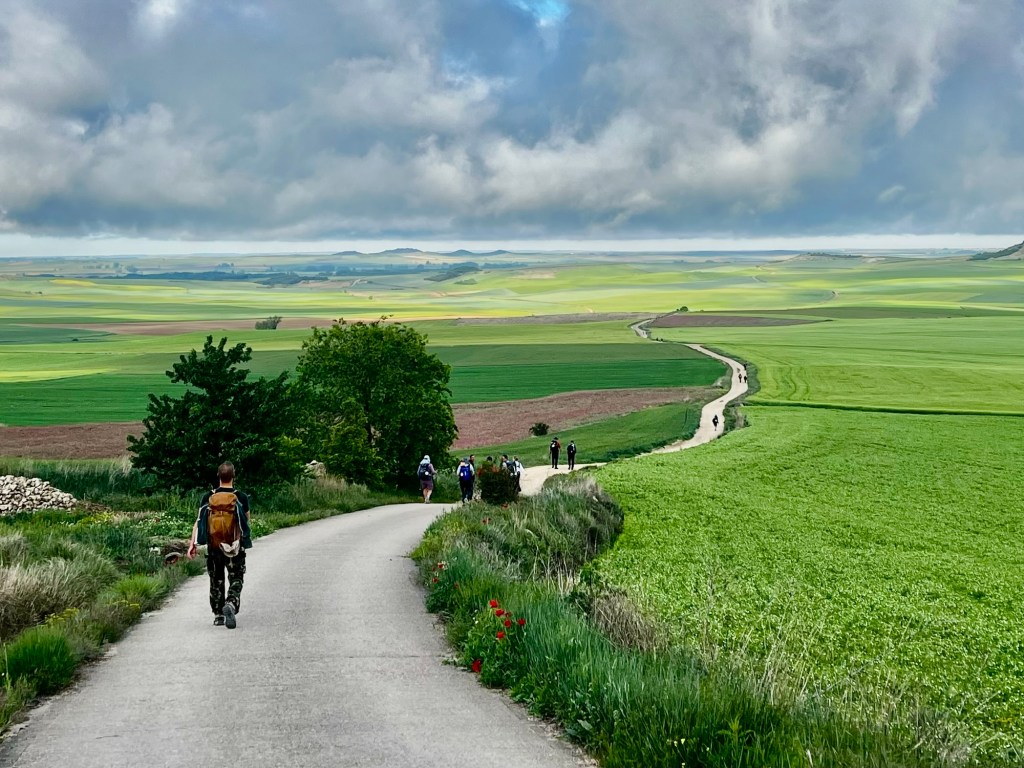
Essentially, the Meseta is mythologised by pilgrims as a long, straight, stretch of, well, nothingness really. Dry, featureless, with a seemingly endless road always stretching beyond the horizon. It is said there is nothing to do but go within and keep on walking.
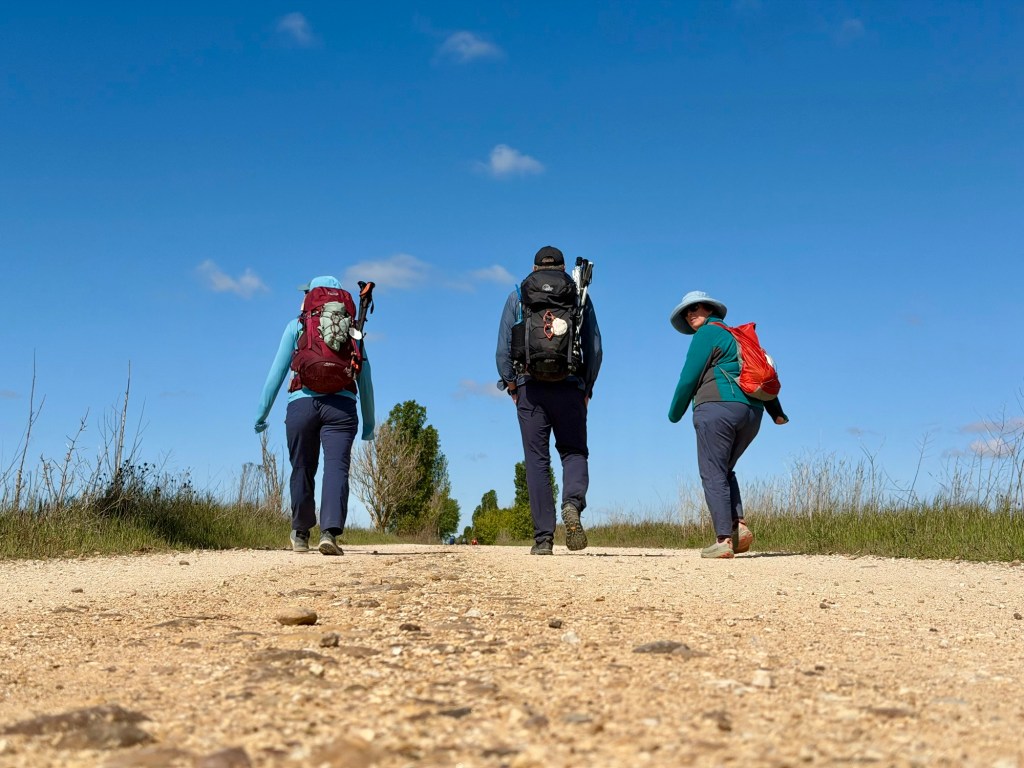
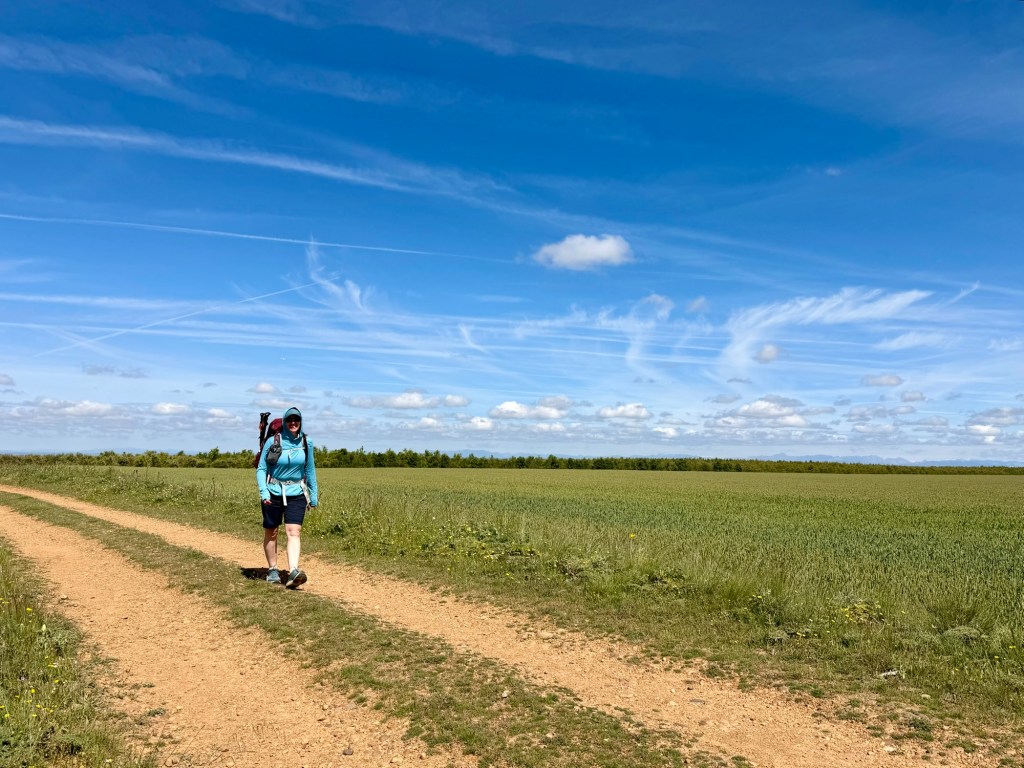
Maybe we’re odd, but this was not our experience. The Camino undulated (gently) up hill and down dale. I don’t think the rest of the world really understands what flat means. They should drive across the Nullarbor. Then they’d get it.
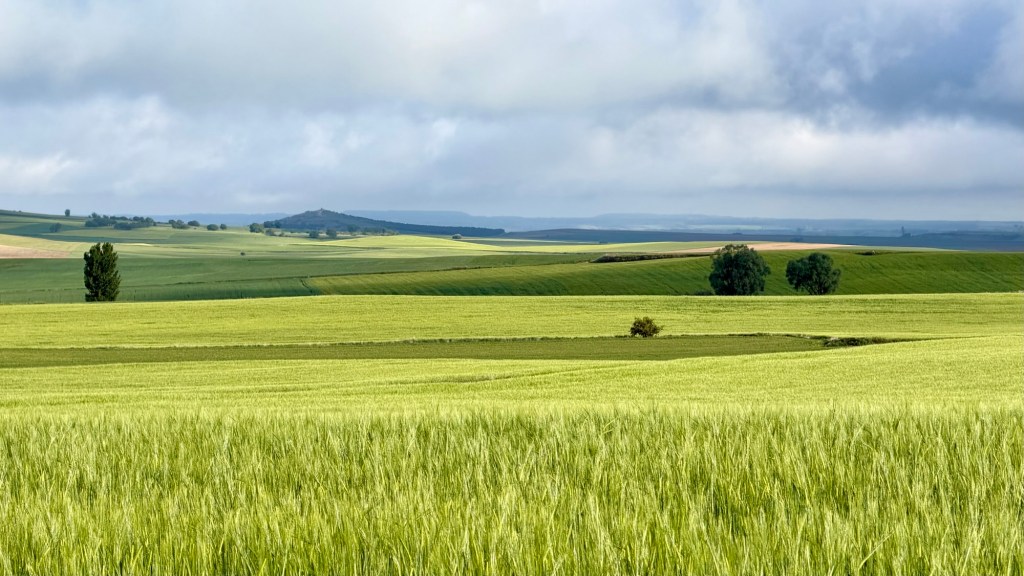
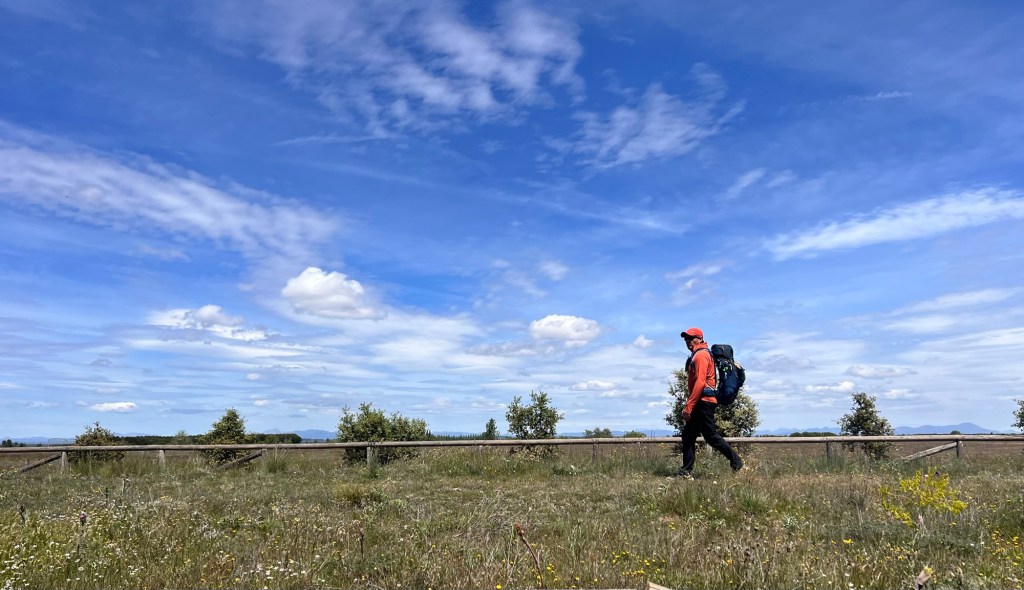
It is also spring, so it turns out the Meseta is vibrant and green, not barren and dry. We were a little early for the sunflowers and corn but the wheat, barley and oats were in fine form, set off by the ever present verge-side flower show to which we have now become accustomed.
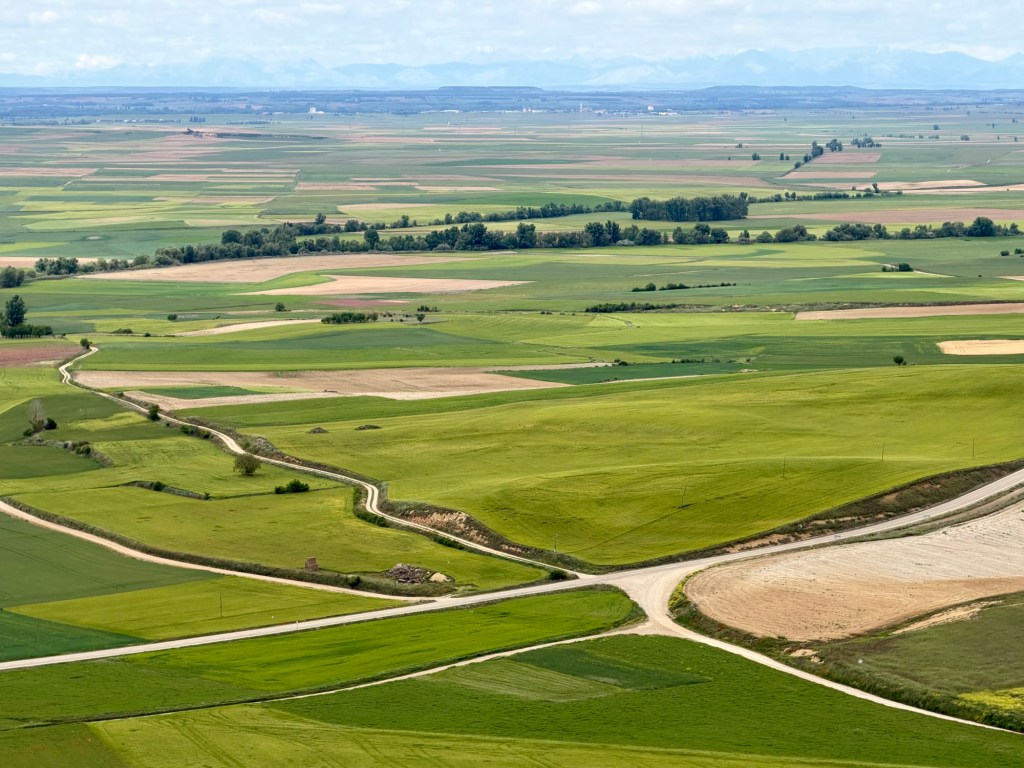
And as for nothingness, well nobody mentioned the Europa Peaks, a snow capped mountain range off to our north. They constantly drew my eye and my adulation as a scenic sliver to accompany the horizon-to-horizon dome of sky. Throw in a conversation with an Anglican minister; the unexpected ruins of the San Anton Monestary; a hilltop castle (complete with with ramparts, groovy stone stairways and vistas as far as you can see); an old Roman road upon which to walk and ponder the union of space and time; and an evening sing-a-long with the nuns of San Augustin – and rather than a long and lonely stretch of road with which to focus on introspection, I felt I barely had time to gather my thoughts.
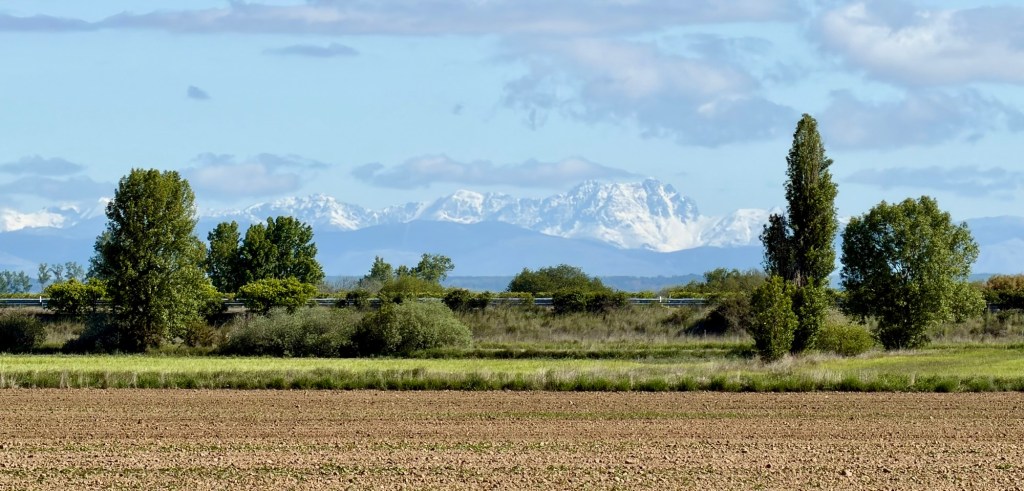
That said, I did find myself humming songs with references to lonely stretches of road… The long and winding road, Hotel California, Country Roads, Life is a Highway, On the Road Again… Highway to Hell. Nah, that would be inappropriate.
In Carrión de los Condes we attended the aforementioned sing-a-long held each evening by the San Augustin nuns.
(It started at 6.00. A detail of no consequence other than the fact that we found ourselves on the opposite side of town at around 5.45. We’d had a long day of walking and Khia advised us all that she was, ‘in no shape to run quickly towards the nuns’. Words Paul promptly pointed out he never thought he would ever hear Khia say out loud.)
The San Augustin nuns handed out a song sheet with the lyrics to various tunes in a range of languages. It also included poems one of which was for pilgrims on the Camino.
‘Nobody went yesterday, Nor goes today, nor will go tomorrow, towards God, along the same path that I do. For each man [or woman – let’s be fair] the sun holds a new beam of light and a virgin path. (Leon Phillips)
In essence, a few hundred thousand people may walk this path every year, but none of them have the same experience.
A bit like at our very first night on the trail back at Borda, the nuns kicked off their understated event by inviting each of the 30 to 40 people there to talk briefly about where they were from and why they were walking.
The sister’s themselves were warm and engaging and surprisingly young. They made it their business to see pilgrims, ‘as more than the bed numbers ascribed to them’. It was touching, as was their blessing and the stories of those present.
One woman’s son had died walking the Camino. She was clearly grieving. We felt her pain. She was walking with her father, presumably as part of the process of coming to terms with the loss. Another lady had a scare with cancer. She and her husband had decided that when and if she got free of the disease they would get out and walk. She choked up and she tried to explain this to this group of strangers. Her husband gently clarified once she had finished. Then there was this thread of stories oscillating around the notion of change and transition. People laid off from their jobs, relationship challenges, and other life shifts. Some were just in it for the adventure. They were all here taking a pause from regular life, walking the Camino.
While everyone’s rationale for being here was different, they all seemed to have one thing in common. On the Camino, people wear their struggles on their sleeve and ask, ‘why are you walking’, before they get anywhere near ‘what do you do’, if that even comes up at all.
We all struggle from time to time, even if our struggles are different. Viewed this way, are we as individual and alone as we often feel? And is our experience of the Camino as different as the poem above suggests? Furthermore, are each of us one element of a bigger whole to which we all belong?
Paul and I had been contemplating this question for some kilometres beforehand, including whether it was ‘God’ or some other unifying whole to which we all belong. It’s hard not to contemplate God and the church when walking the Camino, it is after all a Christian pilgrimage and the reminders are everywhere.
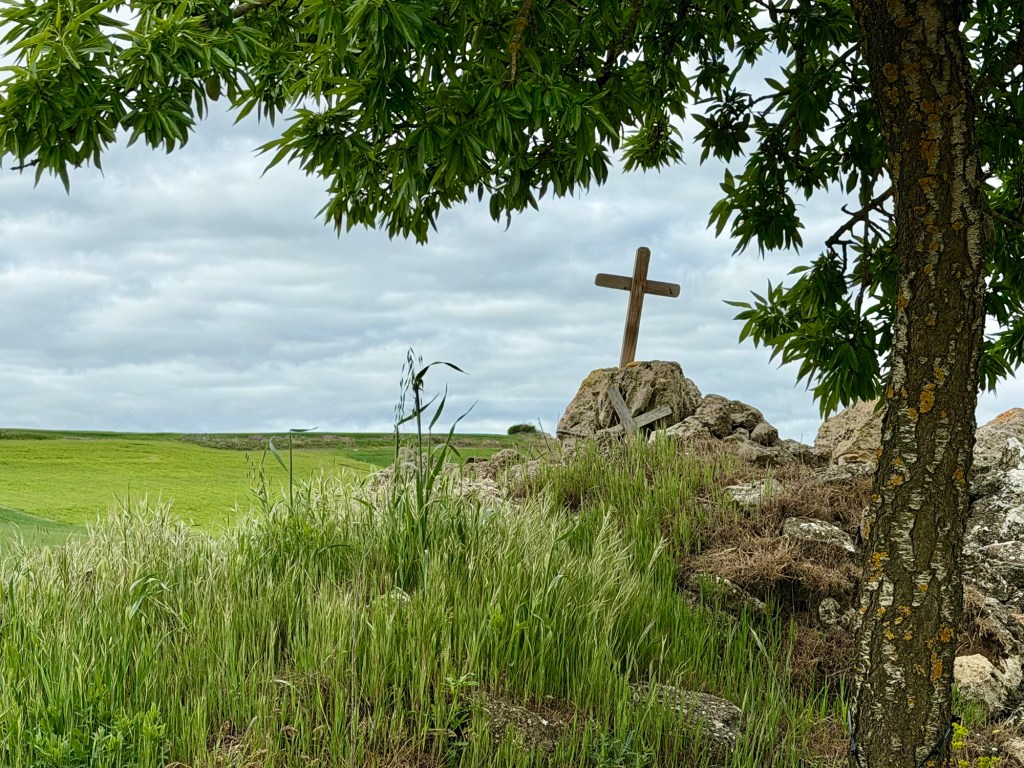
I posed this same question to Nigel somewhere between Hornillos del Camino and Castrojeriz. We first met Nigel and his wife Nikki on the flight out of Sydney. We had spotted each other as likely pilgrims from amongst the hoards of travellers boarding the plane. When finally crossing paths on the Camino and with a chance to chat, it turns out that Nigel is an Anglican minister.
I decided that if I could not ask blunt questions about God, Jesus and the Church of a minister while walking the Camino, then there was nowhere that I could. So I asked Nigel what he thought of the idea that we were individual and collective beings all at the same time. That, however, was just the warm up and it wasn’t long before I was quizzing him why he even believed in God to begin with?
I dived in boots and all, like an episode of ‘You can’t ask that’, laying out all my problems with the existence of an interventionist God. If God exists why would he look after the prayers of some but let whole populations starve to death? Why would God inflict pain and suffering on innocents? Why would God make some people sick and not others? Why did God set up a system where people were even tempted to sin if he had such a problem with that? And why was the church so damn good at making people feel bad about themselves?
We must have walked and talked for an hour or two and to be honest it felt good to ask these questions freely – as opposed to my usual stance of projecting respect for another’s beliefs while quietly thinking them quite mad. I’m still processing Nigel’s responses to my questions. I’m not sure he convinced me (or even that he was trying to do so) but he made me think and was open and thoughtful in his responses. I very much appreciated the manner in which he engaged with my scepticism.
Our conversation was interrupted by the unexpected sight of the rather grand ruins of the San Anton Monastery, which seemed to appear out of nowhere down a hill and round a corner of the trail. The monastery had also served as a hospital many hundreds of years ago. People thought that the Tau (T) symbol the monks baked onto their bread would cure them of the wheat disease that had seen people dropping dead left right and centre around that time. The Monestary was quite a fantastic sight, with a bell, which has a story I’ll save for another day.
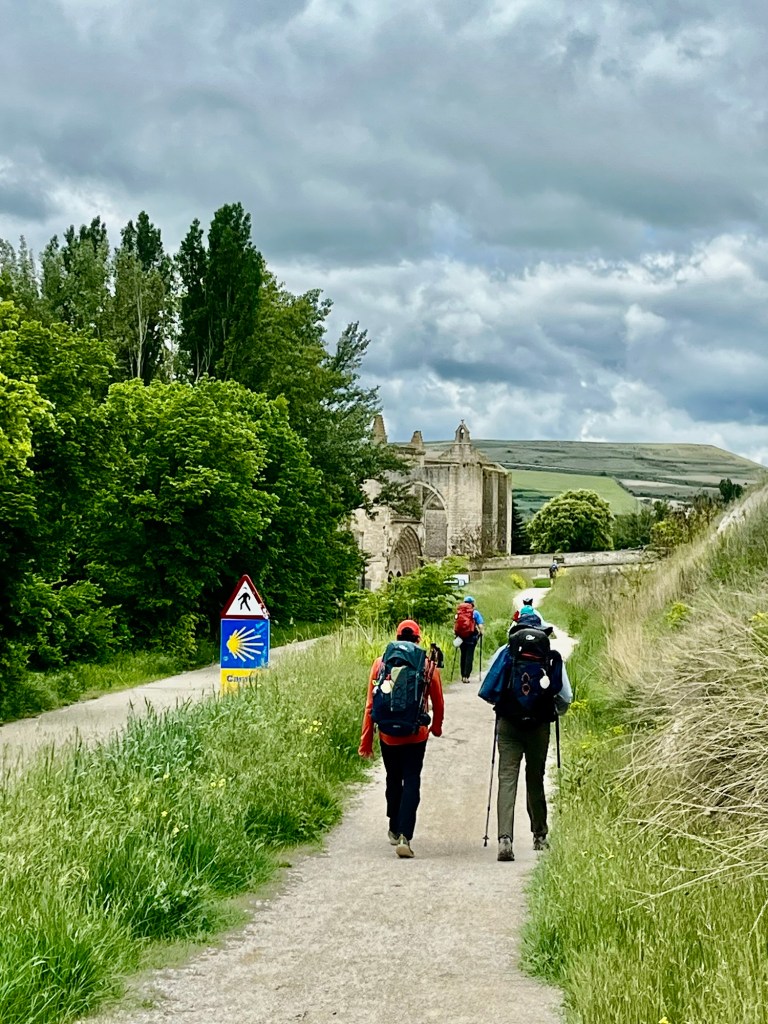
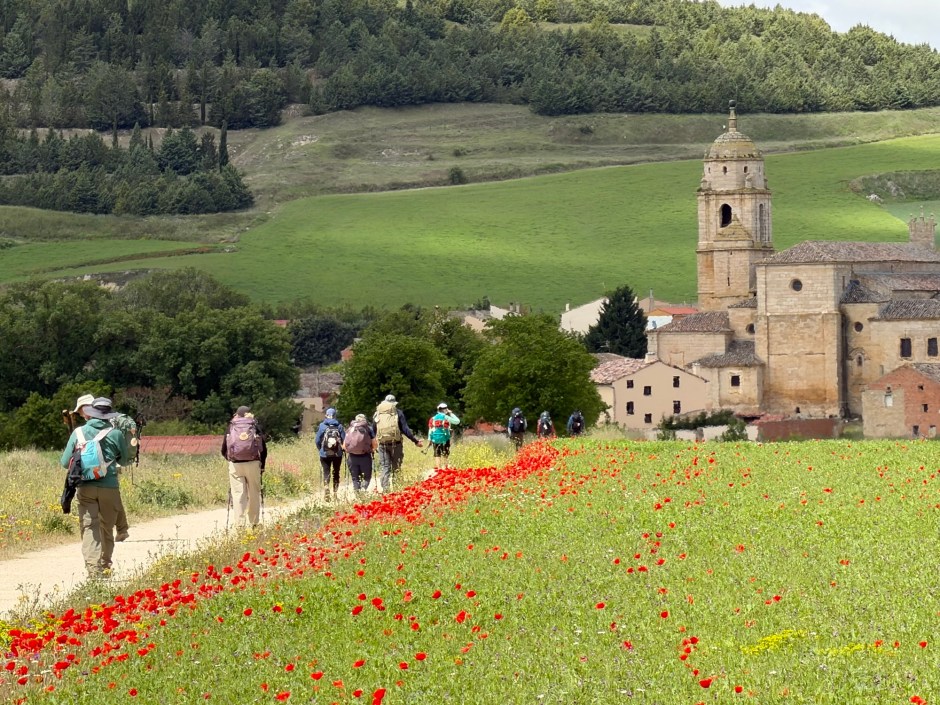
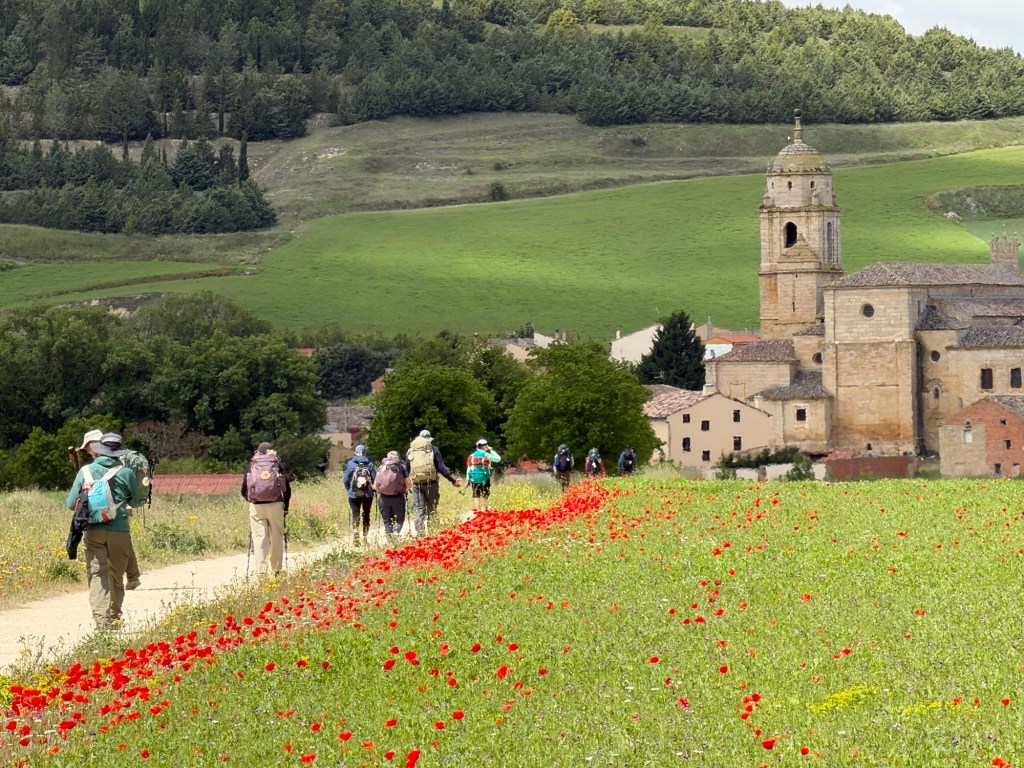
A little further on and one of the most picturesque sights of the Camino stood before us. A long straight stretch of trail, lined on one side by trees, lead a long line of pilgrims towards Castrojeriz with its cathedral nestled at the base of a hill which was topped by a castle ruins dating back to the 9th century. Next to the trail were fields of grain scattered with red poppies. If I have taken one picture to represent the Camino so far on our journey it would be the one below.
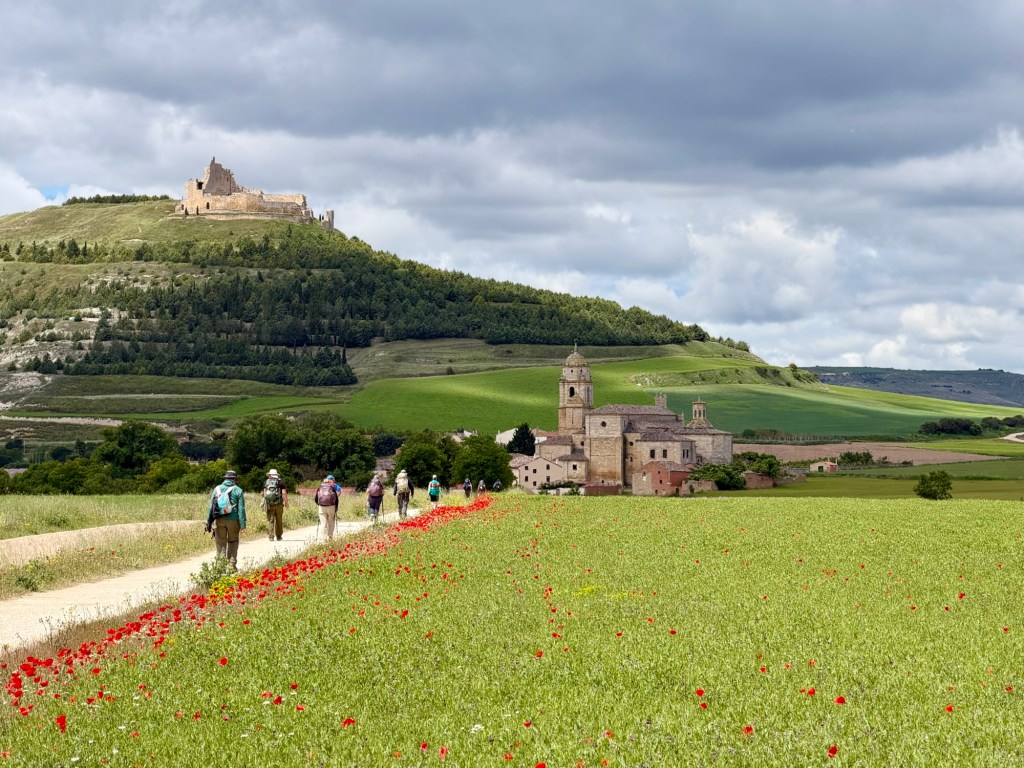
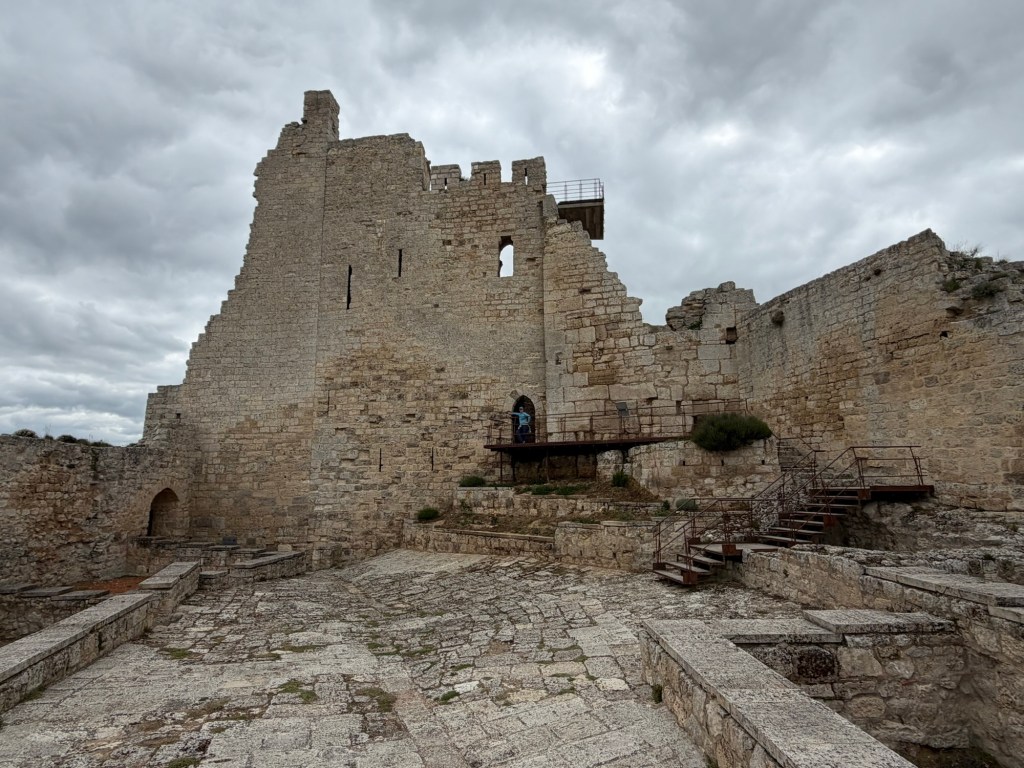
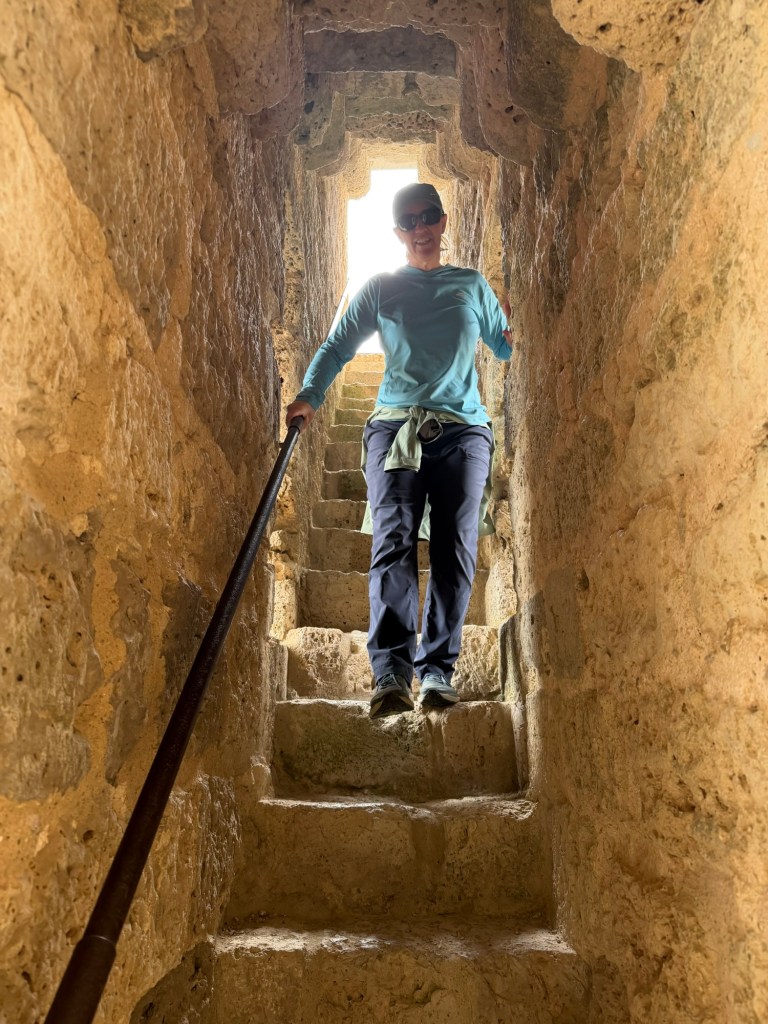
After settling in that evening, Emma and I made our way up the hill to the castle which had proper castle walls, a proper castle courtyard, and the ruins of a castle keep with intact stairways that made their way up through the walls themselves. It was exactly the stuff of the fantasy novels I read when I was much younger.
Somewhere along The Way, the next day, a curious emotion came over me, which gave me cause to ponder, what is this thing that I am feeling? A short time later I said to Emma, ‘I think I feel the absence of stress’.
She thought for a brief moment before replying, ‘You mean you feel relaxed’.
‘Yes!’ I said. ‘That’s it!’.
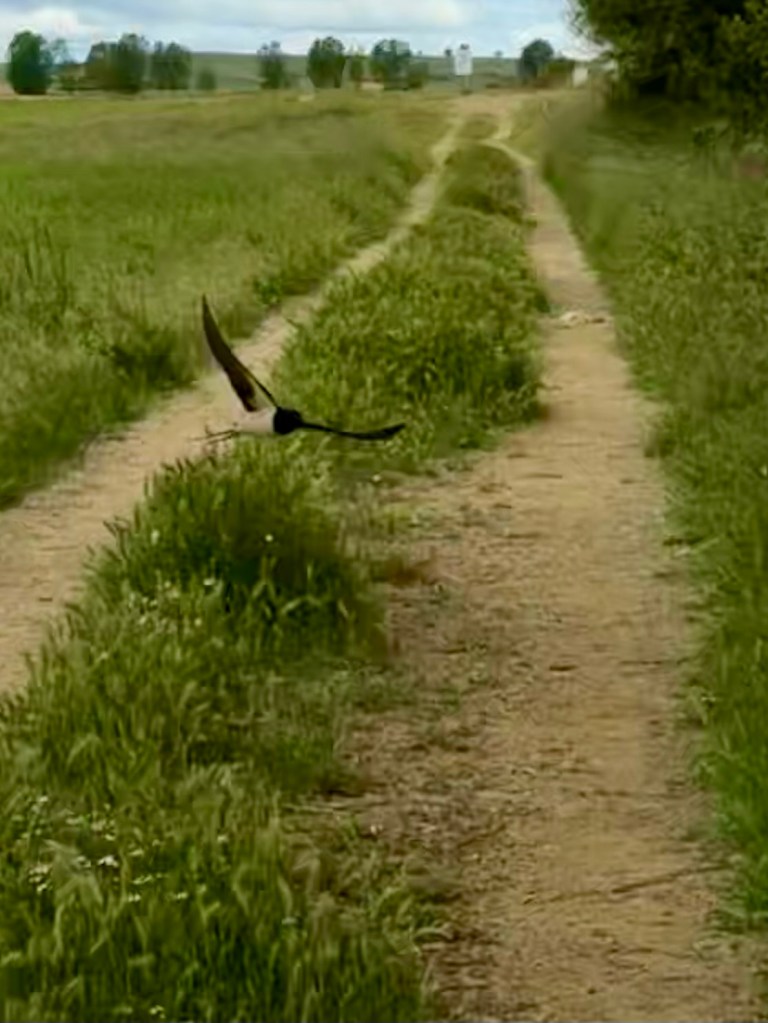
Bugger me, I am relaxed. How did that happen. We wandered along a canal and then along a river side and it further occurred to me that perhaps I ought to be using my time on the Meseta to think about something meaningful or at least useful. Maybe about life, or life at home, or what I/we wanted to do next etc. But then it occurred to me that I didn’t really want to think about any of those things. I didn’t want to think about anything. So I didn’t. I just walked, watching the wind rustle in the trees and swallows flying at us at high speed while pursuing their evening meal at high speed and chatting with Emma about this that and the other.
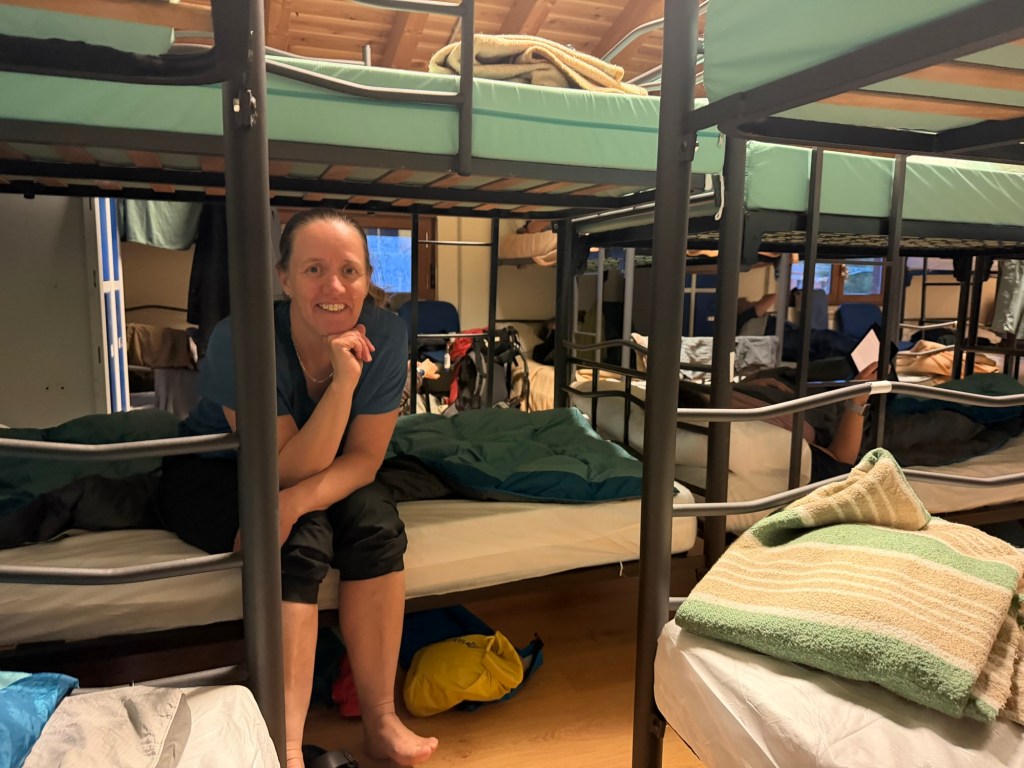
Our bed that night brought relaxation to an end. By and large, dorm rooms on the Camino aren’t too bad, provided you have a good set of ear plugs and an eye mask. Our bunk bed in Frómista was an exception. It made a highly irritating squeak every time one of us moved our big toe or any other larger body part.
‘Don’t come knocking if the bunk beds rocking’, I laughed to Paul on the bunk opposite as my inner 13 year old was set free.
‘You’re in there on your own Greg’, he replied with a chuckle before we both started giggling. A lady (who we ended up chatting with a few days later) in the next bunk over joined in and then we were all laughing. The other people in the dorm ignored us.
An ancient Roman road took us most of the rest of the way into León. Isn’t that fun? I still love seeing ancient stuff even if it is just a 31 km stretch of packed stones a few metres wide. The fact that these stones were put there by the Roman Empire and were subsequently marched upon by legionnaires makes my head spin with delight. We were walking in the foot steps of legionnaires! Separated not by geography, just the passage of 2000 years. So cool.
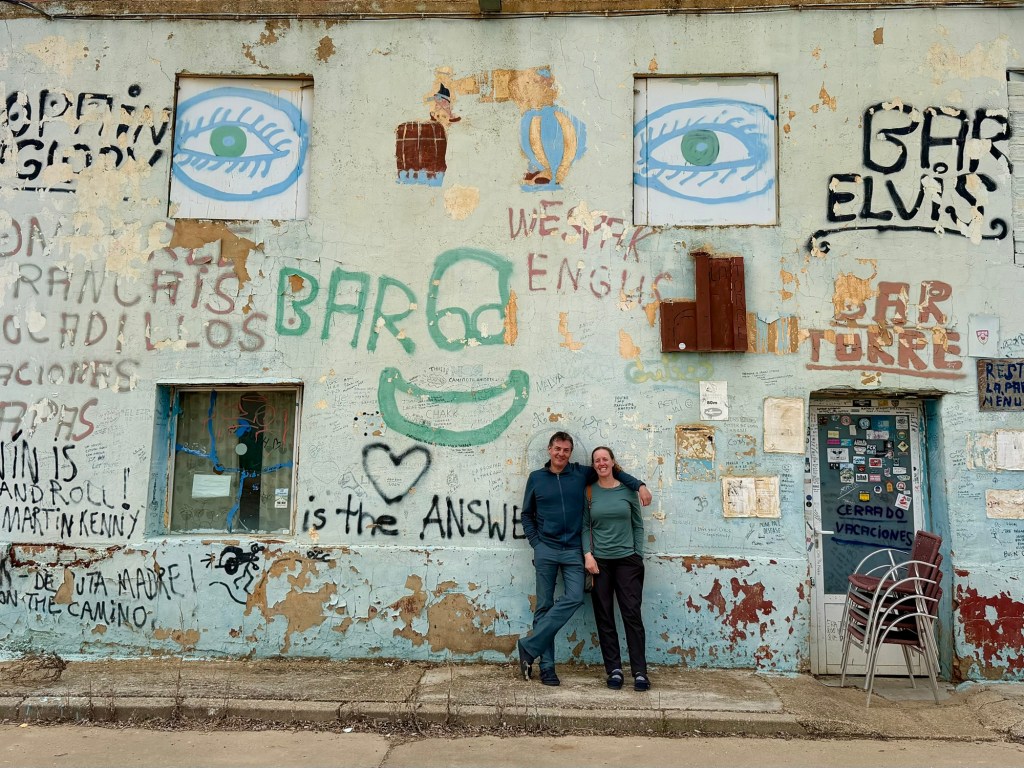
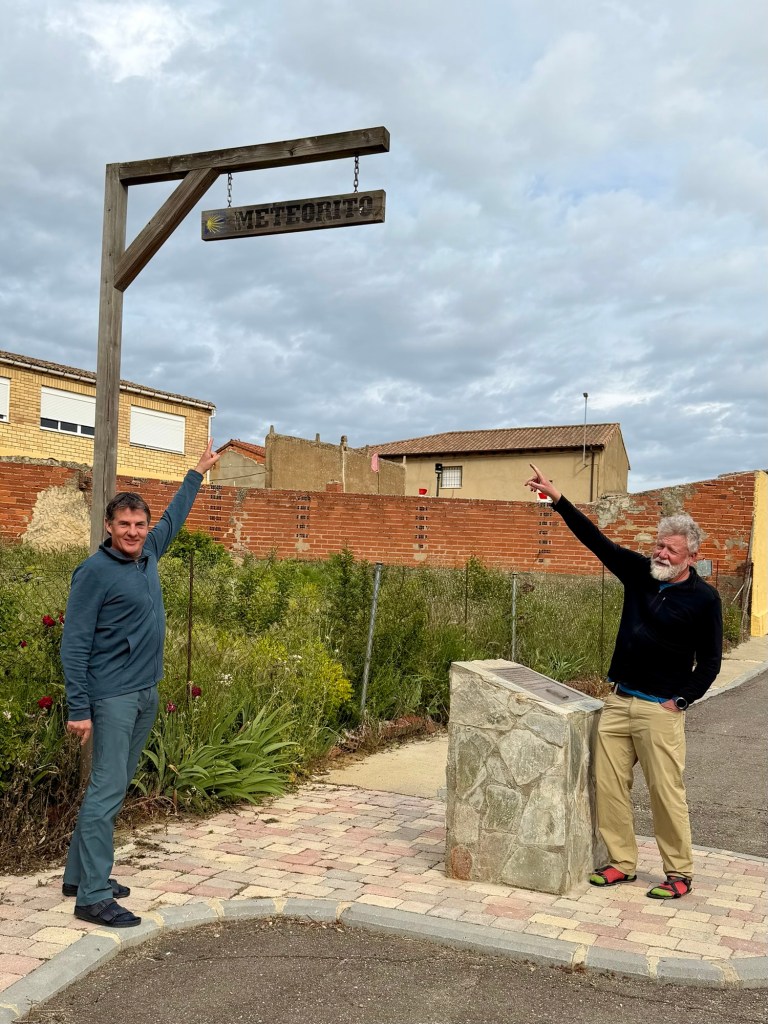
Another thing worth mentioning is a visit to the most famous bar on the Camino. Bar Elvis in Reliegos. Only when we got there it was closed. Not to worry, Reliegos had a second major attraction, it was the sight of a meteor’s crash landing back in 1947. Emma lead us to the site, which had a plaque and a sign swinging from a post overhead. ‘That’s a little underwhelming’, Paul stated dryly.
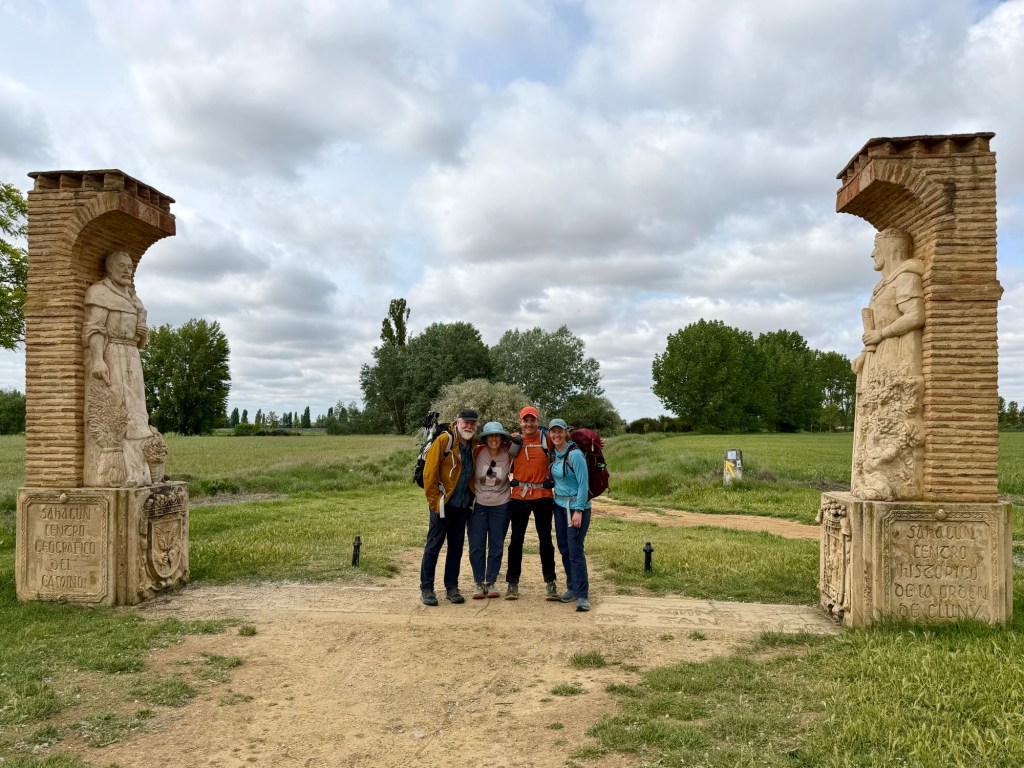
And now we are in León. Which has my favourite cathedral of all the cathedrals we have seen since arriving in Europe. We’ve crossed the half way mark. In fact we are now two thirds done with ~470km behind us. 16 more days and all going well we will be in Santiago de Compostela.
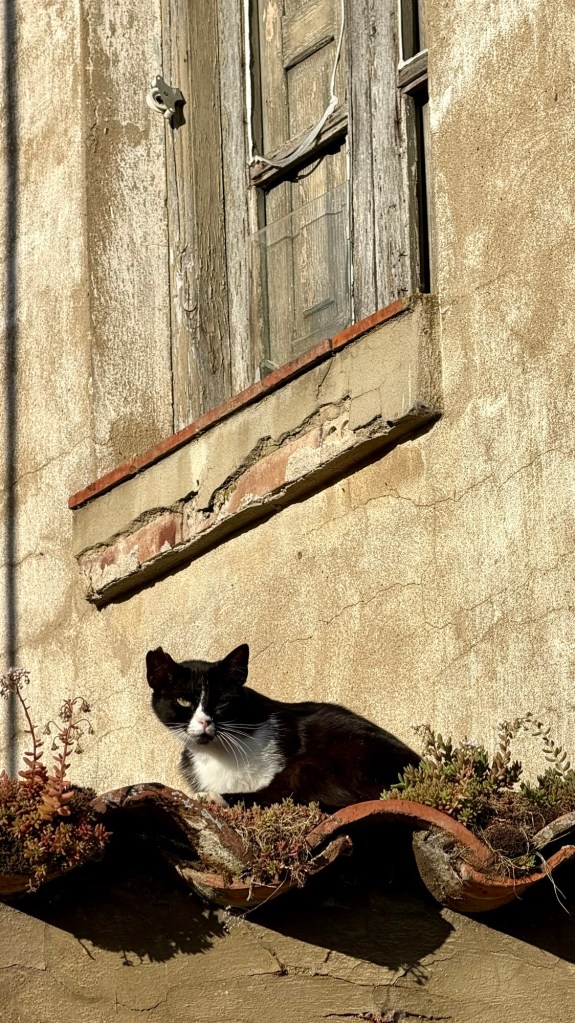
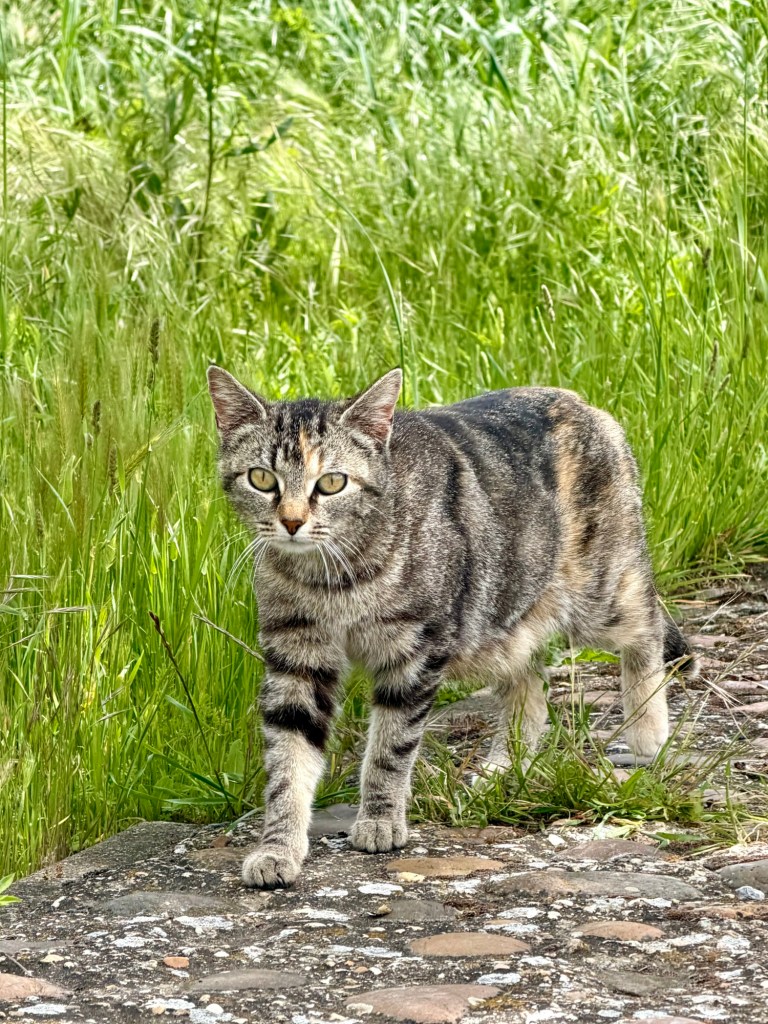
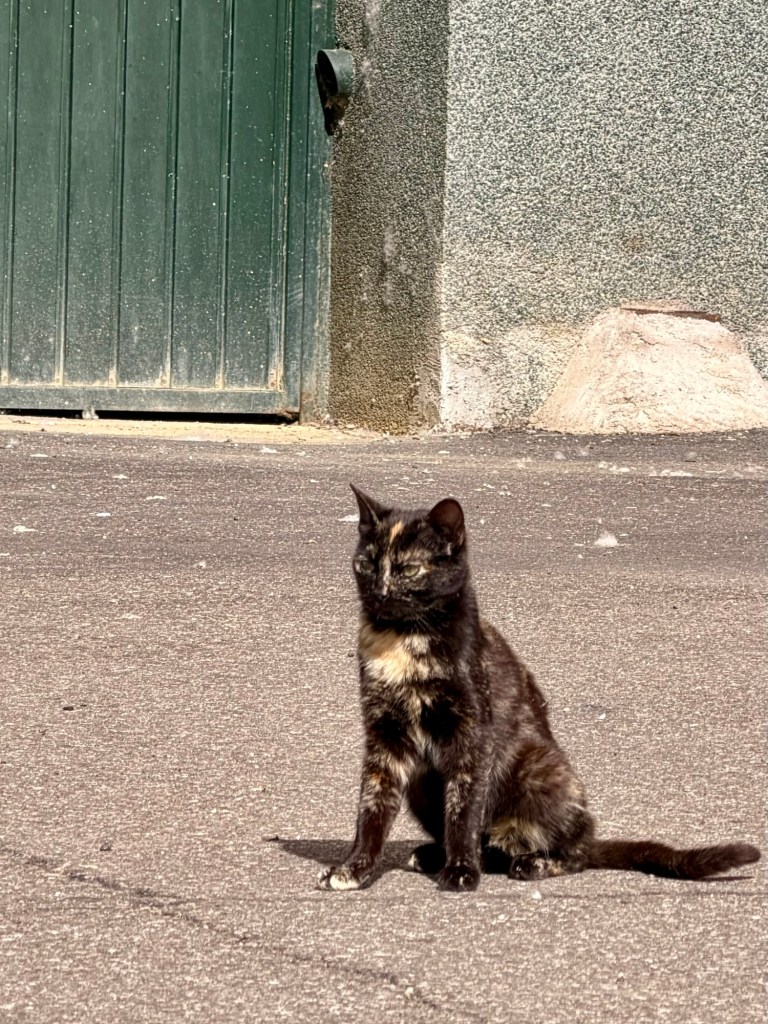
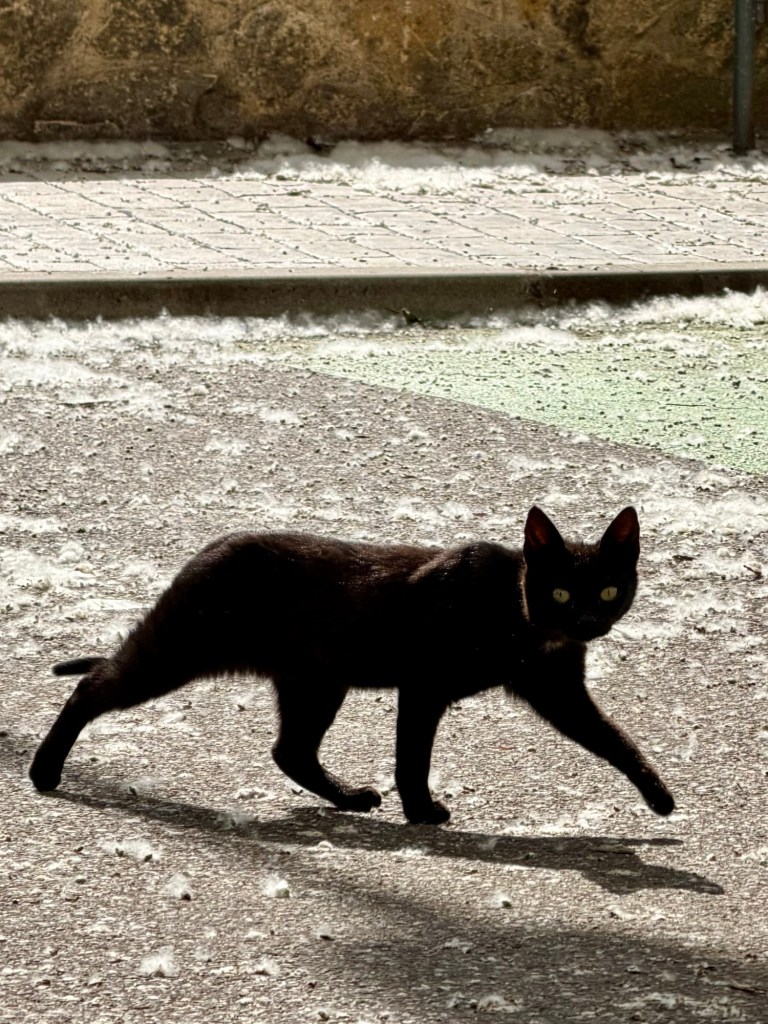
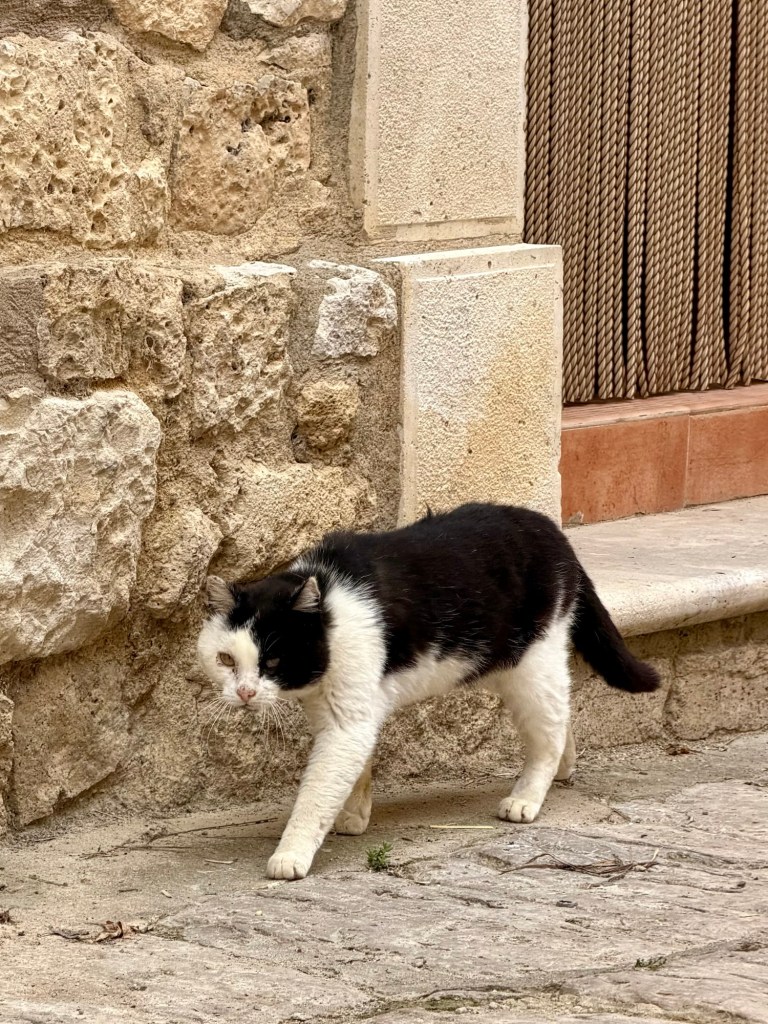
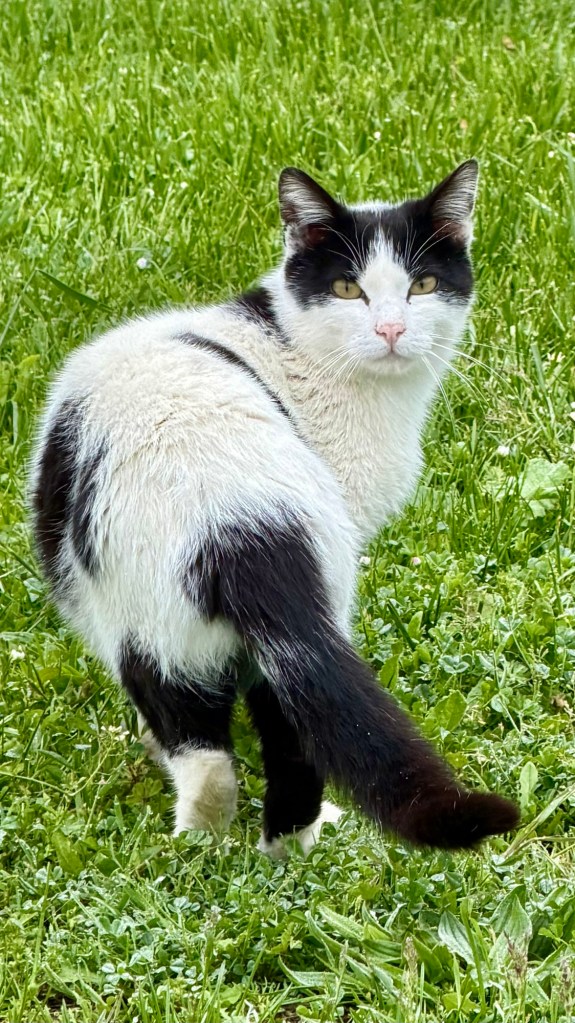
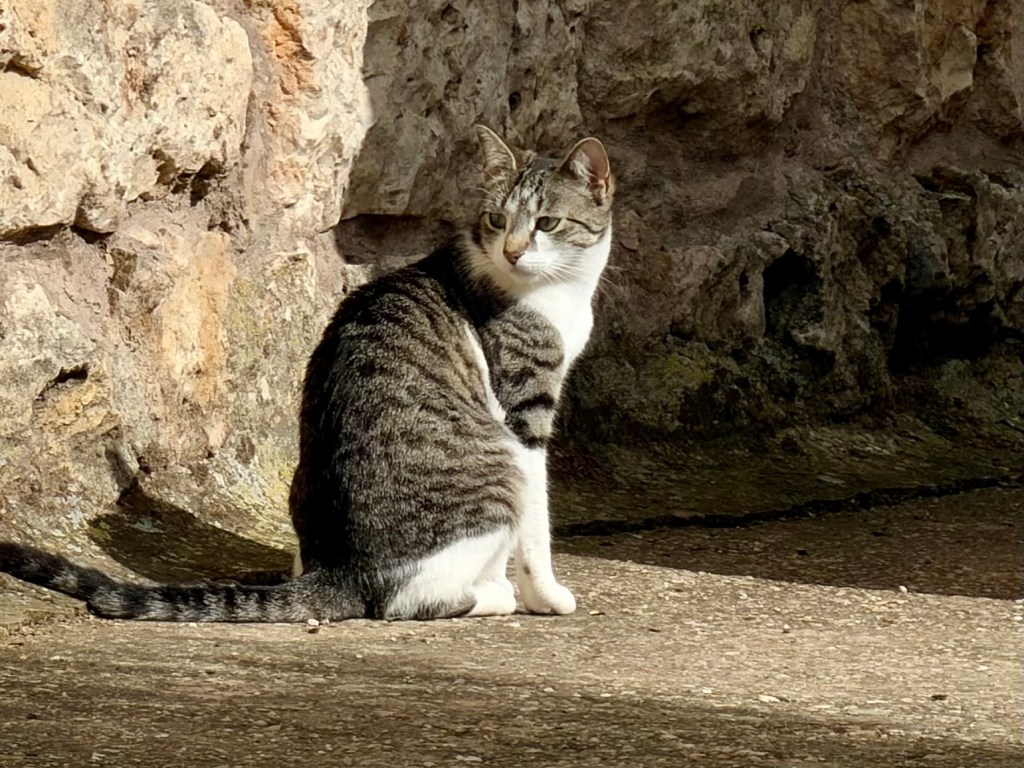
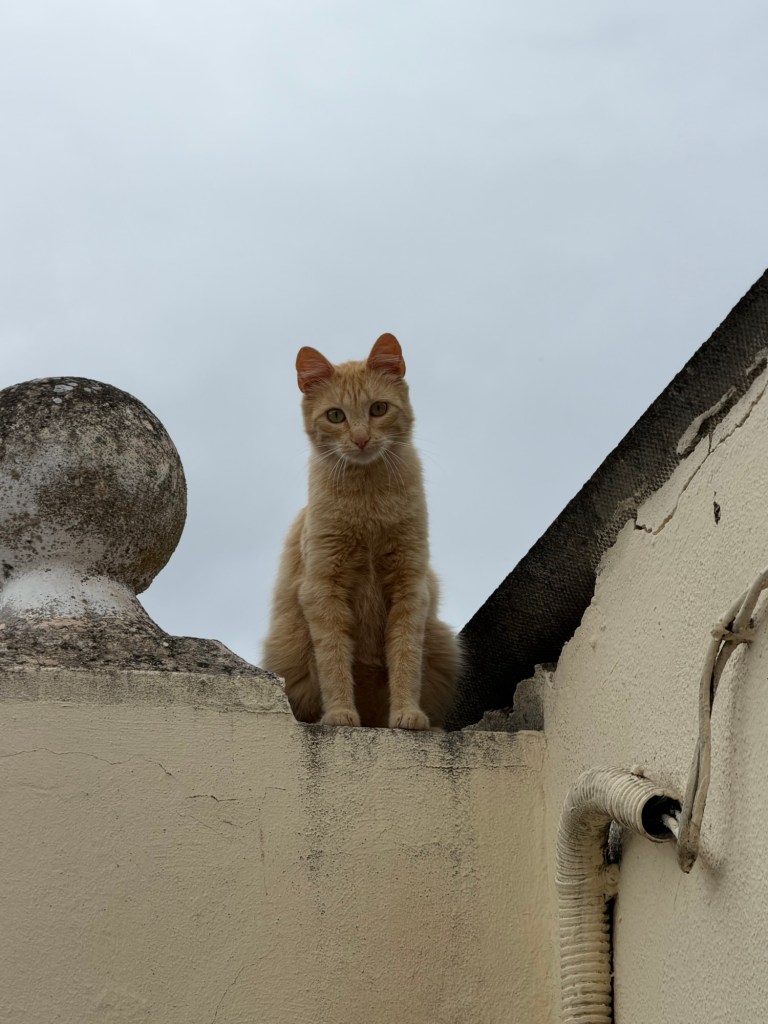
And now for Cats of the Camino… it’s a bumper edition this time with many excellent felines along the way.
And a few extra photos because choosing your favourites is hard.
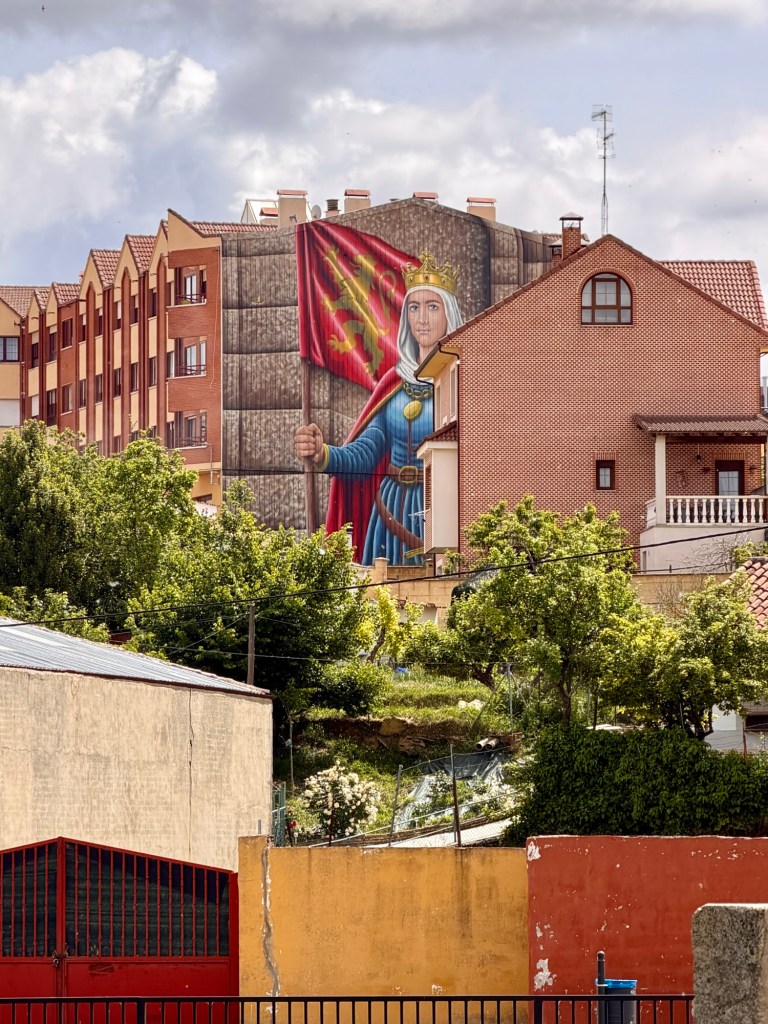
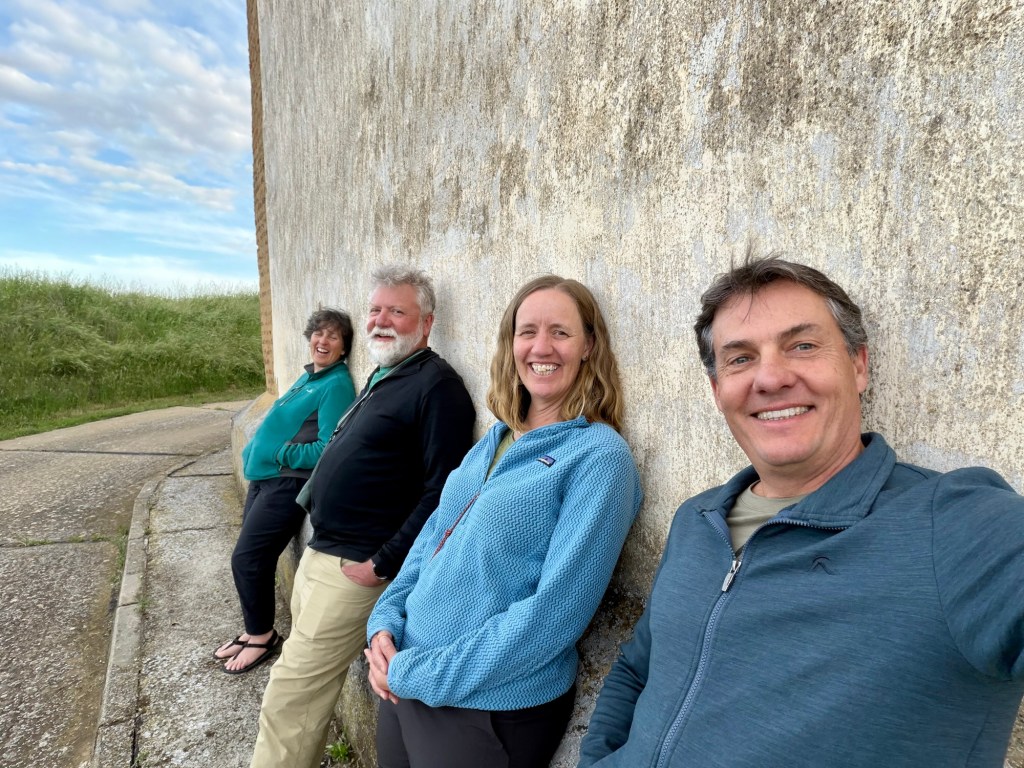
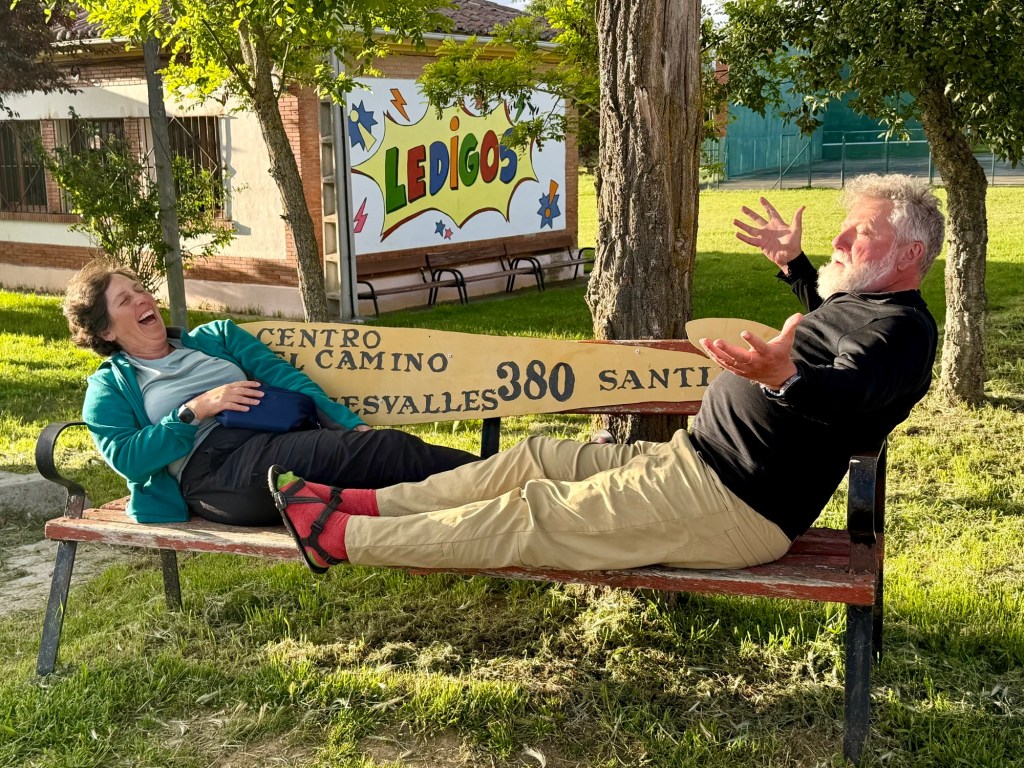
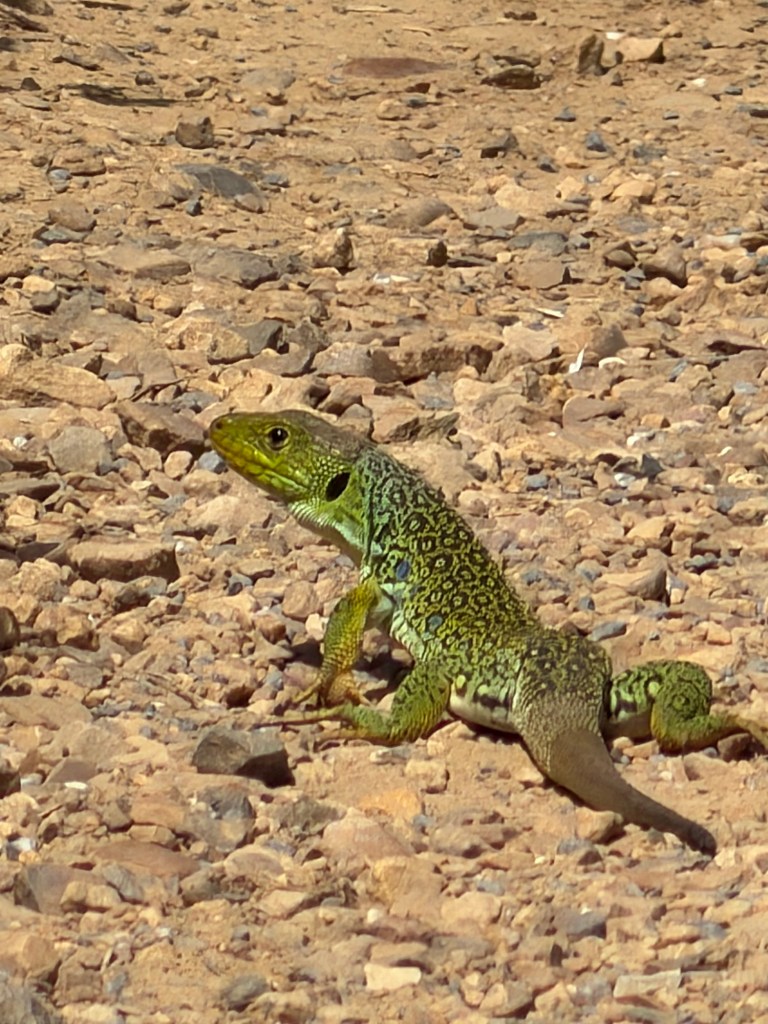


Amazing!
Road to Nowhere!
Follow the Yellow Brick Road!
I would walk 500 miles!
You are a true philosopher, Pilgrim Greg, and I am delighted that you are relaxed.