Cathedrals, crankiness and a castle

I don’t have much to say. For completeness however, an update seems appropriate.

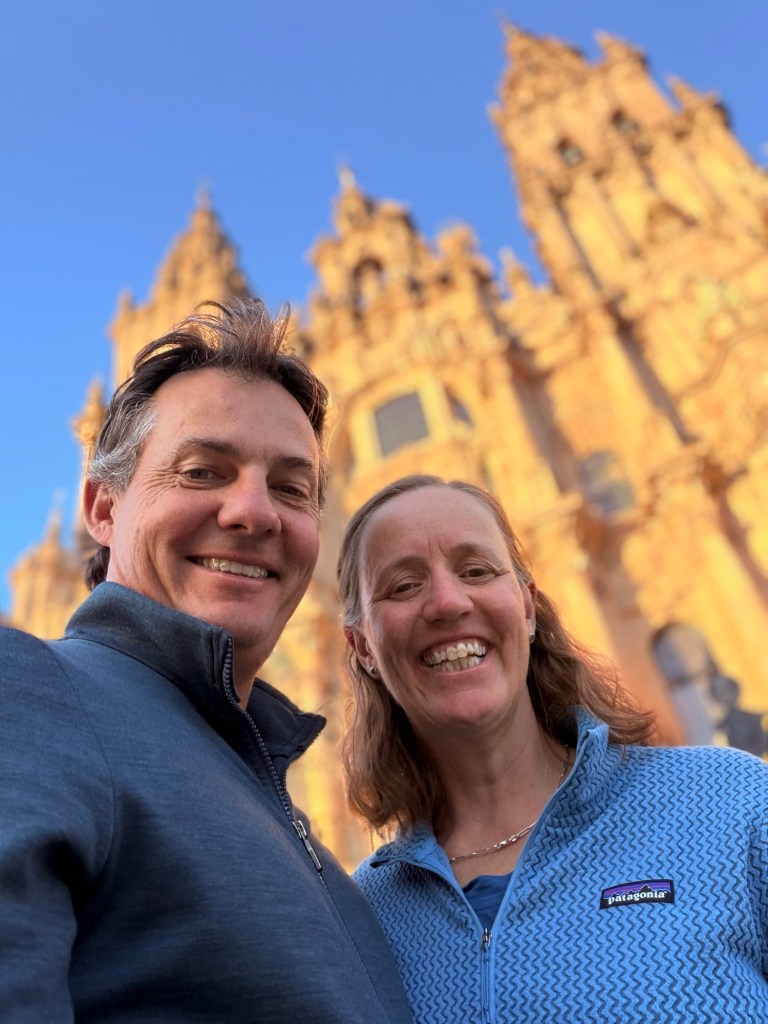
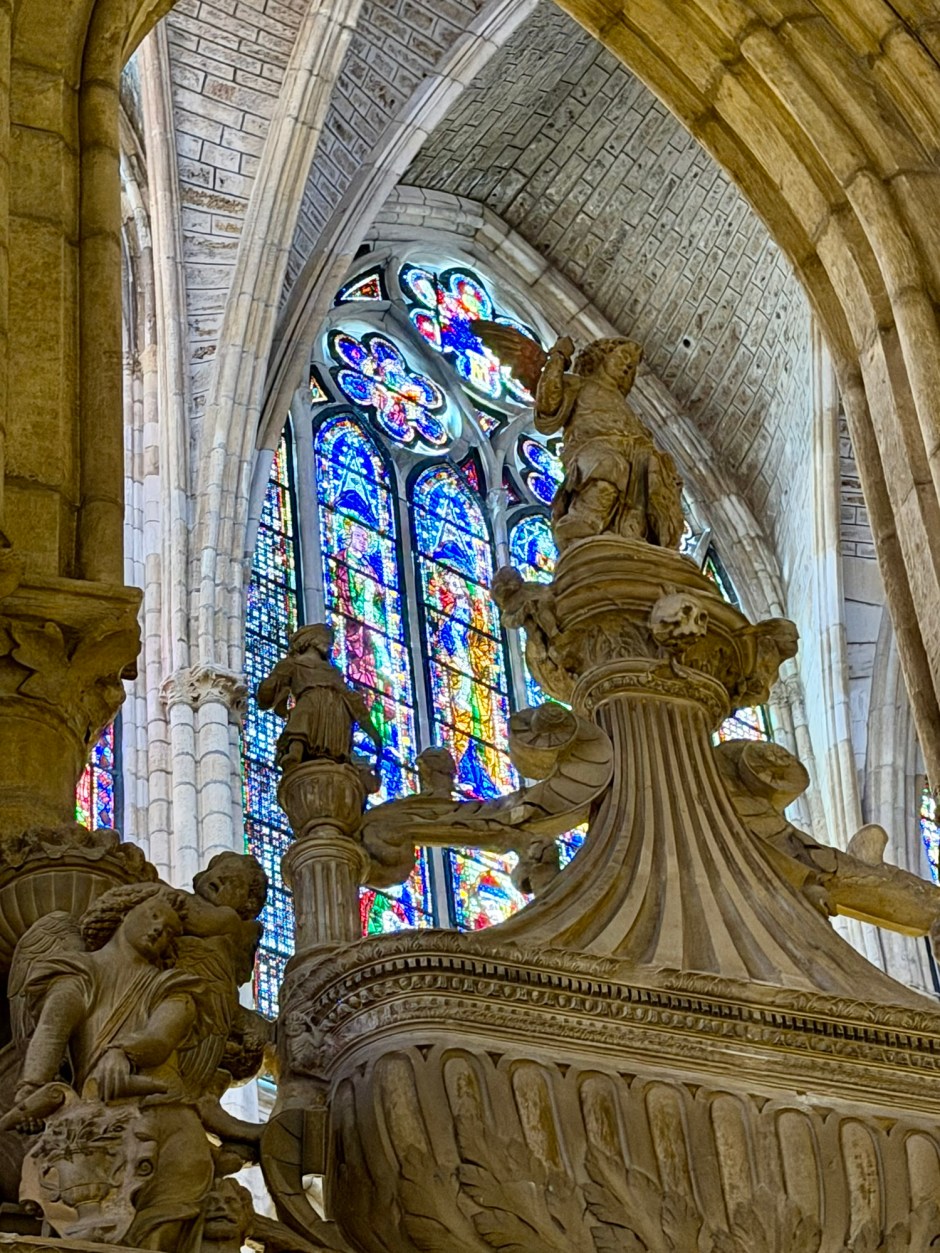
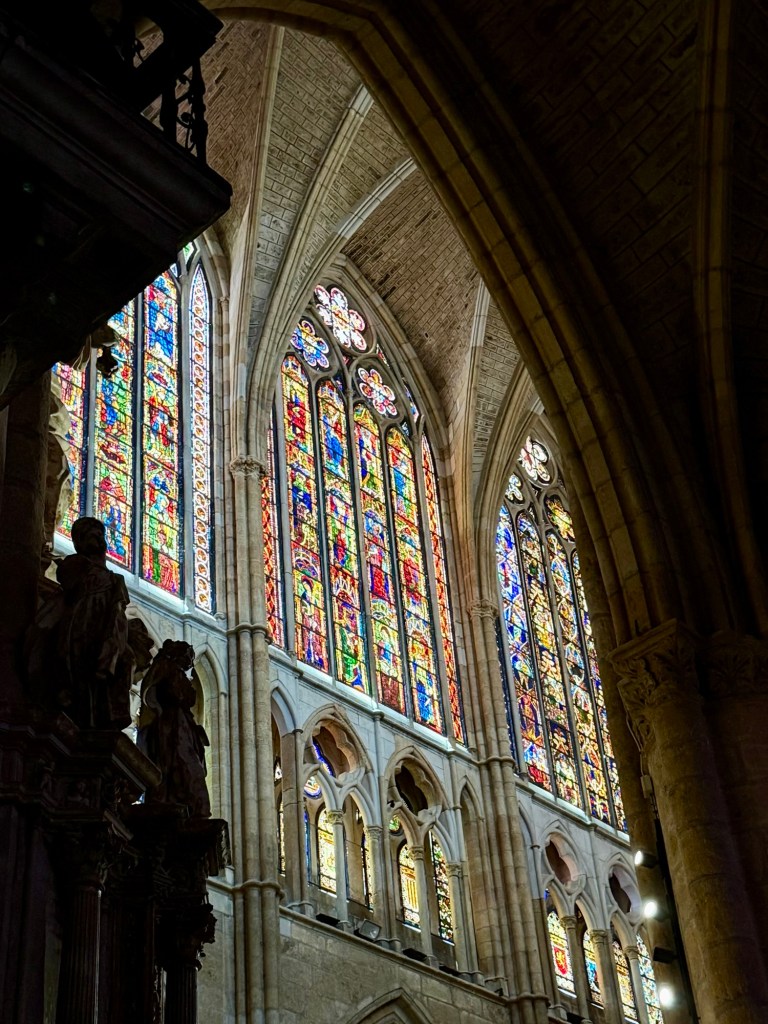
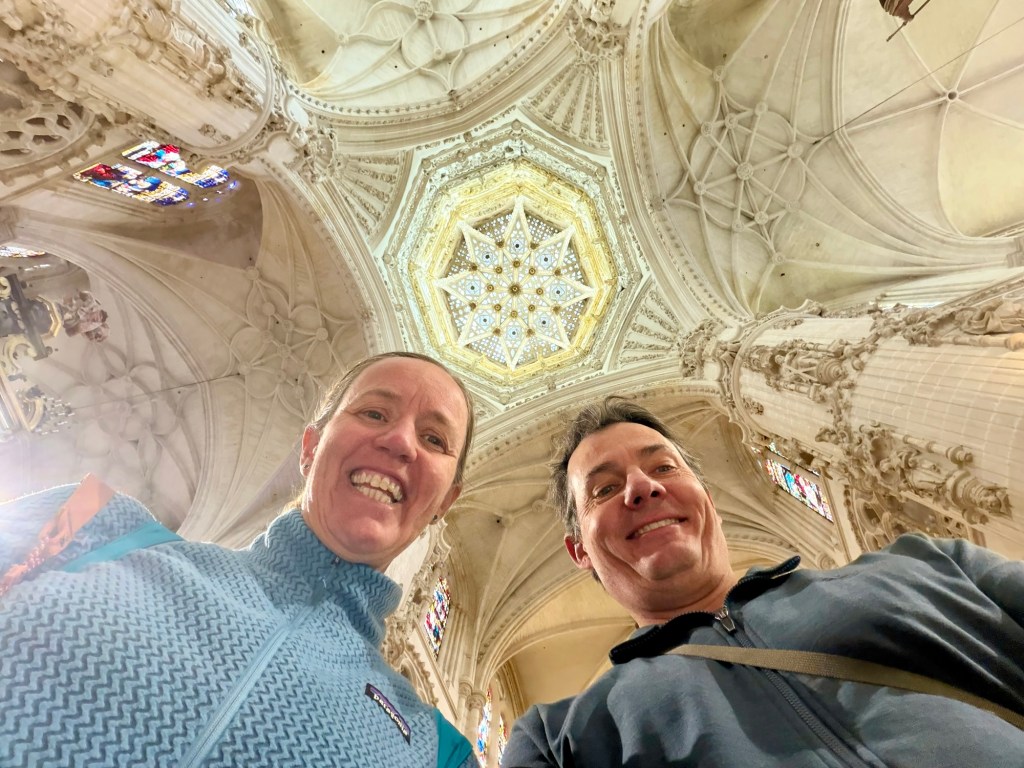
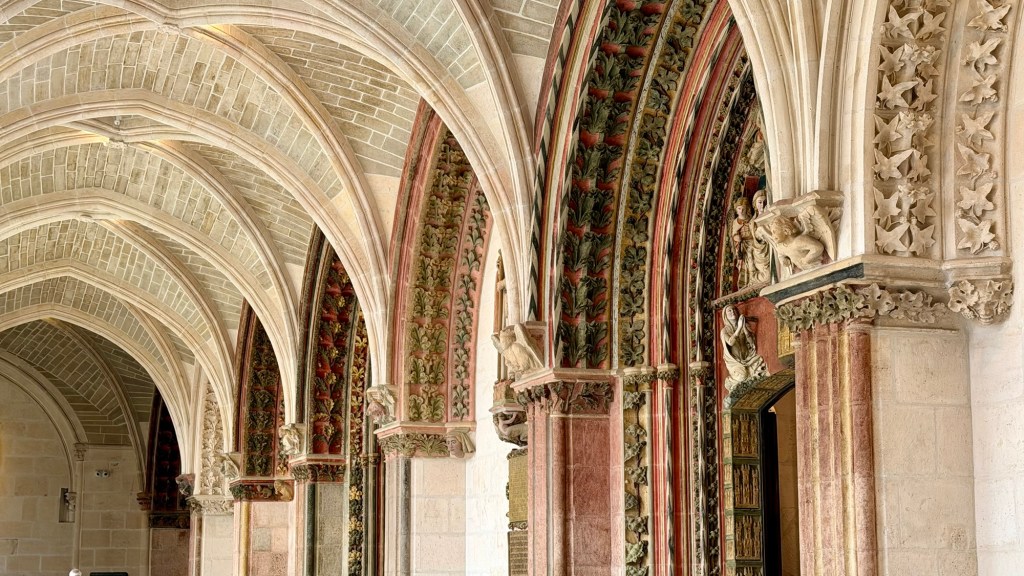
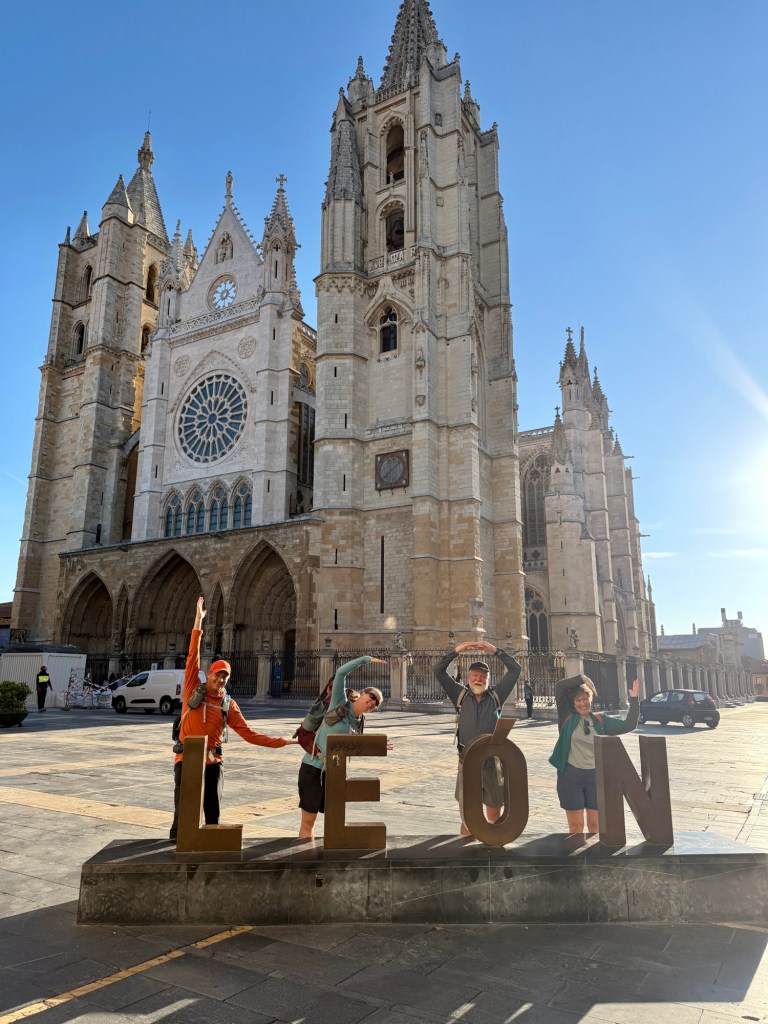
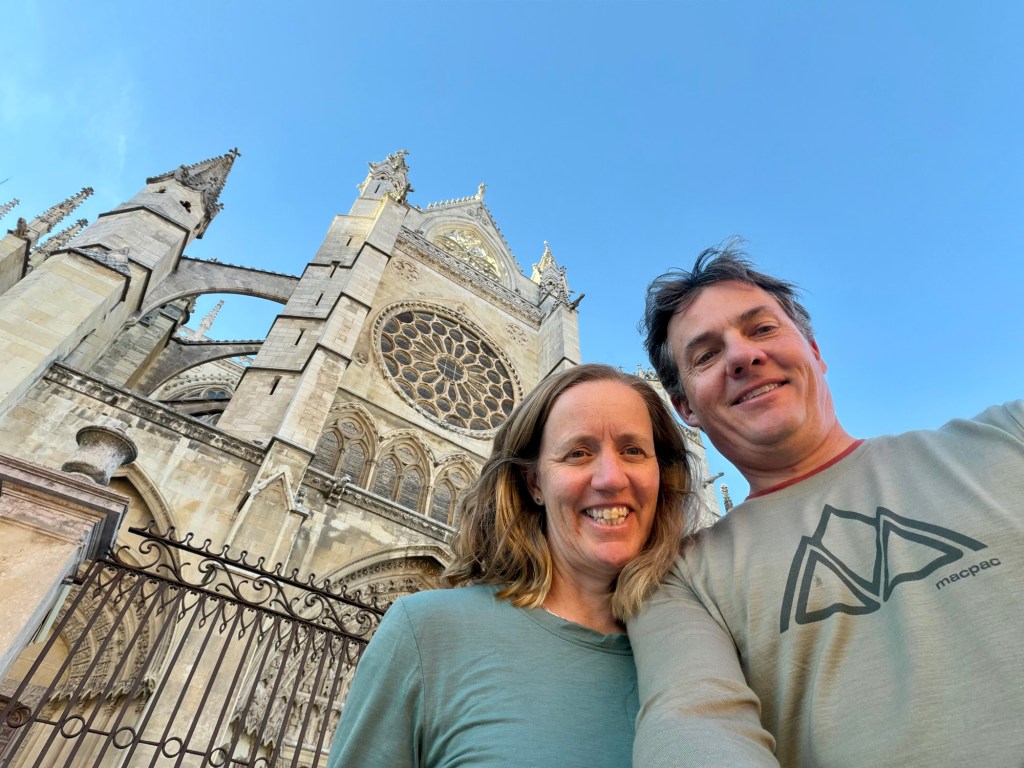
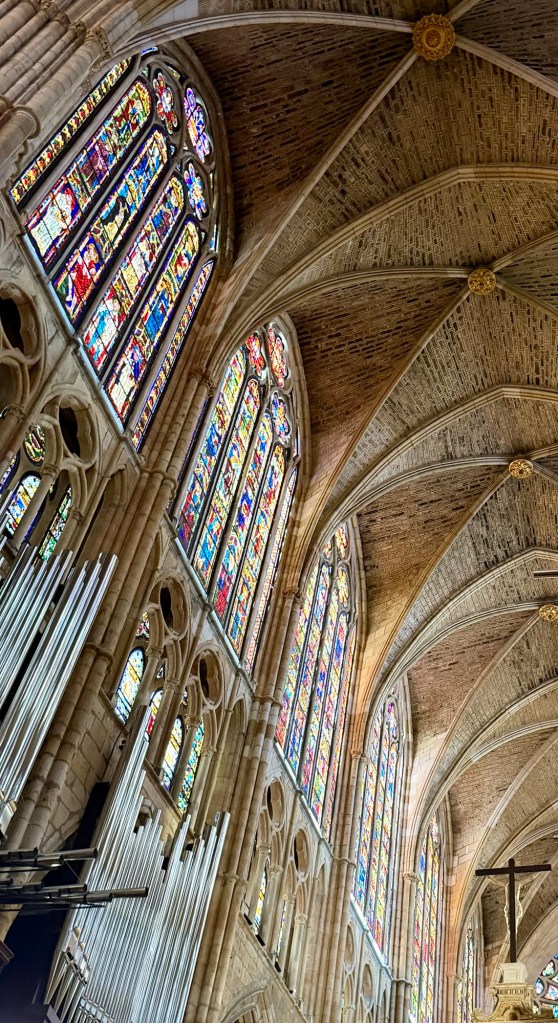
Leon was lovely. The cathedral in particular. It was my favourite of all the cathedrals and churches we have visited so far. Why? Because it is objectively (in my subjective opinion) beautiful. Its vaulted ceilings are epically tall, and the upper reaches glow with more than 1800 sq metres of stained glass. It spoke to my aesthetic.

It also gave me a crick in my neck, walking around for 45 minutes with head tilted unnaturally this way and that. This of course is precisely what the cathedral’s architects intended. Look up, to the beauty of God.

While we’re on the topic of cathedrals, the others we have visited since we started also seem worthy of a mention. I’m not sure it’s right and proper to compare cathedrals, but I think I’m about to.

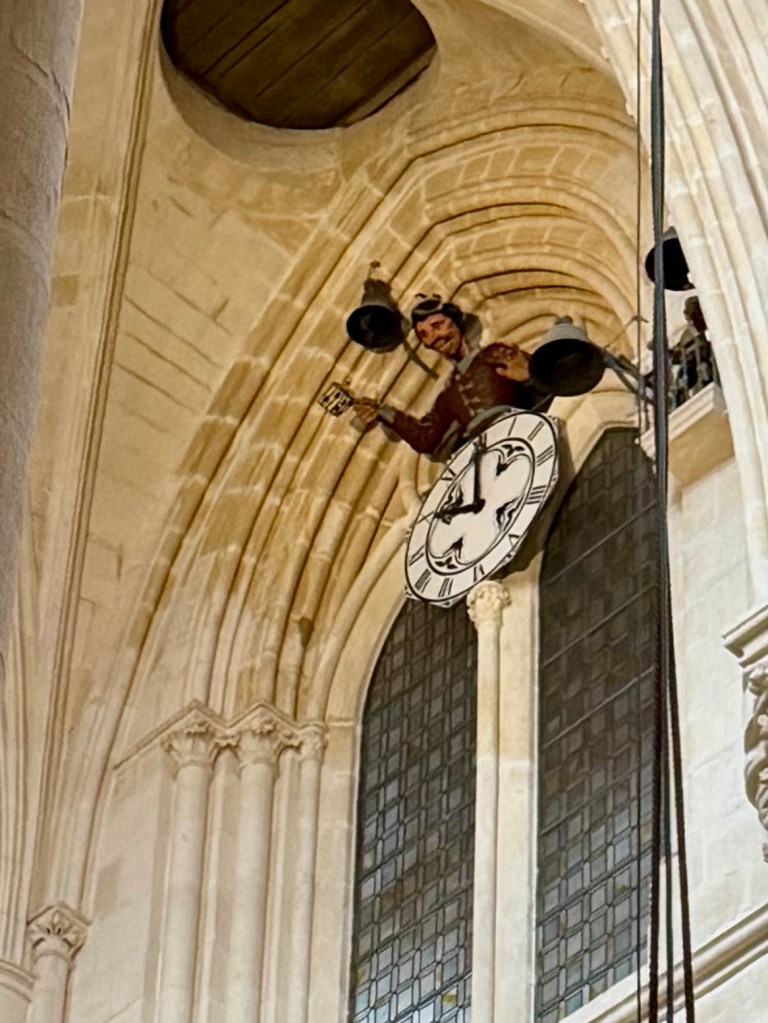
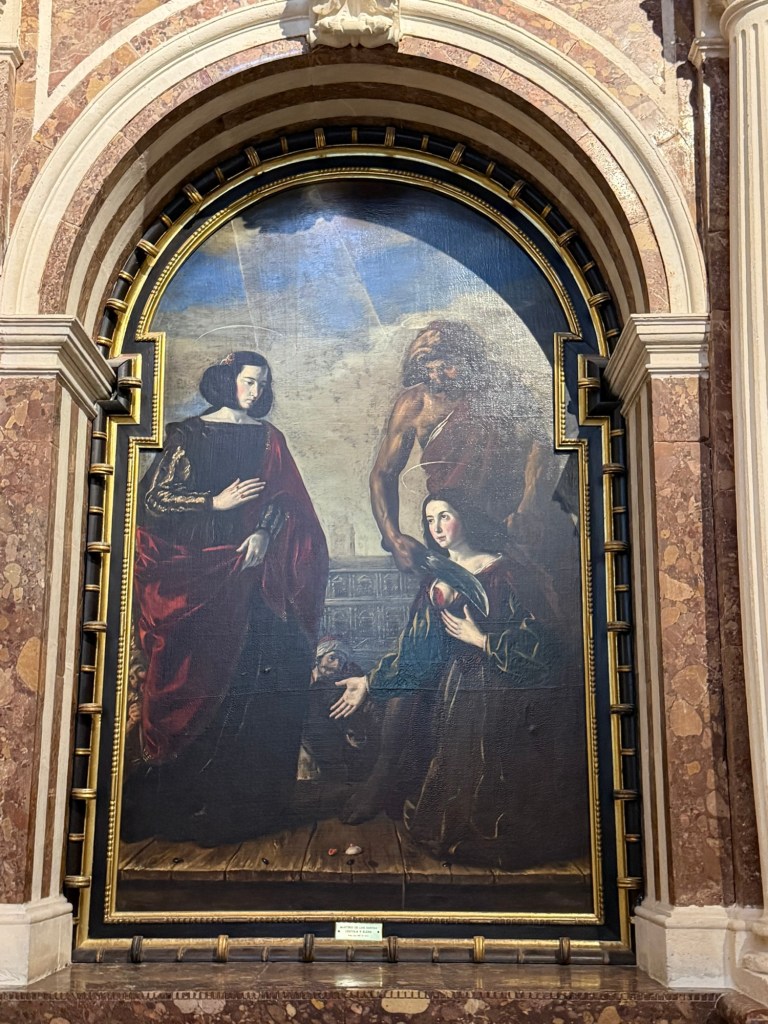
Burgos’ was… OTT. So many chapels and naves and tombs and paintings including some pretty gruesome imagery (one of which I can’t get out of my head depicted a lady with her tongue cut out and her breast being cut off). There was however a cheeky little figure high in the rear who pops out on the hour with a hammer to ring a bell. Disney style. He also opens and shuts his mouth as he hits the bell earning him the nickname ‘the flycatcher’. It was unexpected to say the least, but to my mind earned credit for helping the place not take itself too seriously.

Burgos 16th century bell ringer
Pretty Burgos ceilings
Dramatic Burgos artwork…

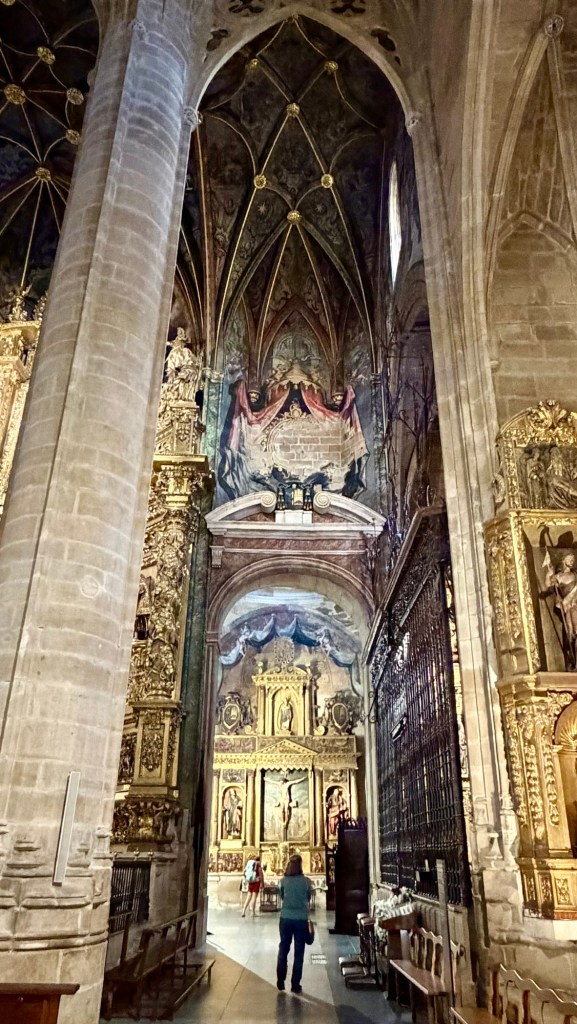
The Logroño cathedral; could you squeeze in any more gold gilding on top of the insanely intricate carving? Other than that, too dark for me.

Gilded Logrono

Pamplona’s cathedral, I’m struggling to remember now because I was more into the cathedral for bull fighting (see post on Pamplona).

We missed the cathedral at Santa Domingo del la Calzada, which is a bit of a shame. It has live chickens! I kid you not. They are kept in a coup with a glass front above the archway of one of the doors. Apparently they are the direct descendants of two chickens whose life was unnaturally extended by a miracle performed by Saint Dominic. As the story goes…

…a young man and his family were traveling as pilgrims to Santiago. On the way, they stopped in Santo Domingo de la Calzada for the night, where he rejected the advances of the inn keeper’s daughter. Upset with the rejection, the young woman hid a silver cup in the pilgrim’s bag, who would be later accused of theft and condemned to death.

On their return from Santiago de Compostela, his parents went back to Santo Domingo de la Calzada to give the final farewell to their son and found him still alive, thanks to the intervention of Saint Dominic who knew of the young man’s innocence.

Surprised by such a miracle, the parents went to the authorities to let them know. The Corregidor (sheriff) of Santo Domingo being skeptical replied that their son would be as alive as the roasted cockerel and hen he was going to eat that very moment. As he pronounced these words, the cockerel and hen instantly got up on the plate, their white feathers grew back and they started to sing.’ (Camino Ways)

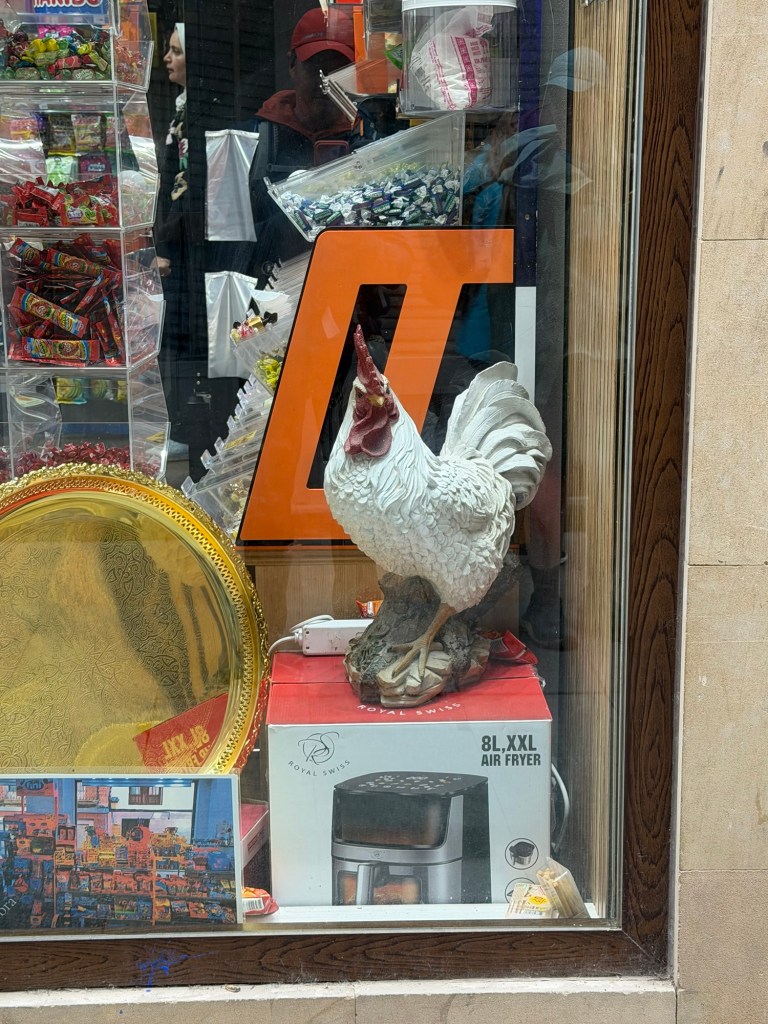
It’s a miracle celebrated to this day. The town has chicken paraphernalia everywhere, including one shop with a chicken sitting on top of an air fryer! Hilarious. It reminded Paul of the McDonalds situated on the lower floor of the museum of communism in Moscow. Also hilarious.

Is it a cooking suggestion?

Unfortunately we had too many kilometres to hike that day so were unable to visit the descendants of the miraculous chickens. As I write, that now seems like something of an oversight.

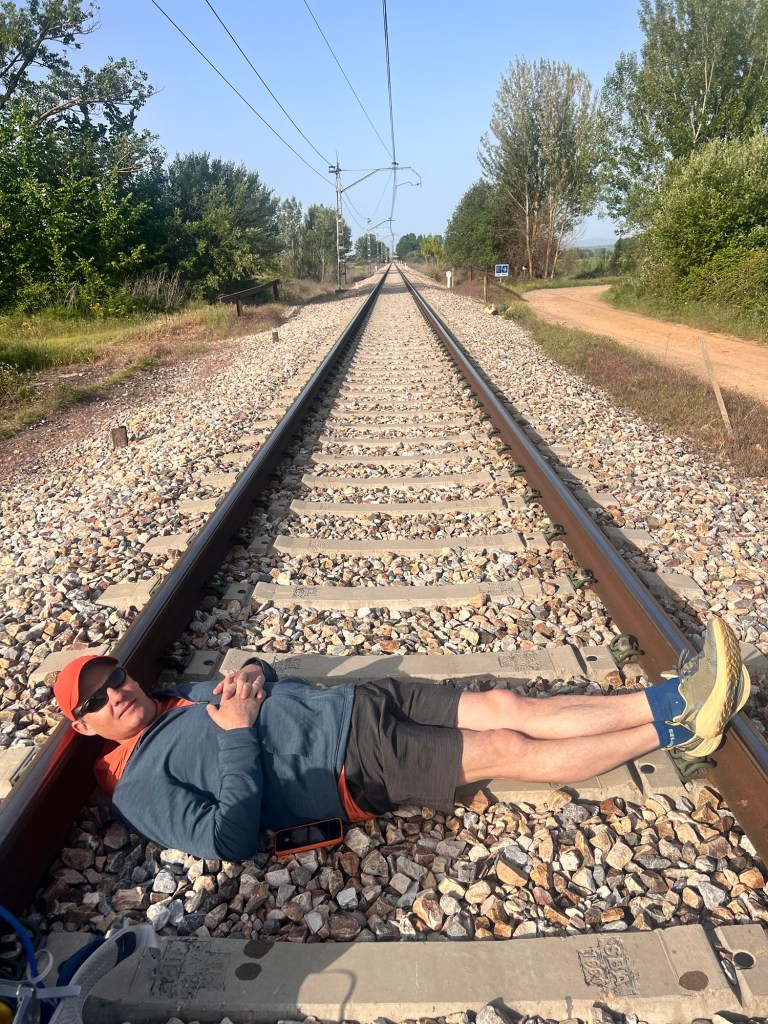
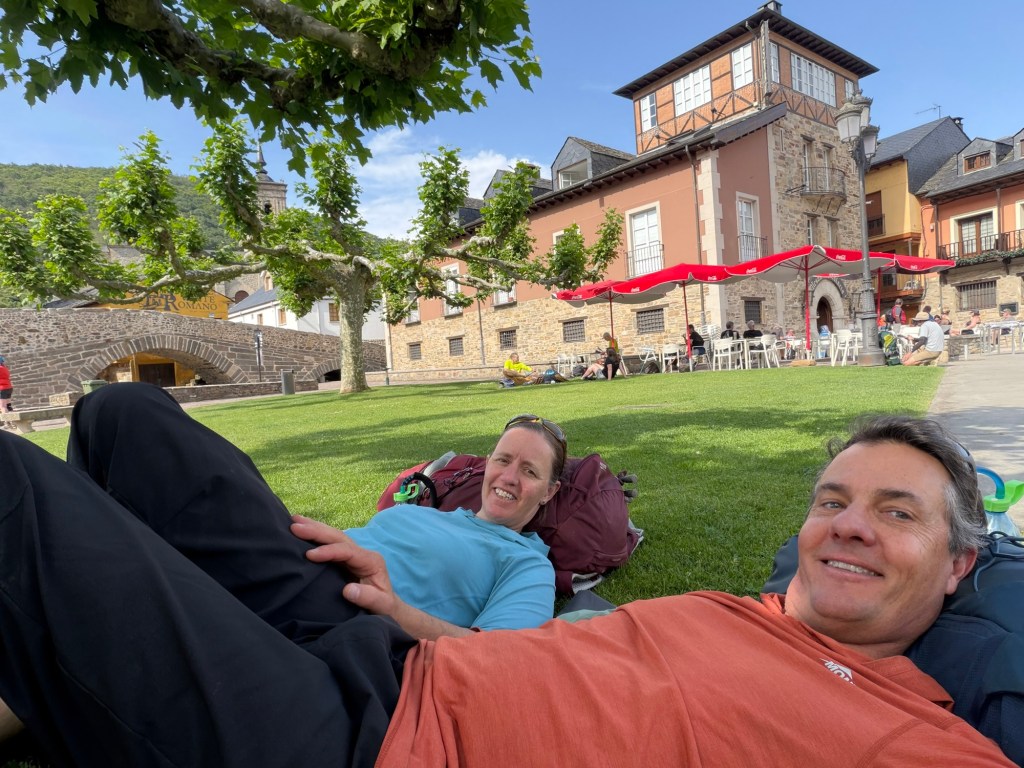
We left Leon thinking the Meseta was behind us, to discover we had two more days before reaching its edge. I think maybe I finally understood the pilgrim mythology (refer to previous post). There really wasn’t much to do, or see and it wasn’t the most lovely stretch we have walked. If I were our son Oliver I’d rate it ‘meh’ out of ten. I took a nap on a train track, because I could.

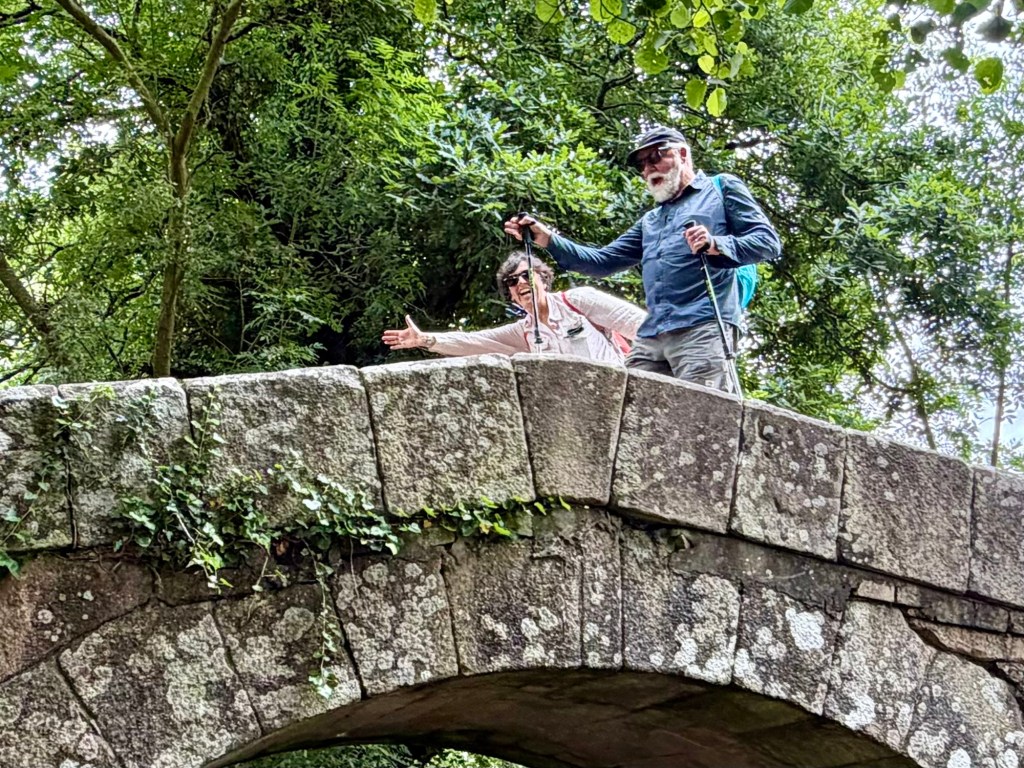
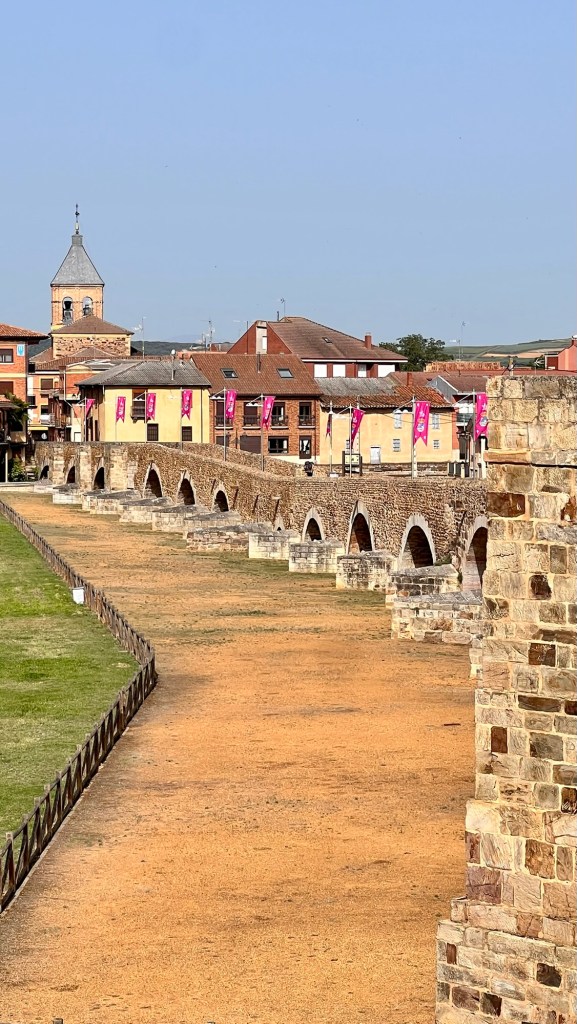
A little further along we came to Hospital de Órbigo, famous for objectively (once again in my subjective opinion) the best bridge on the Camino. Two hundred metres of meandering medieval genius. Its imperfect lines made it just perfect.

The Camino’s best bridge

They hold a jousting tournament here every year in honour of the knight Don Suero. As we understand the tale:

‘In the fifteenth century, the knight Don Suero fell in love with Lady Leonor, who unfortunately did not return his affections. Don Suero, who should have gone on to become the patron saint of emo, displayed his heartbreak by fasting and donning an iron collar every Thursday to show himself a “prisoner of love.” [That “every Thursday” part gets me every time.]

But a weekly collar wasn’t enough to get over the lady’s rejection, so in 1434 Don Suero also announced that he would joust any knight brave enough to fight him on the long bridge of Hospital del Órbigo. When he won 300 lances, he said, he would remove the collar and be free of his affliction. This became known as the tournament of the Honorable Passage.

Oh, but Don Suero didn’t really intend to fight all 300 jousts himself. Because there are bros in every century, he managed to convince nine of his closest friends to fight in his place sometimes — probably on Thursdays, when he was hampered by the collar’ (Camino times two).

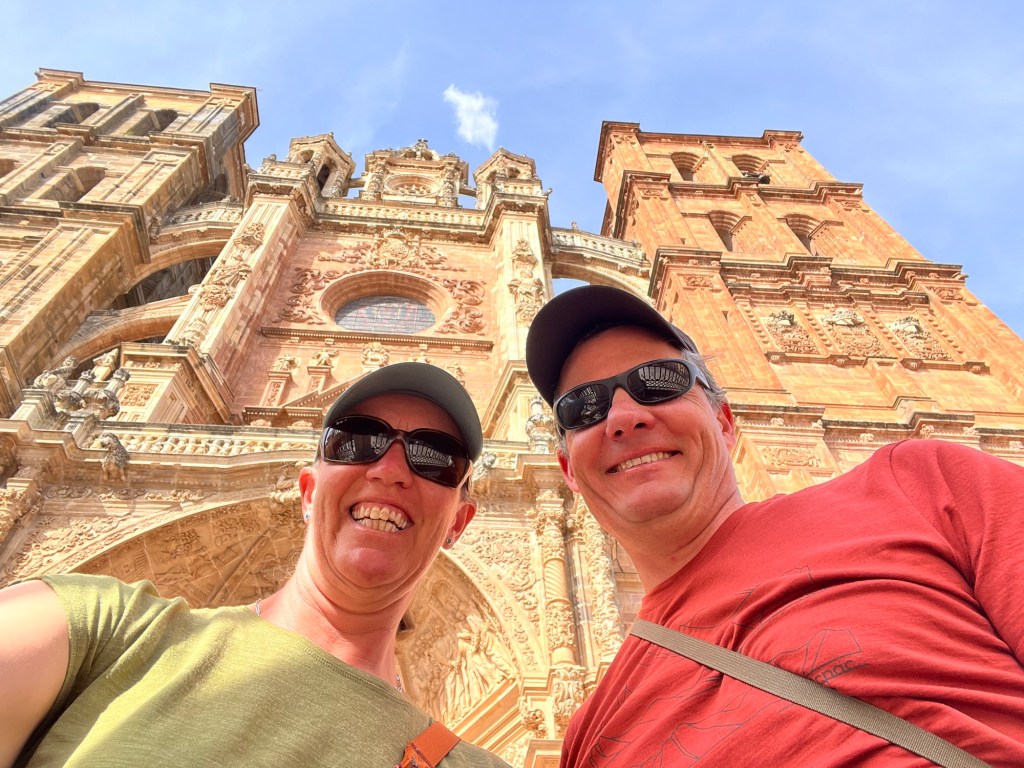
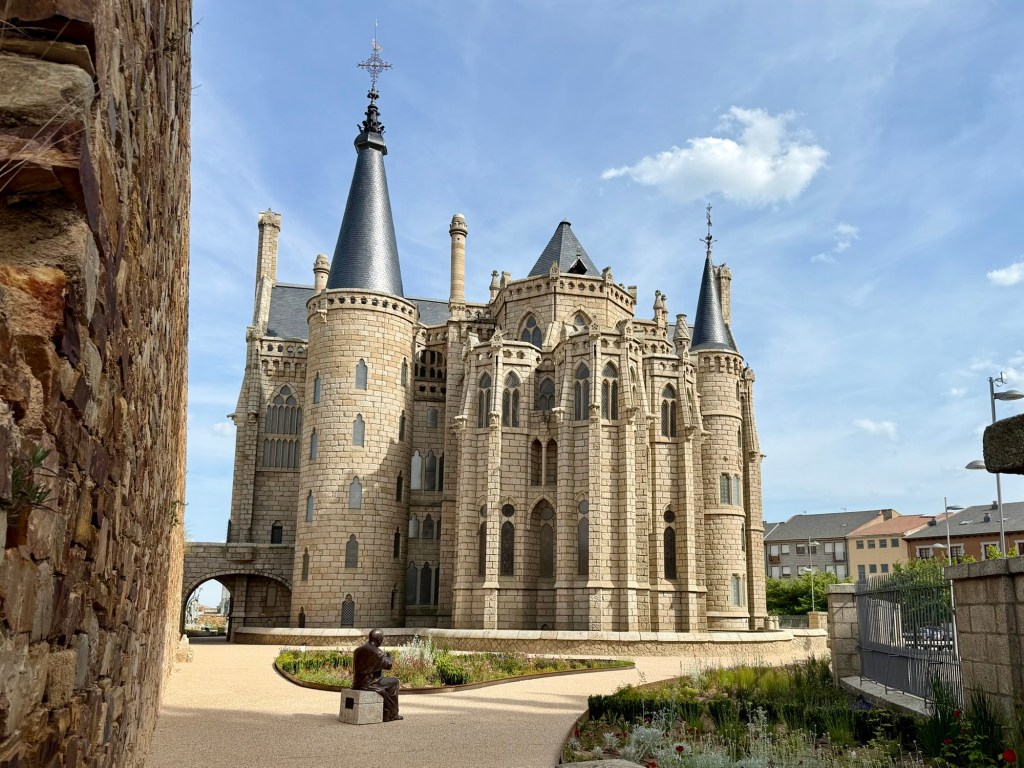
In Astorga we discovered a palace designed by Gaudi. Apparently it was home for the local Bishop which didn’t quite accord with my understanding of a life of piety. The palace was right next door to the Astorga cathedral, upon which I am unable to report regarding its interior. Our legs were too tired from walking 32 kilometres that day (at the start of a European heatwave) to justify the 8 euros required to get inside.

It had a nice gift shop though and in Emma’s reading of our Camino guide book we learnt that the outside of this cathedral is an unfortunate mixture of Romanesque, Baroque and Gothic styles. It really doesn’t know what it’s trying to be… architecturally. Which is unforunate given it sits next door to Gaudi’s masterpiece.

Astorga cathedral – outside only
Gaudi in Astorga

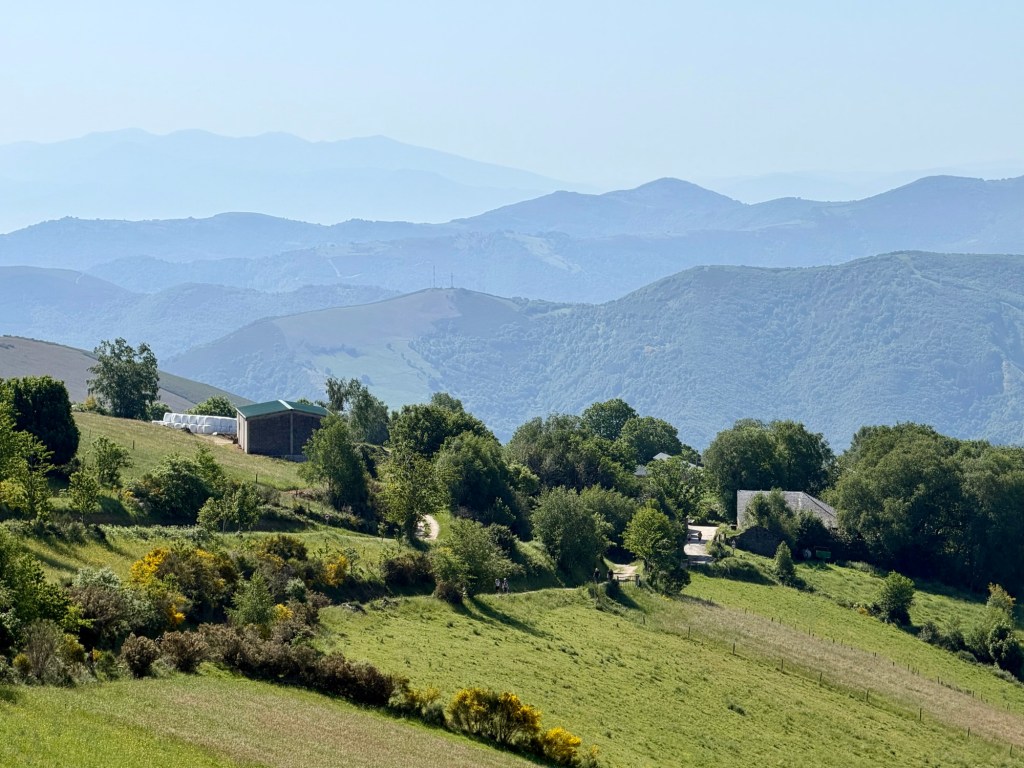
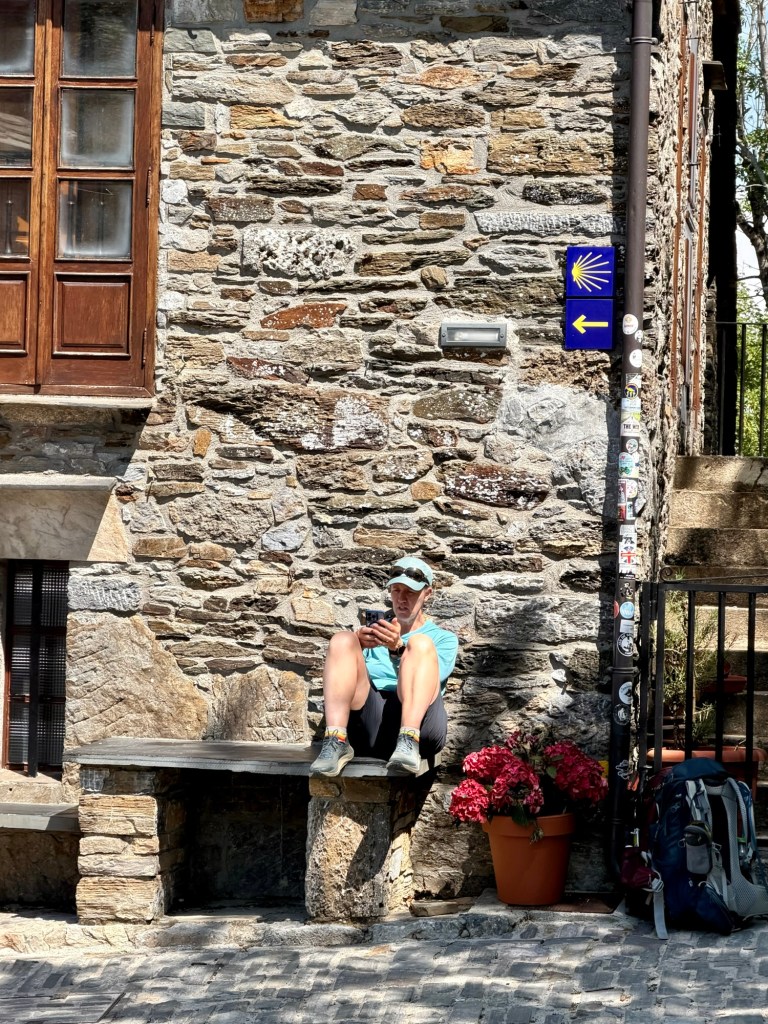
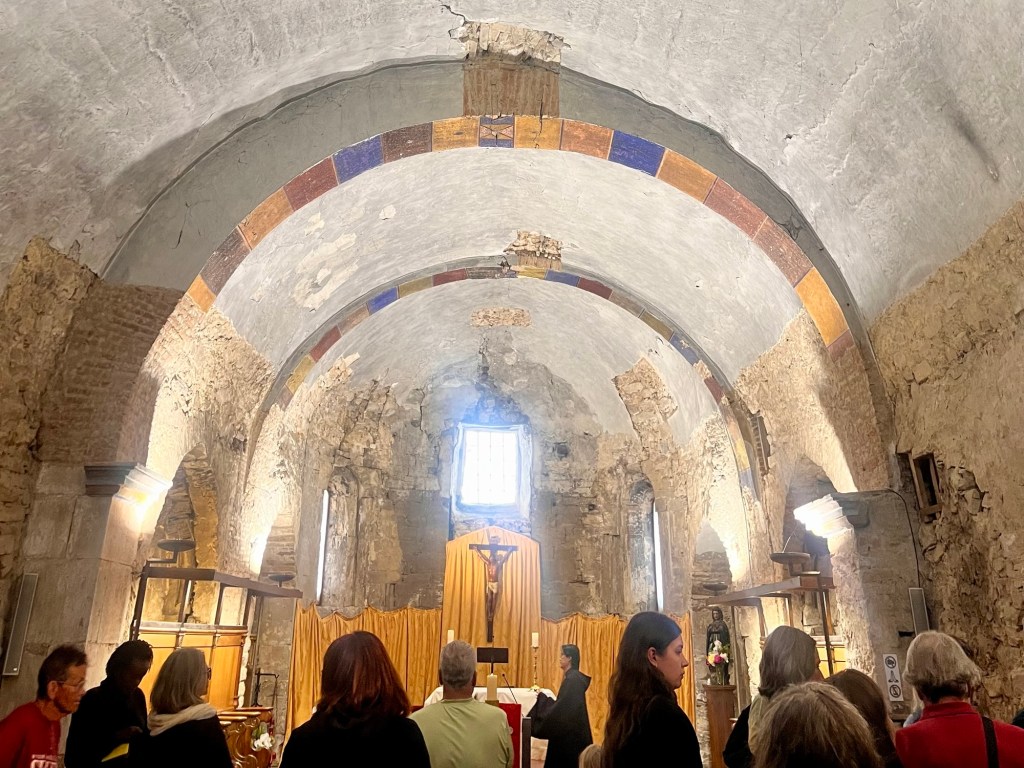
Onward we went. The plains dissapppeared in equal proportion to the reappearance of hills. The tired, often crumbling little towns of the Meseta tuned into charming stone villages in the foothills of the Camino’s highest point at Cruz de Ferro. The village of Rabanal del Camino was particularly lovely, having made a resurgence ever since the Benedictine monks set up shop here in the 1980s to support the passing parade of pilgrims. We attended their evening prayer in a charming if rustic old church. The monks sung their praise in Latin. It was a unique experience.

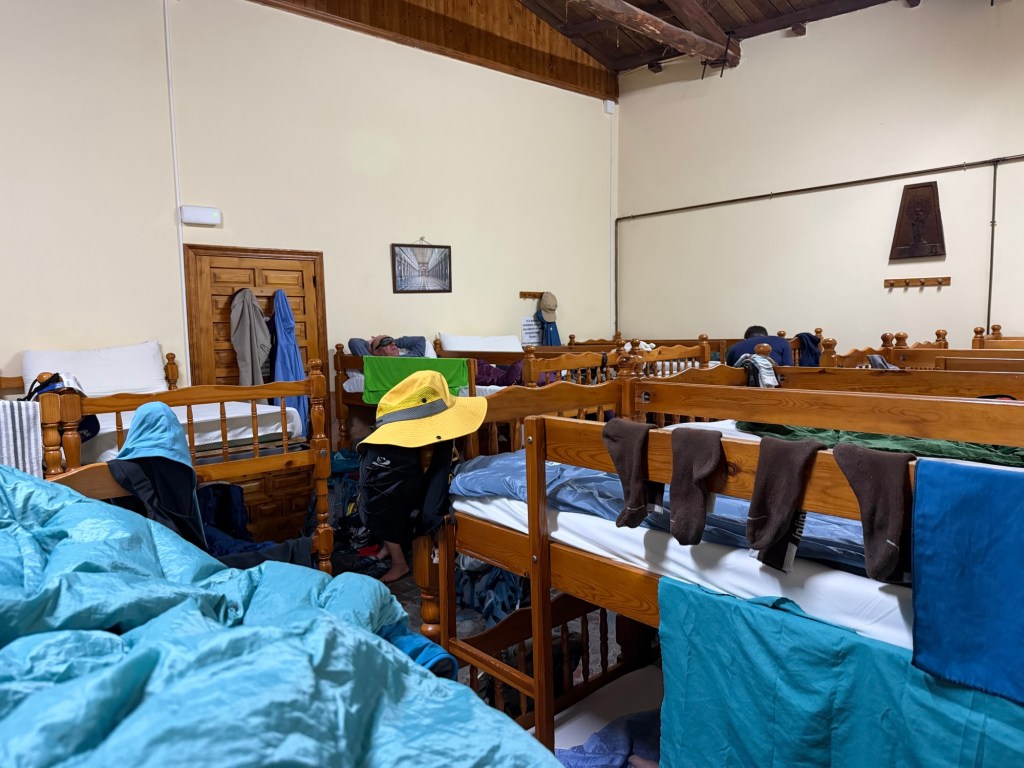
We spent that night in a 76 bed albergue (38 in our room) which forced me to rethink my kind disposition towards the peregrino commmunity. OMG, this is a dorm and people are trying to sleep. If you want to discuss the tradie who didn’t show up to fix your garden wall (three times apparently) by phone, on speaker, THEN PLEASE FEEL FREE TO USE THE COMMUNAL COURTYARD OUTSIDE!

Inconsiderate peregrinos were here

Of course I could have fixed this problem for myself simply by inserting my very effective Loops earplugs, except that I had bumped them off my top bunk while trying to simultaneously deal with my reading glasses, eye mask, phone, watch and multiple charging cords. The small container holding my ear plugs hit the floor, crashed open and sent them flying across the darkened dorm. No amount of scrabbling around on the floor to the glow of the red lamp on my head torch would reveal their location.

Frustrated and struggling to maintain my commitment to equanimity, I lay in bed and tried to ignore the solution to the missing tradie coming from five bunks over. An evening of unfiltered snoring ensued. Not to mention the howls of objection from a chorus of peregrinos at 5.00 am the next morning when another thoughtful individual decided they needed to turn on the fluorescent lights FOR THE WHOLE DORM so they could continue their packing!

That morning was also Sunday. Bad news on the Camino. We delayed our walk hoping for breakfast. No tortilla de patats on a Sunday though. We had a croissant. Chased down by a chocolate croissant. Fortunately (for me) there was coffee.

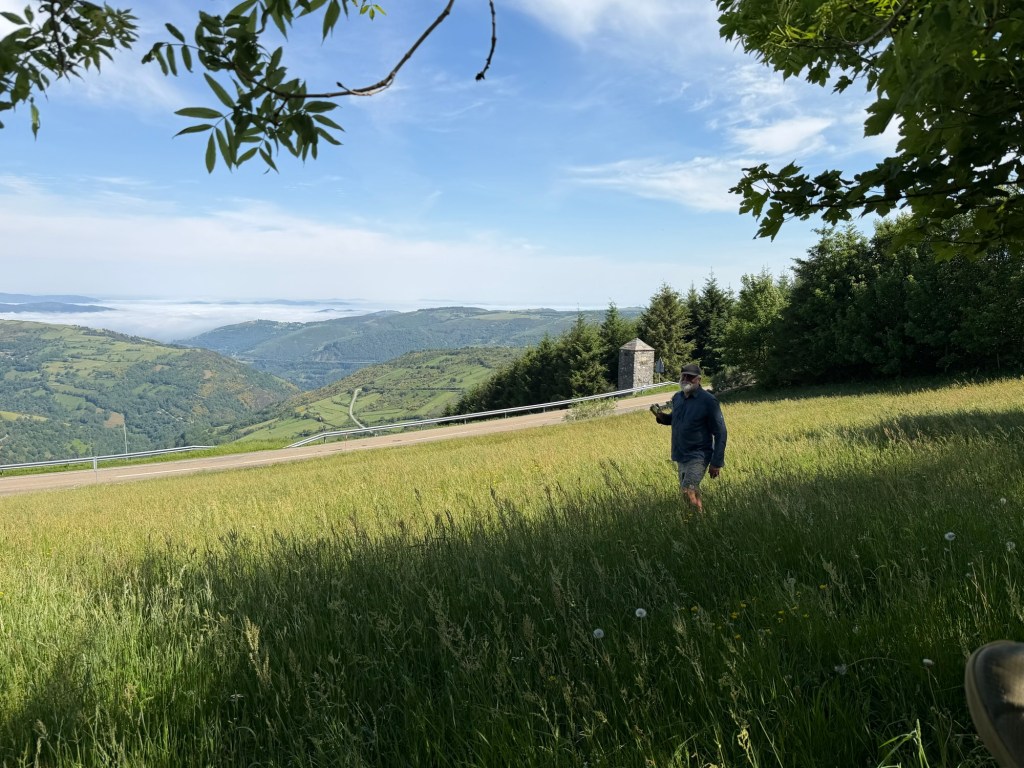
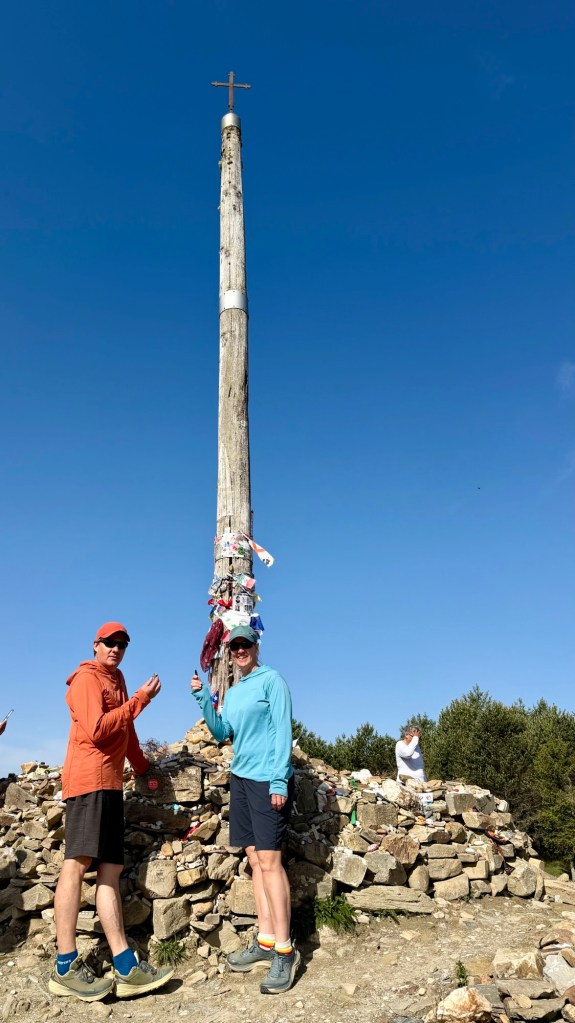
The next day was the high point of the Camino. Geographically. We walked slowly but steadily, up and up to Cruz de Ferro, an iconic site for pilgrims, with a 7 metre high mound of stones built up by the offerings of each passing pilgrim. At its centre, an oak pole is topped by an iron cross. In leaving a stone, you metaphorically leave behind whatever baggage you feel you have been carrying as you go through life. I decided this was a good place to forgive the noisy peregrinos from the night before.

Irritation left behind

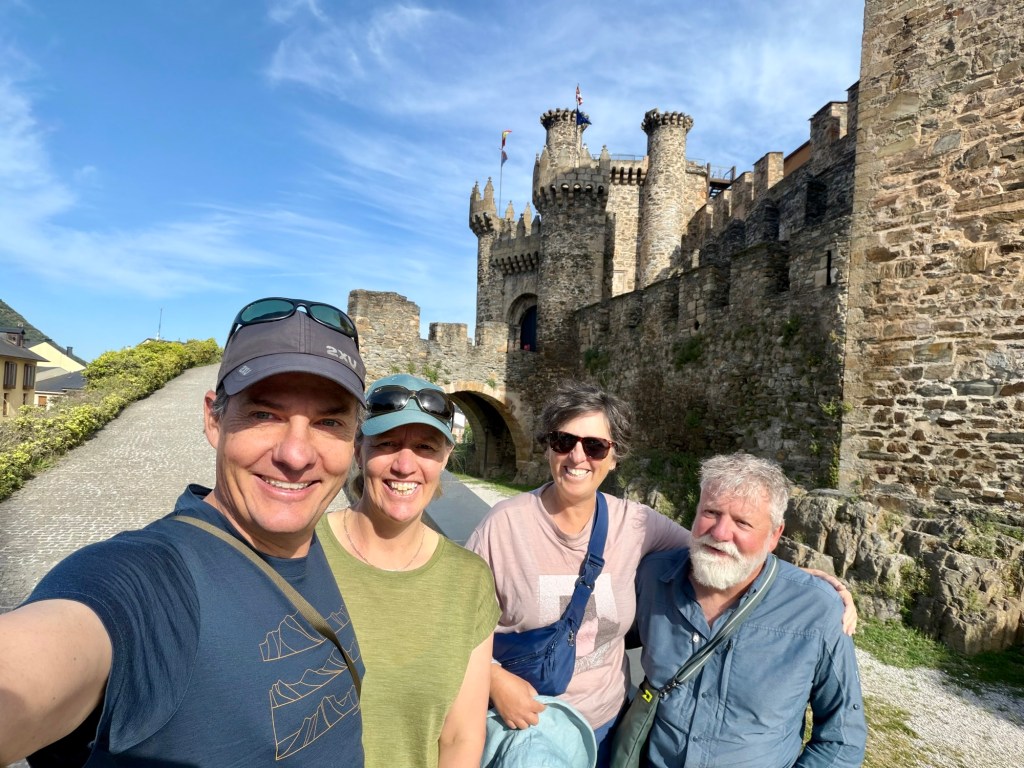
Down the other side we went with the villages becoming evermore charming along the way. Until today, where we are resting once again, in Ponferrada. Which has another castle. Paul and I reenacted Monty Python scenes because we could and because it made us laugh.

Right now I am feeling inspired by the lyrics of Simon and Garfunkel’s 59th Street Bridge.

‘I got no deeds to do, no promises to keep, I’m dappled and drowsy and ready for sleep, Life I love you. Always Groovy’.

And that’s it. You’re up to date!

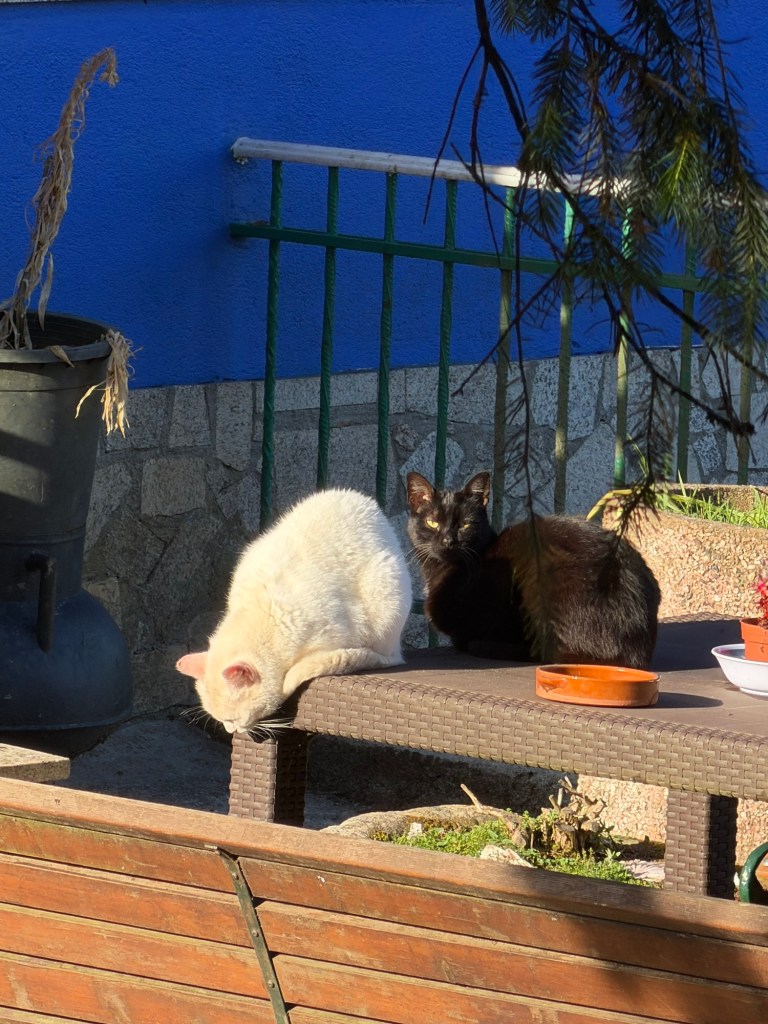
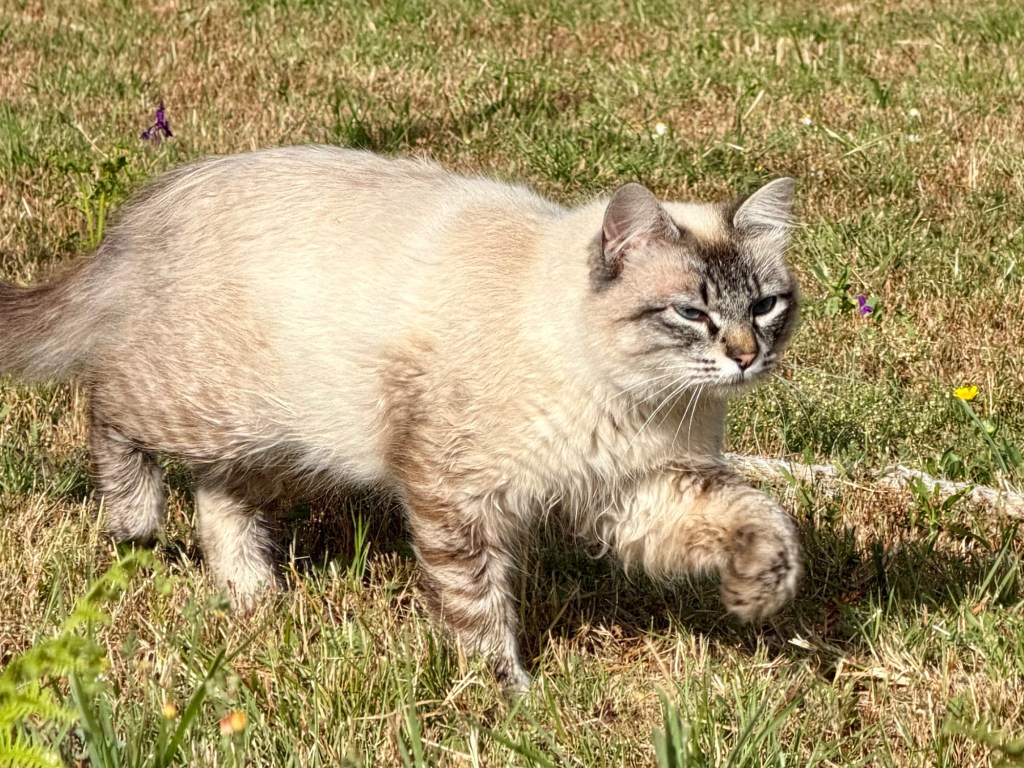
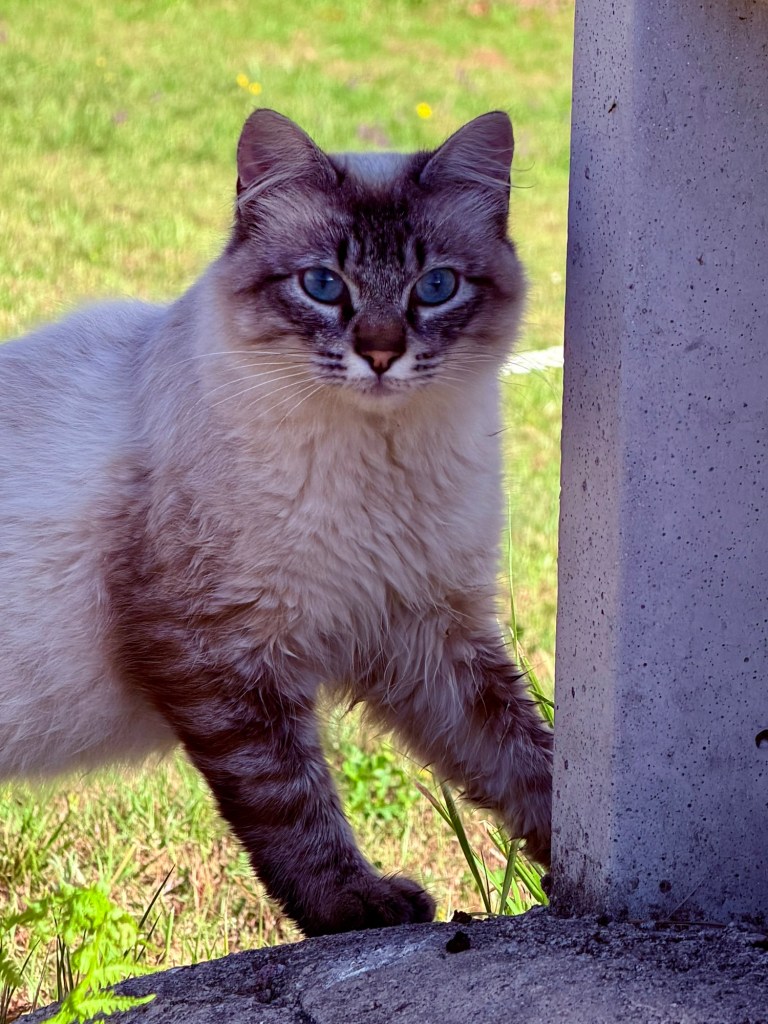
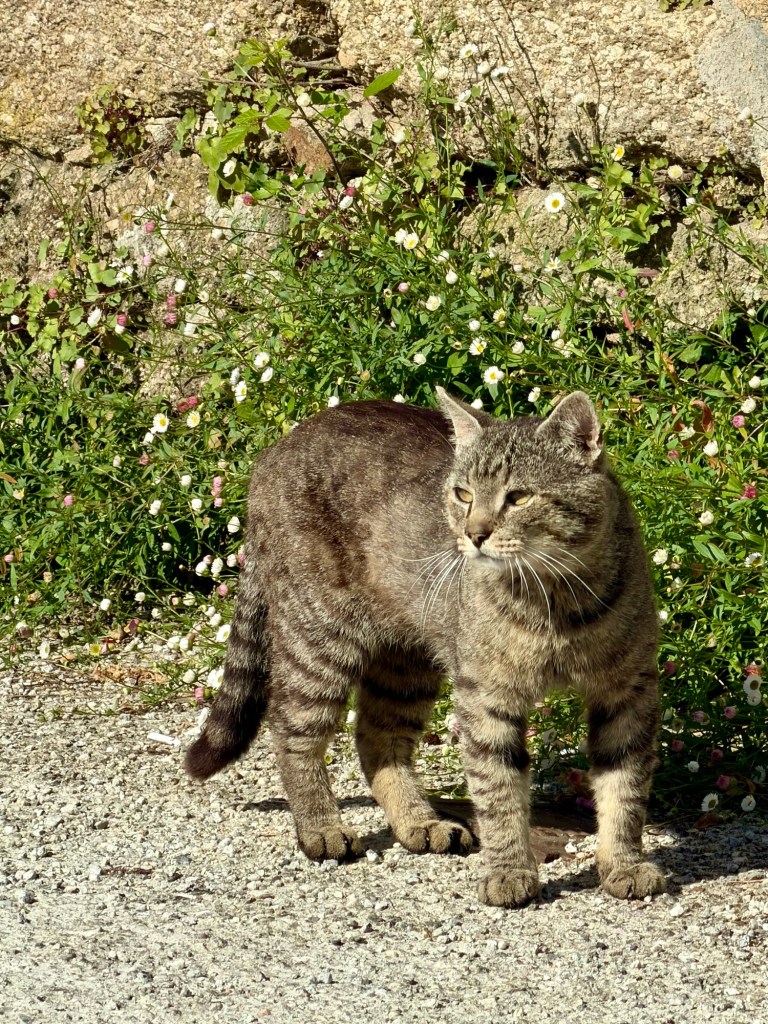
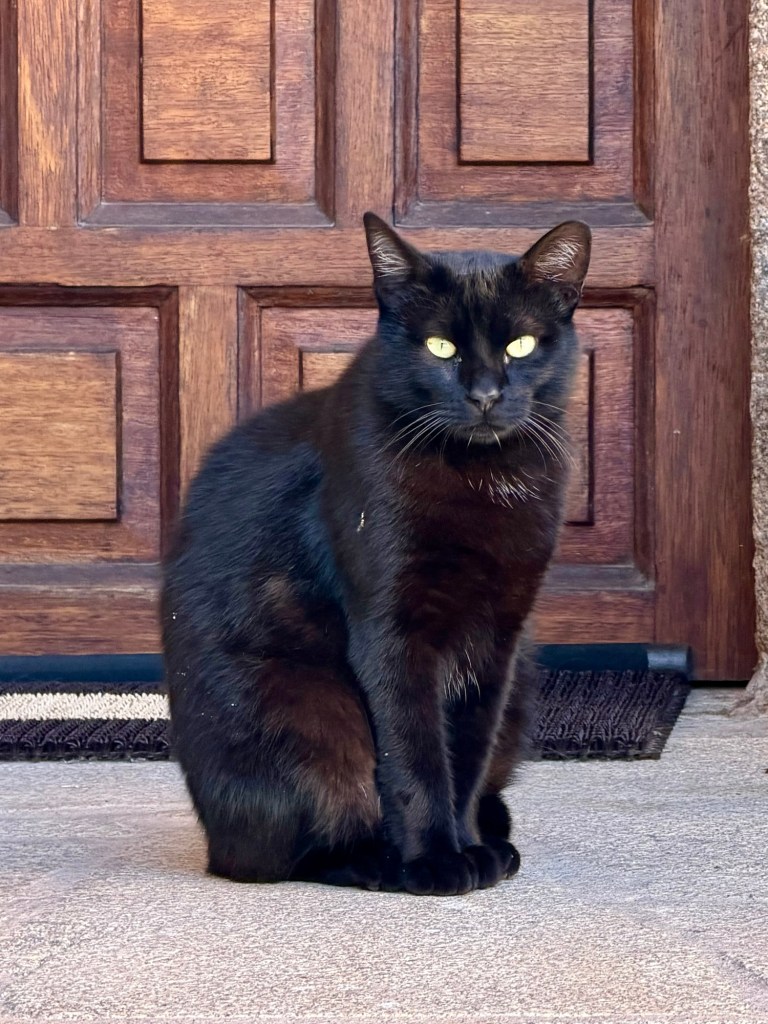
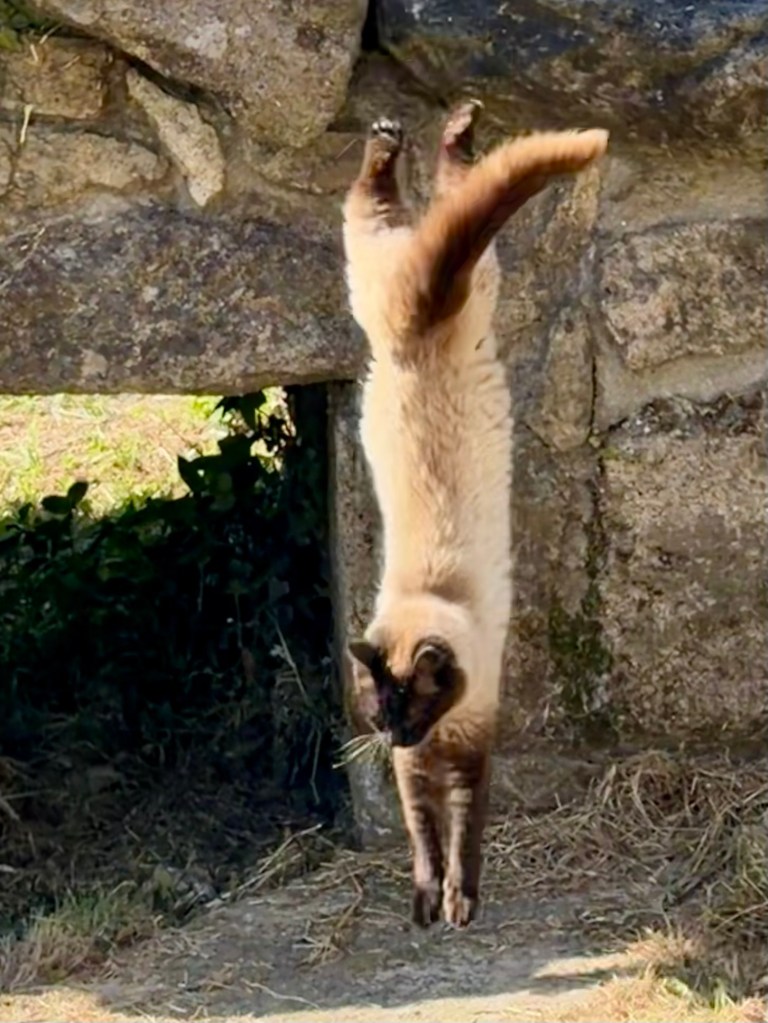
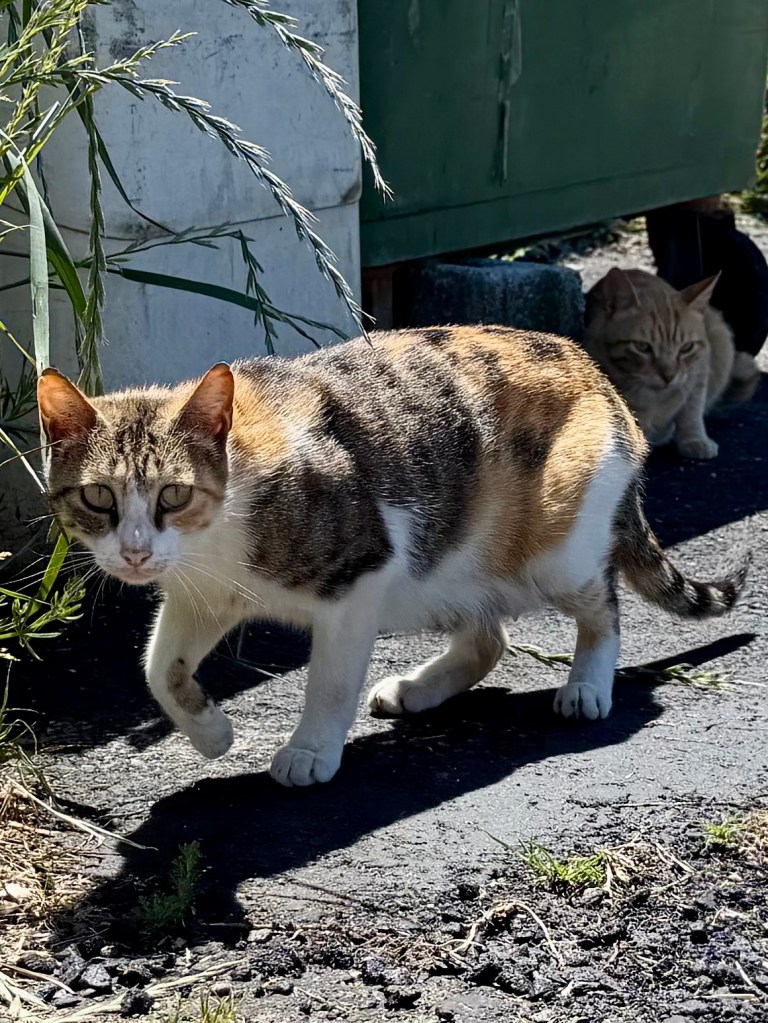
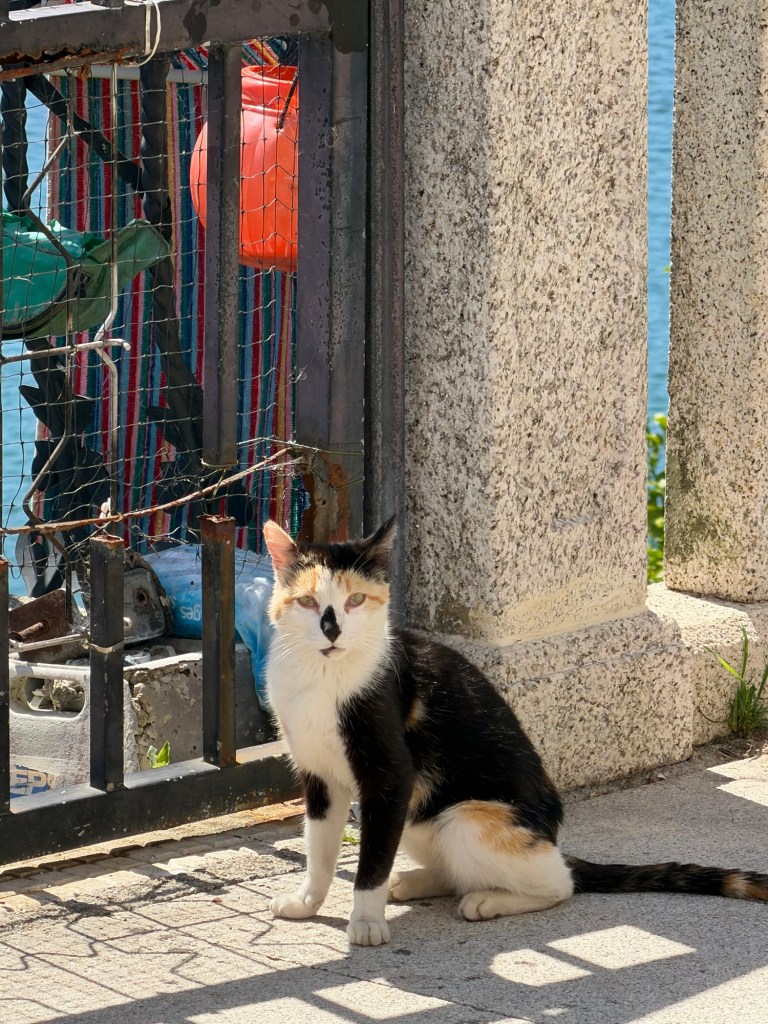
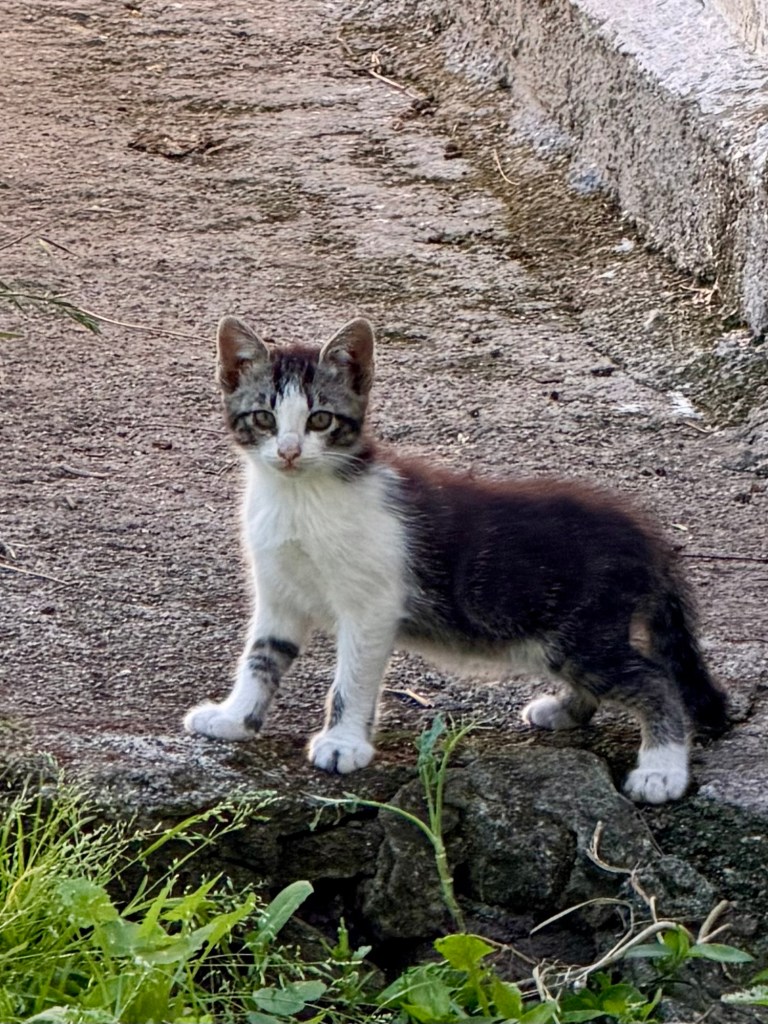
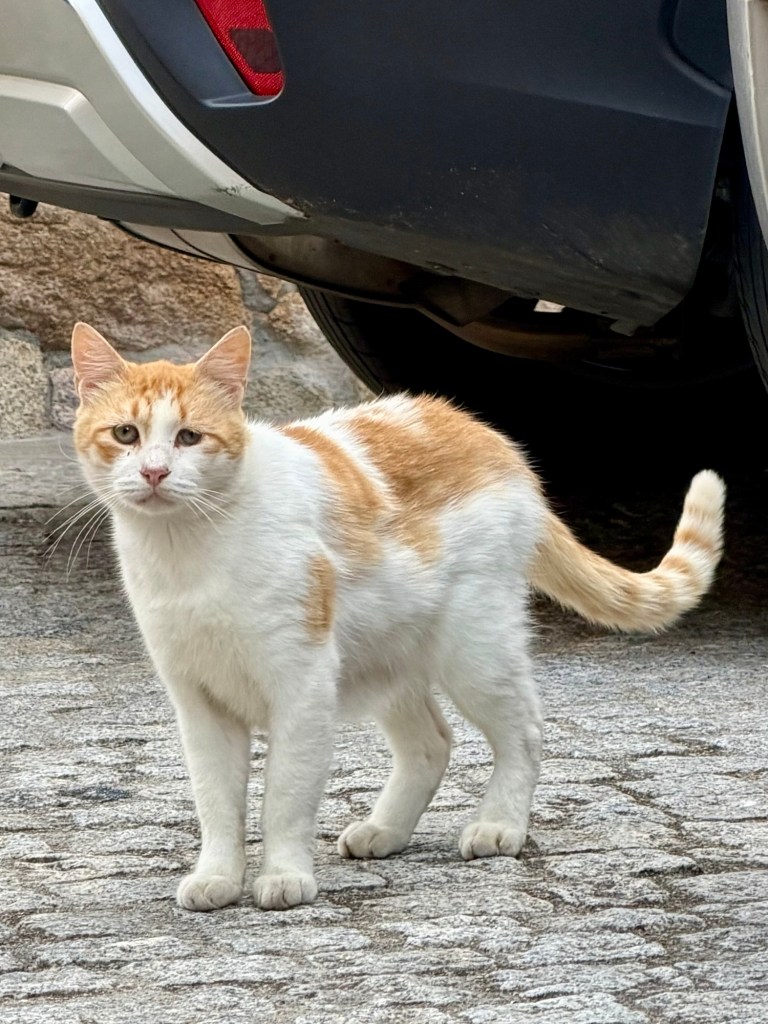
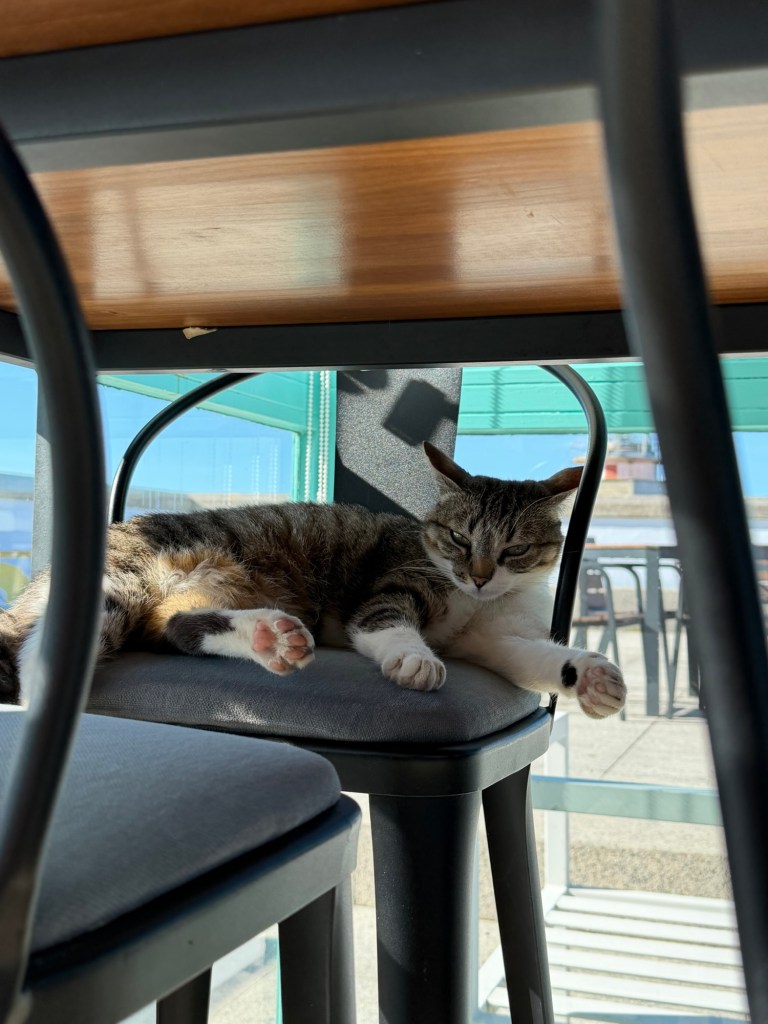
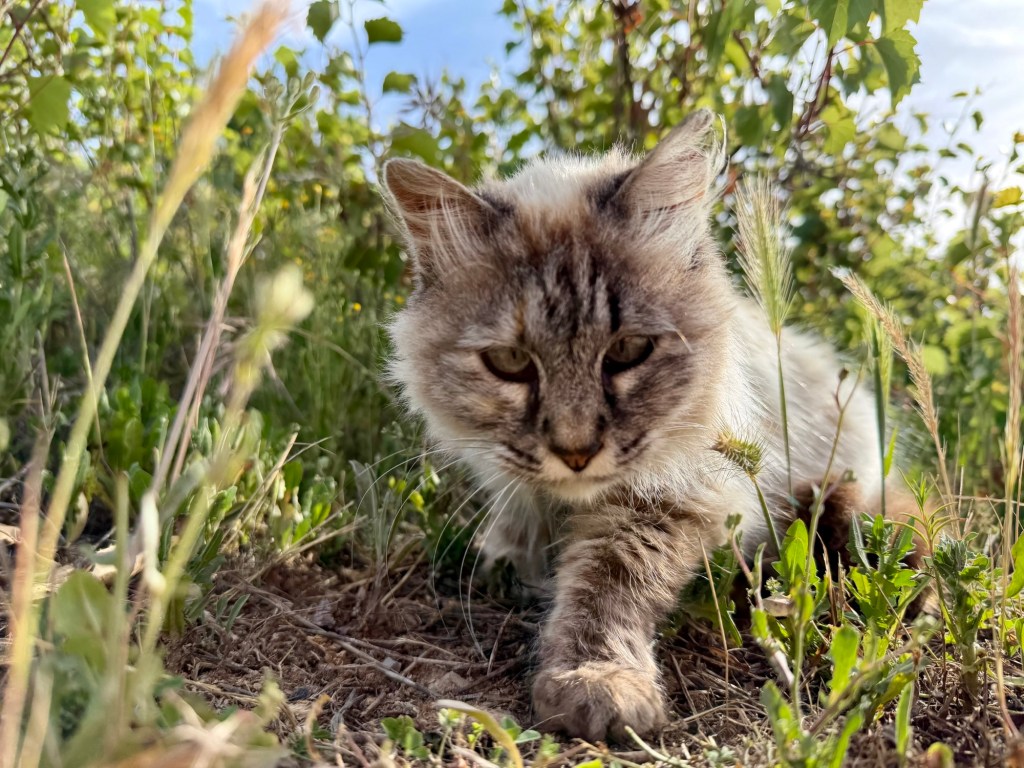
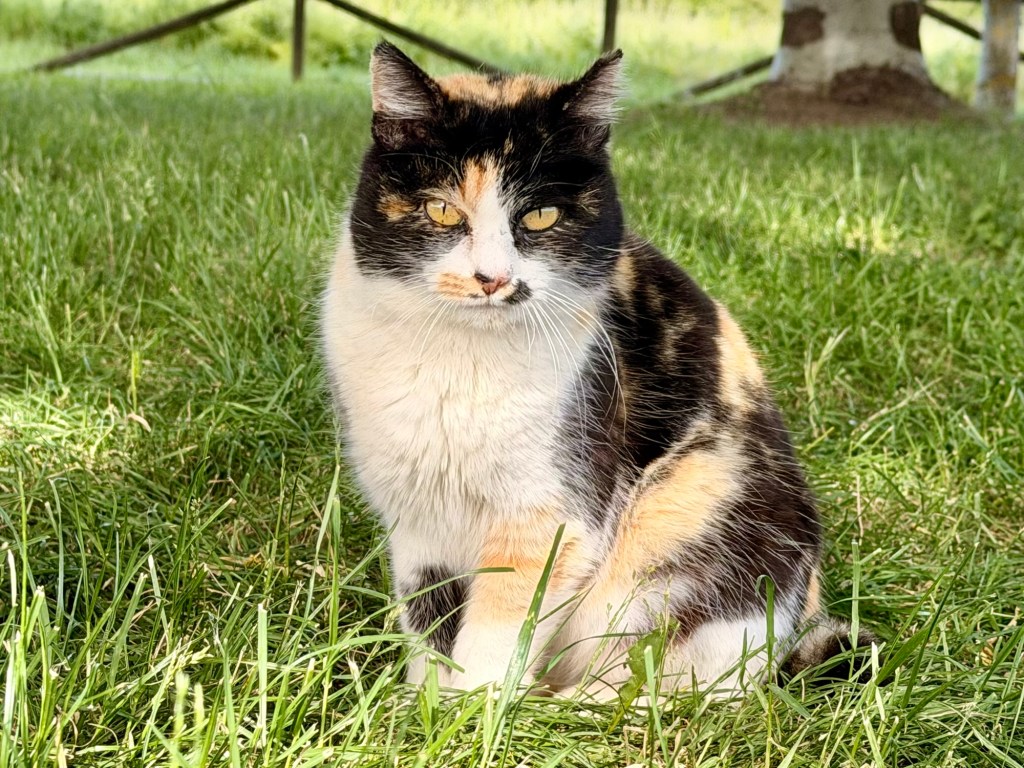
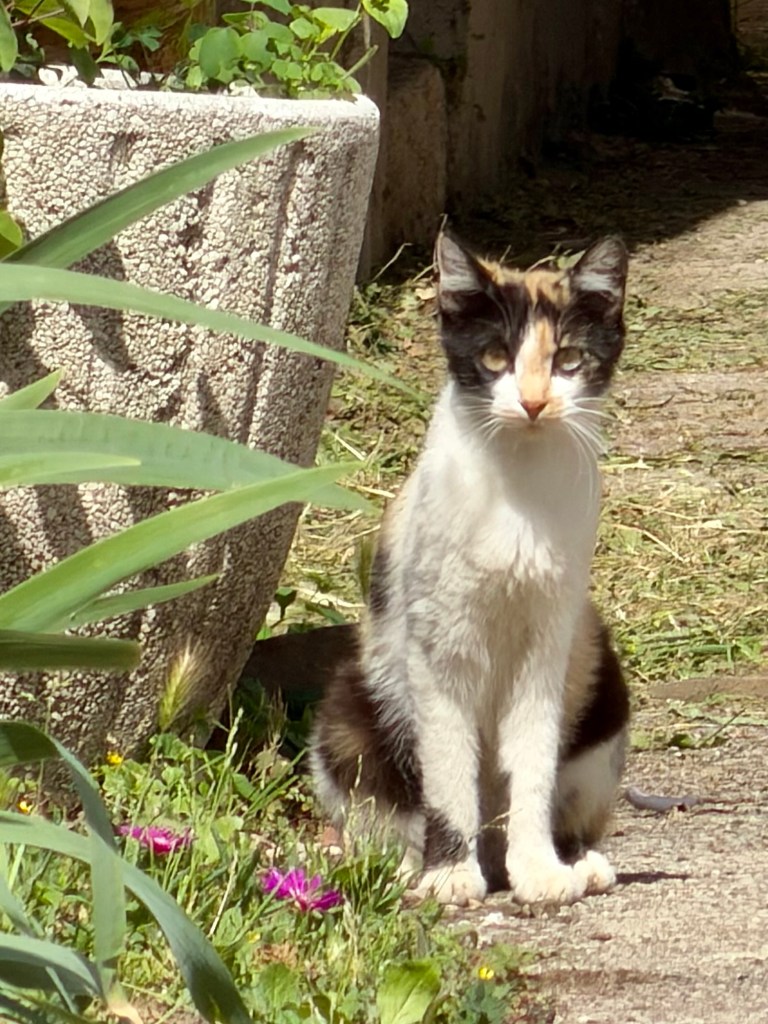
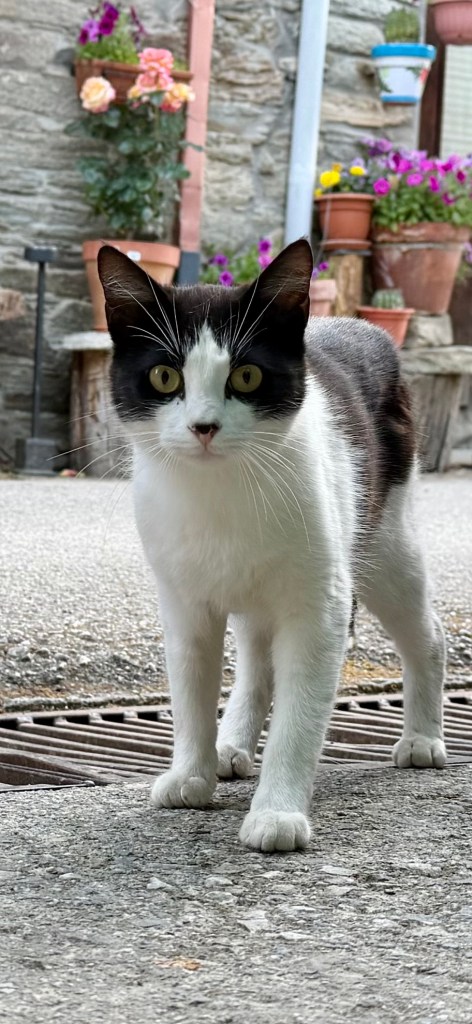
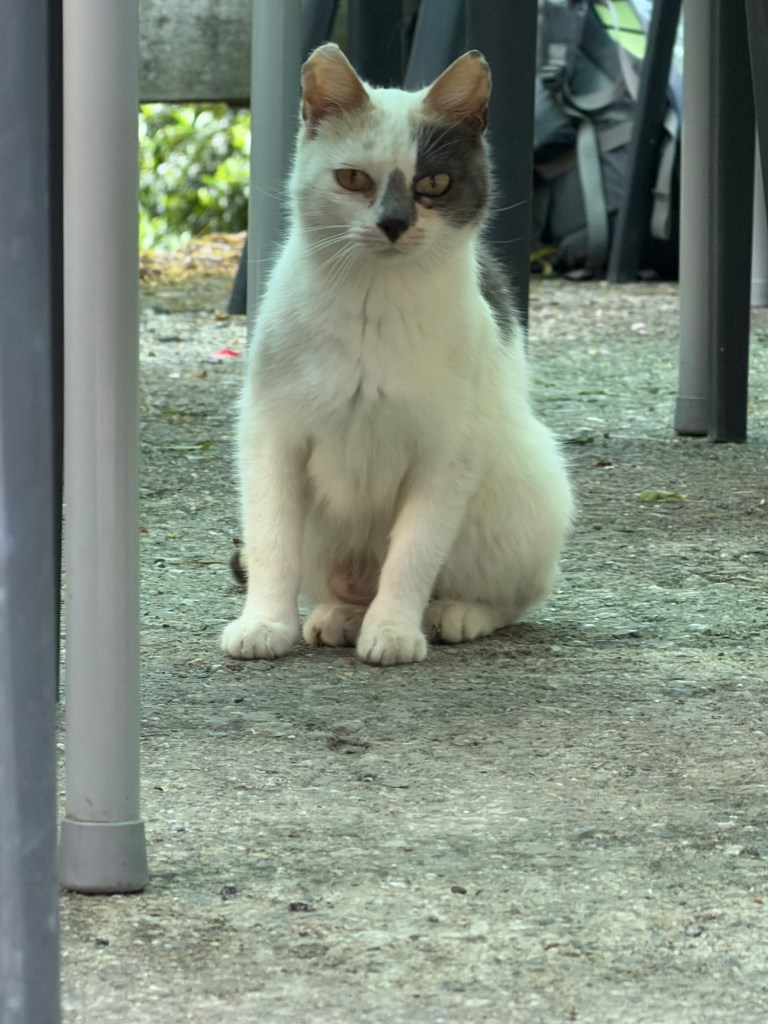
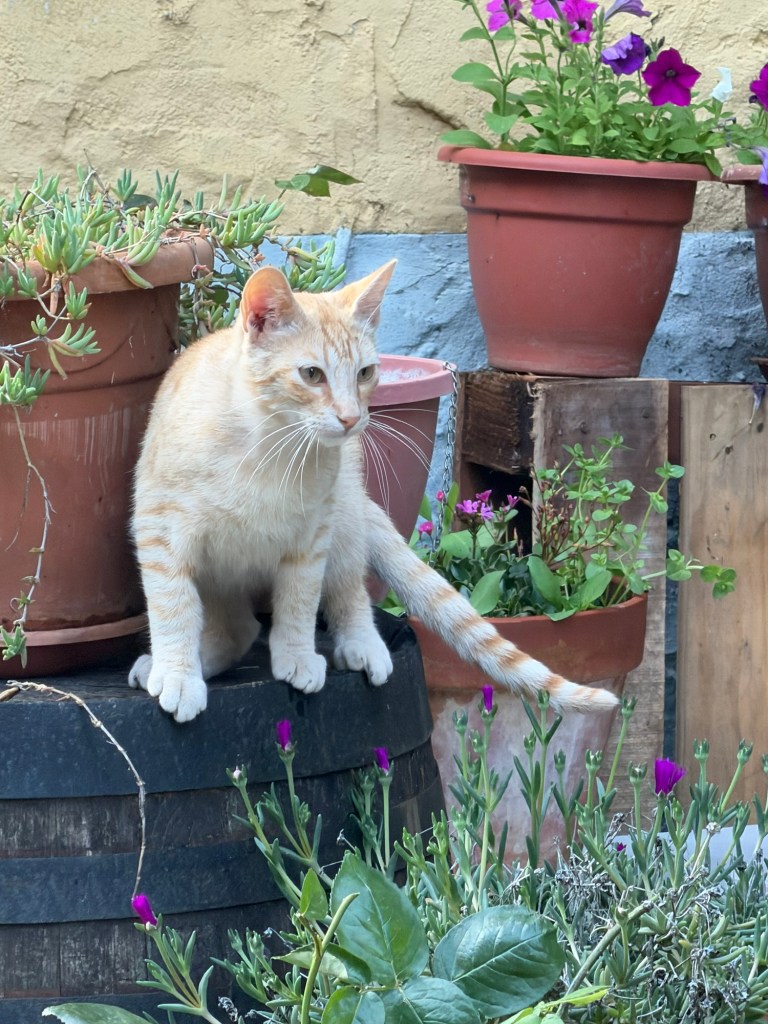
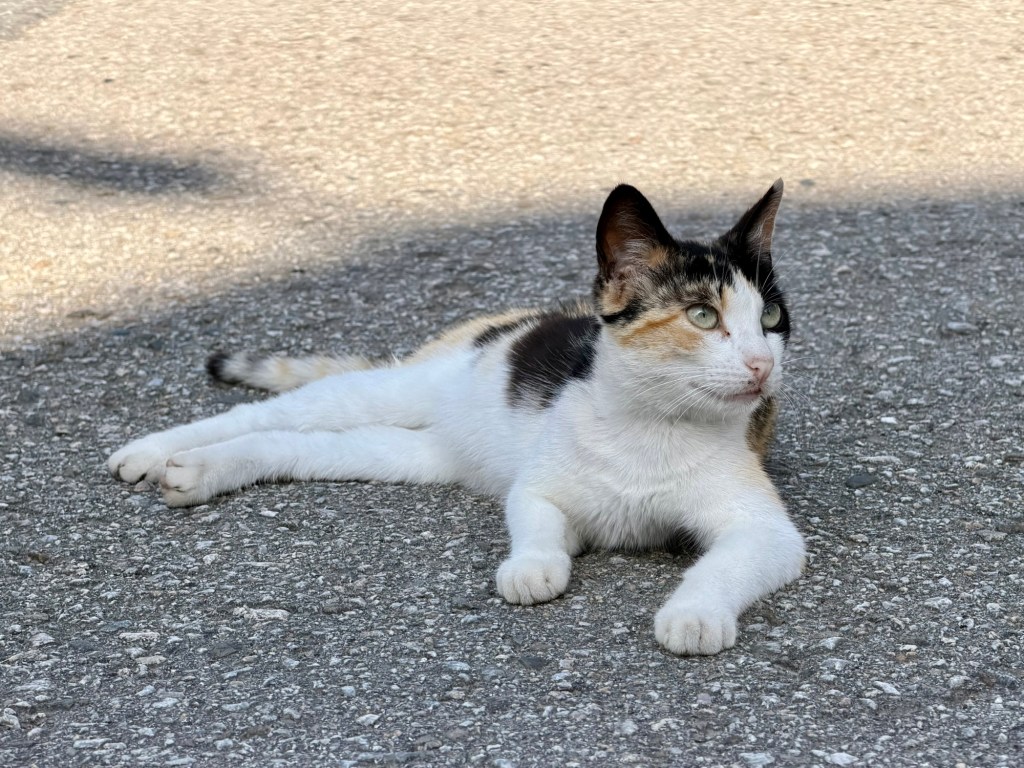
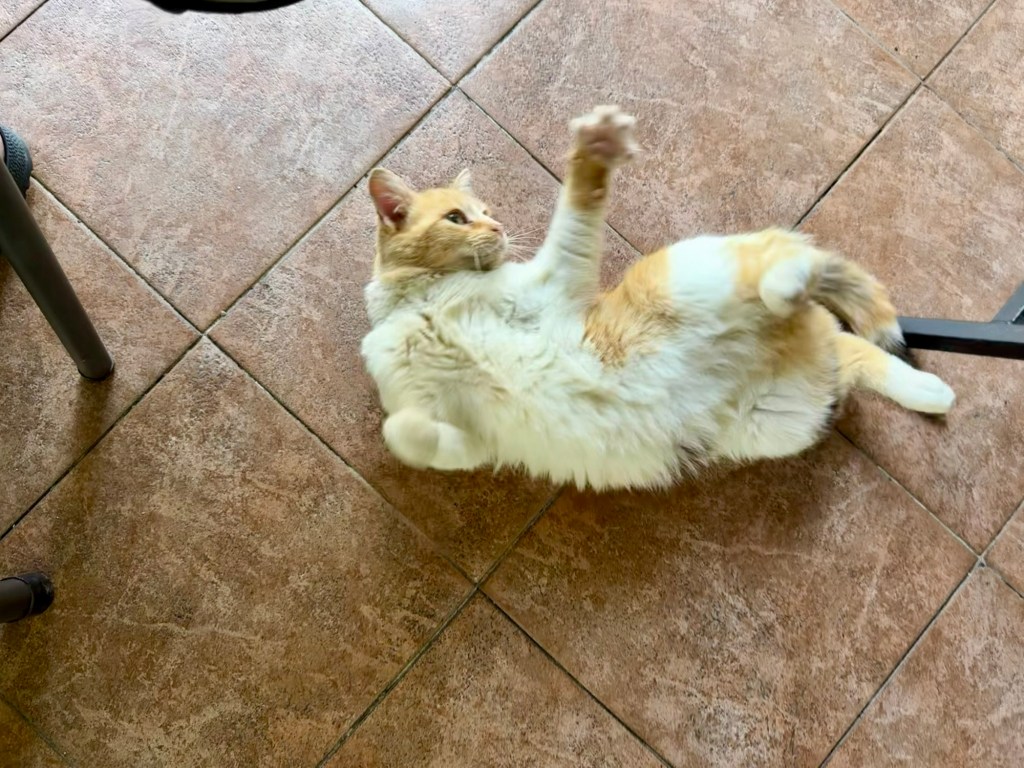
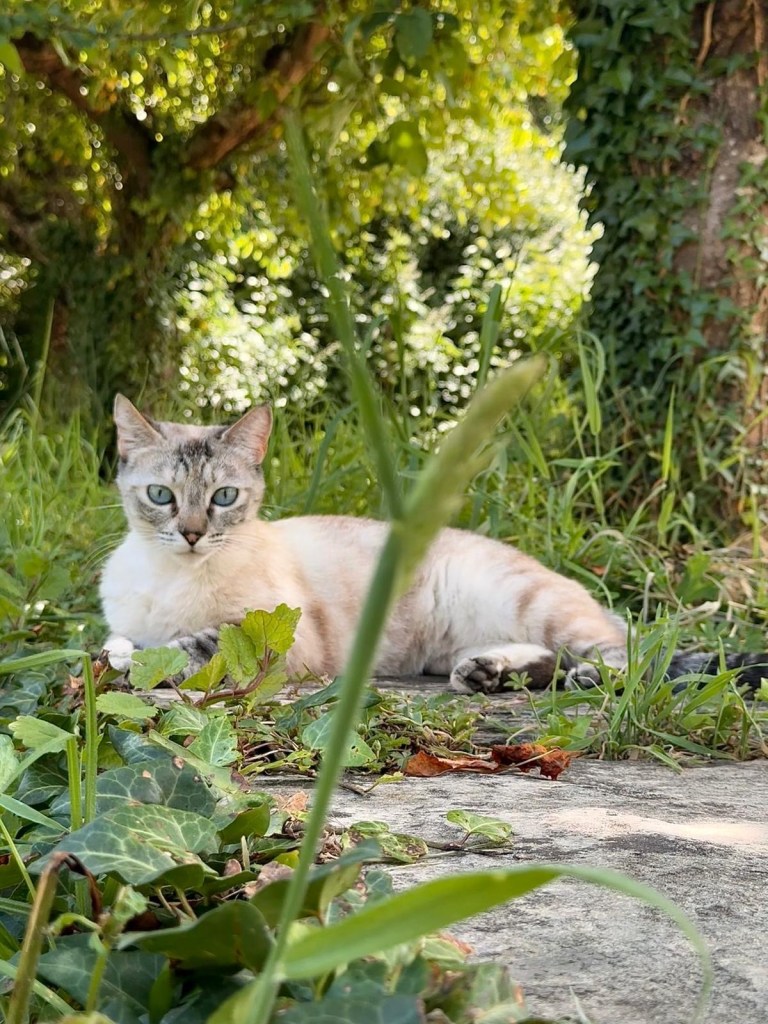
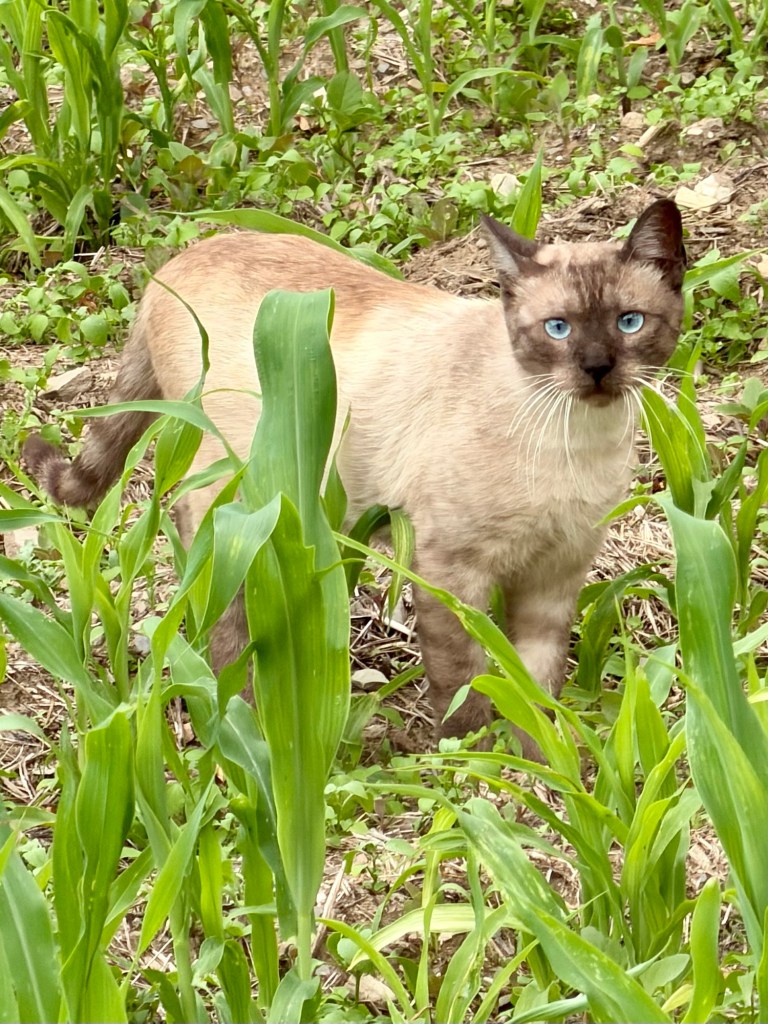
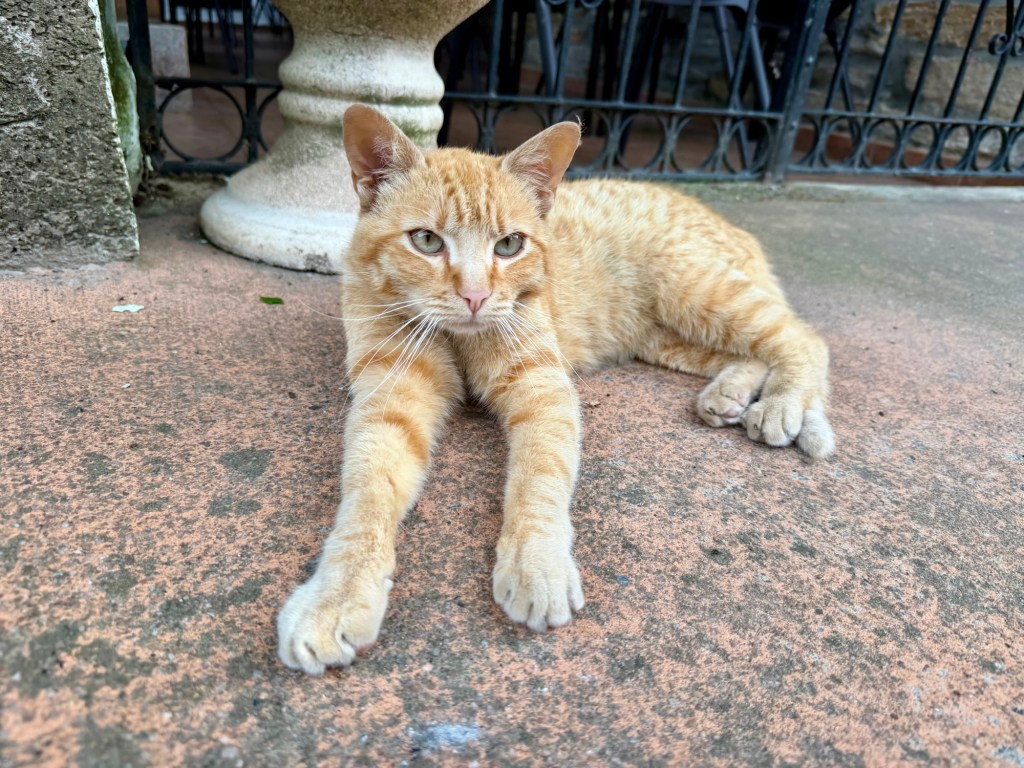
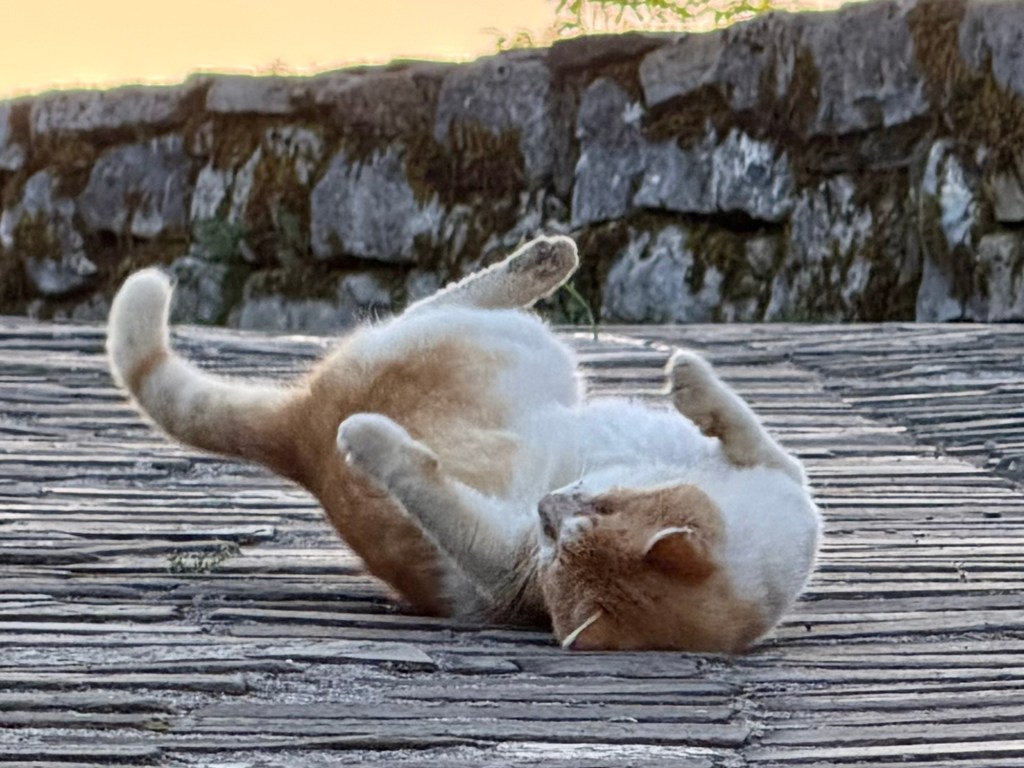
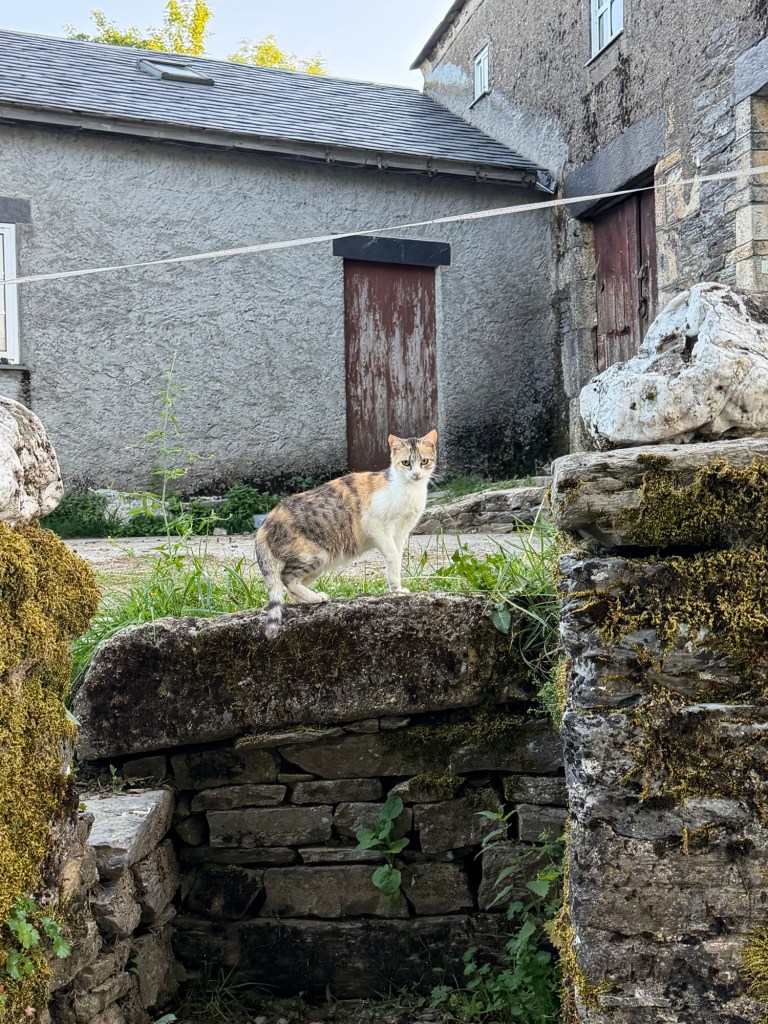
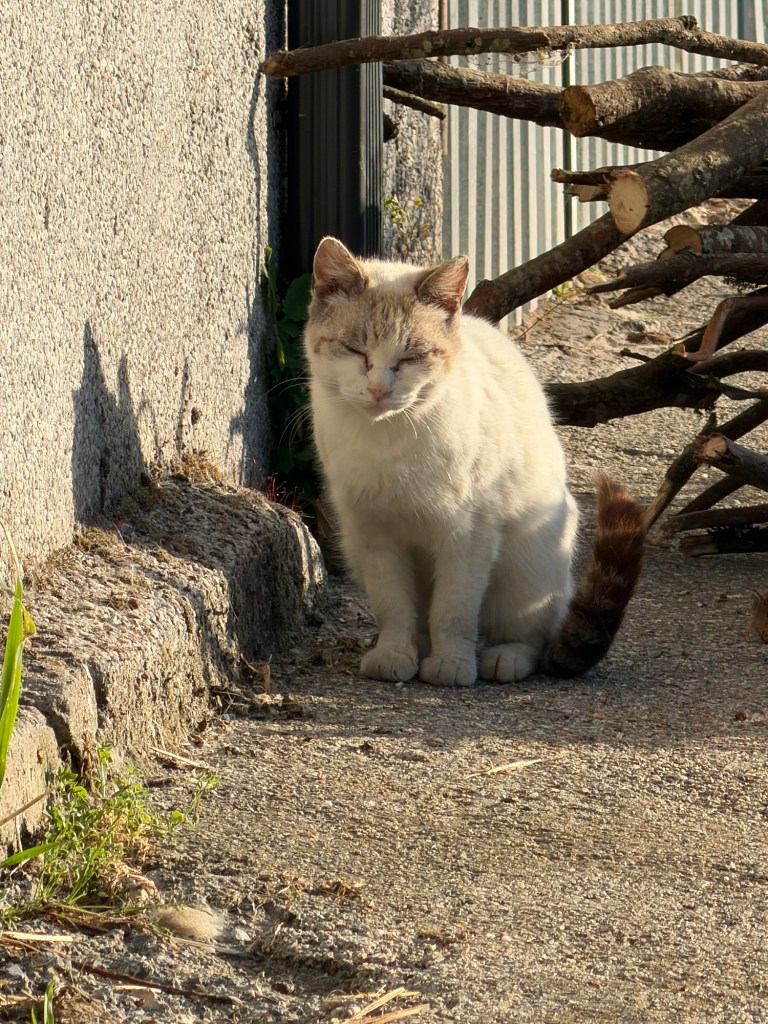
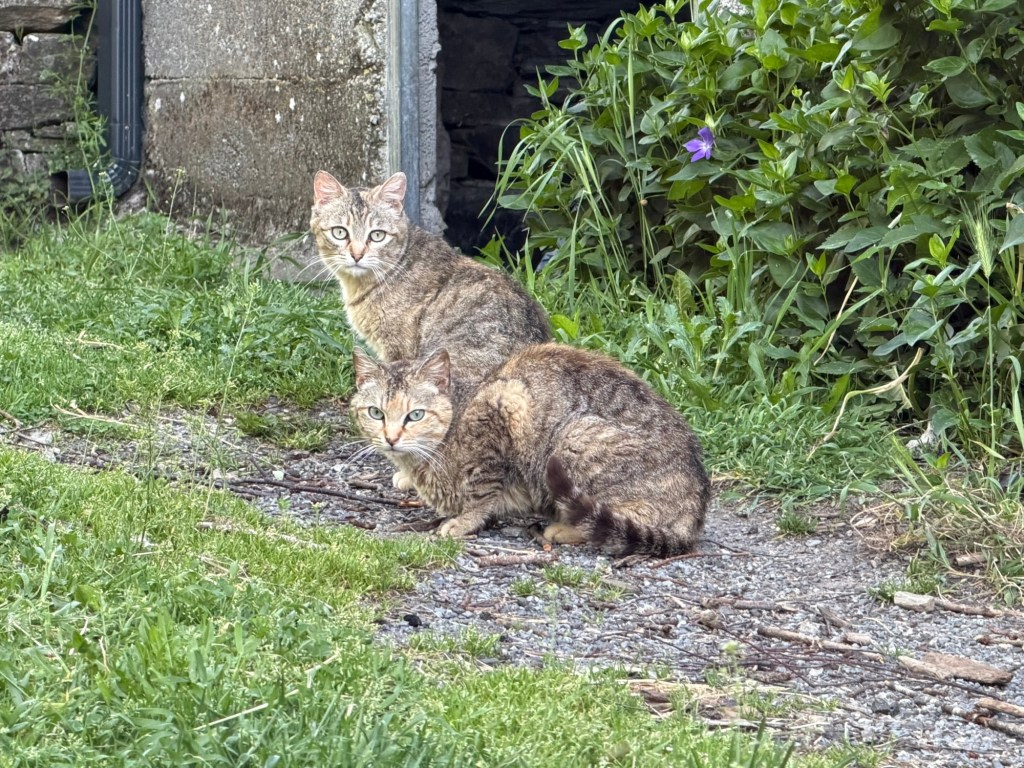
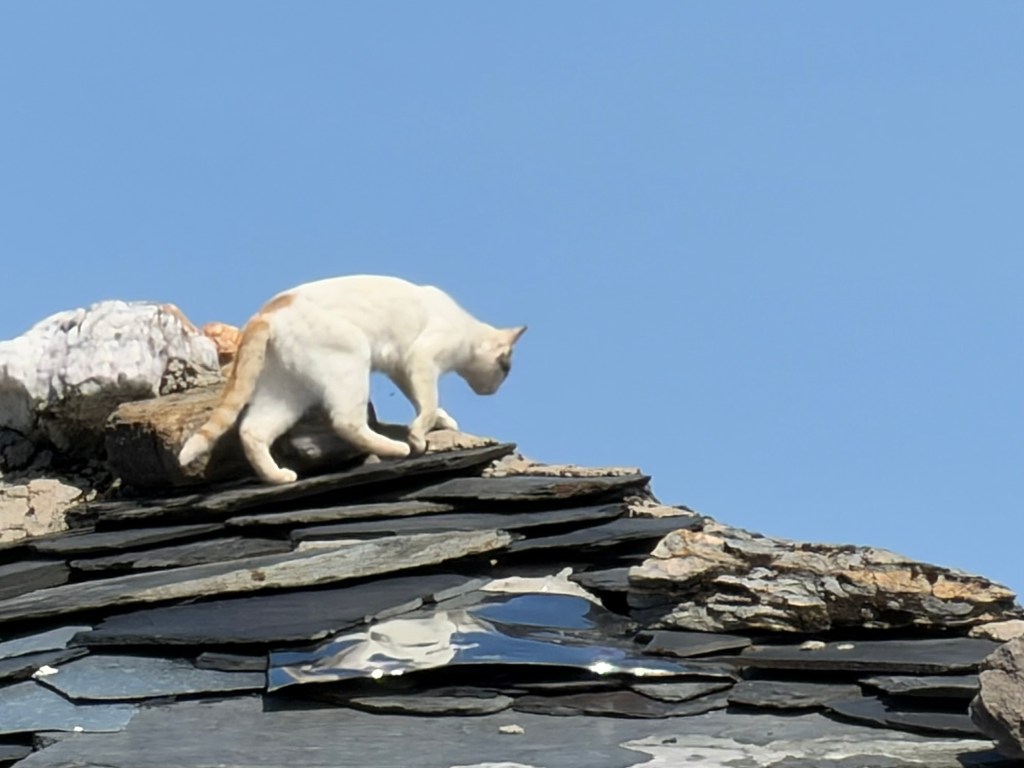
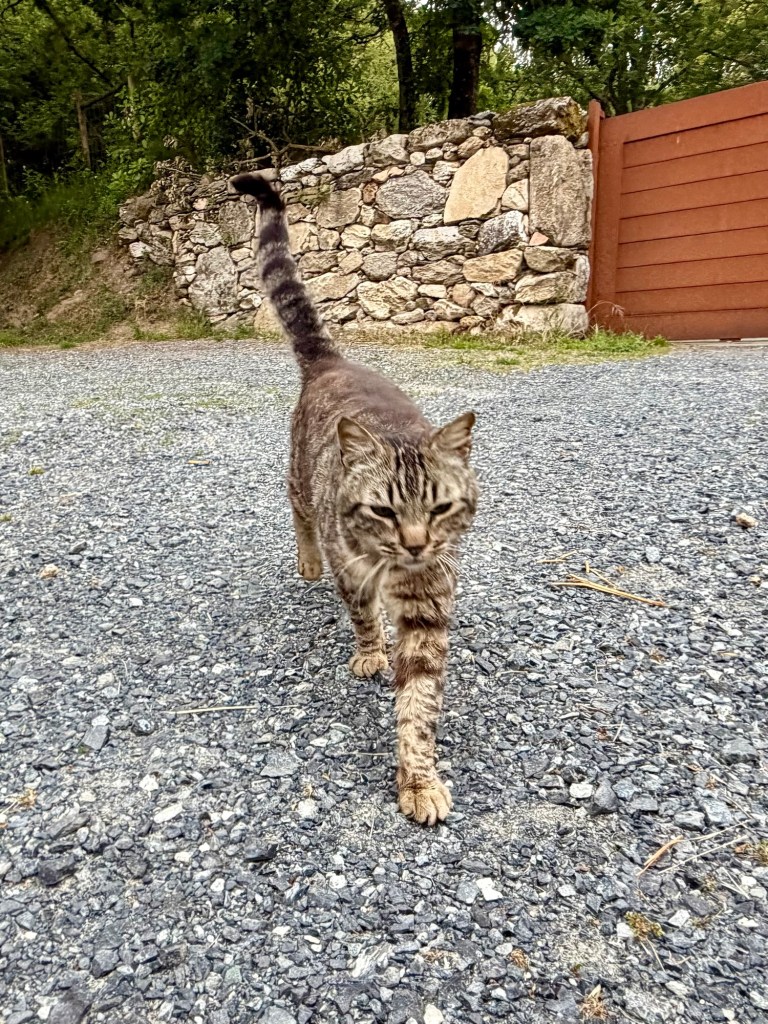
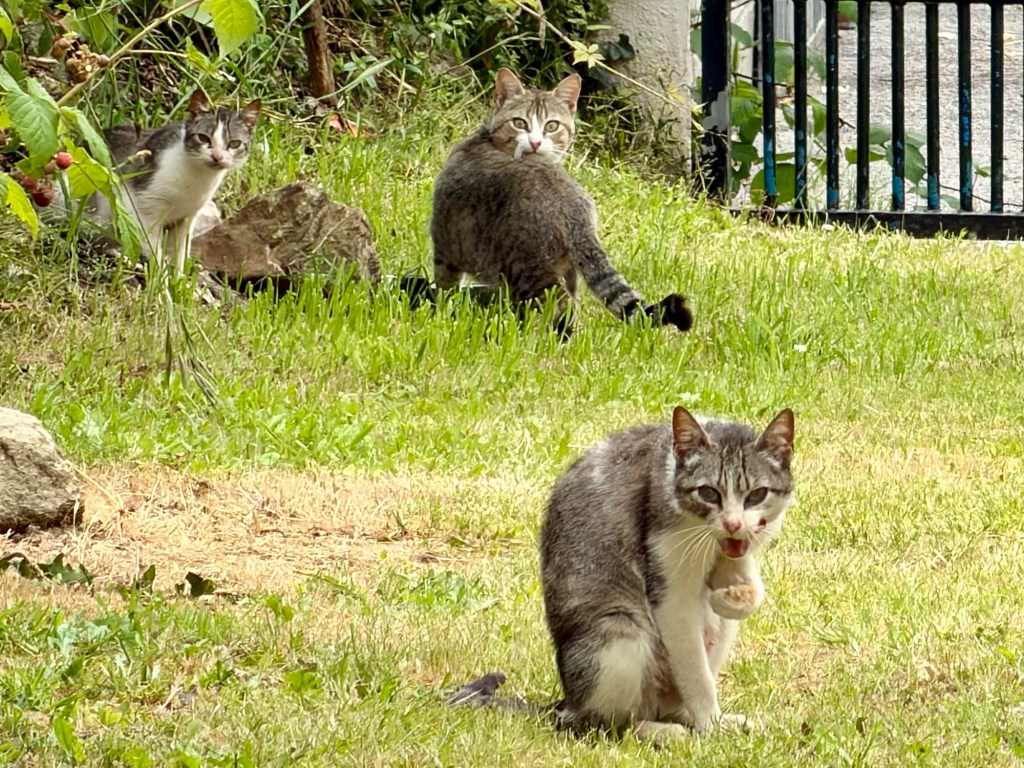
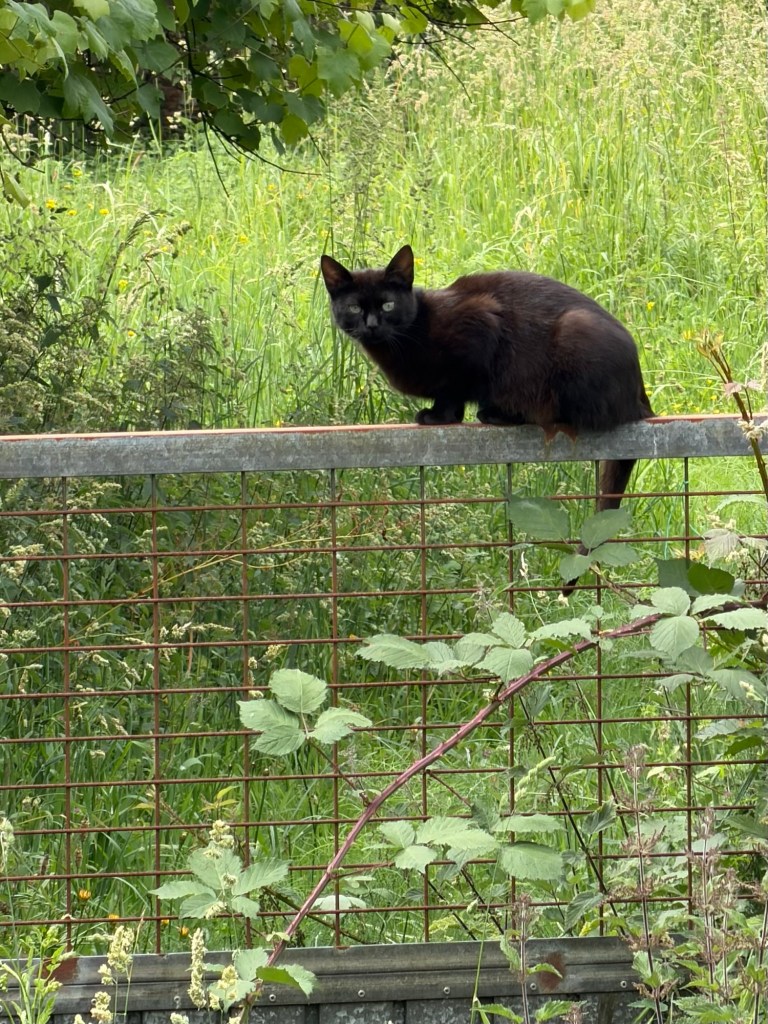
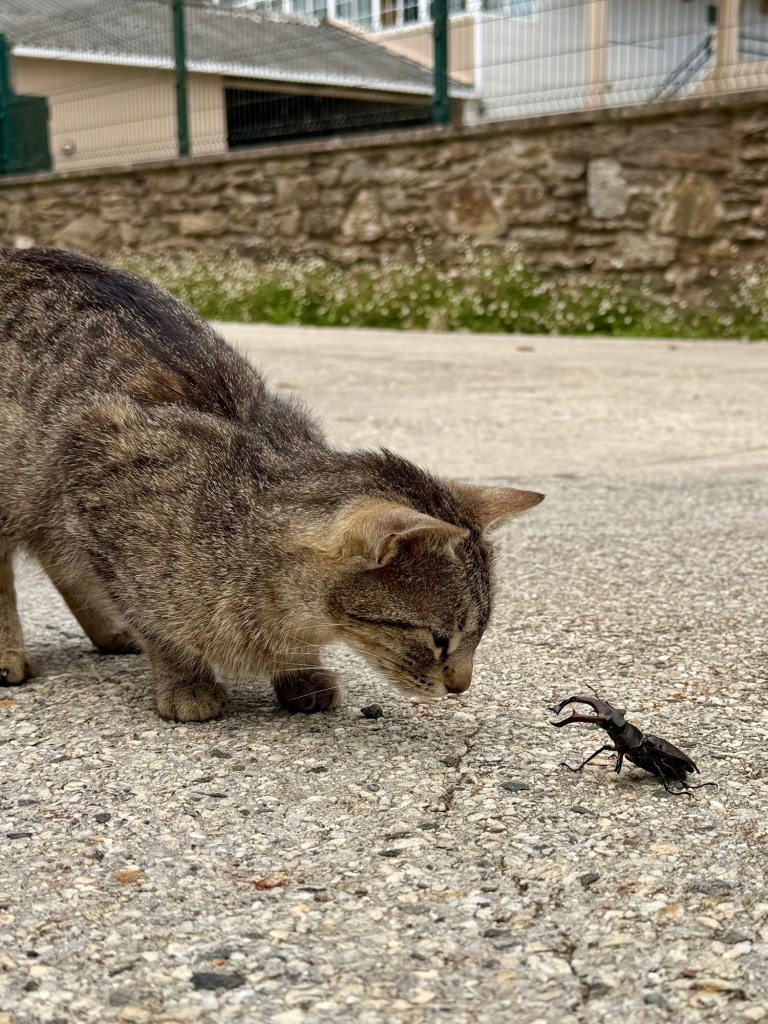
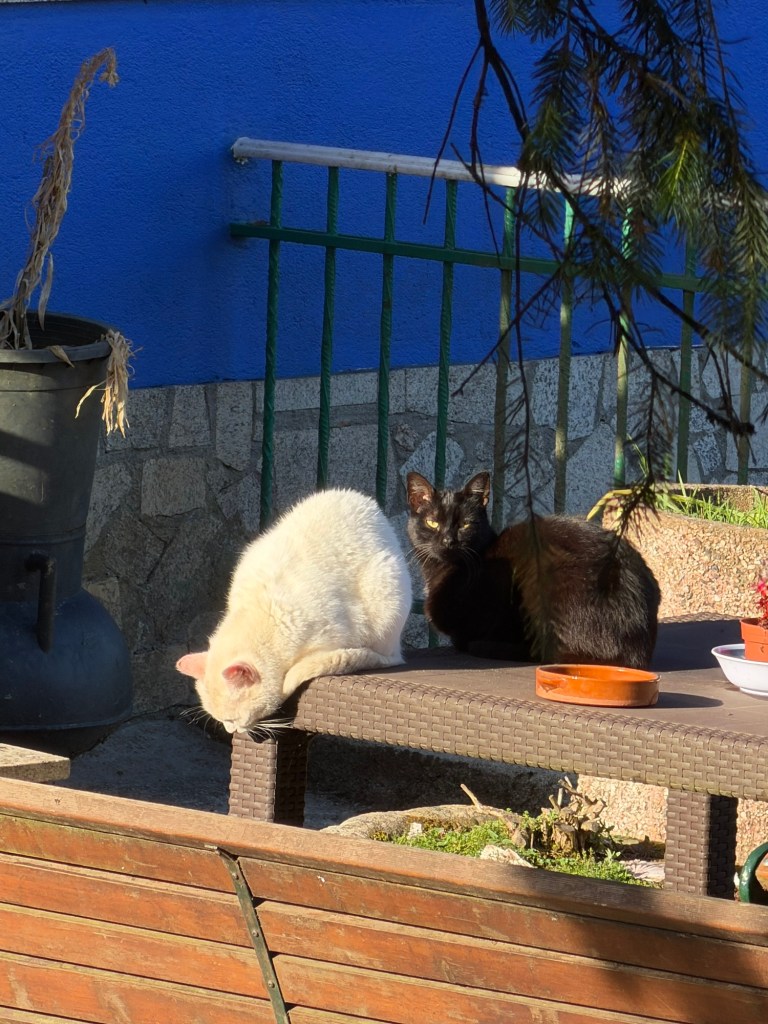
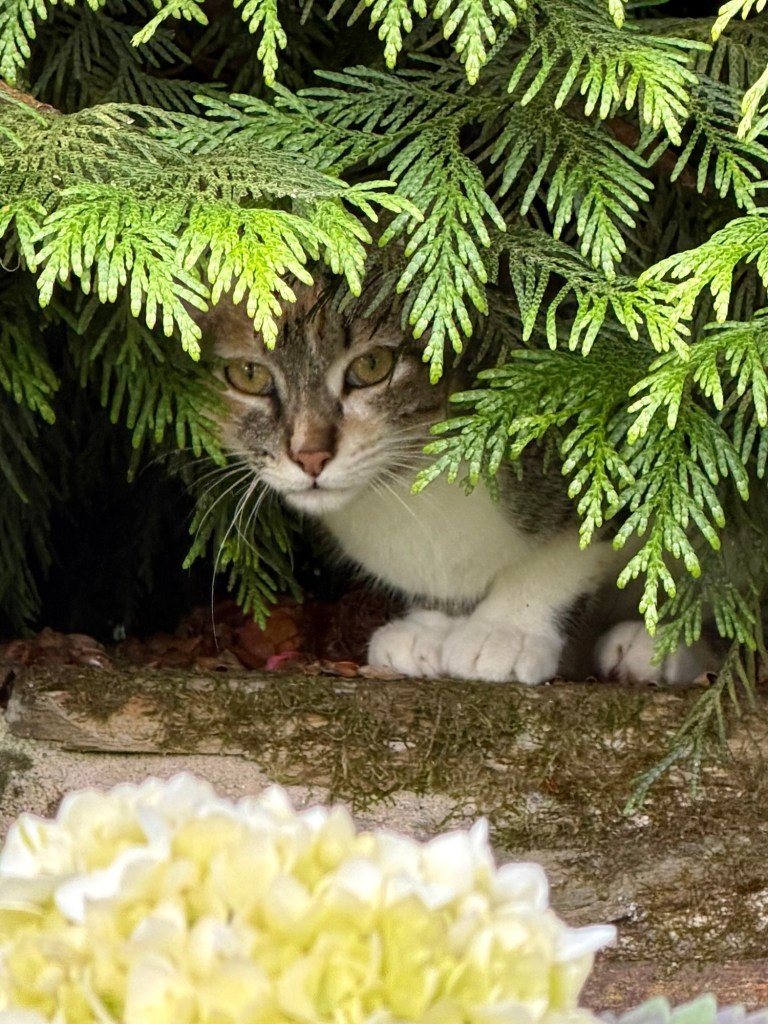
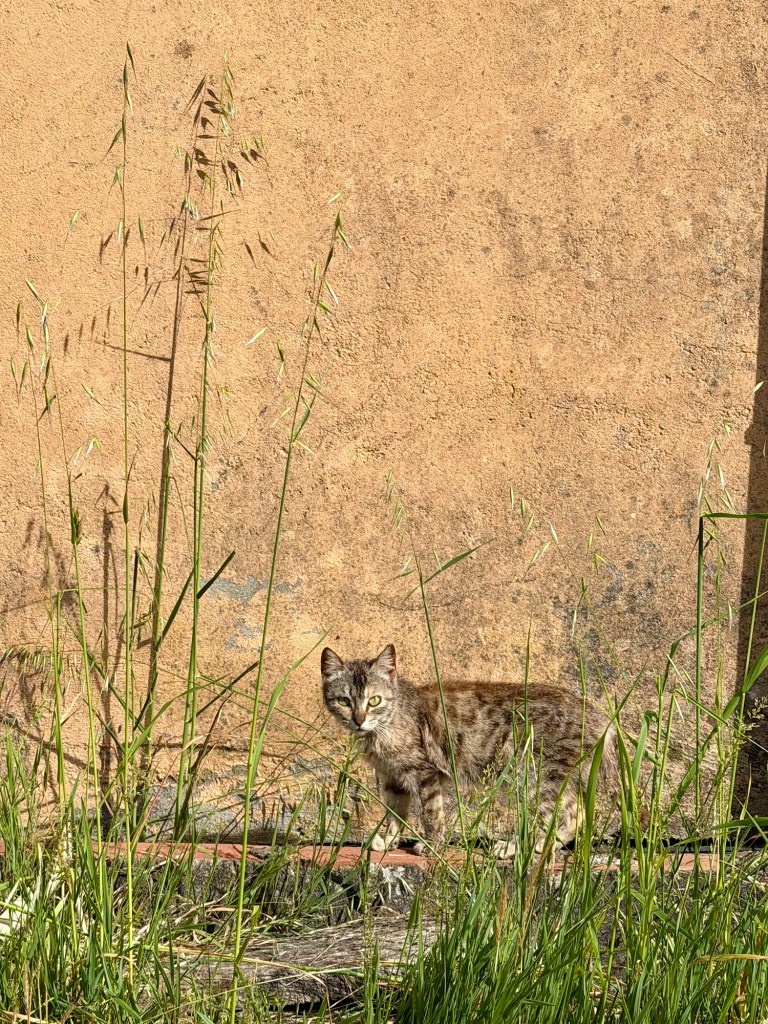
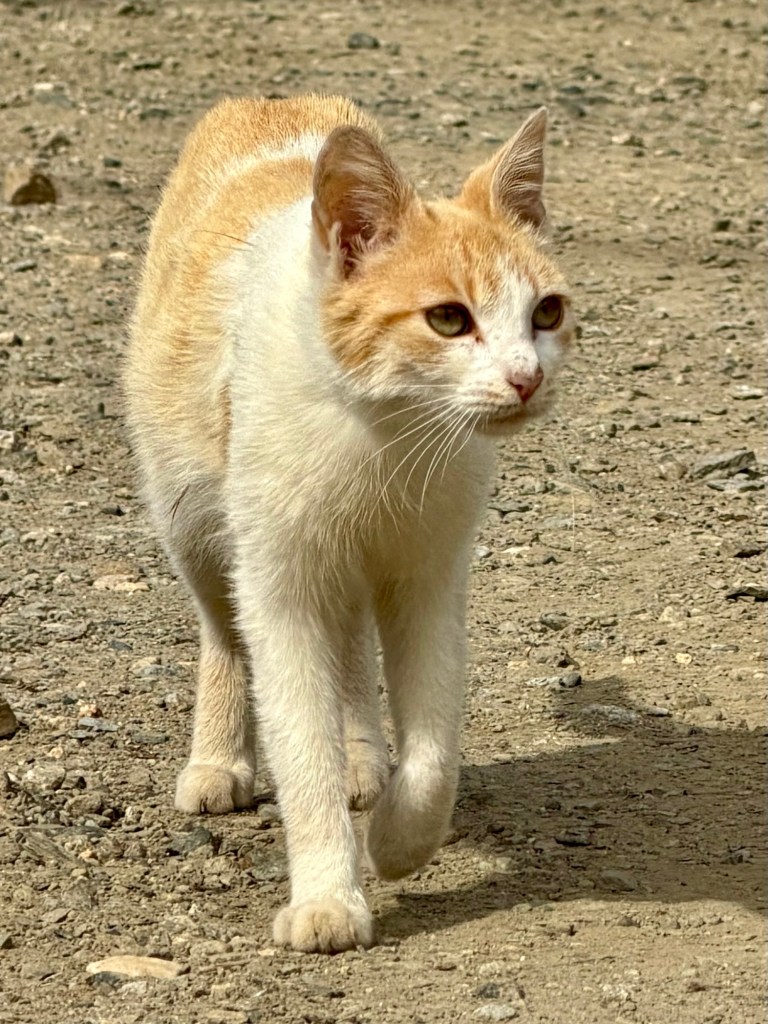
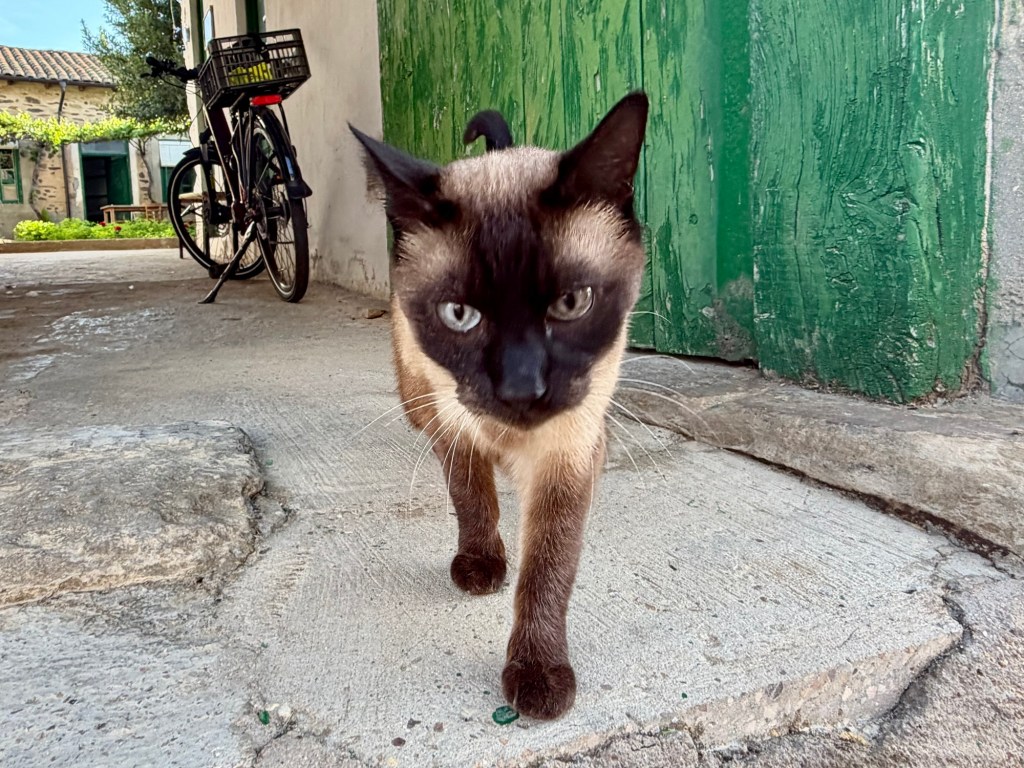
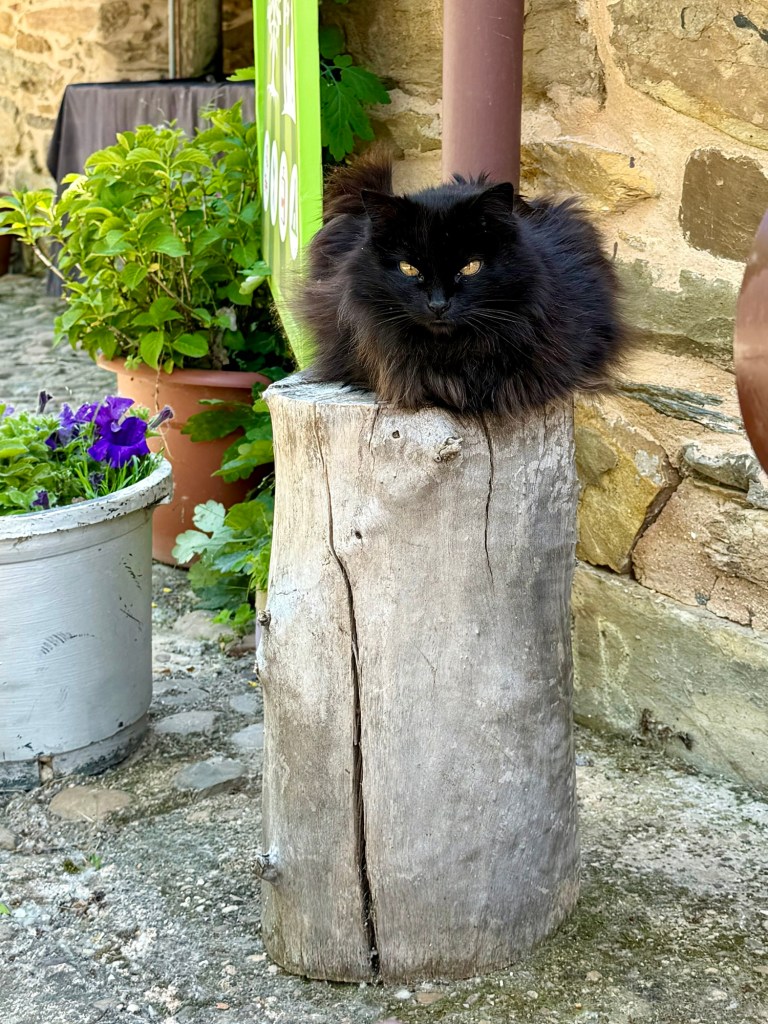
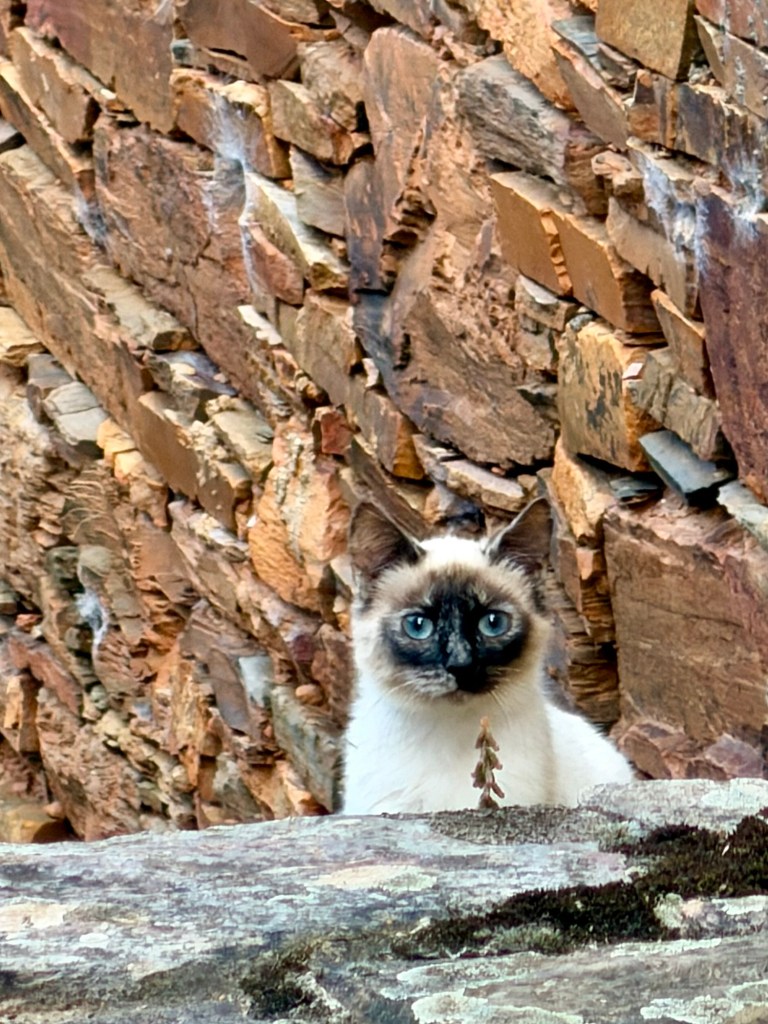
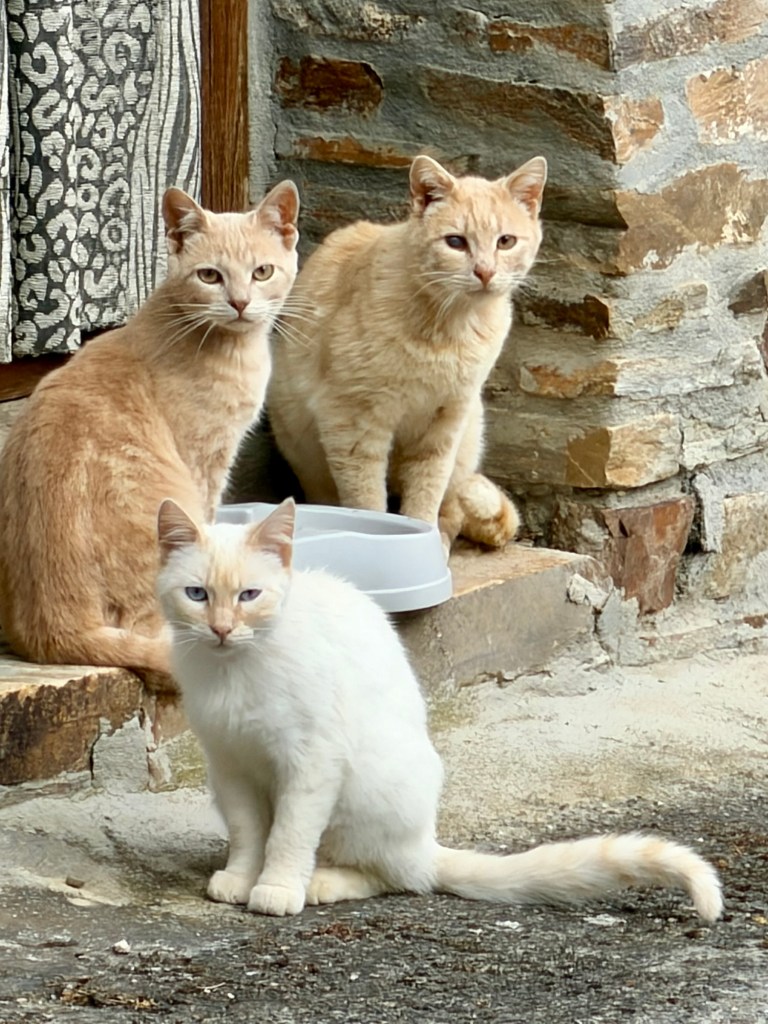
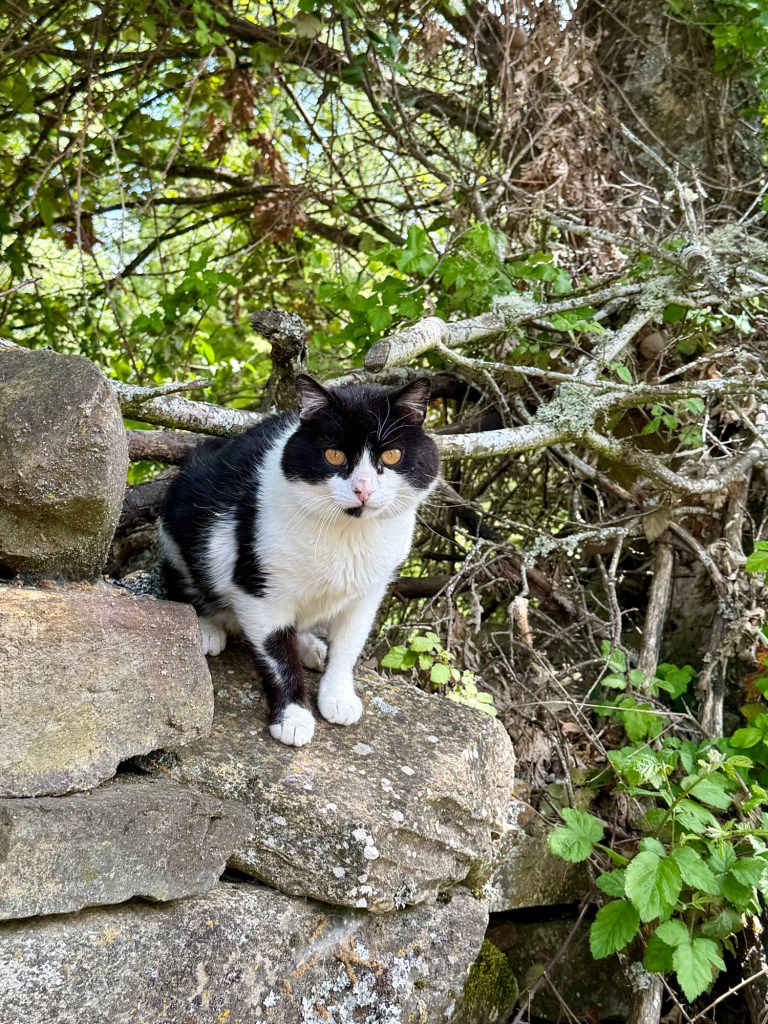
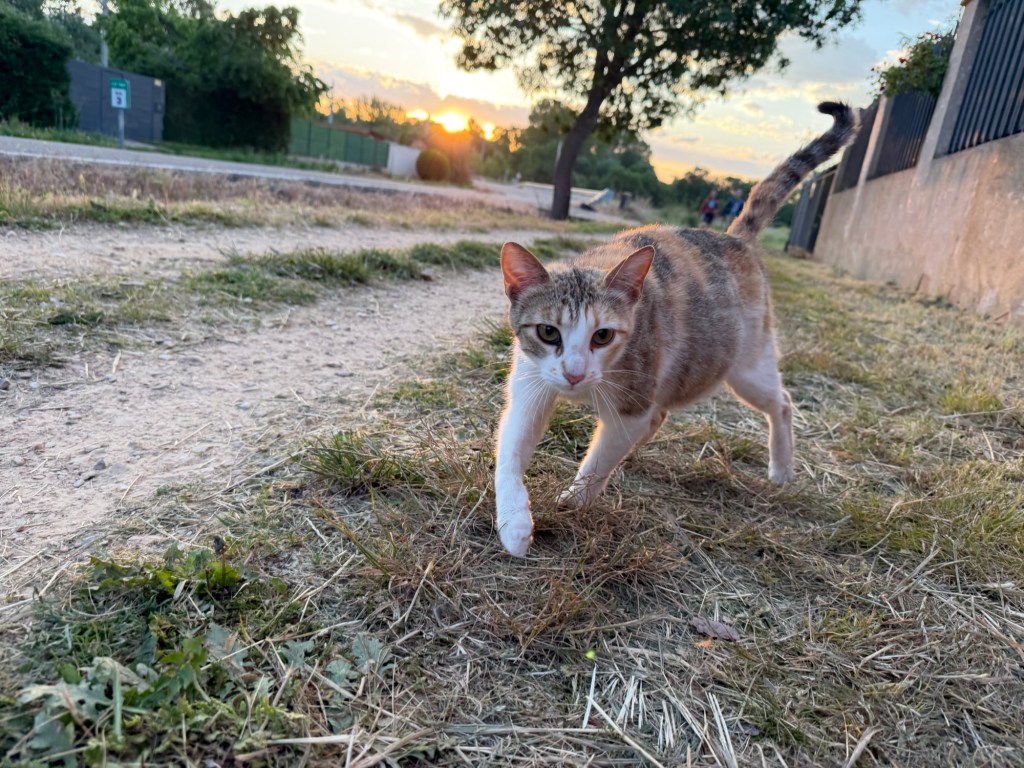
Time for Cats of the Camino!
And a couple more photos for the record…

Not nothingness

The Meseta was not as advertised. For those who haven’t heard of the Meseta, let me explain.

The Meseta Central is Spain’s vast, high-altitude central plateau, covering over 210,000 square kilometers across the interior of the Iberian Peninsula. More specifically for us and the few hundred thousand peregrinos that pass this way each year, it refers to the 200 odd kilometres between Burgos and Astorga, on the other side of León.

Essentially, the Meseta is mythologised by pilgrims as a long, straight, stretch of, well, nothingness really. Dry, featureless, with a seemingly endless road always stretching beyond the horizon. It is said there is nothing to do but go within and keep on walking.

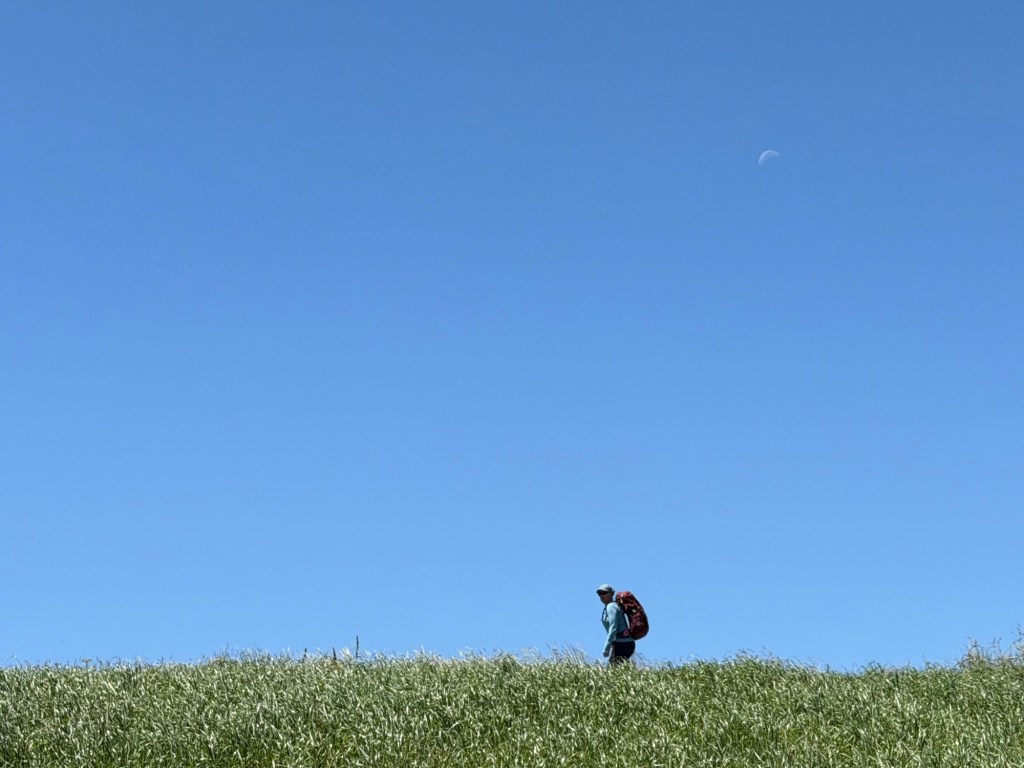
Maybe we’re odd, but this was not our experience. The Camino undulated (gently) up hill and down dale. I don’t think the rest of the world really understands what flat means. They should drive across the Nullarbor. Then they’d get it.

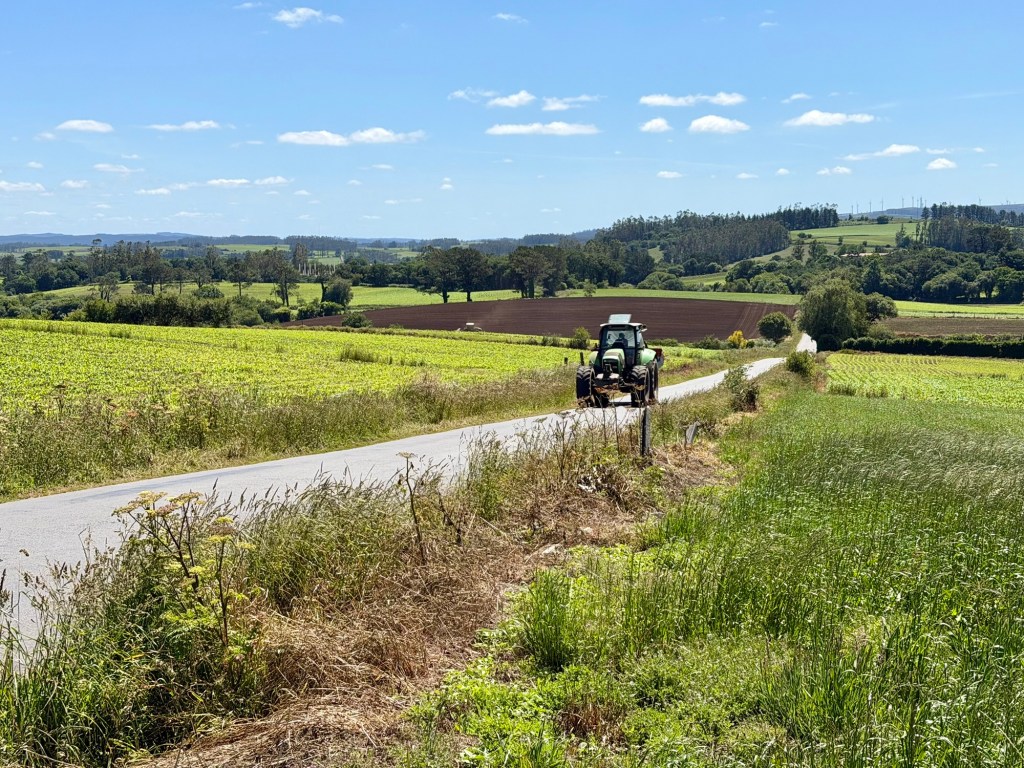
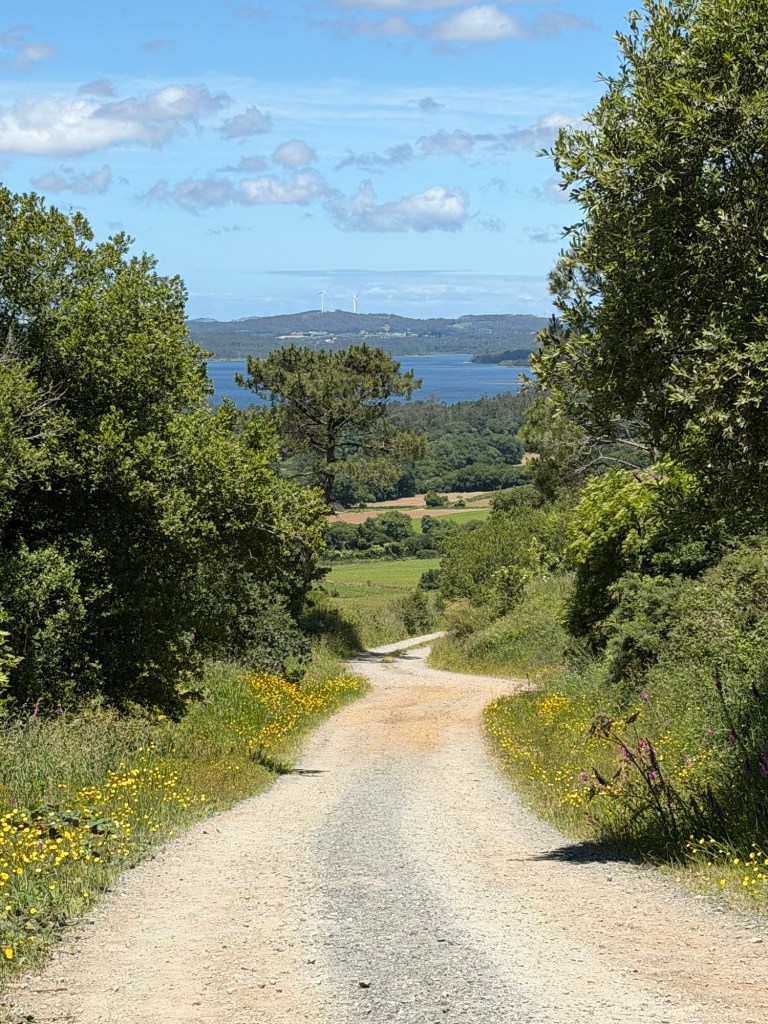
It is also spring, so it turns out the Meseta is vibrant and green, not barren and dry. We were a little early for the sunflowers and corn but the wheat, barley and oats were in fine form, set off by the ever present verge-side flower show to which we have now become accustomed.

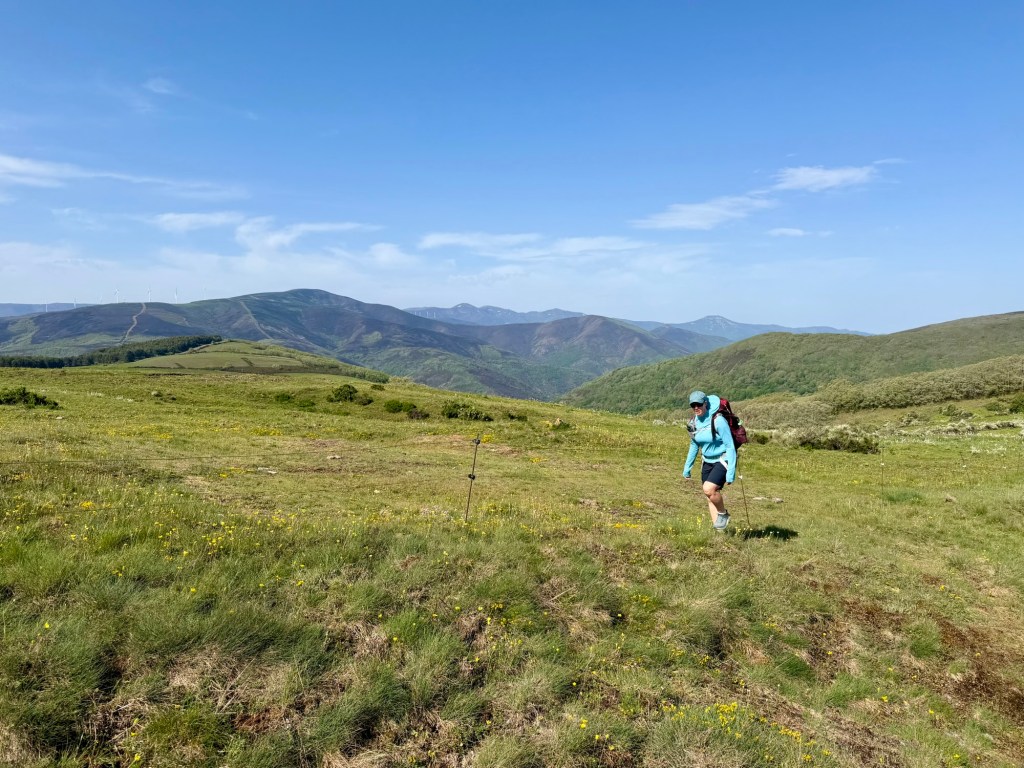
And as for nothingness, well nobody mentioned the Europa Peaks, a snow capped mountain range off to our north. They constantly drew my eye and my adulation as a scenic sliver to accompany the horizon-to-horizon dome of sky. Throw in a conversation with an Anglican minister; the unexpected ruins of the San Anton Monestary; a hilltop castle (complete with with ramparts, groovy stone stairways and vistas as far as you can see); an old Roman road upon which to walk and ponder the union of space and time; and an evening sing-a-long with the nuns of San Augustin – and rather than a long and lonely stretch of road with which to focus on introspection, I felt I barely had time to gather my thoughts.

Europa Peaks kept us company

That said, I did find myself humming songs with references to lonely stretches of road… The long and winding road, Hotel California, Country Roads, Life is a Highway, On the Road Again… Highway to Hell. Nah, that would be inappropriate.

In Carrión de los Condes we attended the aforementioned sing-a-long held each evening by the San Augustin nuns.

(It started at 6.00. A detail of no consequence other than the fact that we found ourselves on the opposite side of town at around 5.45. We’d had a long day of walking and Khia advised us all that she was, ‘in no shape to run quickly towards the nuns’. Words Paul promptly pointed out he never thought he would ever hear Khia say out loud.)

The San Augustin nuns handed out a song sheet with the lyrics to various tunes in a range of languages. It also included poems one of which was for pilgrims on the Camino.

‘Nobody went yesterday, Nor goes today, nor will go tomorrow, towards God, along the same path that I do. For each man [or woman – let’s be fair] the sun holds a new beam of light and a virgin path. (Leon Phillips)

In essence, a few hundred thousand people may walk this path every year, but none of them have the same experience.

A bit like at our very first night on the trail back at Borda, the nuns kicked off their understated event by inviting each of the 30 to 40 people there to talk briefly about where they were from and why they were walking.

The sister’s themselves were warm and engaging and surprisingly young. They made it their business to see pilgrims, ‘as more than the bed numbers ascribed to them’. It was touching, as was their blessing and the stories of those present.

One woman’s son had died walking the Camino. She was clearly grieving. We felt her pain. She was walking with her father, presumably as part of the process of coming to terms with the loss. Another lady had a scare with cancer. She and her husband had decided that when and if she got free of the disease they would get out and walk. She choked up and she tried to explain this to this group of strangers. Her husband gently clarified once she had finished. Then there was this thread of stories oscillating around the notion of change and transition. People laid off from their jobs, relationship challenges, and other life shifts. Some were just in it for the adventure. They were all here taking a pause from regular life, walking the Camino.

While everyone’s rationale for being here was different, they all seemed to have one thing in common. On the Camino, people wear their struggles on their sleeve and ask, ‘why are you walking’, before they get anywhere near ‘what do you do’, if that even comes up at all.

We all struggle from time to time, even if our struggles are different. Viewed this way, are we as individual and alone as we often feel? And is our experience of the Camino as different as the poem above suggests? Furthermore, are each of us one element of a bigger whole to which we all belong?

Paul and I had been contemplating this question for some kilometres beforehand, including whether it was ‘God’ or some other unifying whole to which we all belong. It’s hard not to contemplate God and the church when walking the Camino, it is after all a Christian pilgrimage and the reminders are everywhere.

I posed this same question to Nigel somewhere between Hornillos del Camino and Castrojeriz. We first met Nigel and his wife Nikki on the flight out of Sydney. We had spotted each other as likely pilgrims from amongst the hoards of travellers boarding the plane. When finally crossing paths on the Camino and with a chance to chat, it turns out that Nigel is an Anglican minister.

I decided that if I could not ask blunt questions about God, Jesus and the Church of a minister while walking the Camino, then there was nowhere that I could. So I asked Nigel what he thought of the idea that we were individual and collective beings all at the same time. That, however, was just the warm up and it wasn’t long before I was quizzing him why he even believed in God to begin with?

I dived in boots and all, like an episode of ‘You can’t ask that’, laying out all my problems with the existence of an interventionist God. If God exists why would he look after the prayers of some but let whole populations starve to death? Why would God inflict pain and suffering on innocents? Why would God make some people sick and not others? Why did God set up a system where people were even tempted to sin if he had such a problem with that? And why was the church so damn good at making people feel bad about themselves?

We must have walked and talked for an hour or two and to be honest it felt good to ask these questions freely – as opposed to my usual stance of projecting respect for another’s beliefs while quietly thinking them quite mad. I’m still processing Nigel’s responses to my questions. I’m not sure he convinced me (or even that he was trying to do so) but he made me think and was open and thoughtful in his responses. I very much appreciated the manner in which he engaged with my scepticism.

Our conversation was interrupted by the unexpected sight of the rather grand ruins of the San Anton Monastery, which seemed to appear out of nowhere down a hill and round a corner of the trail. The monastery had also served as a hospital many hundreds of years ago. People thought that the Tau (T) symbol the monks baked onto their bread would cure them of the wheat disease that had seen people dropping dead left right and centre around that time. The Monestary was quite a fantastic sight, with a bell, which has a story I’ll save for another day.

Q&A on the way into San Anton Monastery

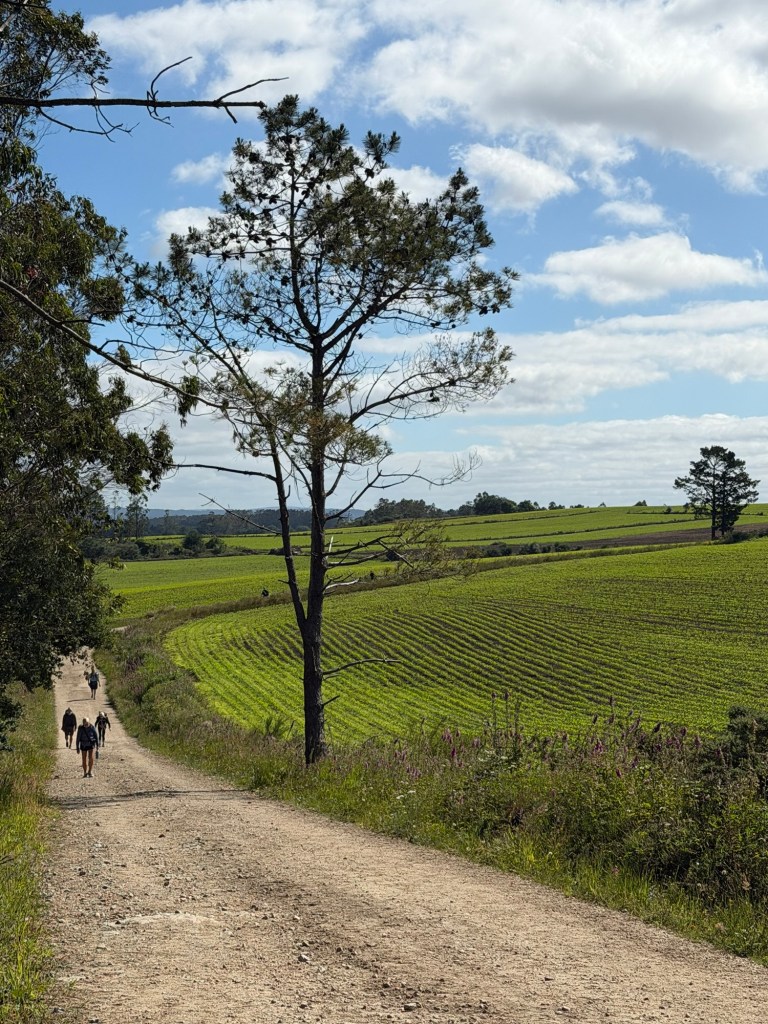
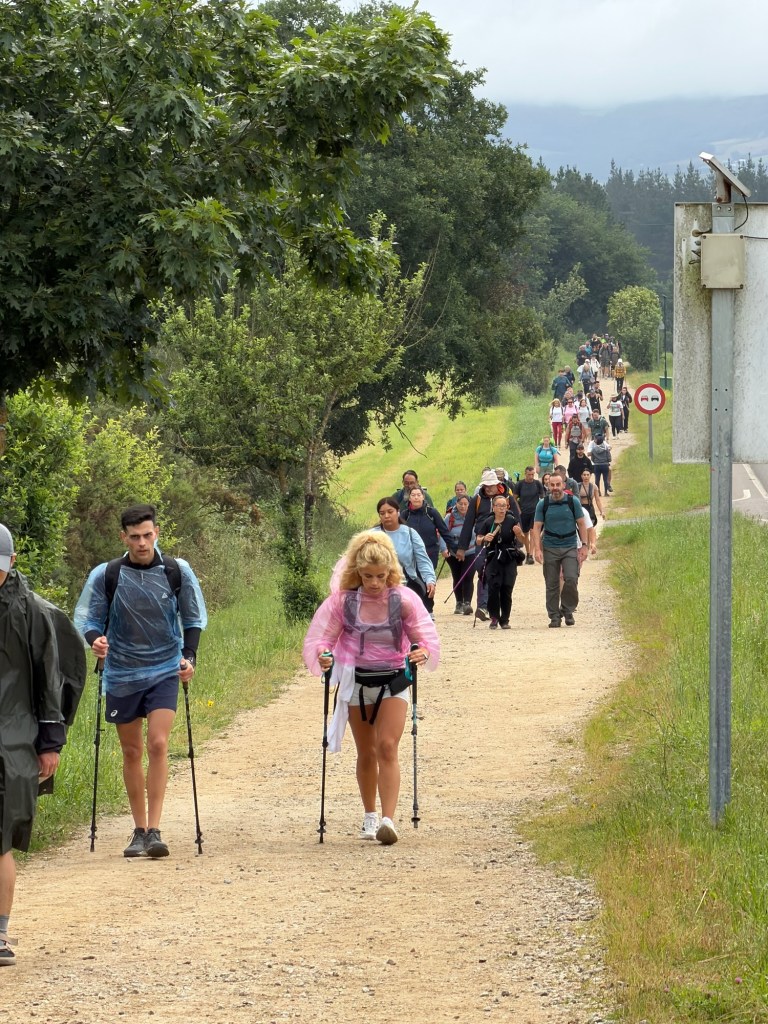
A little further on and one of the most picturesque sights of the Camino stood before us. A long straight stretch of trail, lined on one side by trees, lead a long line of pilgrims towards Castrojeriz with its cathedral nestled at the base of a hill which was topped by a castle ruins dating back to the 9th century. Next to the trail were fields of grain scattered with red poppies. If I have taken one picture to represent the Camino so far on our journey it would be the one below.

A line of peregrinos on the way into Castrojeriz

After settling in that evening, Emma and I made our way up the hill to the castle which had proper castle walls, a proper castle courtyard, and the ruins of a castle keep with intact stairways that made their way up through the walls themselves. It was exactly the stuff of the fantasy novels I read when I was much younger.

Castrojeriz castle courtyard
Heading down from the 5th level

Somewhere along The Way, the next day, a curious emotion came over me, which gave me cause to ponder, what is this thing that I am feeling? A short time later I said to Emma, ‘I think I feel the absence of stress’.

She thought for a brief moment before replying, ‘You mean you feel relaxed’.

‘Yes!’ I said. ‘That’s it!’.

Bugger me, I am relaxed. How did that happen. We wandered along a canal and then along a river side and it further occurred to me that perhaps I ought to be using my time on the Meseta to think about something meaningful or at least useful. Maybe about life, or life at home, or what I/we wanted to do next etc. But then it occurred to me that I didn’t really want to think about any of those things. I didn’t want to think about anything. So I didn’t. I just walked, watching the wind rustle in the trees and swallows flying at us at high speed while pursuing their evening meal at high speed and chatting with Emma about this that and the other.

Cut off by high speed swallows

Our bed that night brought relaxation to an end. By and large, dorm rooms on the Camino aren’t too bad, provided you have a good set of ear plugs and an eye mask. Our bunk bed in Frómista was an exception. It made a highly irritating squeak every time one of us moved our big toe or any other larger body part.

‘Don’t come knocking if the bunk beds rocking’, I laughed to Paul on the bunk opposite as my inner 13 year old was set free.

‘You’re in there on your own Greg’, he replied with a chuckle before we both started giggling. A lady (who we ended up chatting with a few days later) in the next bunk over joined in and then we were all laughing. The other people in the dorm ignored us.

An ancient Roman road took us most of the rest of the way into León. Isn’t that fun? I still love seeing ancient stuff even if it is just a 31 km stretch of packed stones a few metres wide. The fact that these stones were put there by the Roman Empire and were subsequently marched upon by legionnaires makes my head spin with delight. We were walking in the foot steps of legionnaires! Separated not by geography, just the passage of 2000 years. So cool.

Under that grass is the old Roman road
A less well preserved section of the old Roman road

Another thing worth mentioning is a visit to the most famous bar on the Camino. Bar Elvis in Reliegos. Only when we got there it was closed. Not to worry, Reliegos had a second major attraction, it was the sight of a meteor’s crash landing back in 1947. Emma lead us to the site, which had a plaque and a sign swinging from a post overhead. ‘That’s a little underwhelming’, Paul stated dryly.

Bar Elvis – Reliegos
The site of the meteor landing – Reliegos

And now we are in León. Which has my favourite cathedral of all the cathedrals we have seen since arriving in Europe. We’ve crossed the half way mark. In fact we are now two thirds done with ~470km behind us. 16 more days and all going well we will be in Santiago de Compostela.

Half way!

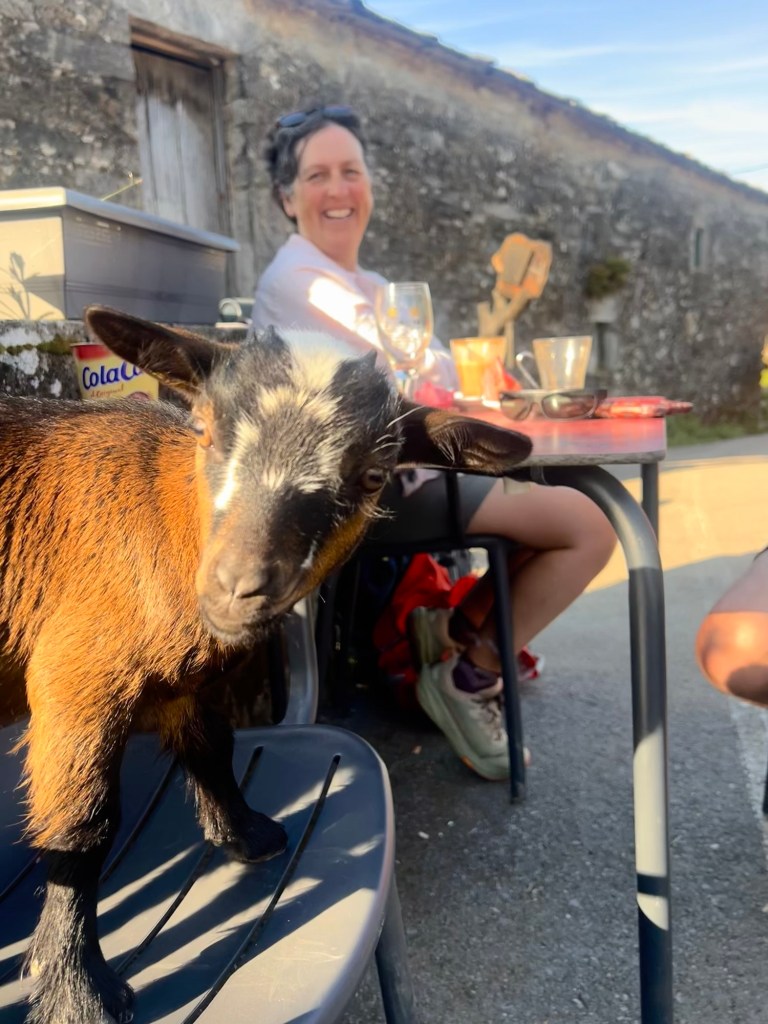
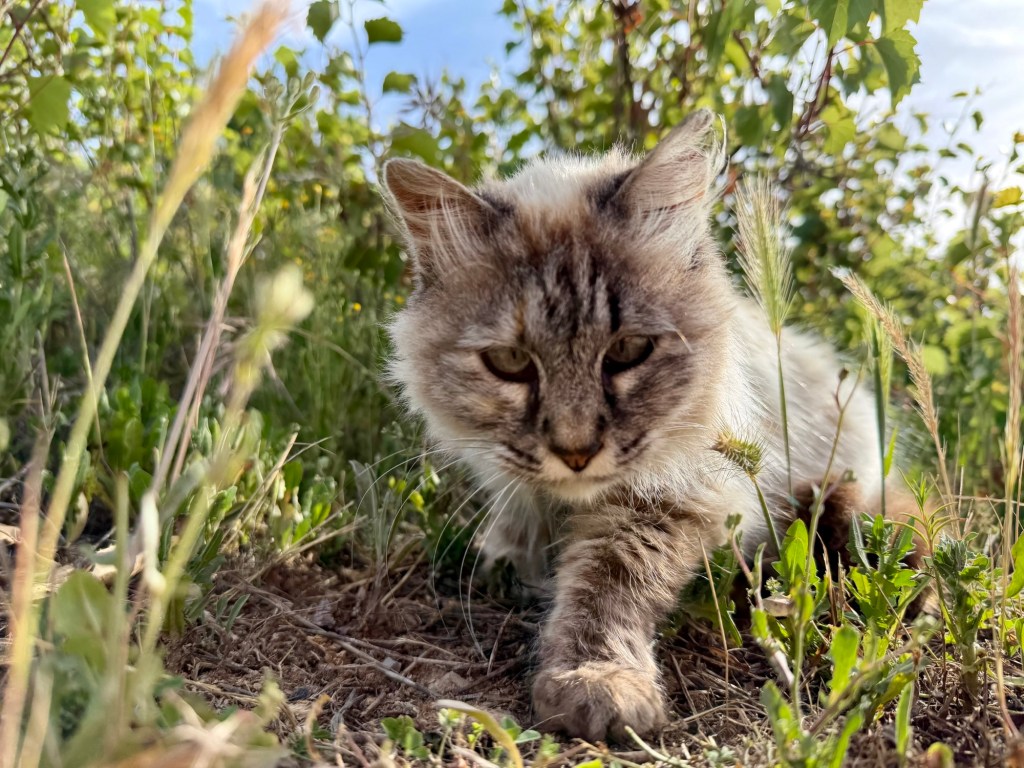
And now for Cats of the Camino… it’s a bumper edition this time with many excellent felines along the way.

And a few extra photos because choosing your favourites is hard.

Crossing the Meseta two days out of Burgos
Donativo life (Albergue where you choose what you pay) – Calzada del Coto
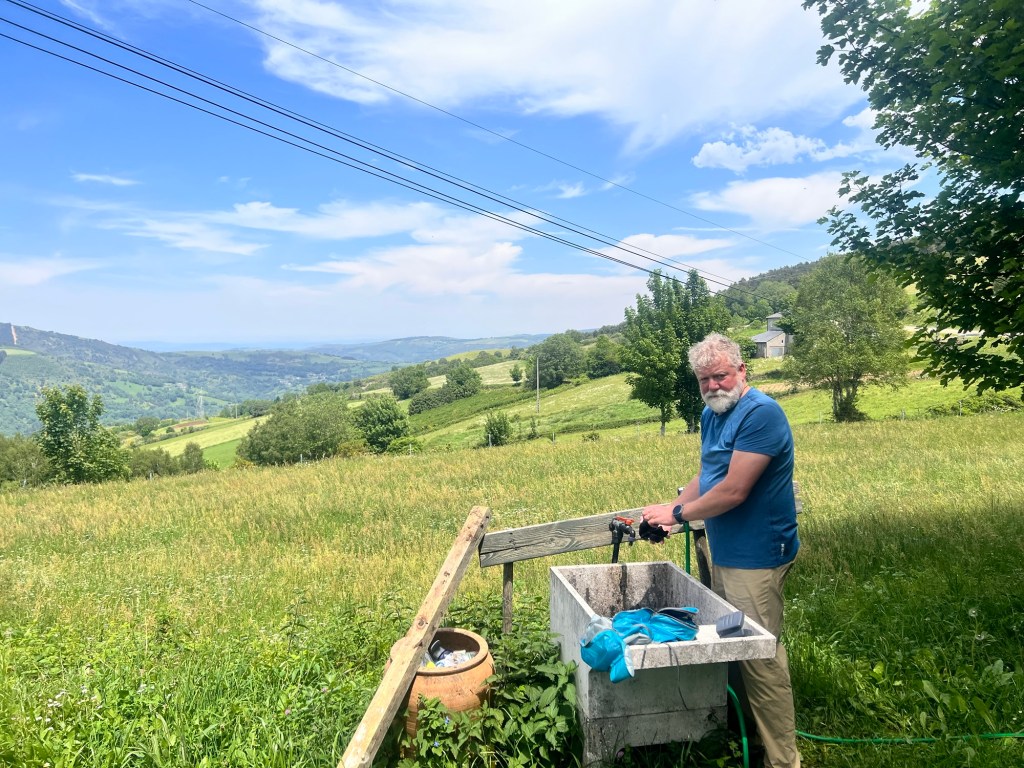
Joining in with the washing – Calzada del Coto
On the way into Castrojeriz
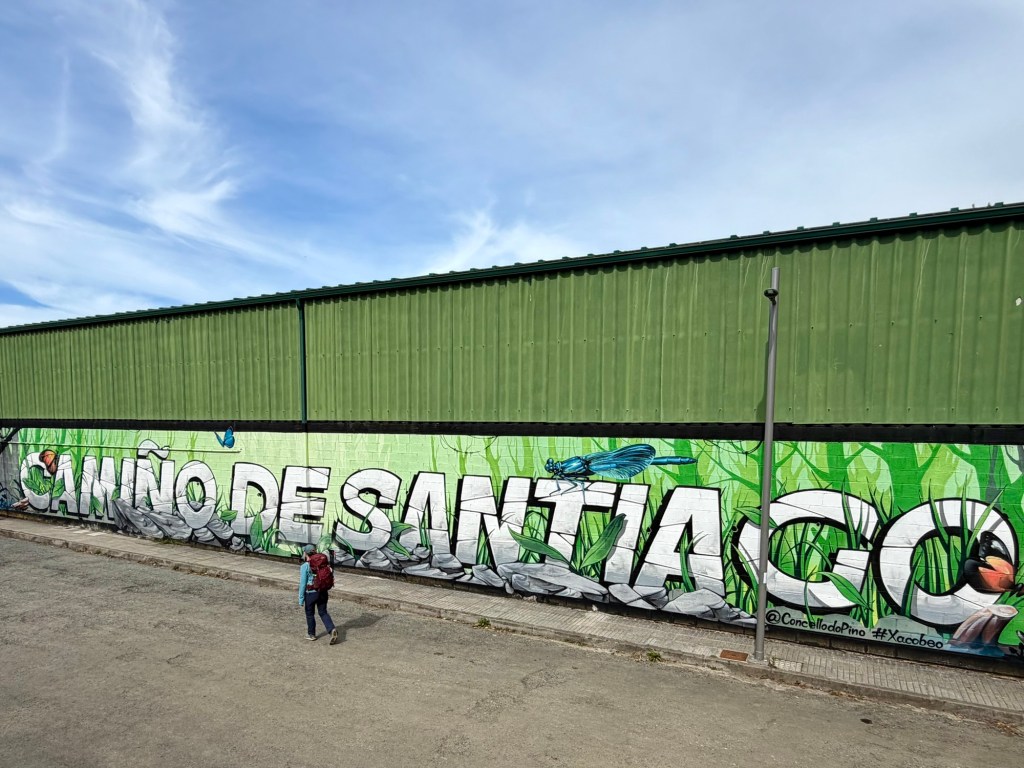
Huge mural on the way out of Sahagún
Evening constitutional – Ledigos
Um, I’m not sure, but it was funny!
An Iberian emerald lizard!
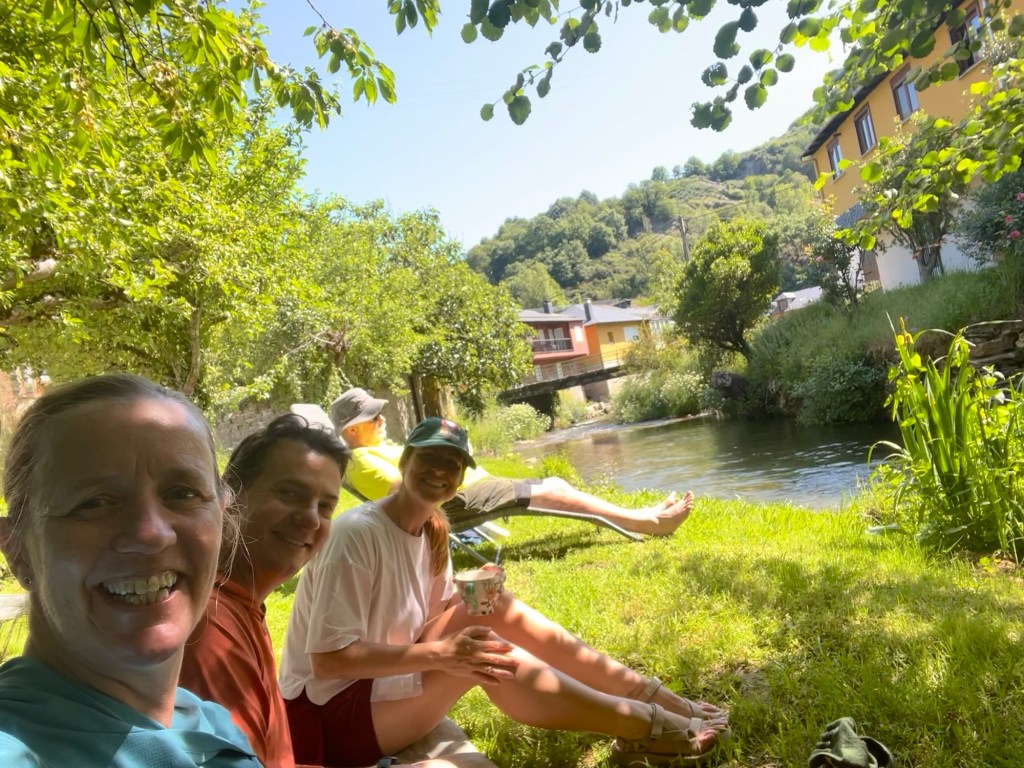
Stopping for a pause in the shade on the way into León

A natural pace

We have walked 282 kilometres. 282! That’s like walking from Canberra to Sydney. I just measured it on Google Maps. Canberra to Sydney is 284 kilometres. And it’s taken us 16 days. 16 days to go the same distance we would normally go in three hours in a car. We’ve never walked this far. Not in one go. My feet get tired sometimes.

It’s strange. It’s a strange way to travel. Slow. Yet each day seems to have little spare time. We wake around 6.30. Pack our bags and begin walking by 7.30. The first five to ten kilometres seem easy. We prefer to eat before we go, but that may or may not be possible. This is Spain and while this whole thing is set up to support pilgrims, there is a lack of urgency about it.

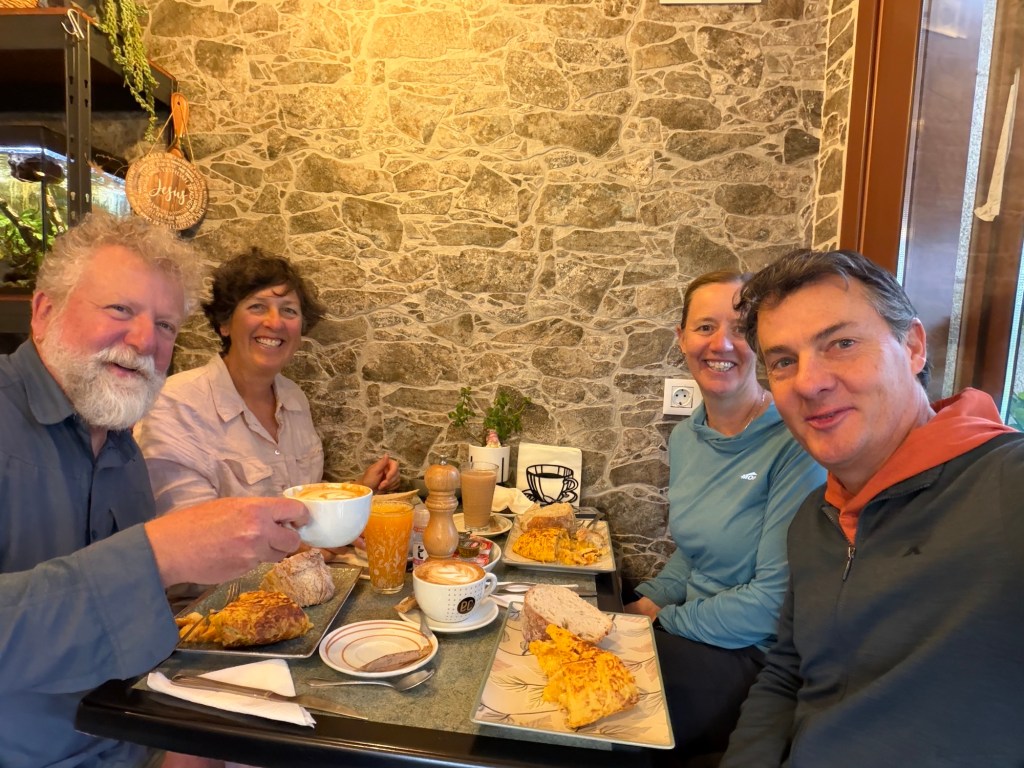
On a Sunday, your albergue will feel no compulsion to provide breakfast before sending you out the door. And the next three towns may or may not have a cafe. If there is one, it may or may not be open. We always seem to find something sooner or later though. Cafe con leche, tortilla de potatas (potato and egg slice) and a chocolate croissant being our preferred morning stop.

Breakfast on the Camino

Kilometres ten through twenty are not too bad either. My energy surges after we’ve eaten and it carries me through. I’ve been noticing these things when normally I would not. After that it gets a bit harder. By twenty kilometres, four to five hours will have passed, but I don’t seem to notice. All of a sudden its mid afternoon. I can also tell because by this time my feet are tired.

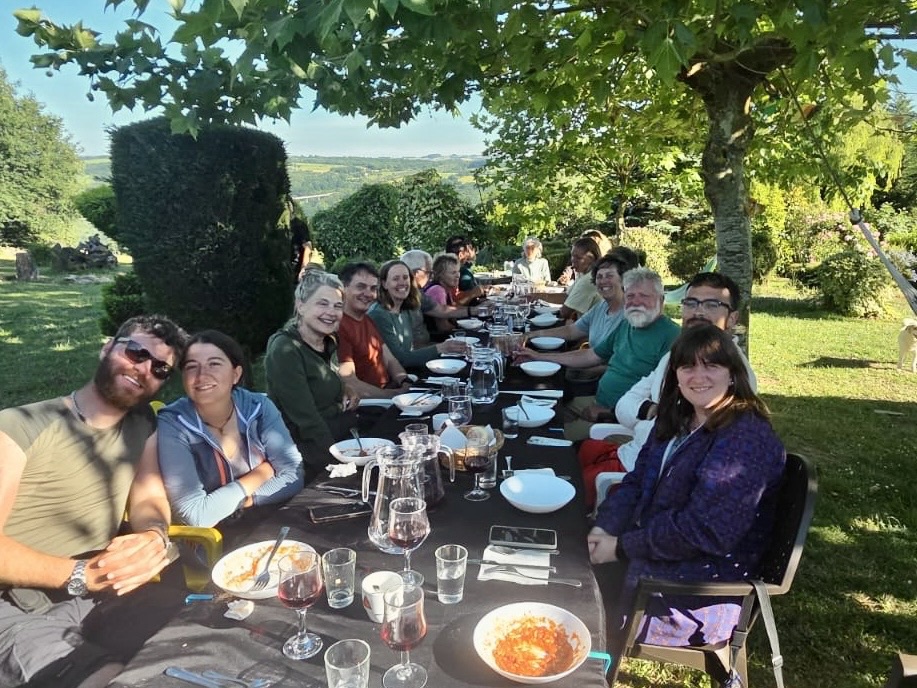
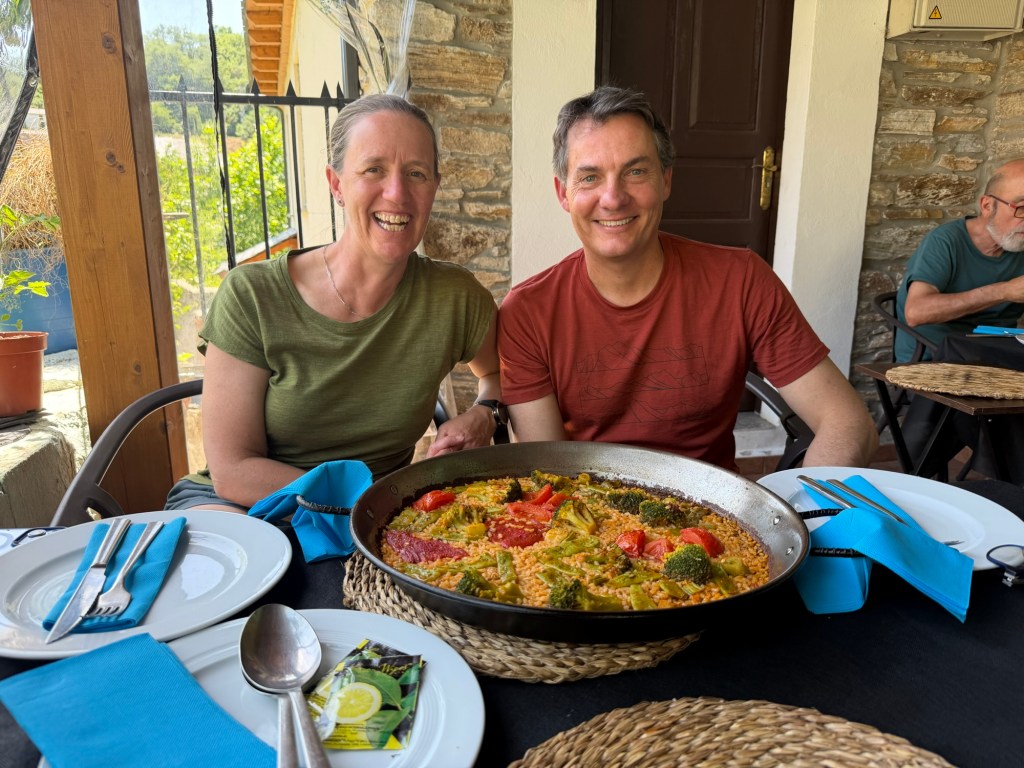
By 25 to 30 kilometres everyone is ready, or a bit past ready, to stop. We find our albergue. Check in. Shower. Poke about town or the local church or find a beer and a glass of wine. Maybe we play a little cards. Maybe we don’t. Eventually it’s dinner time. Pilgrim meals are fun. Sometimes too loud. Sometimes hard to chat across language barriers but always upbeat and cheery.

I loved our host in Sansol. She was an Italian lady who had fallen in love with a Spanish man when they walked the Camino a year or so ago. They weren’t sure what they were doing with their lives but some connection to the Camino was important to them. They sent emails to hundreds of albergues looking for opportunities. The email reached the owner of the Palacio in Sansol the same week she had decided she would close. Her father had spent years restoring the place, he had died and she took it on for the next few years but now she felt she was done. The rest as they say, is history.

The two lovebirds stepped in and took the place on (only about a month ago). I got the impression however that they had little background in hospitality. She had a penchant for swearing and taking the Lord’s name in vain, with occasional cries of ‘Jesus Christ!’, as she grappled with multiple pilgrims arriving all at once or when accidentally serving bread to a gluten free peregrino. ‘Jesus Christ don’t eat that!’, she cried on that occasion, racing out of the kitchen and across the dining hall to pluck the bread away from a pilgrim who no doubt would not have eaten the bread anyway.

Our Italian host at Sansol

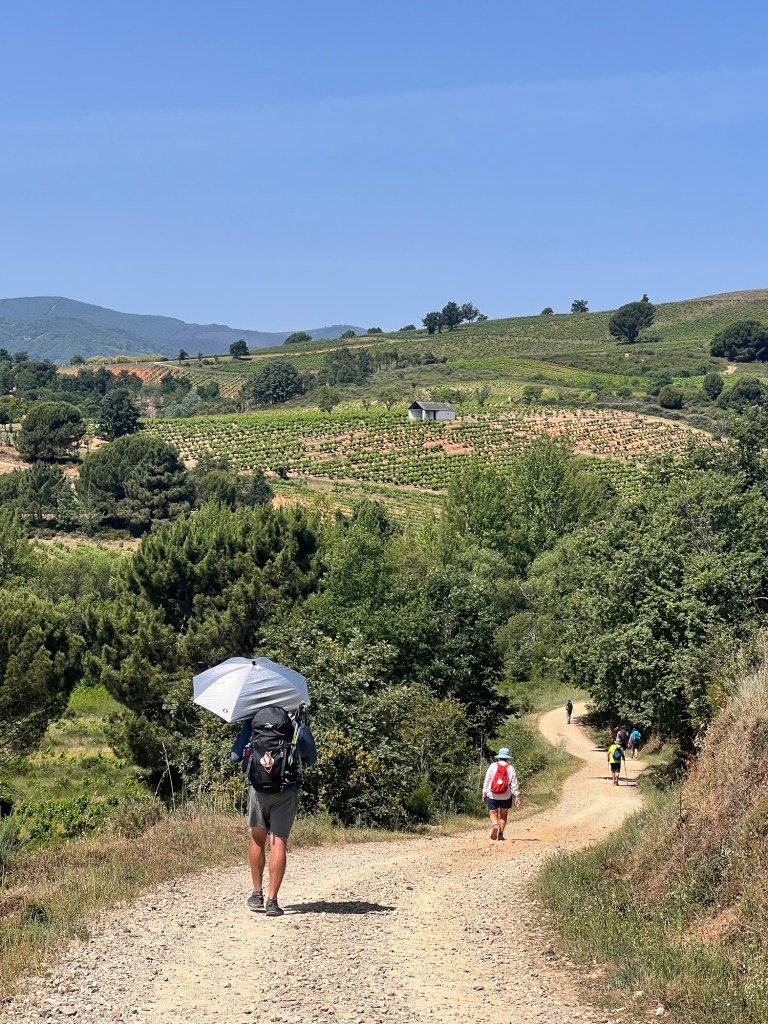
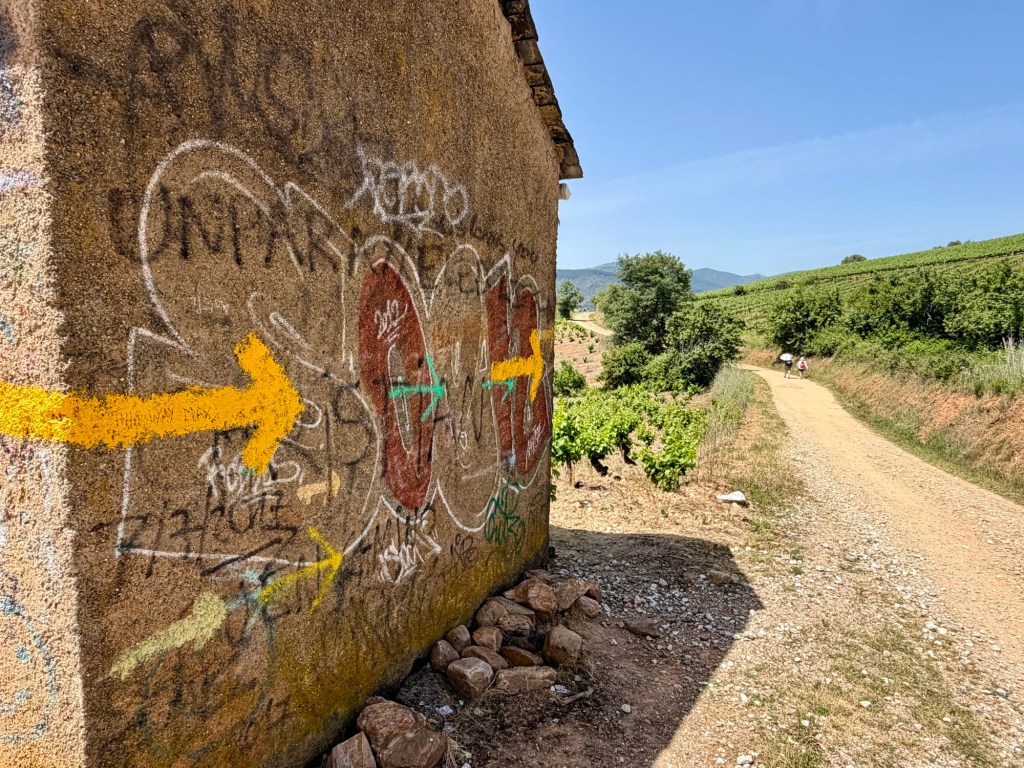
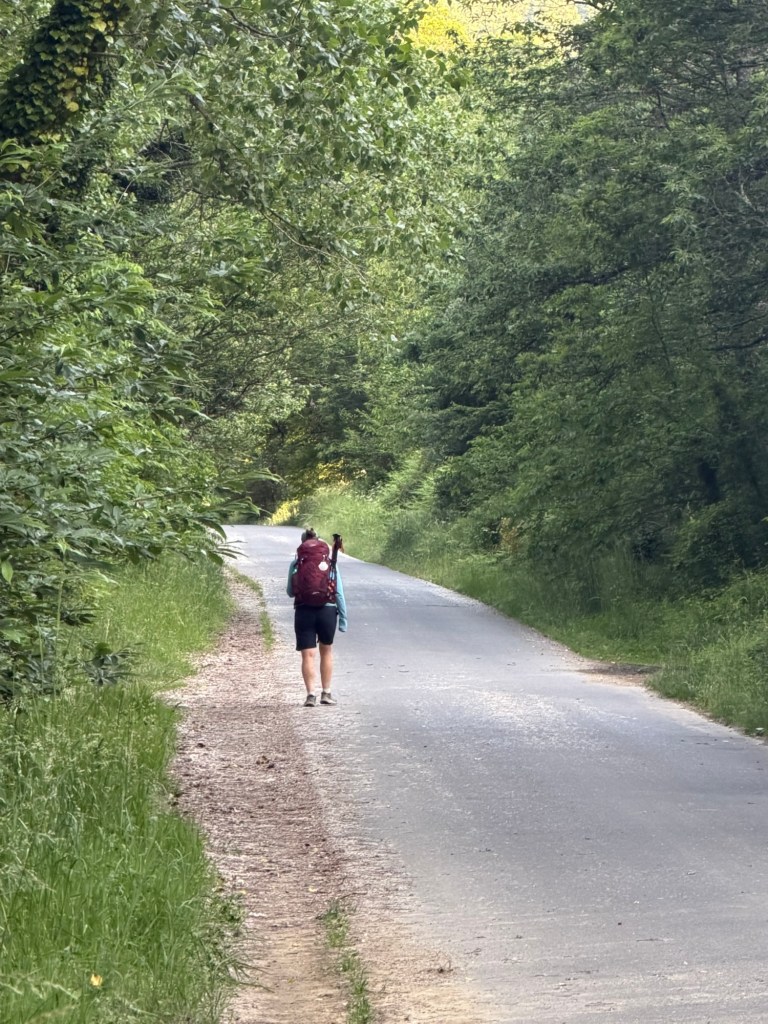
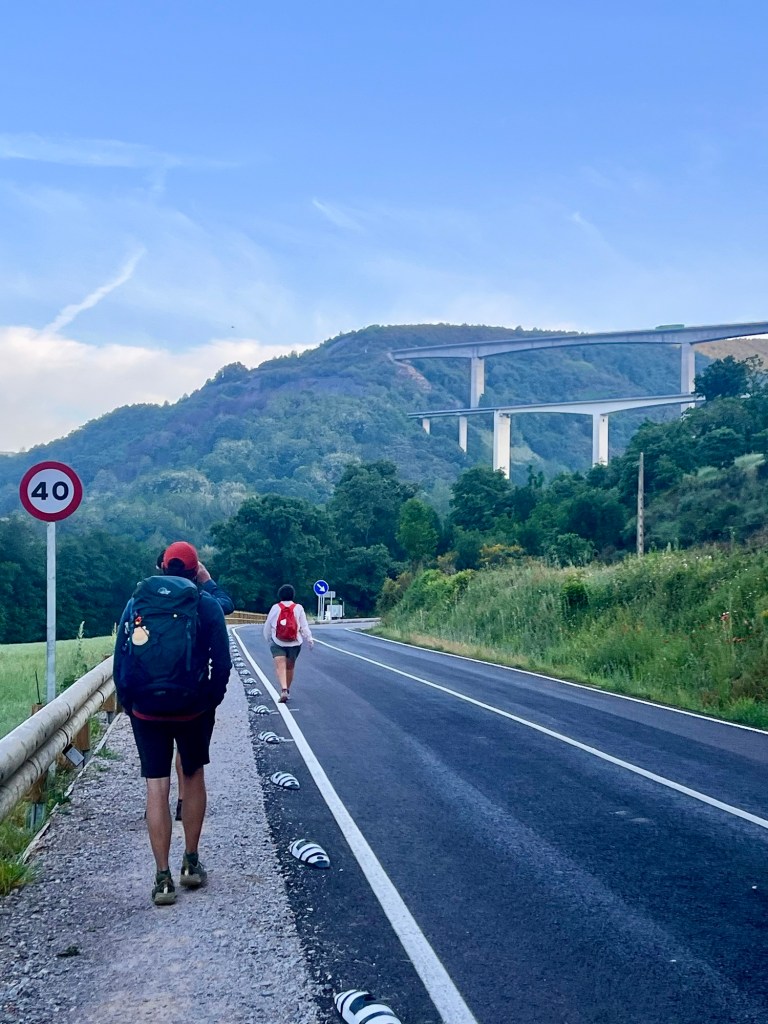
We’ve seen so many wonderful things already. Beautiful things and yet at any given moment the reality of the Camino is as likely to be a gritty, graffiti ridden underpass, or a stroll past an electrical substation or noisy highway as it is to be through the gorgeous byways of county lanes, villages, vineyards, forests and fields. Generally speaking it is more of the latter than it is the former.

Road runner and Kyote – underpass graffiti
Walk Baby!

We’ve walked for 5 days now since leaving Logrono. Staying in Ventosa, Cirueña, Belorado, and San Juan de Ortega before arriving here in Burgos for another rest day. We’ve picked up our mileage too, covering more than twenty kilometres each day. The day into Belorado was our longest at 29.85 kilometres according to my watch. That bothered me, so Emma and I walked around the block before stopping at our albergue, just make sure we could say we had walked a full 30km.

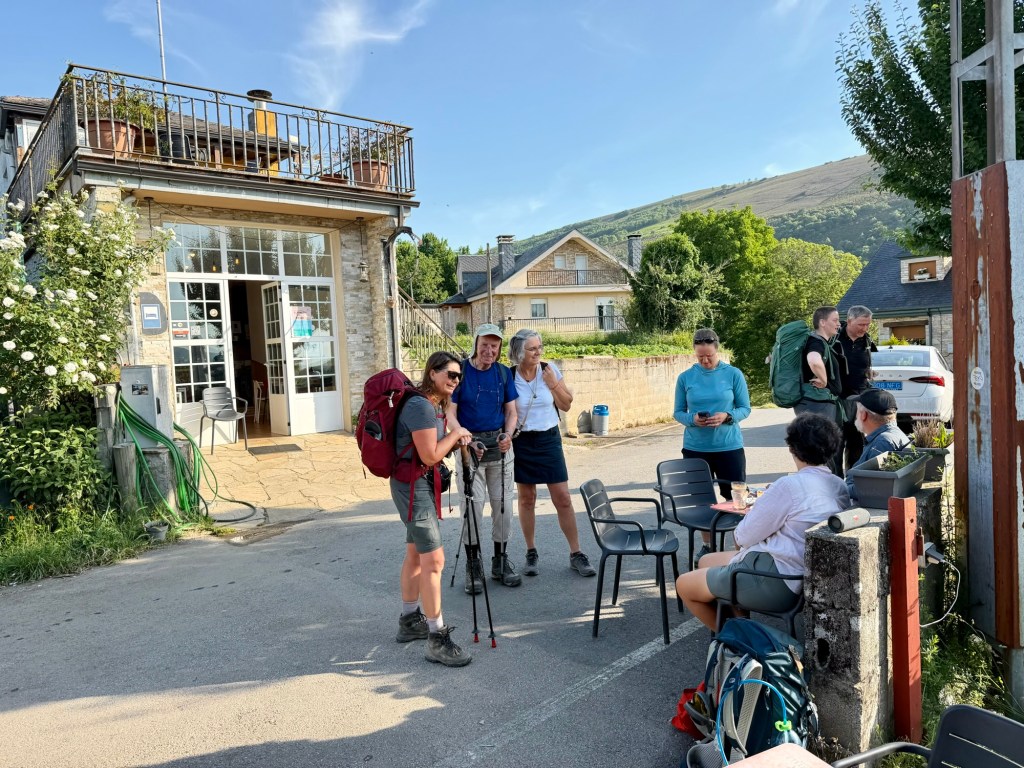
The day we left Logrono we walked with Guy from the UK and Danae from the US. We had spent the morning with them the day before, exploring Logrono itself. The only reason we did that of course was because Paul had lent across the table at a bar we had stopped at for lunch days before and started chatting. The Camino is fun like that.

We had explored the cathedral, the pilgrims fountain and the pilgrims square. And then we walked with them for a splendid day. I stopped taking photos and listened to Guy share his story. He has been on quite the journey. It’s not my place to reveal that story other than to say he had discovered that when he is walking, the voices in his head run out of things to say. Guy seems to have a way of collecting friends as he goes. I’m very grateful to him for sharing the way he did. His story gave context and scale to my own. It reminded me that while I am the centre of my own universe, there are so many others making their way through life in so many different ways.

Hanging in the pilgrims fountain and square in Logrono with Danae and Guy

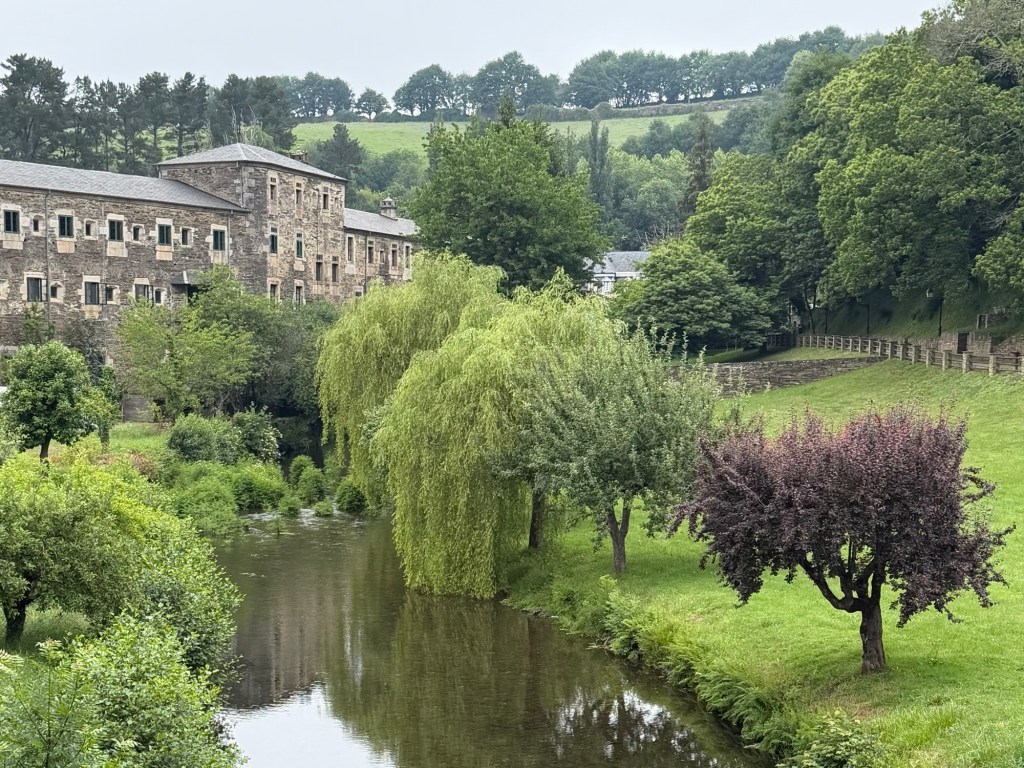
The days walk from Logrono flew by. Kilometres melting into the background. We went past a wetland, over a busy highway, past the ruins of an ancient pilgrims hospital and into the heart of La Rioja – Spanish wine country.

Vineyards started appearing and then increased in number, interspersed with the endless ocean of wheat and barley. The countryside is so neat. We’re told that at other times of year it is all brown, but now it is a festival of colour, a patch work of loveliness set to the chirping birds who never seem to tire of their cheery disposition.

The second day out of Logrono the sky decided to put on a show. Thunderheads appeared on the horizon, to our left and to our right. They grew steadily as we walked until their shadow consumed us. The scene played out slowly, only to be observed at all because we weren’t whizzing by at 110 km per hour. I was reminded of a concept I had read about which I think was called slow or deep time, where life and activity pass at the pace of the natural world rather than driven by the clock.

Tormenta on the horizon in Rioja

I felt overwhelmingly well on this day. All was right in my little world and the scenery and company was filling me up. There was a lightness in my chest that has been absent a good long while. We kept walking.

The third day out of Logrono started with a gorgeous show of early morning light. Khia discovered the first blister of our trip on her big toe, as if she didn’t have enough other ouchy bits to keep her challenged. She’s a trooper though and there is resolve in those legs to be admired.

Morning light Ventosa
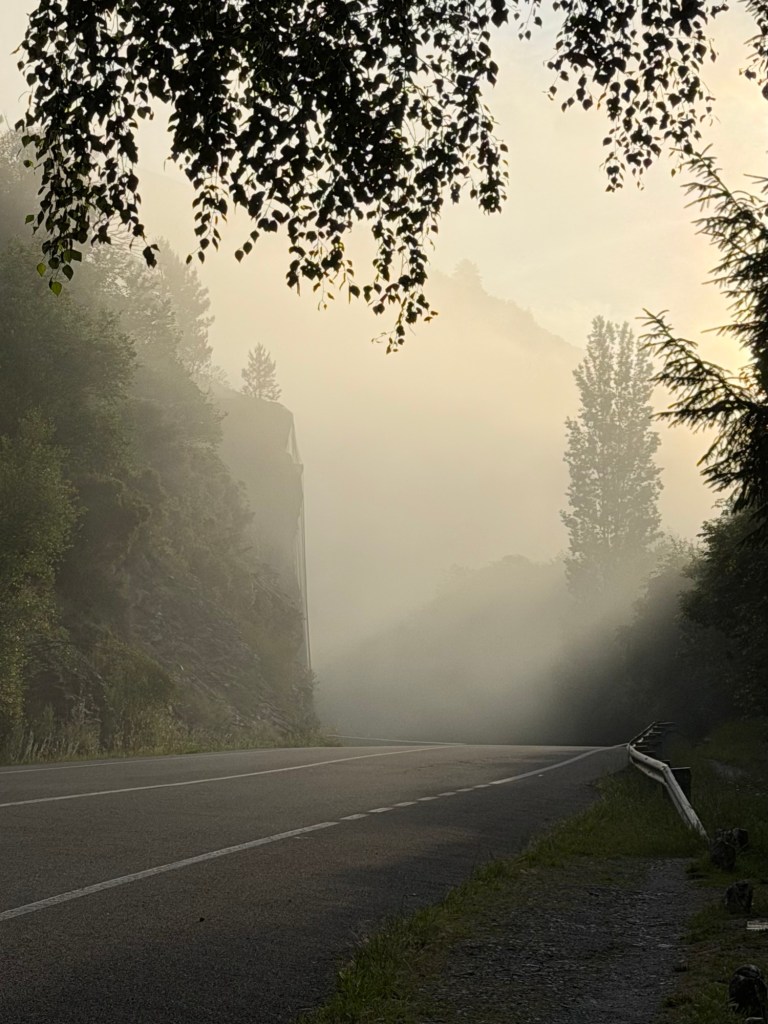
More morning light Ventosa

The day ended in Cirueña. A town with an eerie history. Just before the financial crisis in 2008 the developers had swept in and installed a golf course and around 10,000 apartments and homes with promises to sell a country club lifestyle in the heart of the Rioja wine region. Cirueña’s population now is around 280. Our guide book described it as a town of the zombie apocalypse and that’s how it felt. Paul and I pretended to be zombies, after carefully checking none of the inhabitants were watching.

The storms were back the next day, only this time they did not just cast a shadow but erupted right on top of us. We ate lunch under the roof of a church as the rain came down and we thanked God for his protection. I pondered whether he saw right through me though. Perhaps he did because not long after leaving that town the storm came (storm appropriately translates to tormenta in Spanish) and there was nowhere to hide. For two and half kilometres it poured down, lightning crackled and thunder rippled. The water was cold as it wet our feet, the only part of Emma and me not wrapped in waterproof fibres. Then the rain became hail biting into Khia’s bare legs and face. I felt calm. Strange for me in such a circumstance. Emma grinned from ear to ear. Khia moved quickly, powered by adrenaline and Paul had fallen behind playing with his umbrella.

Shelter from the storm under the cover of a local church
Khia powers on through the tormenta, Emma grins and Paul plays catchup in the background

We arrived into Belorado not long after the tormenta had passed and chose a restaurant for dinner, which of course happened to be where Danae was staying. Of course we bumped into Danae for dinner – this is the Camino!
The next day was Khia’s birthday. She awoke with a giggle with thanks to balloons by Emma and stayed behind in town for a massage with thanks to Paul. Could there be a better gift on the Camino?

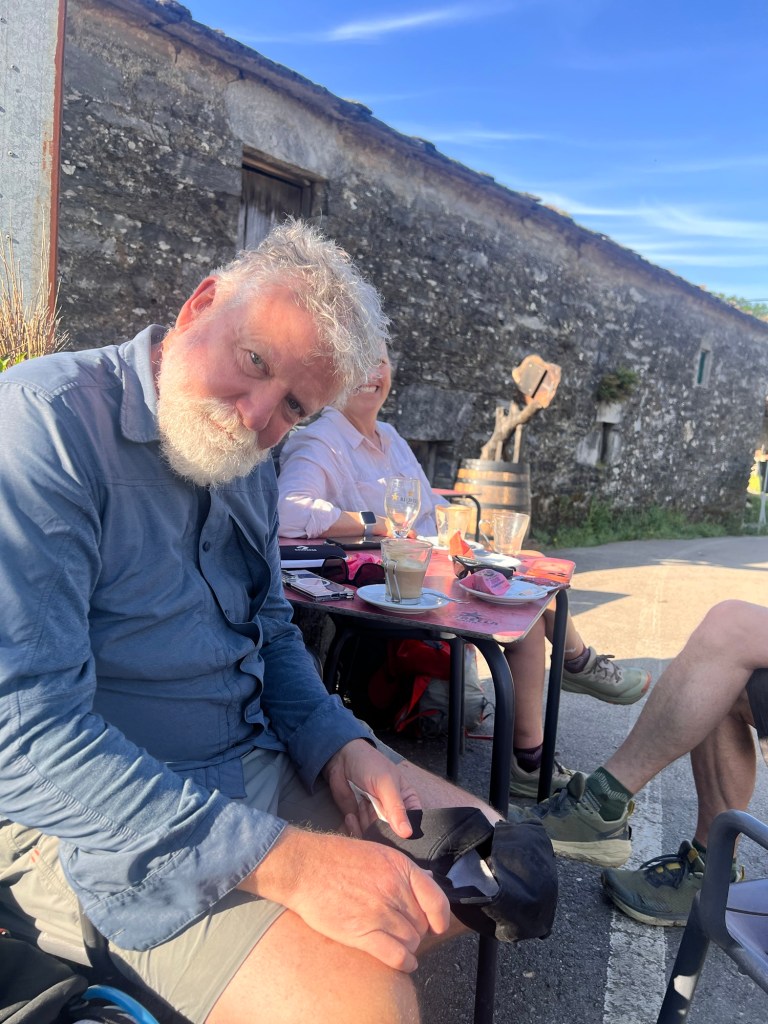
The day we walked into Burgos got off to a rough start. It was a Sunday and our beautiful albergue in San Juan de Ortega did not serve breakfast that morning. Nor did the town after that, or the one after that! Yikes. I promised myself I would increase our donations to Plan International. It sucks being hungry and caffeine deprived. Three hours without food and we were beginning to get desperate! Finally we stumbled into Villalval where there were cafe chairs with umbrellas hoisted high. Our hopes rose and then our hearts surged as we saw every peregrino on the conveyor belt of Saint James seated, eating and drinking in this otherwise blink and you will miss it little town.
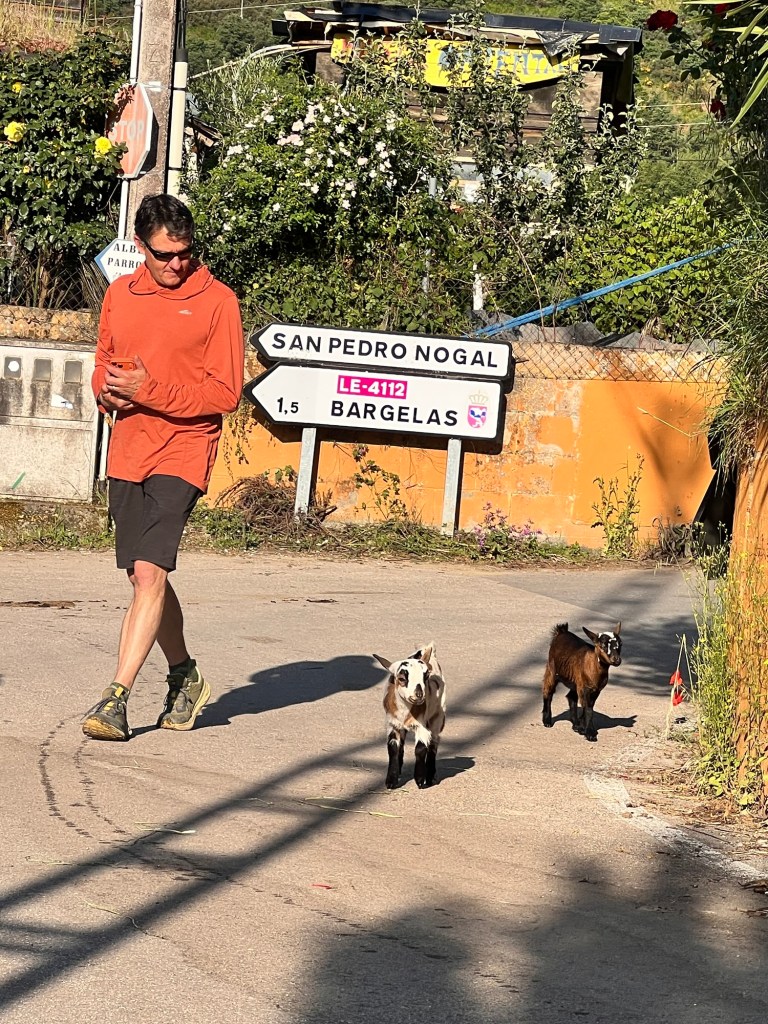
The cafe that saved us in Villalval

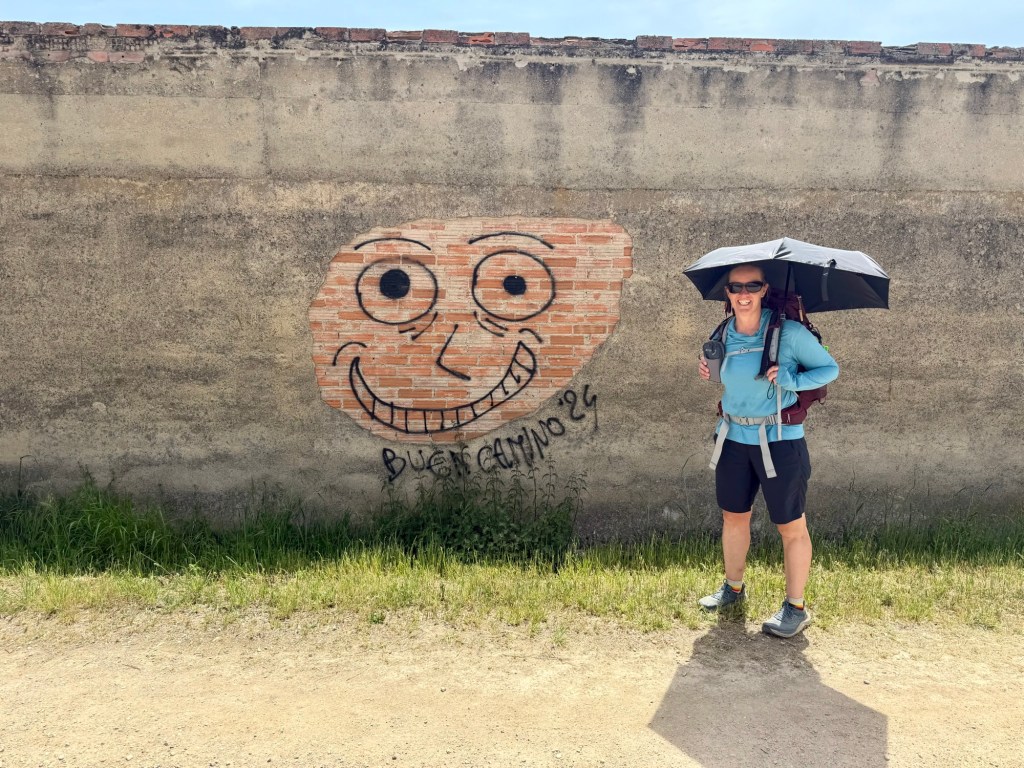
We went on, across a bridge over a highway where Emma and I stopped and waved at the cars and trucks and motor bikes whizzing by below. To my delight the trucks and cars and motor bikes nearly all waved back, flashed their lights and honked their horns. There is love for peregrinos in Spain. Many more locals than not look up, smile and wish you a Buen Camino.

As it is, I am sitting on the fifth floor of an apartment building with views over a magnificent gothic cathedral in the centre of Burgos. My feet are not as tired as the day before. Which is good. It’s 180 kilometres across the high plains of the meseta before our next rest day in León. We’ll get there. Slowly.

Our view from the apartment in Burgos

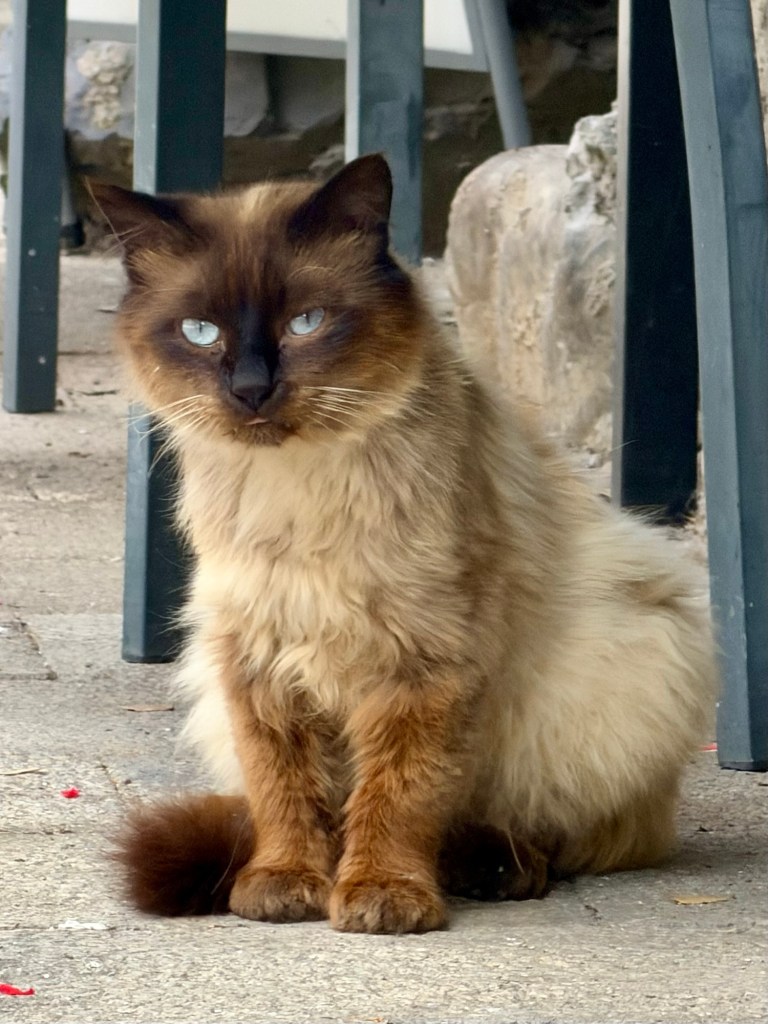
And just for fun, a few more photos from my cats of the Camino collection.

And for even more fun a few photos that I just wanted to post.

Daybreak leaving San Juan de Ortega
Outside the San Juan de Ortega albergue
Paul goes Mission Impossible around a puddle on the way into Burgos
Emma before the storm broke
A patchwork of loveliness
The group capturing a captivating mural
Lightning cracks over Ciruena
Tired feet, must have been somewhere more than 20 km into the day
Happy Birthday Khia!