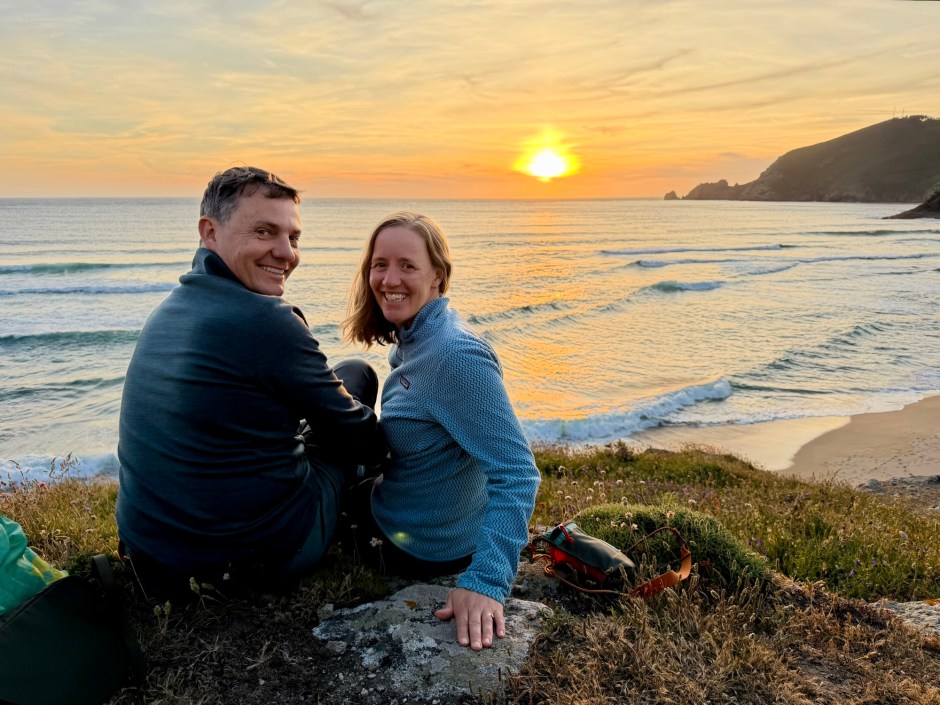
Santiago de Compostela may be the major goal, but for many it is not the end. Count us amongst them (Emma and I in any case).
With all due respect to Saint James, we came for the walking and the walking was not done. Santiago d Compostela is ninety kilometers from the Spanish coastal village of Finisterre. Finisterre translates as, ‘earth’s end’ and is the place medieval peregrinos really did believe the world stopped, on the edge of the infinite ocean. To the end of the earth then we must go.
We had received our compostela by reaching Santiago, but that was not the reward we were chasing. Emma and I wished for a different notch in our belt. A notch of the metaphorical kind, allowing us to proclaim henceforth to anyone who will listen (or just quietly unto ourselves) that we had walked across a whole country. One roughly the size of NSW. Note NSW is actually 63% larger than Spain. It (NSW) is however 1100 kilometres at its widest. Include all the side trips involved in the Camino Frances and Finisterre extension and I say we walked at least that far!
And so, two days after we arrived in Santiago we bid Paul and Khia a fond (but temporary) farewell, donned our weary shoes and swung our packs back upon our backs. Three days and ninety kilometres separated us from the end of the earth.
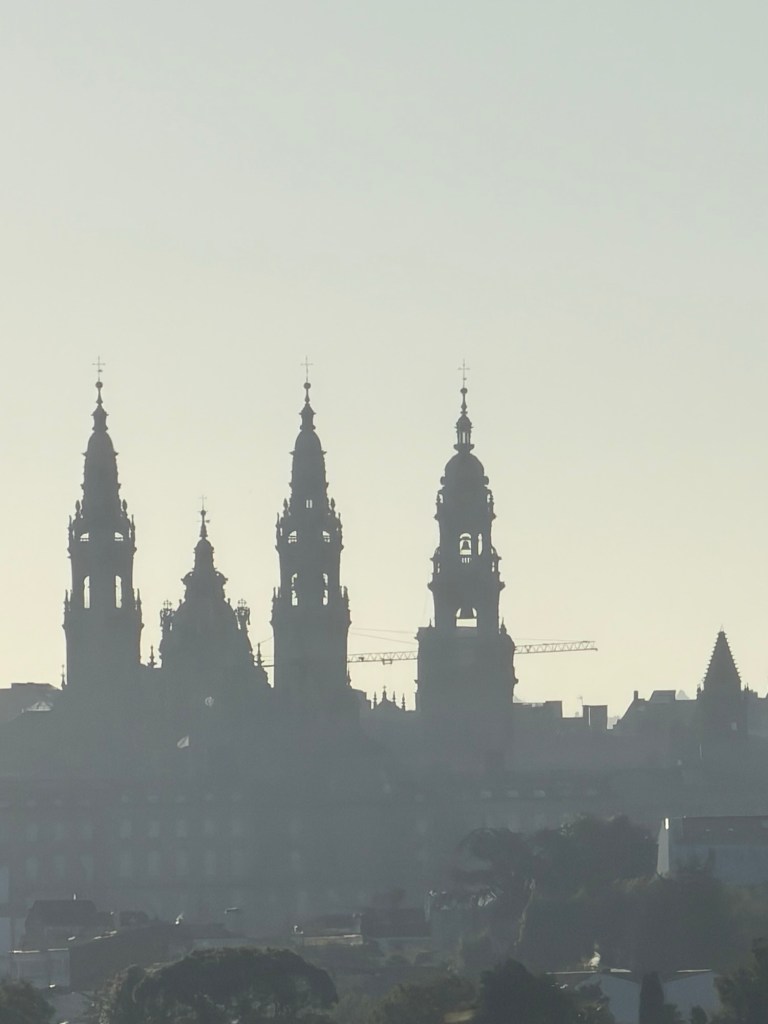
To walk that far of course, in any other context, would have felt like a worthy adventure in its own right. Having just walked most of the way across Spain however, it felt like an afterthought, nary worth a mention.
The first day was a breeze. Twenty two kilometers. Hardly worth getting out of bed for. There was however another medieval bridge to cross at Ponte Maceira. It was a gorgeous scene, with a mirror like pool of water sitting behind a weir with the ruins of several old water wheels off to the side. White water cascaded down the weir and through channels directed at the waterwheels.
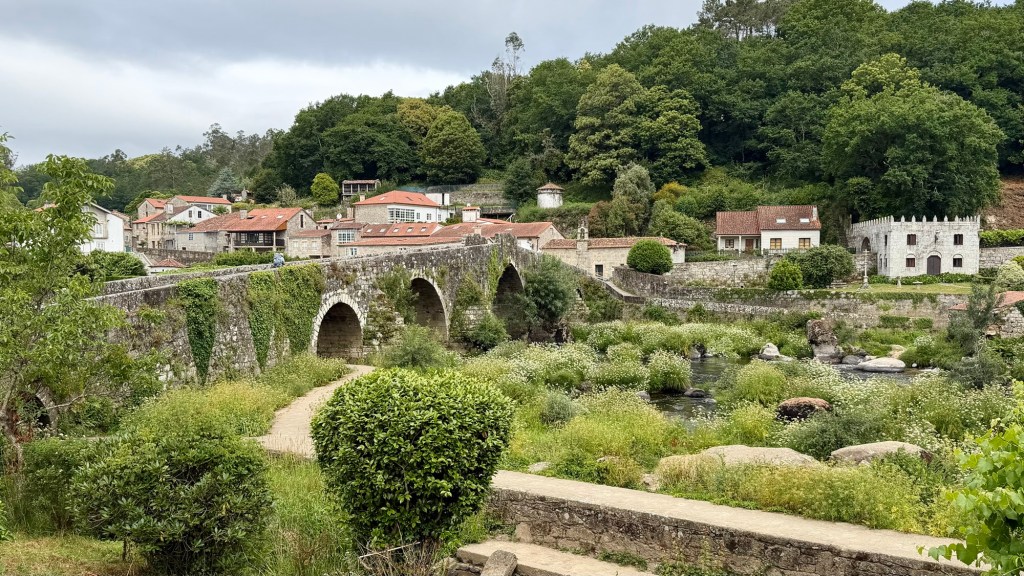
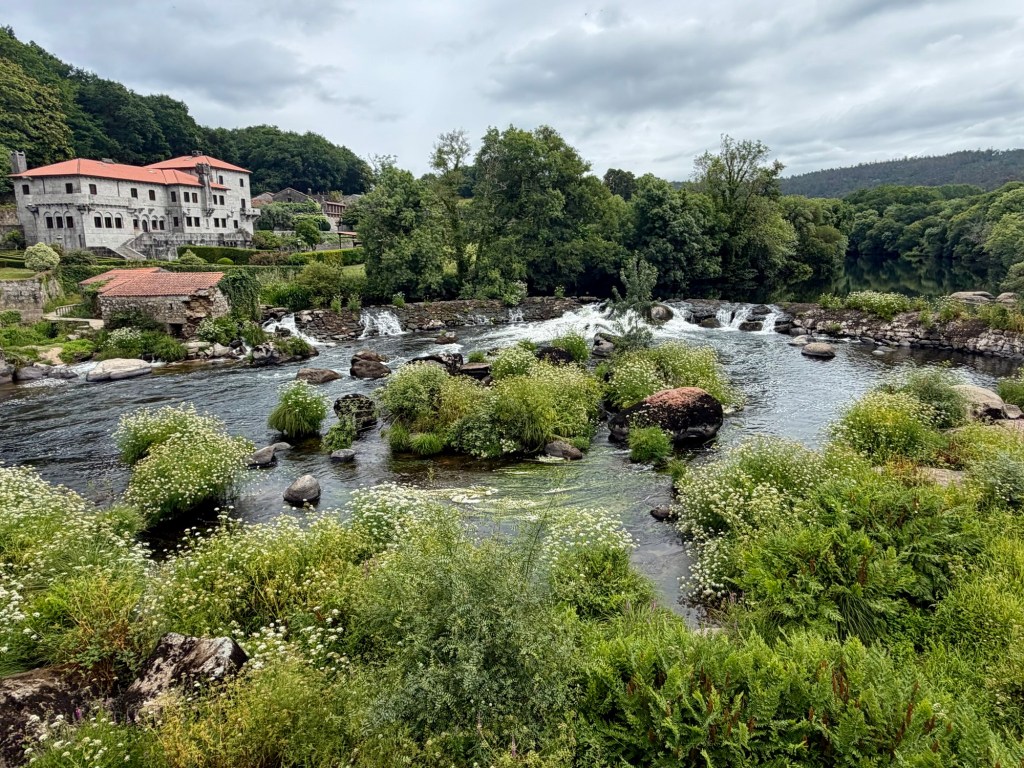
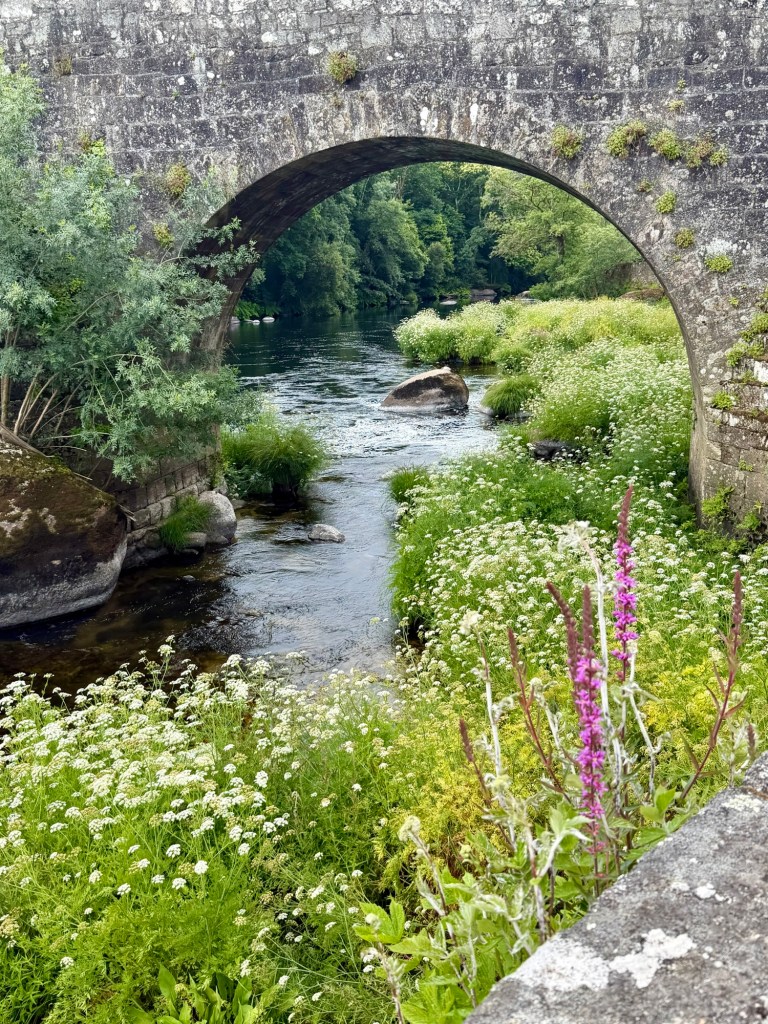
According to legend, Saint James’ disciples fled pursuing Roman soldiers by crossing this bridge. Divine intervention struck the middle of the bridge immediately after they had crossed. Thank God for that. The Romans were unable to run them down and their escape was secured. We know all this to be true because the region’s coat of arms records the whole thing.
Ours was a less desperate plight than that of Saint James’ disciples. We searched in vain for a spot with a view of the water to eat our lunch, but to no avail. A stone bench with a stone fence blocking the view had to suffice. No divine intervention for us.
After eating Emma tore off strips of ankle tape which I carefully inserted inside my shoe lest its fabric upper be rent clean from the sole. My shoes would need some care to get me all the way to the end of the earth.
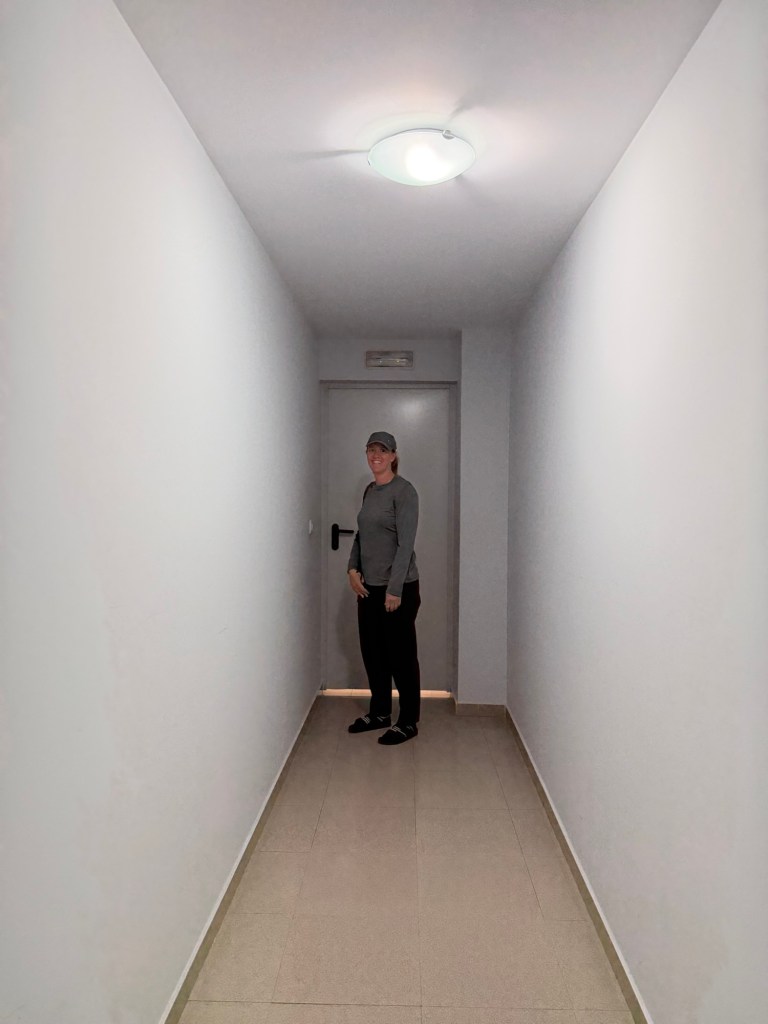
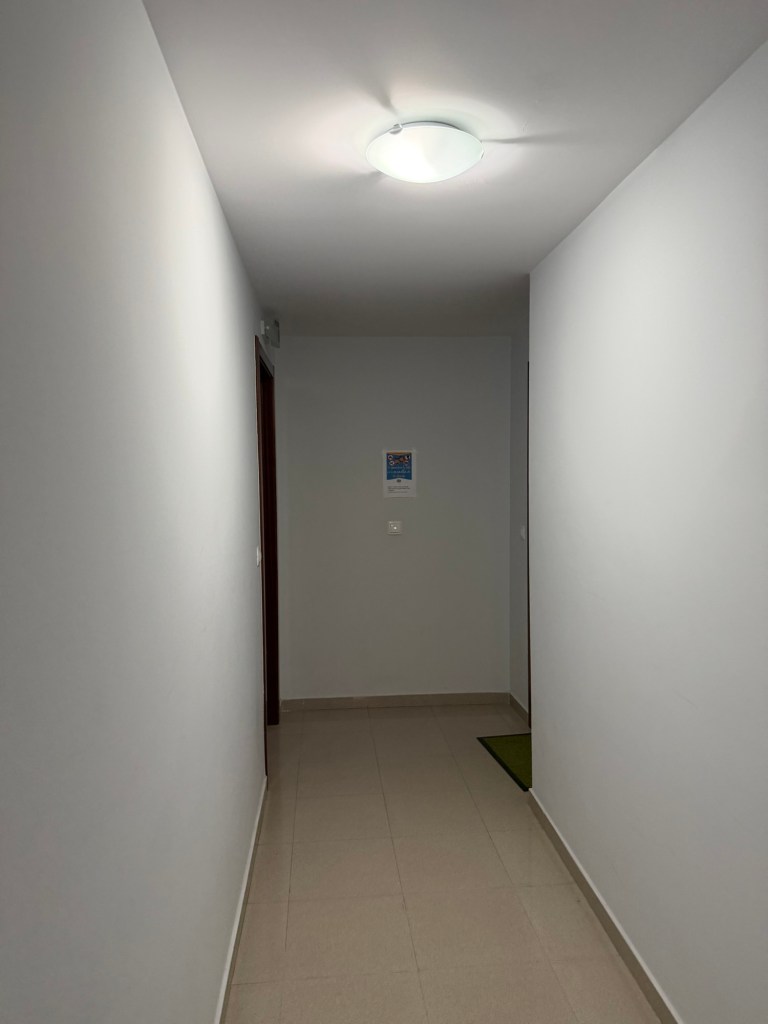
That night we stayed in possibly the most drab and depressing accomodation of our trip, situated in possibly the most drab and dreary town. The albergue felt deserted and spooky, with fluorescent lighting in stark hallways. The town, at least the part we stayed in, was also charmless. The man in the kebab shop where we went for dinner was nice though. For those yet to walk from Santiago to Finisterre we suggest skipping Negreira, but maybe stop in for a kebab.
Day two was a big one. Thirty four and a half kilometres. Our longest days walk yet. It’s easy to say and not too hard to do, though maybe a bit hard. Even at a relatively brisk pace it was a long day. Nine hours separated departure from arrival. That’s a long time to be going at it, even if some of that time involved sitting and eating icecream. The walking was good though. Scenic, hilly, pretty.
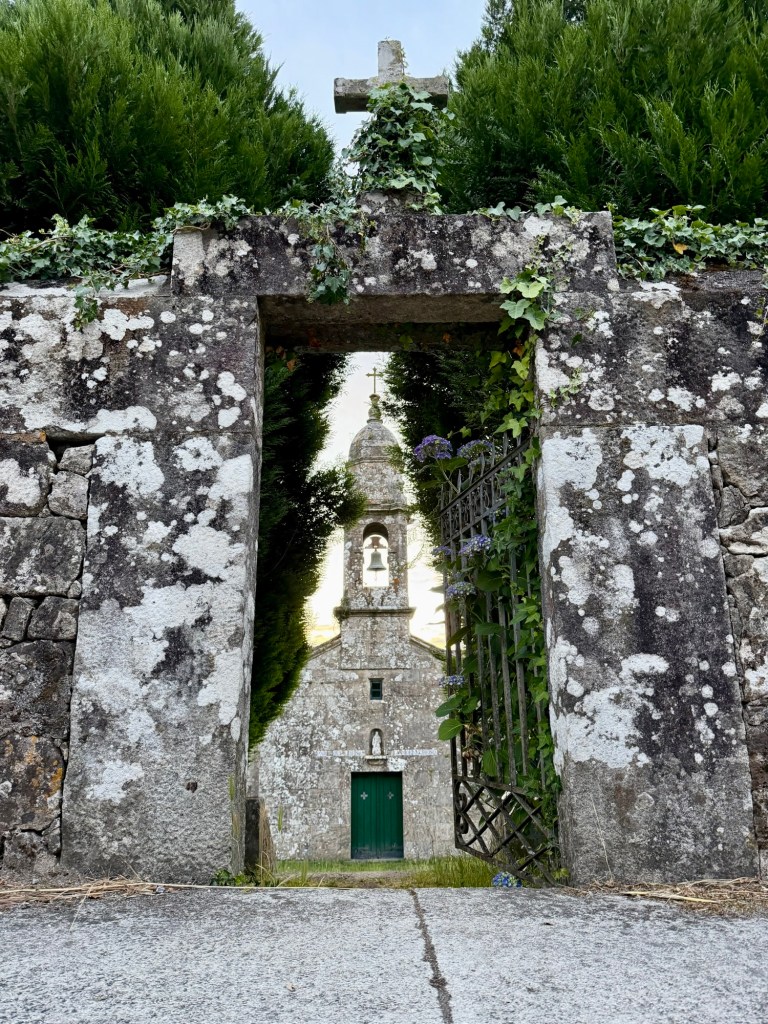
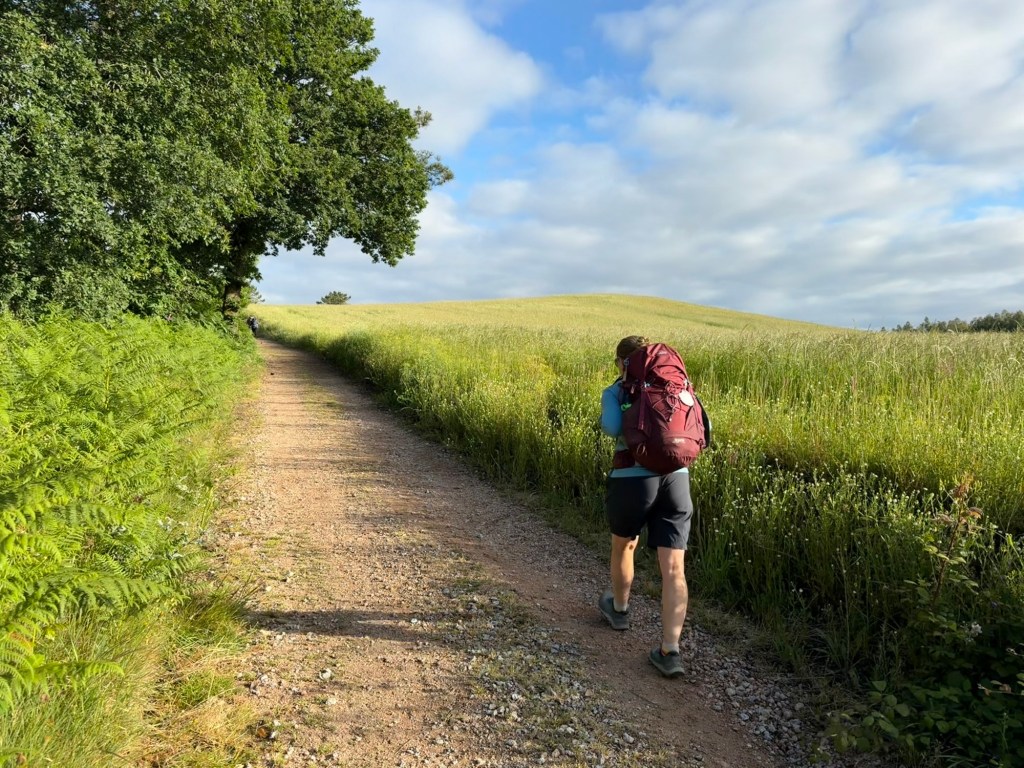
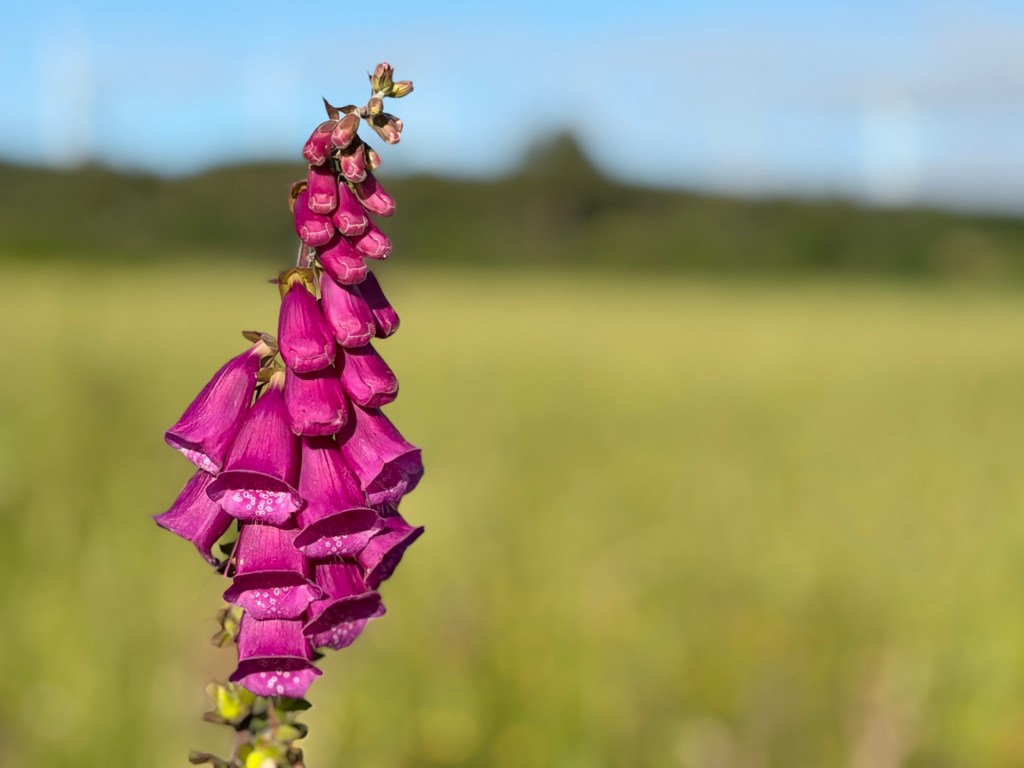
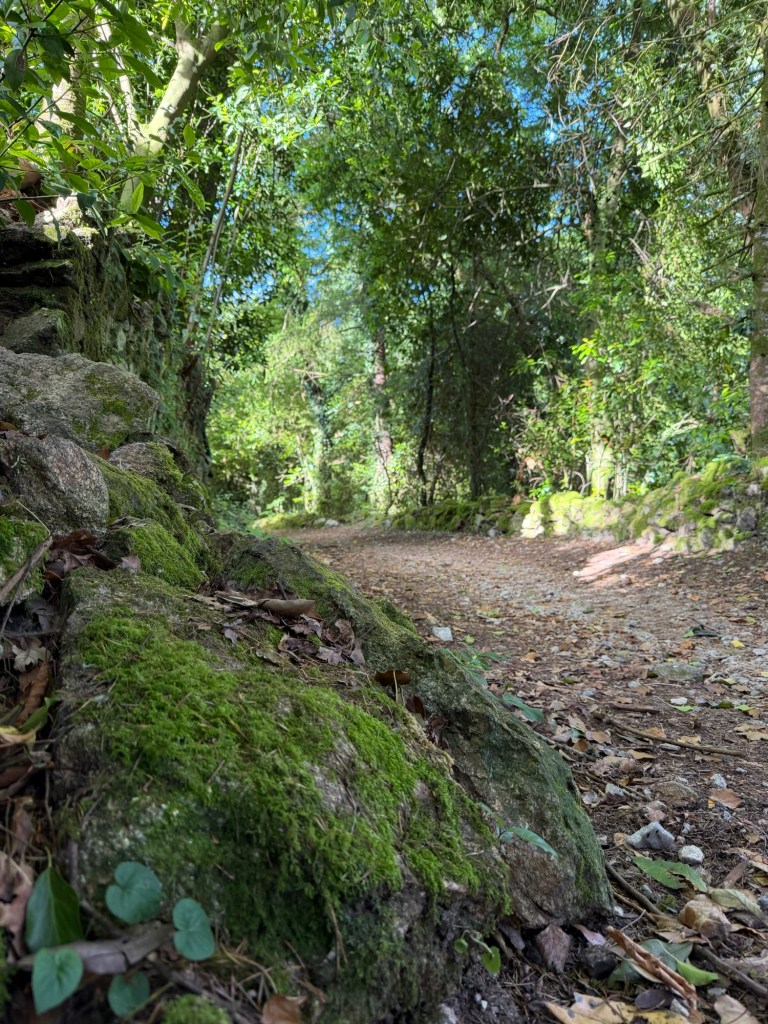
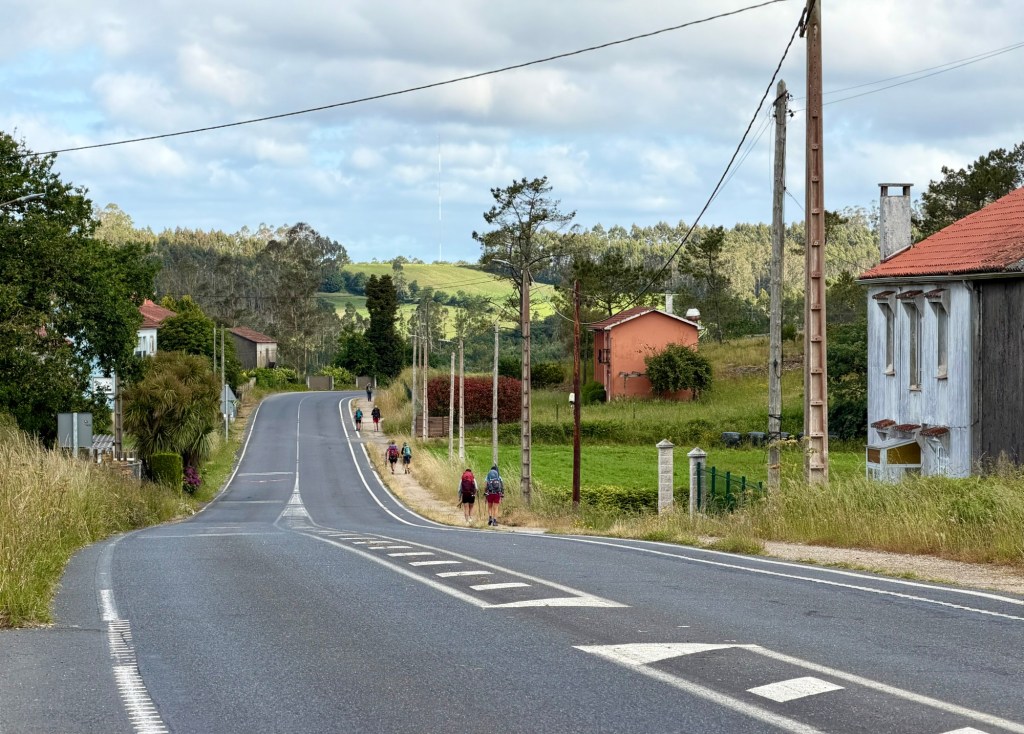
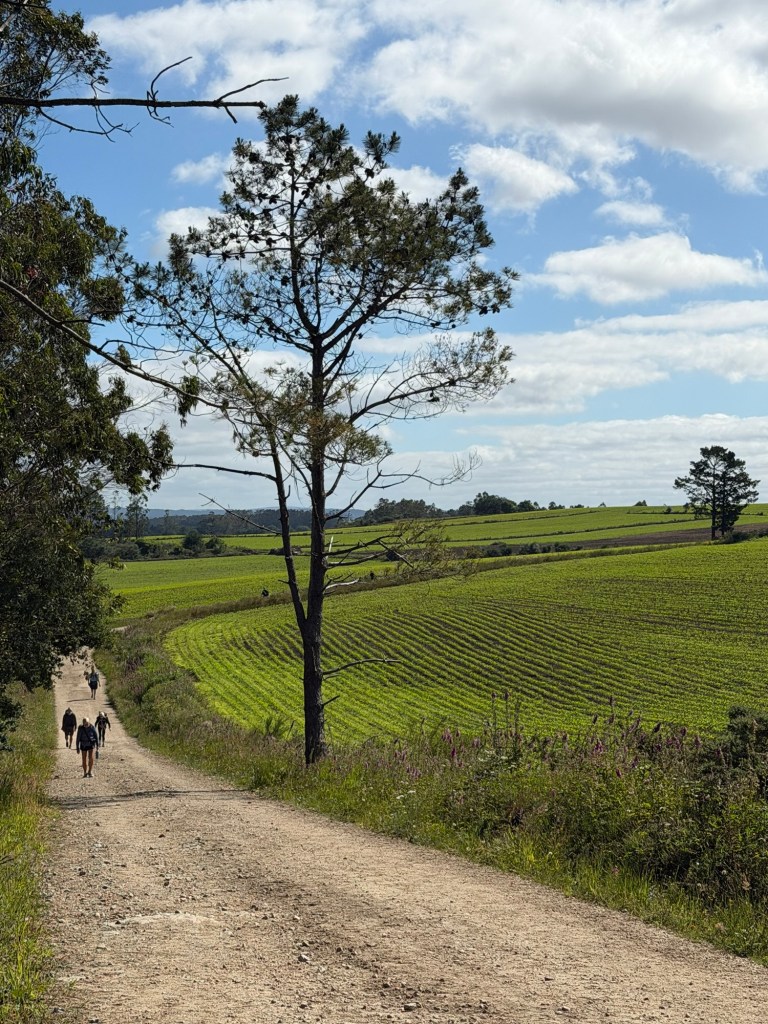
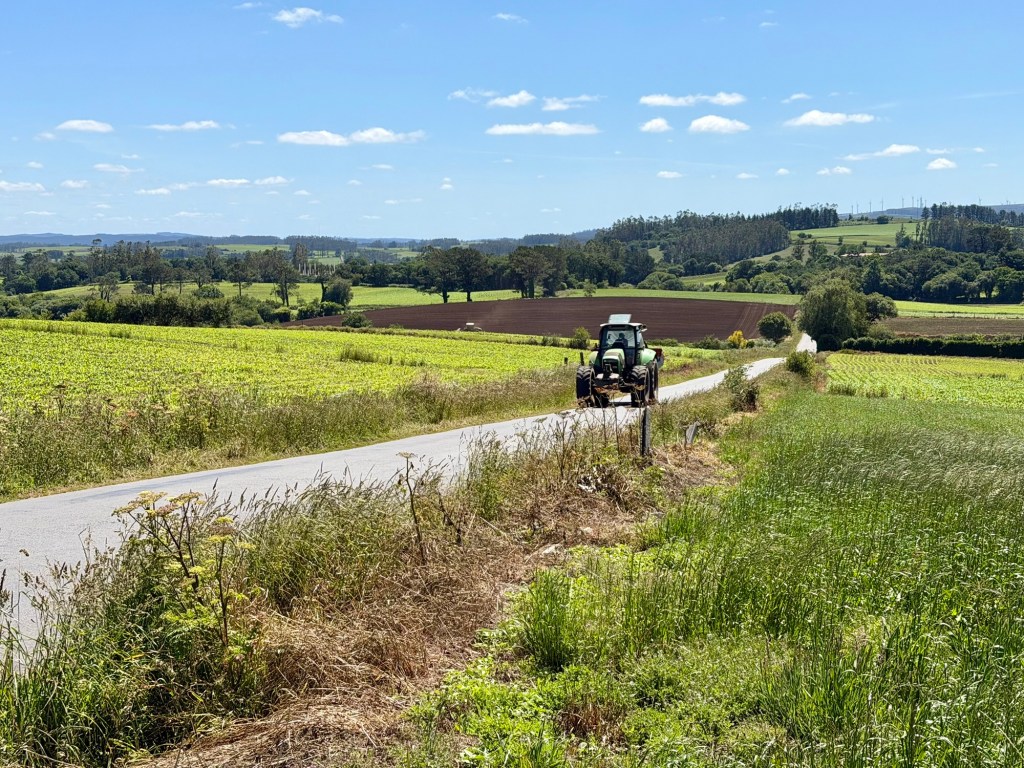
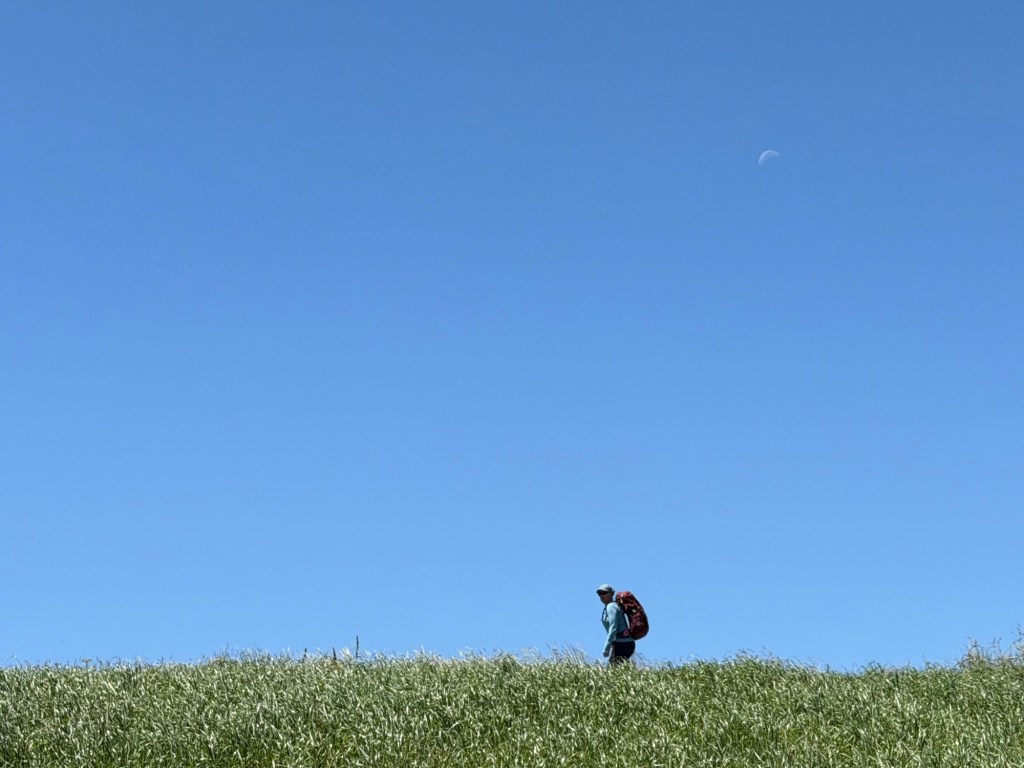
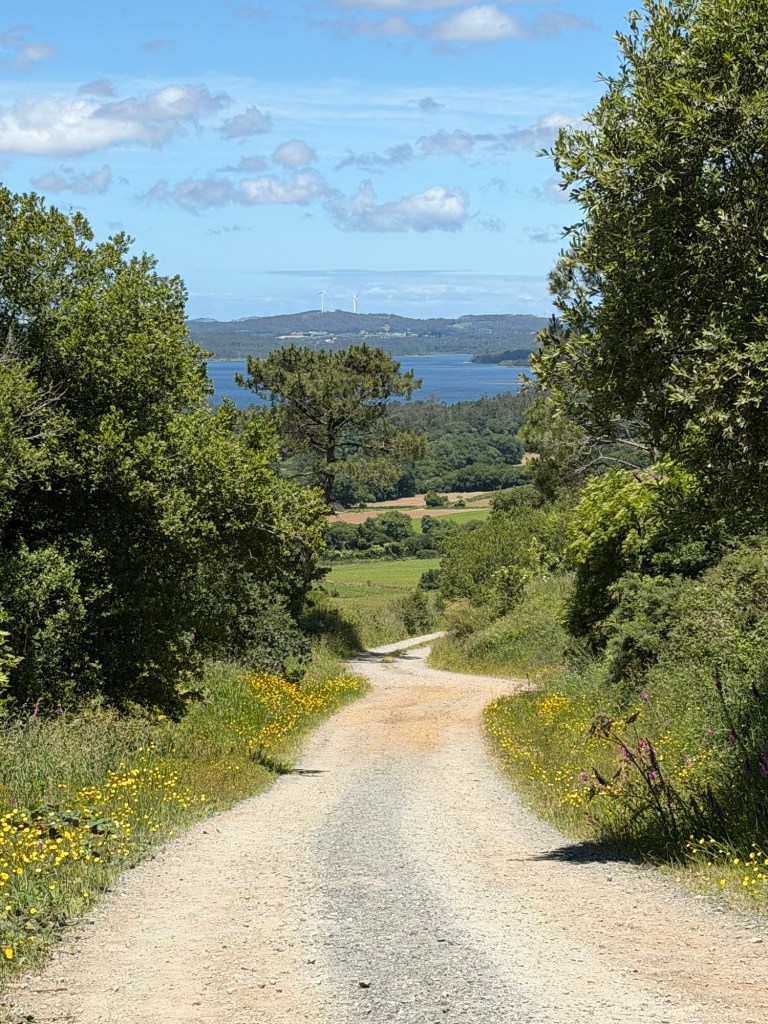
Fortunately the accomodation on night two at Olveiroa had everything Negreira lacked. It is a lovely little town mixing smick accomodation and bars with the usual array of abondoned and crumbing houses. I’ve not mentioned this before, but anyone walking the Camino will find it unavoidable to notice the number of empty, dilapidated homes along the way. Simply not enough people or work so places fall into disrepair.
Day three was thirty two kilometres. Which is less than the thirty four of the day before and this made it feel like it should be easier. It wasn’t, but after twenty kilometres we did see the sea at Cee. Yep, the Camino meets the sea at the town of Cee. It’s a bit like the rain in Spain which, as you may have heard, falls mainly on the plain. Only different.
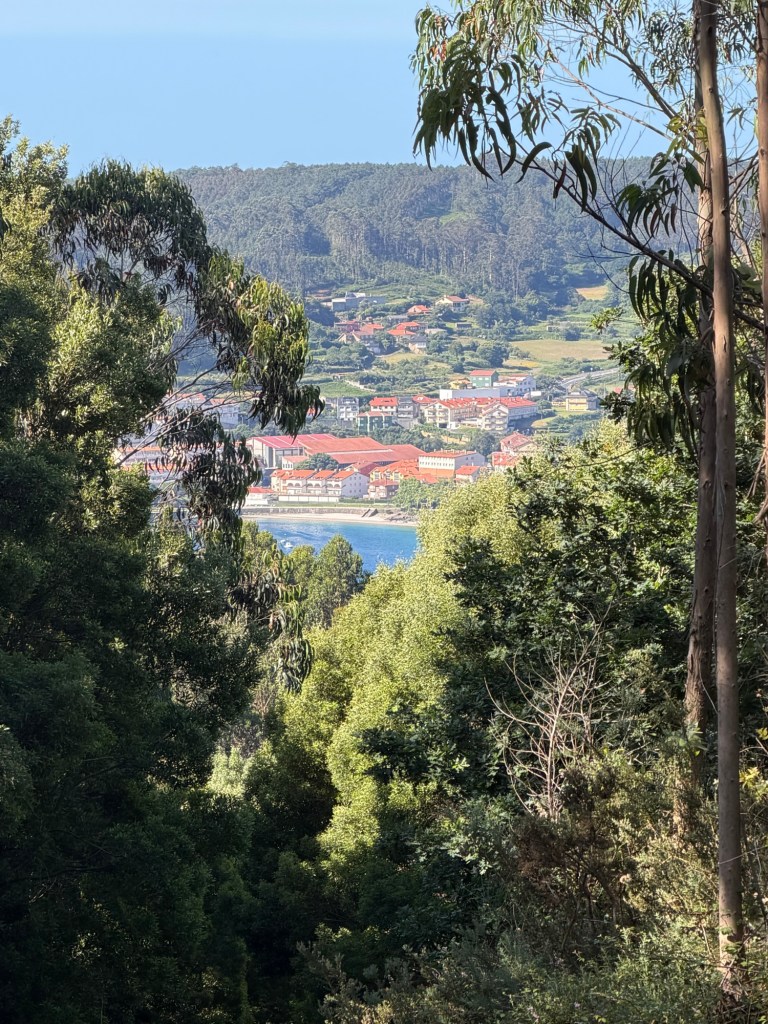
We did see the sea, and it was good. Good for the eyes and good for the soul. We bought lunch at the supermarket, before finding a picnic table down by the water. We decided on a supermarket lunch because the kitchen at the cafe we stopped at didn’t open for another 45 minutes. I don’t know what we were thinking. It was only 12.15!
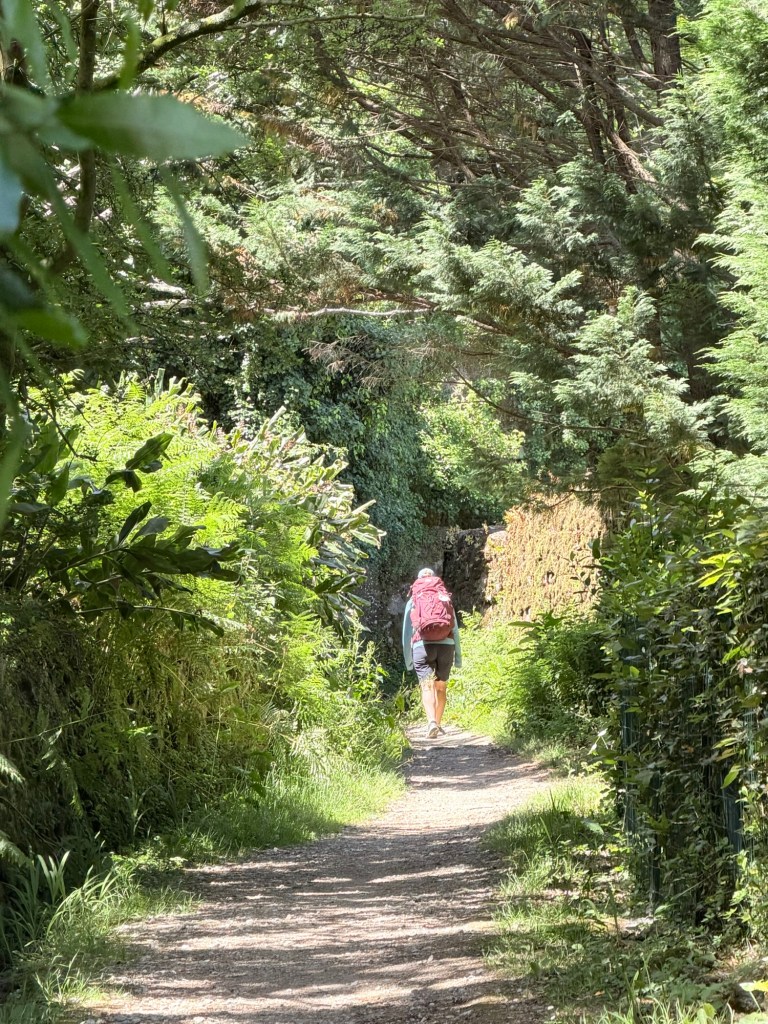
Hours later, and after making our way along the coastline past pretty little bays, up over headlands, through narrow lane ways, and along a lengthy beach we finally made it to Finisterre. The town itself straddles the narrow low point of a cape which runs north – south and which also happens to be the most westerly point in Spain.
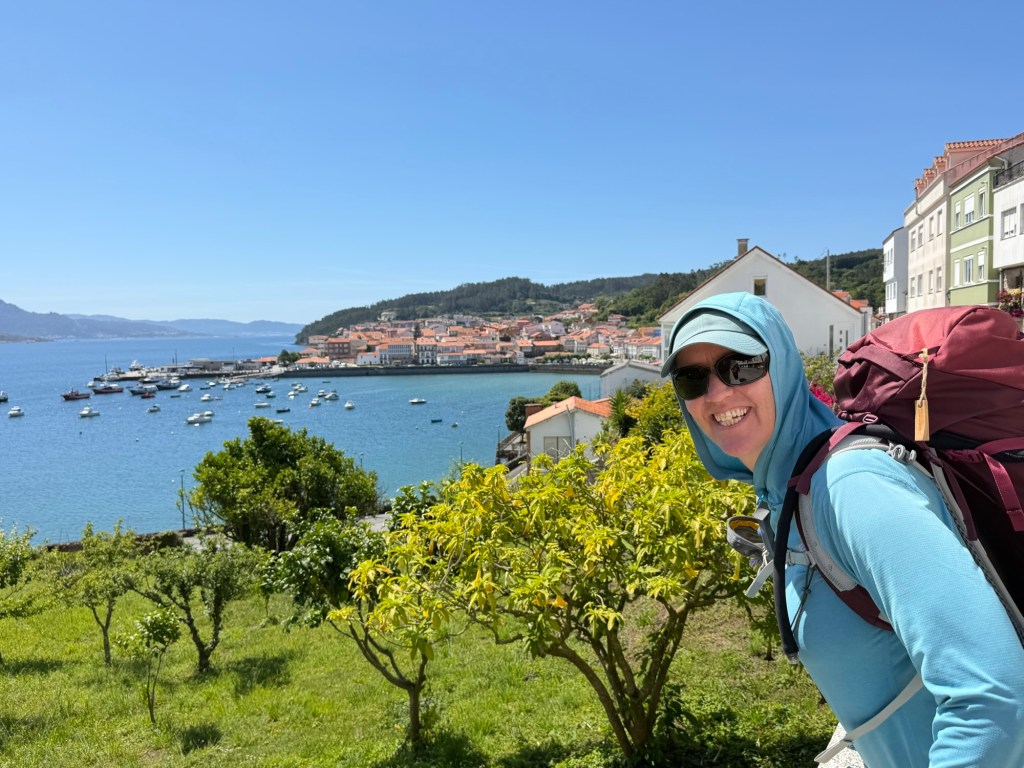
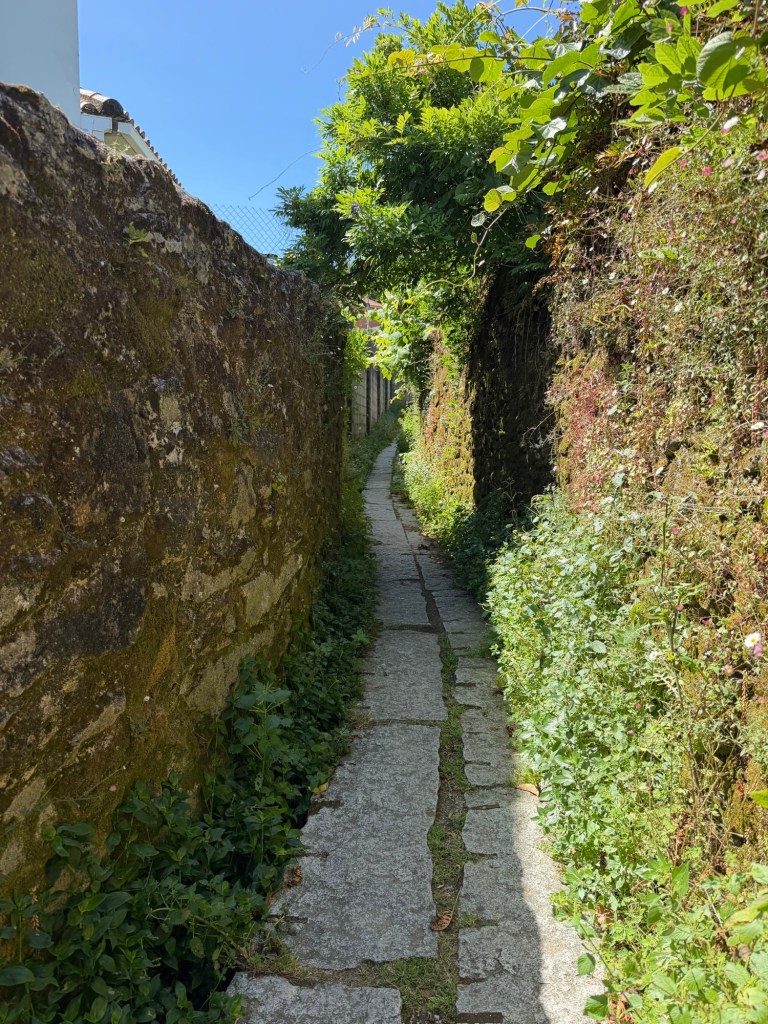
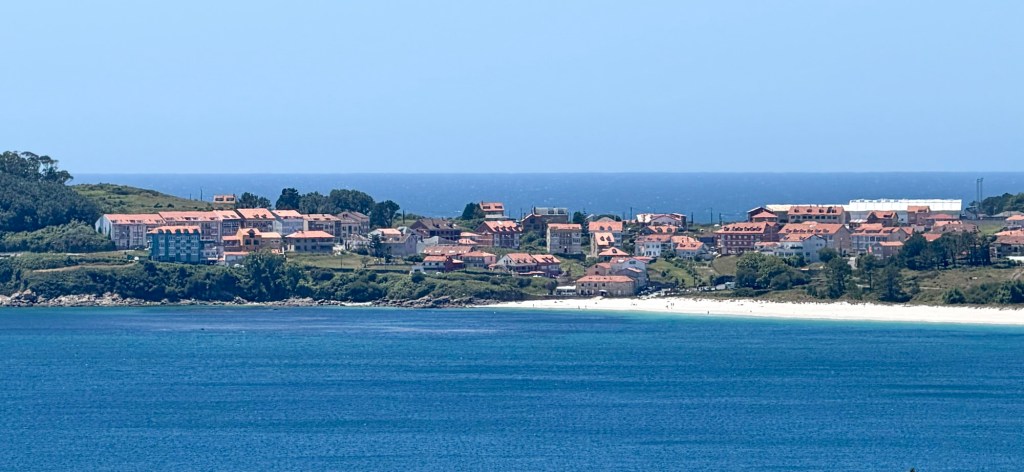
We’d rented a studio apartment overlooking the beach, where we immediately slumped, welcoming the sensation of removing the load from our feet. Later we ventured out to meet Paul and Khia for dinner. They had made their way to Finisterre the day beforehand. You might say it was the last supper (of our trip together).
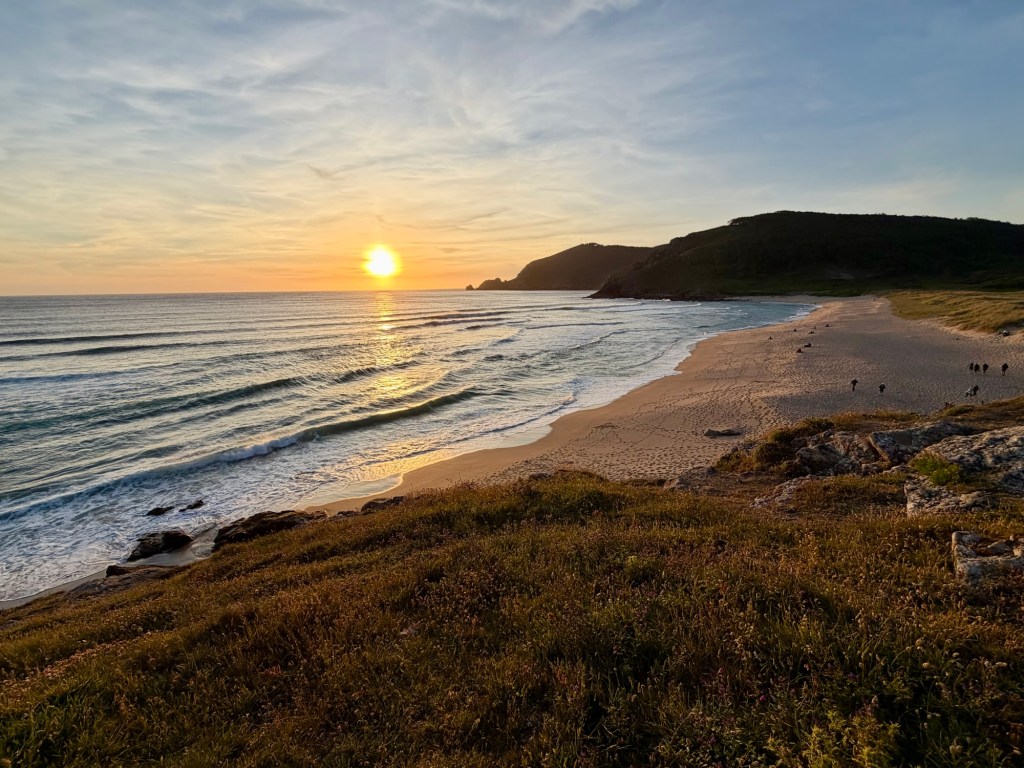
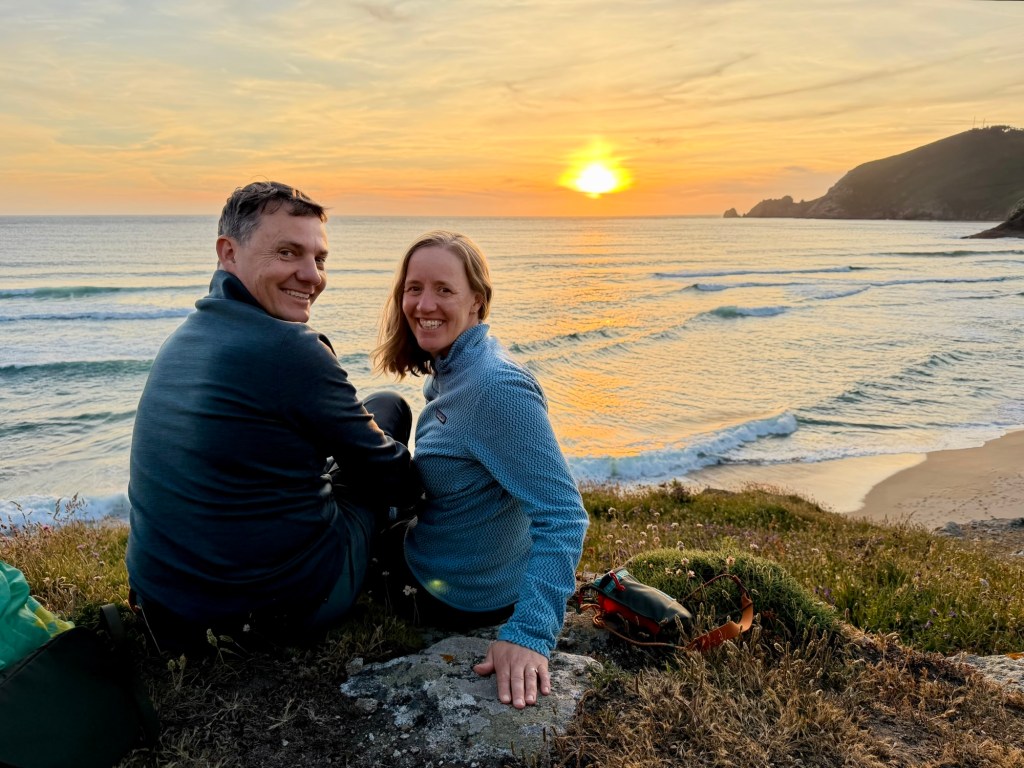
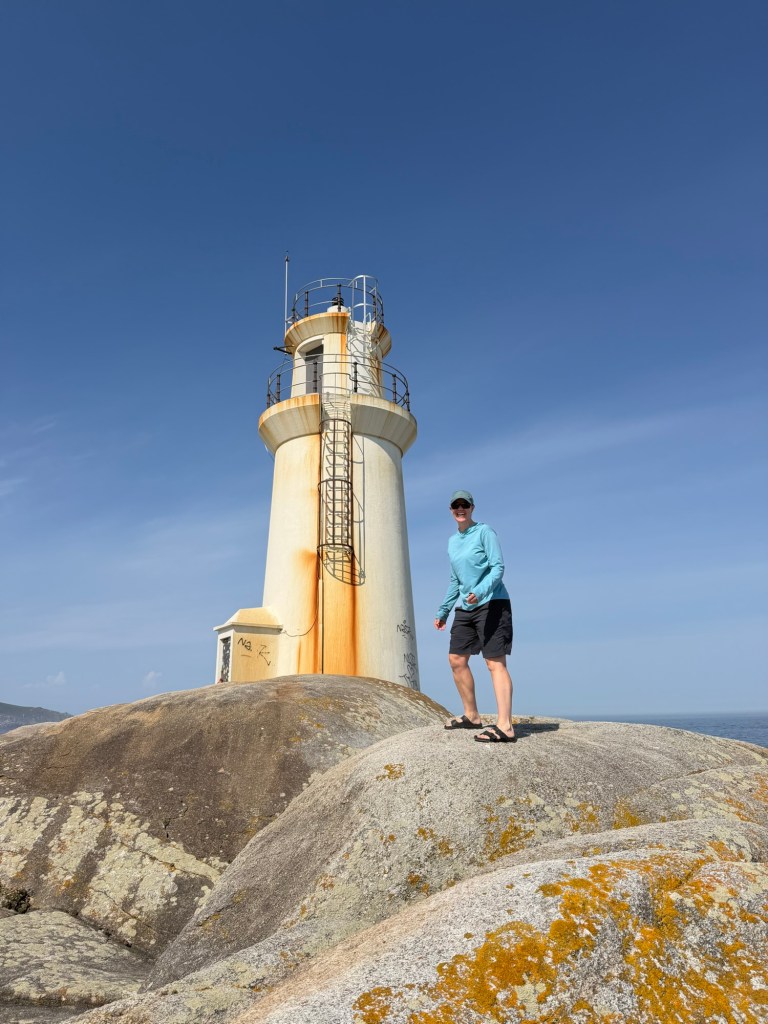
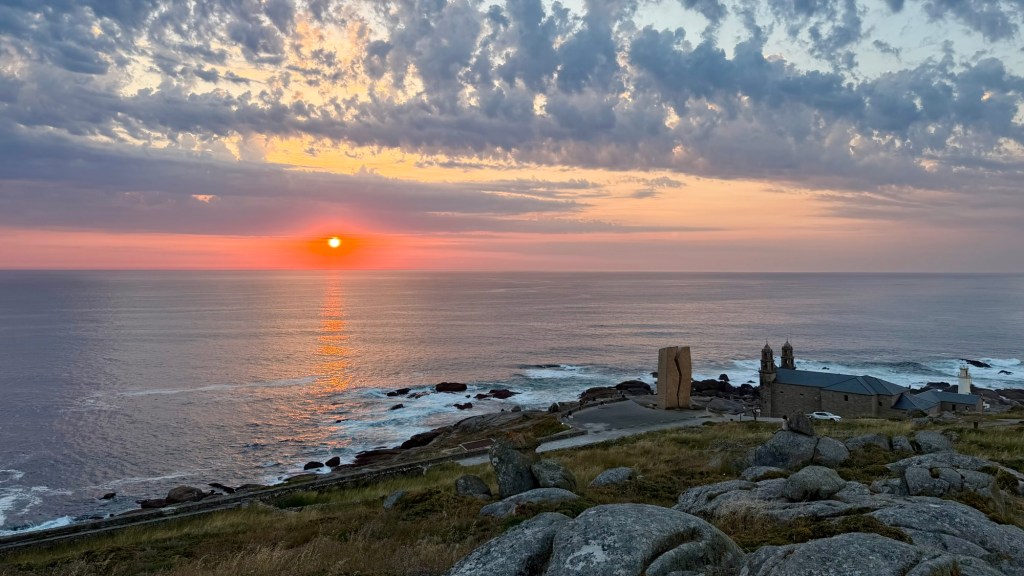
After dinner, we all walked over to the west side of town for sunset over the ocean. We sat on the ridge of the peninsula and watched the sky light up, a fitting end to an awesome adventure. Except that we were still not quite done. Kilometre zero is actually located at the light house on the end of said peninsula. Getting there was another 3500 metres which we tackled without packs the next day.
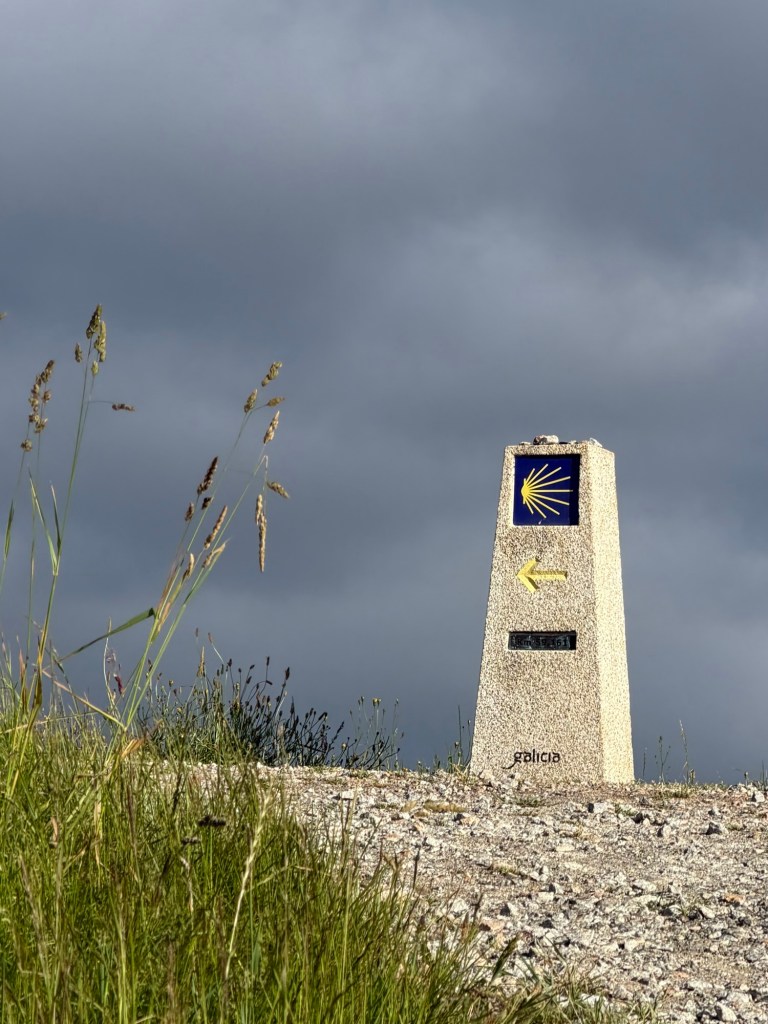
Astute readers will notice that the distances cited in this post don’t add up nicely to the stated ninety kilometres. The reason for this is simply because no distance cited on any sign or in any guide book or app can be relied upon for accuracy. The distance marker plinths in this region of Galicia were precise to be sure, each one labelled to three decimal places, but no more accurate than any other. This is not a problem and I do not wish to imply as much. Just don’t use them to stake your hopes and dreams of a vino blanco on a definitive end point for your days walking. Consider it a guide.
Our spirits were high as we made our way out to kilometre zero, or perhaps well contented would be a a more apt description. Our legs however were weary. So was our appetite for walking, so we ambled at best, up out of town, contouring high above the water and on to the end of the cape. It was bright and sunny, a cool breeze blew, the Atlantic was blue and the sun glistened on the water.
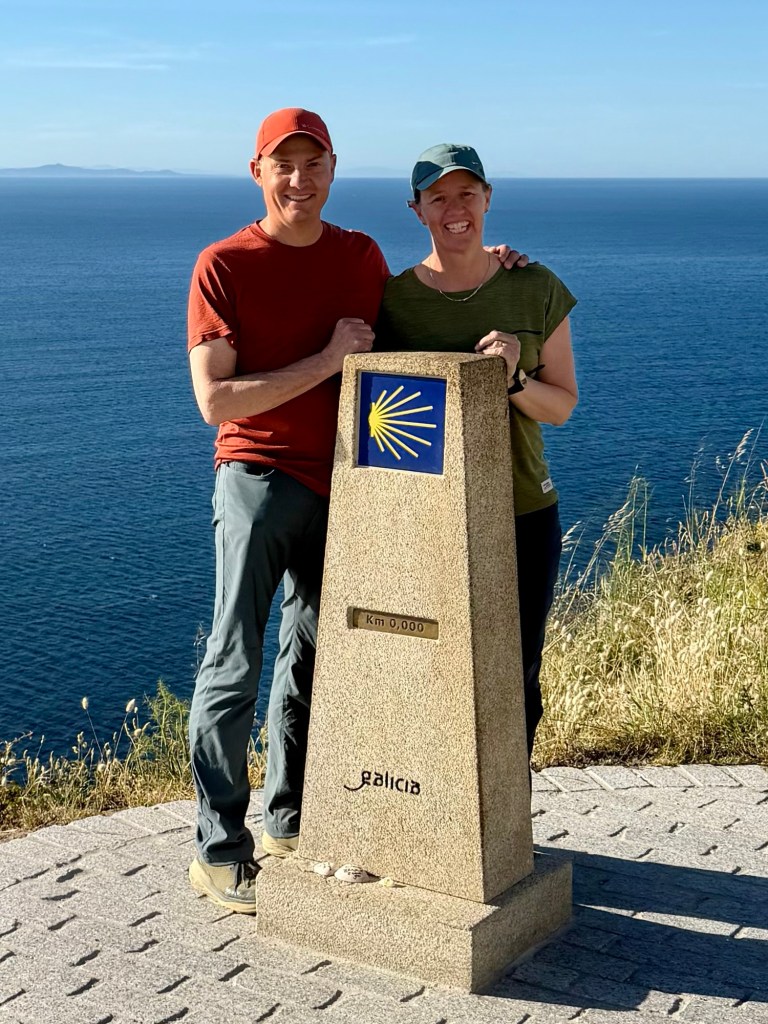
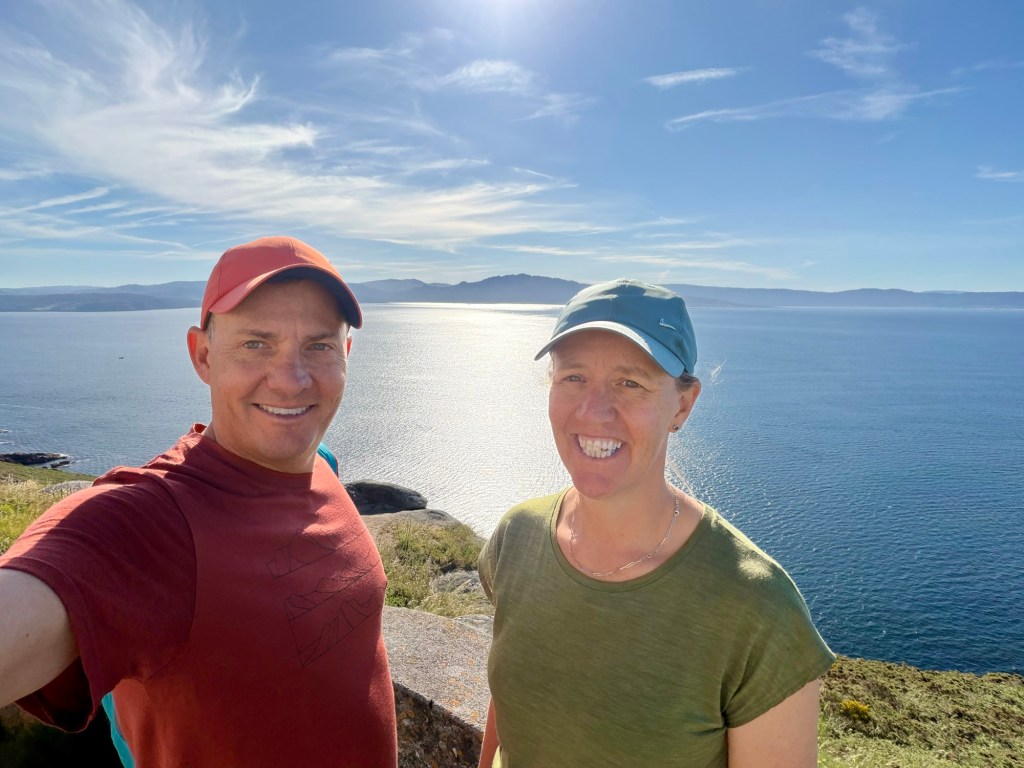
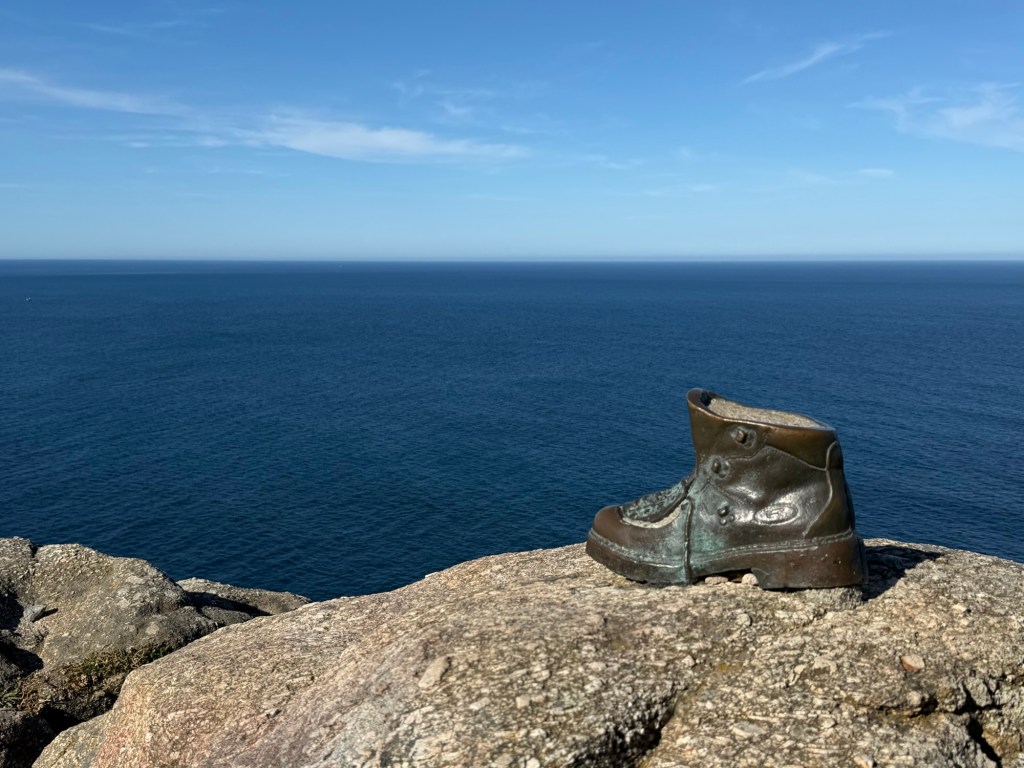
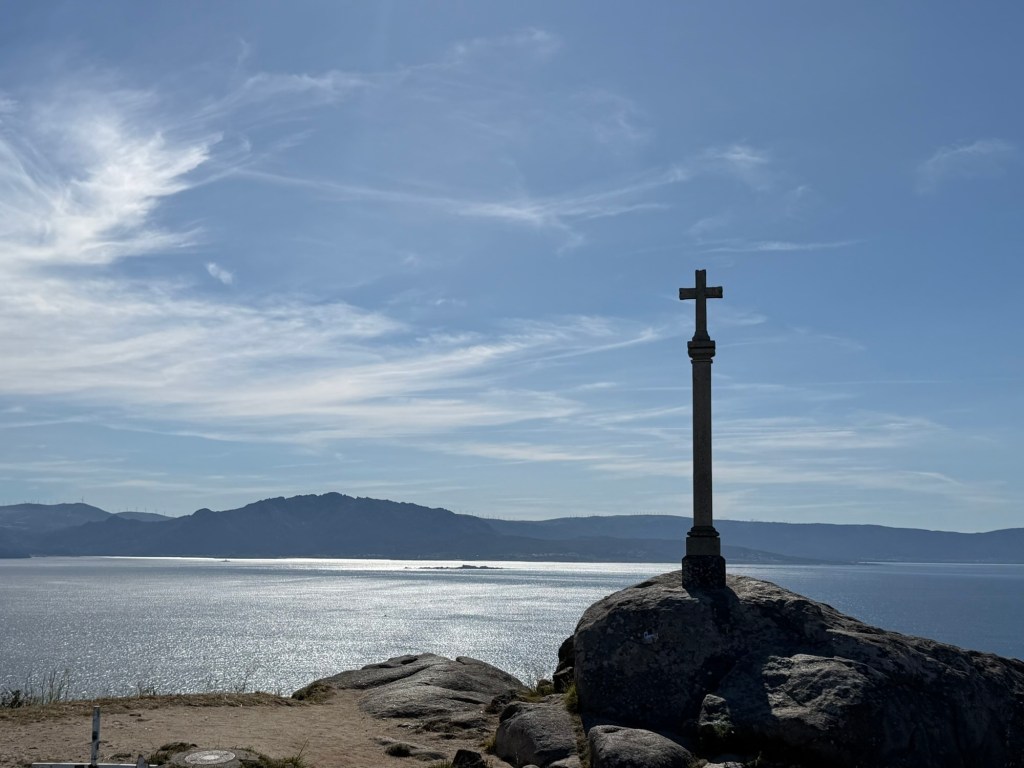
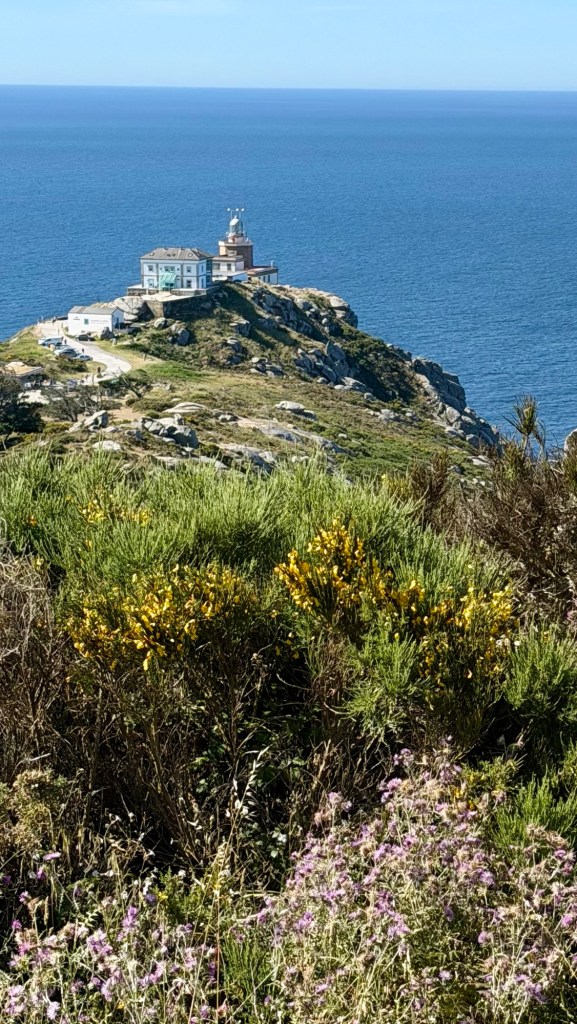
It’s sometimes hard to know when to stop. We had made it to the end of the earth, but that doesn’t mean you can’t keep walking. Twenty nine kilometres north of Finisterre is an alternative end point to the Camino at a sleepy little town called Muxía.
Muxía makes strong claims to the legitimate spiritual end of the Camino. A church sits proudly on the rocks just above the water on the end of the cape. Just in front of the church are a number of sacred rocks, said to be the remains of the stone boat in which Mary visited Saint James to offer encouragement at a low point in his evangelism.
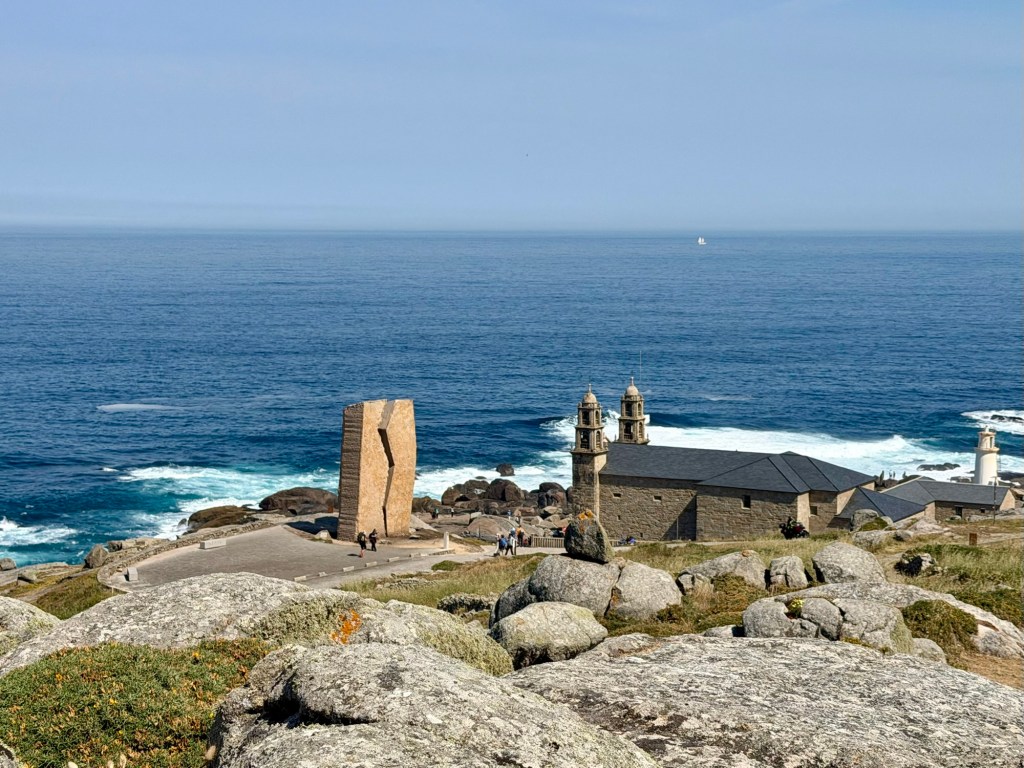
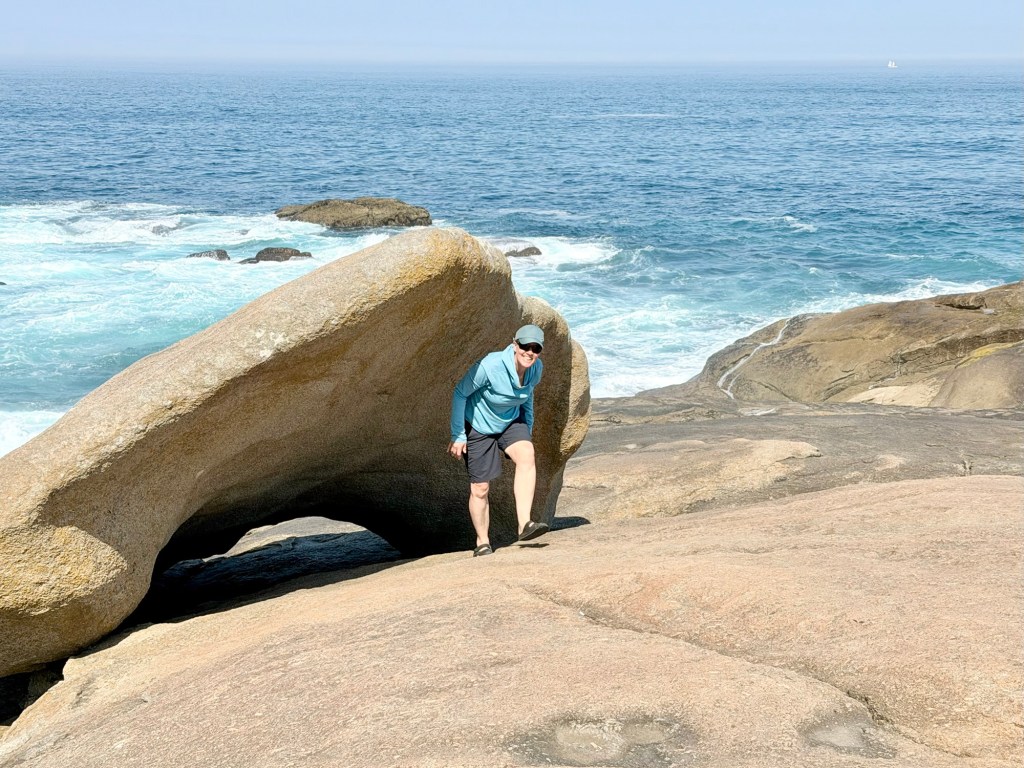
The walk between Finisterre and Muxía is apparently quite lovely. We cannot verify that. After some discussion about why we felt compelled to walk there at all, we decided not to. We yielded to our weariness and the delightful thought of resting by the sea before we flew home. We were done.
We’d walked across Spain, from one side to the other. The same distance as it is from Sydney to Melbourne. In all that time the only vehicle we had entered was a singular bus, which we caught three kilometres from our accomodation back in Logroño to a Decathlon (outdoor) store because my pants kept falling down and I needed a belt and because Emma’s umbrella had broken and she needed a new one.
Since leaving Santiago I found myself marvelling at motor vehicles. What kind of magic machines were these that moved with such pace and ease, transporting their occupants hither and thither without even a light sweat upon their brow.
Turns out that it is possible to avail yourself of the service of these magical machines. We purchased two tickets and the next day we boarded the bus to Muxía.
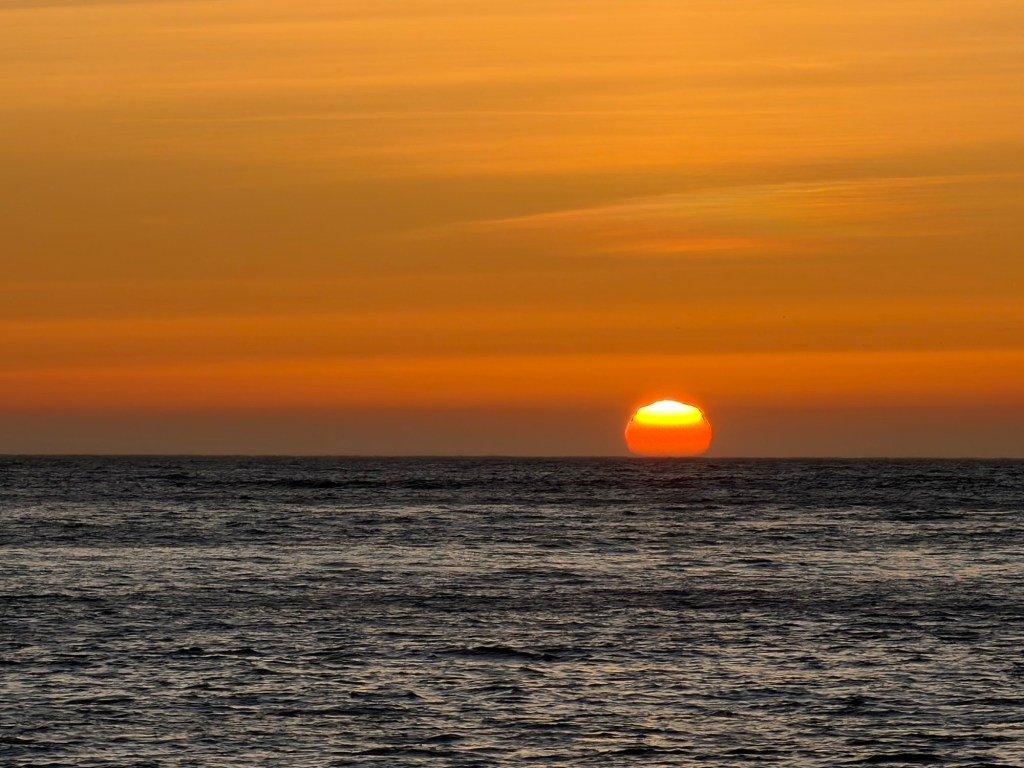
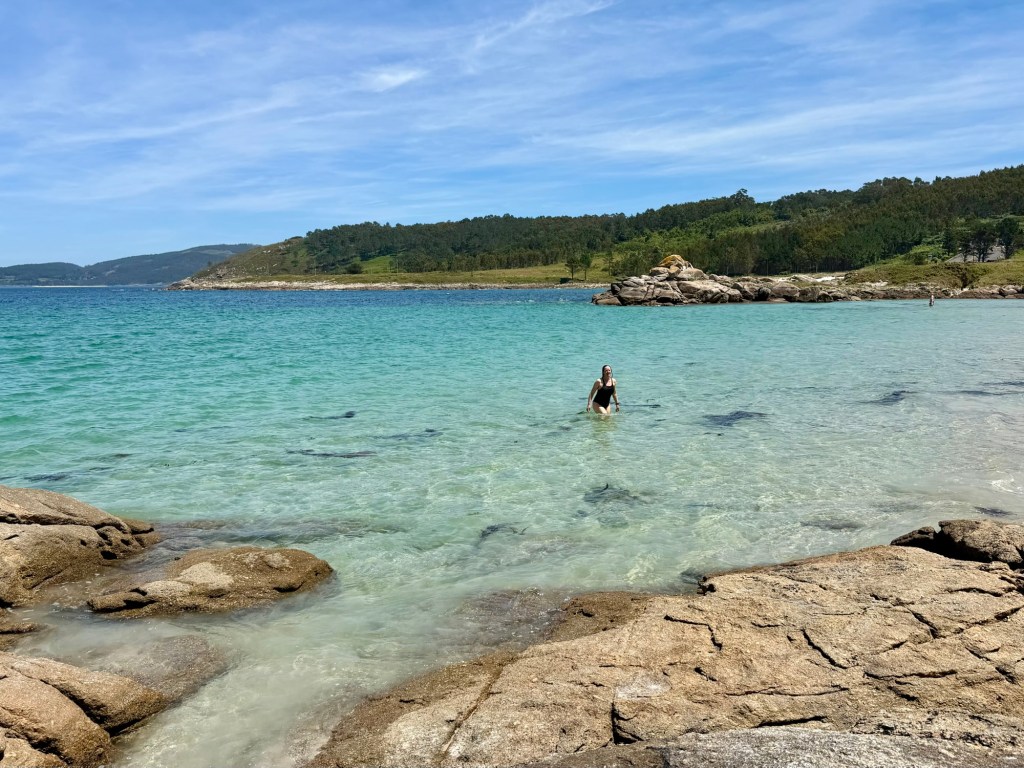
While we loved Finisterre, we loved Muxía even more. Finisterre was a happening place. Muxía was sleepy. We swam at the beach, wandered the rock walls of the marina, snoozed and read books in the afternoons and spent hours lingering on the headland watching the waves of the Atlantic Ocean crashing on the rocks.
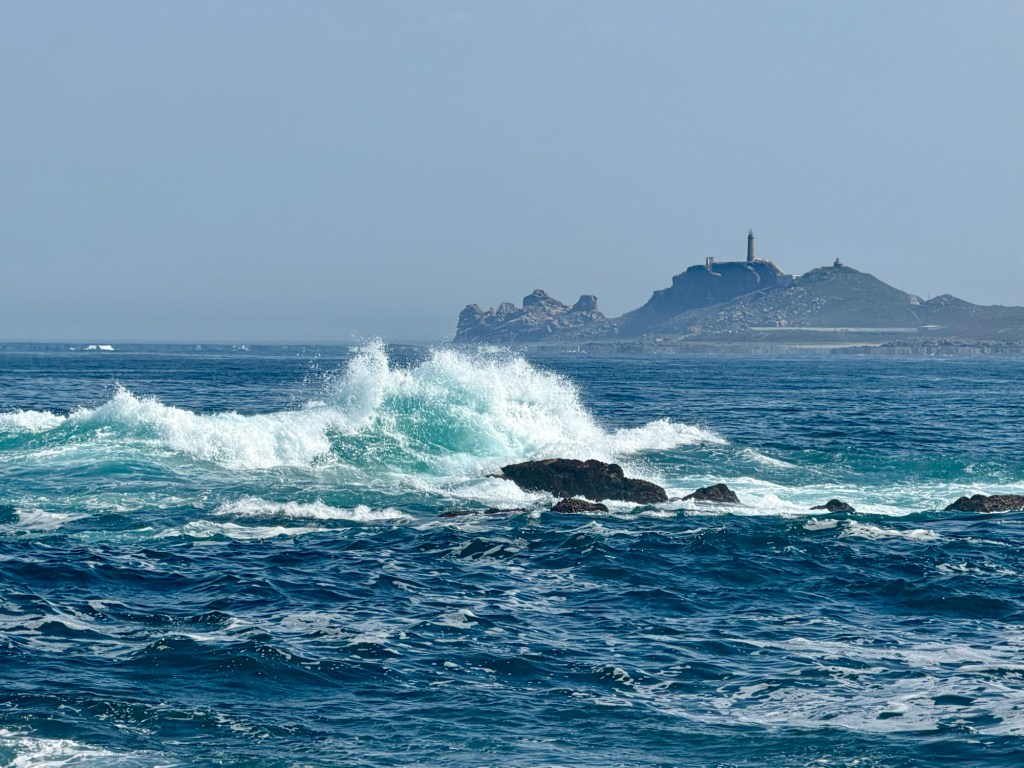
In amongst all that we talked about managing life back home for the next few a years before we hope to retire and we talked about our hopes and dreams for what we would do after that. For those not in the know those dreams included arriving at the end of the world from the other direction, from across the seas. What a grand adventure that will be.
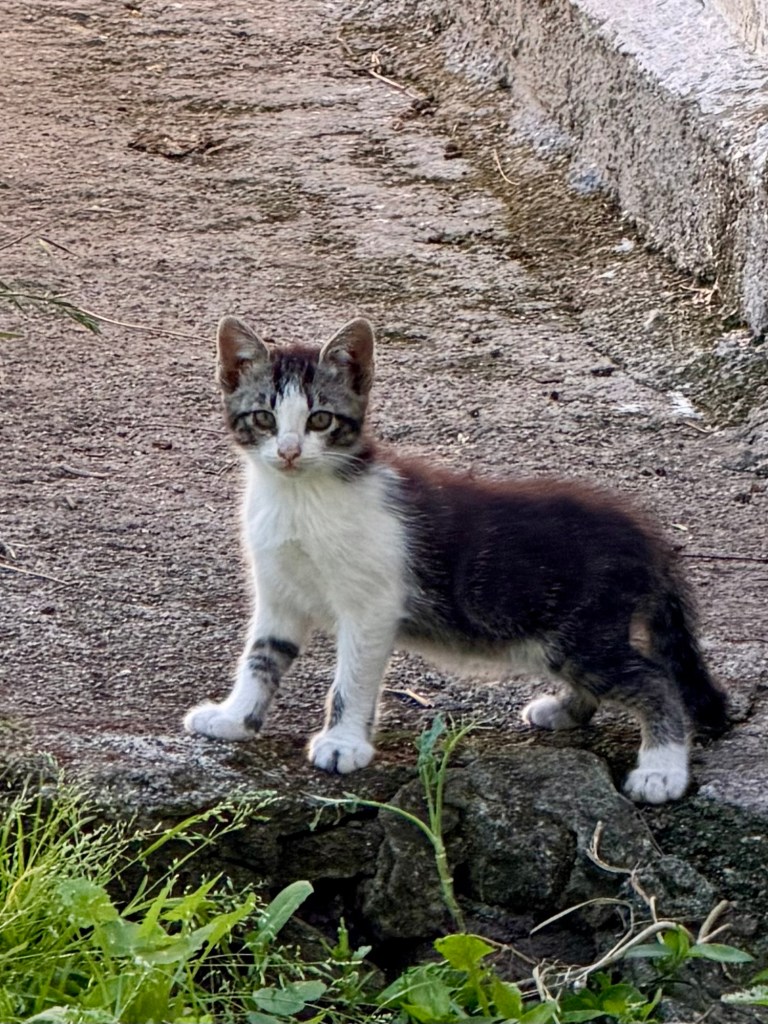
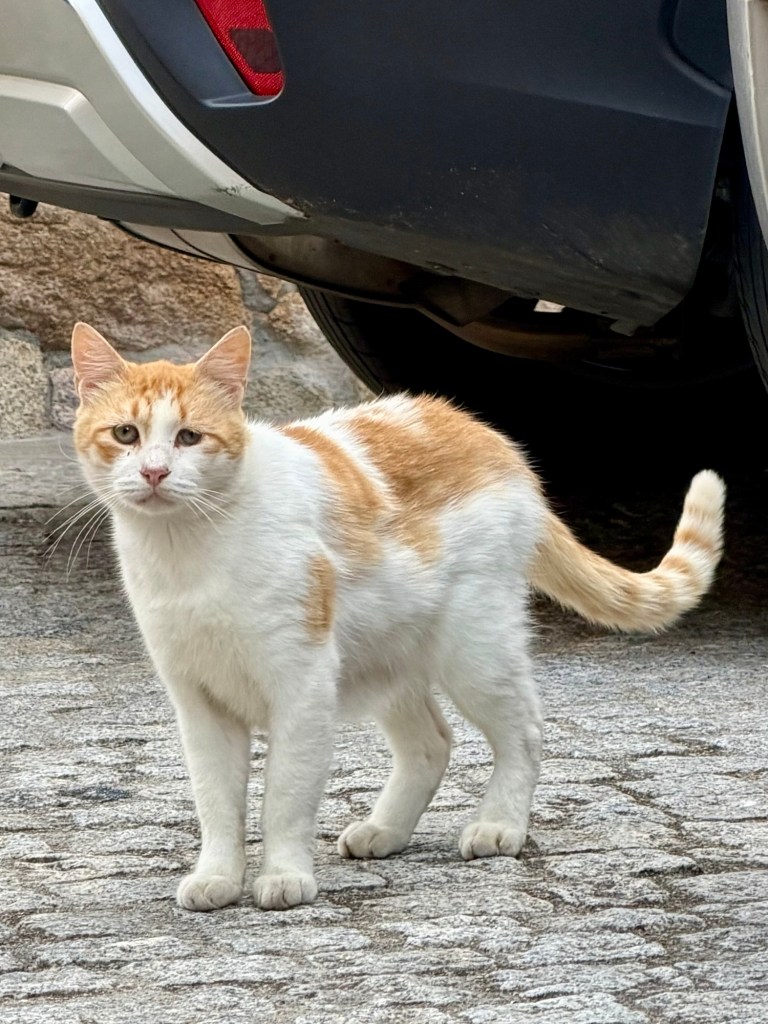
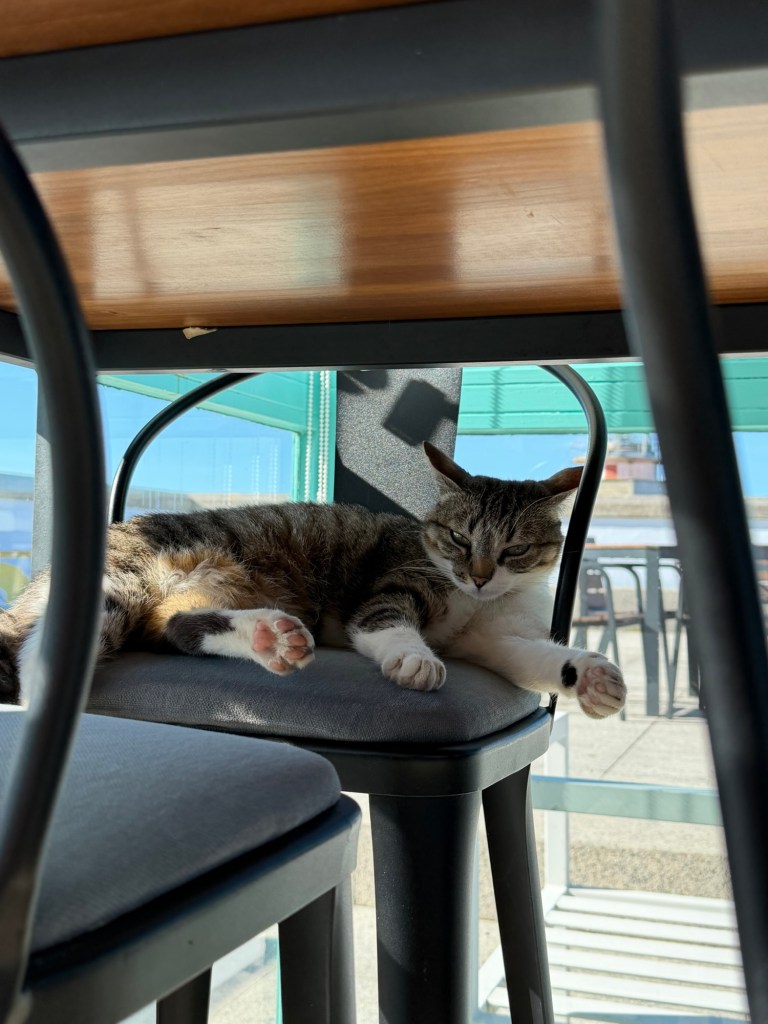
And now. It’s time for. Everyone’s favourite segment. One last time. Ladies and gentlemen give it up for – cats of the Camino!
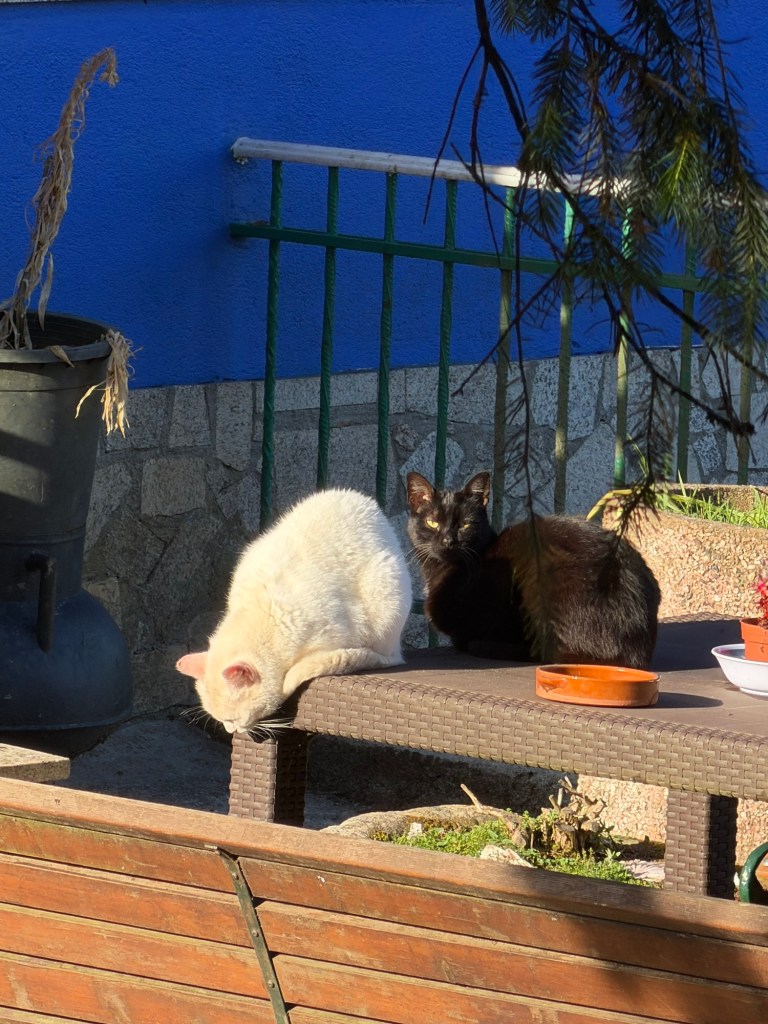
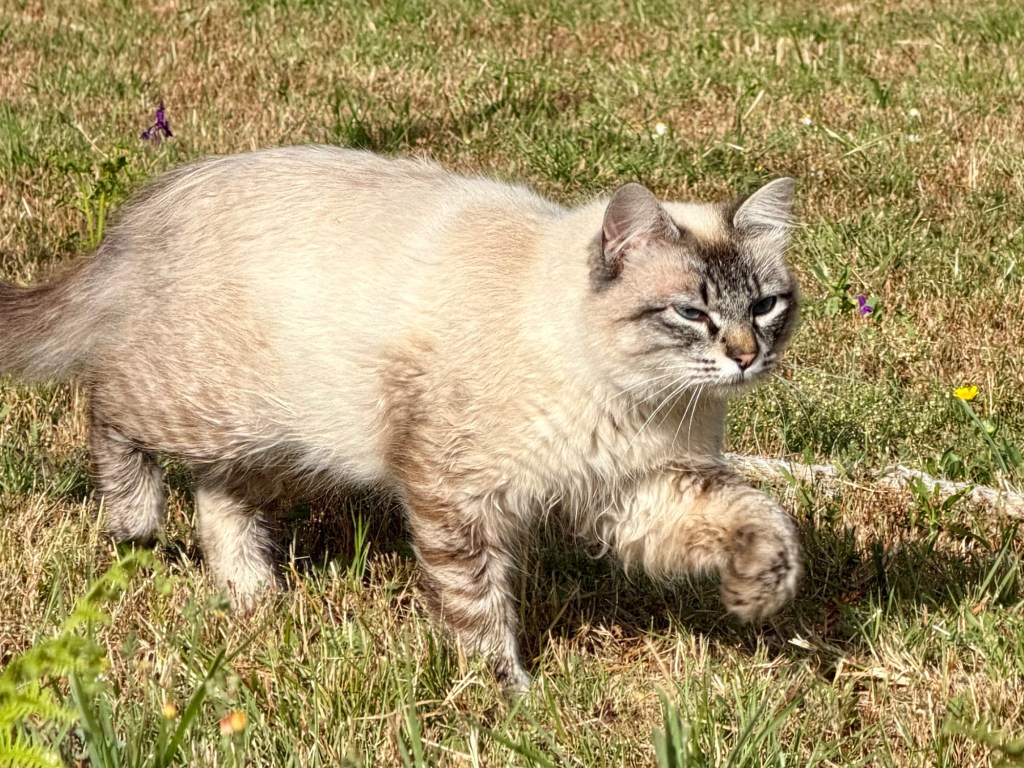
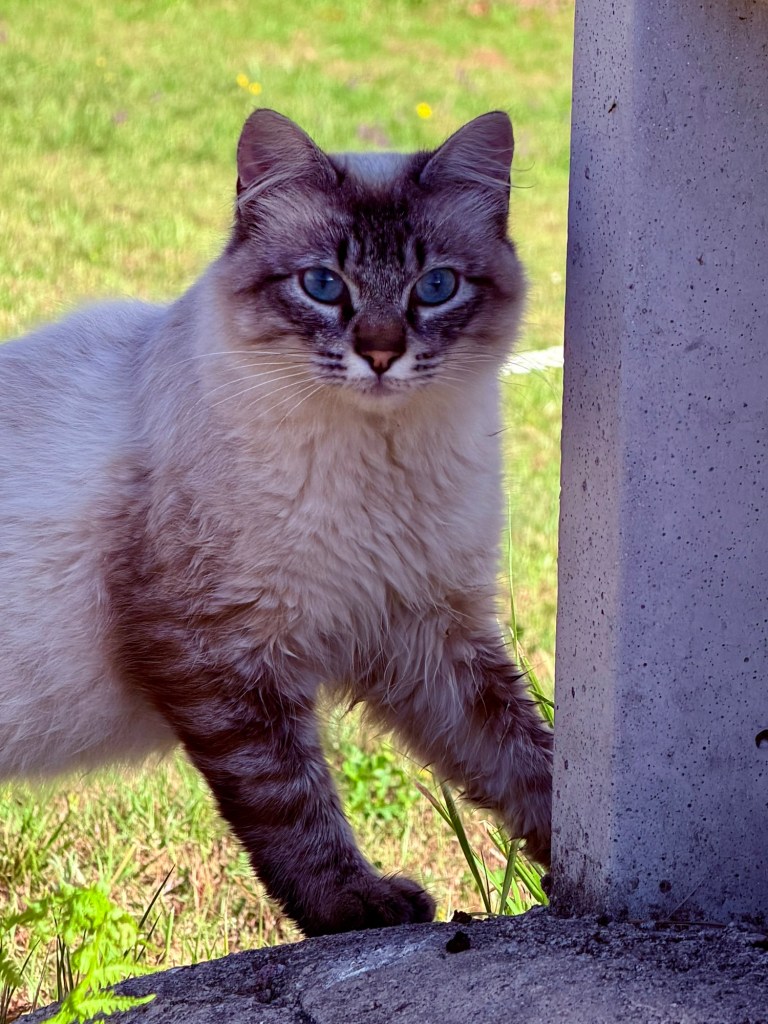
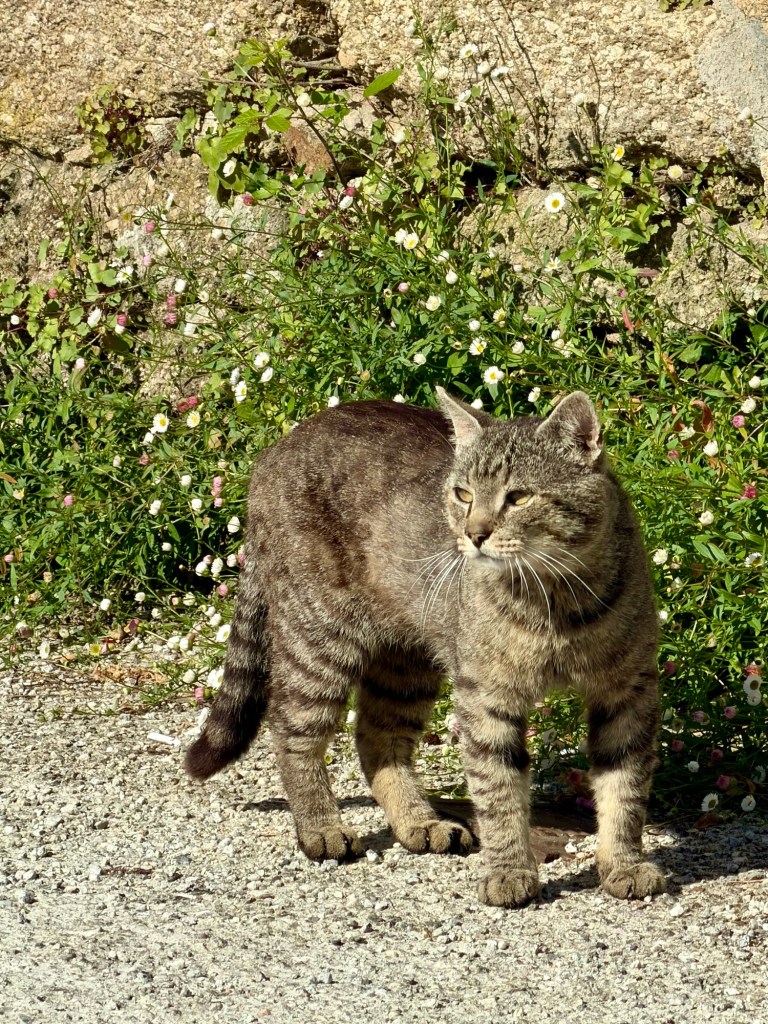
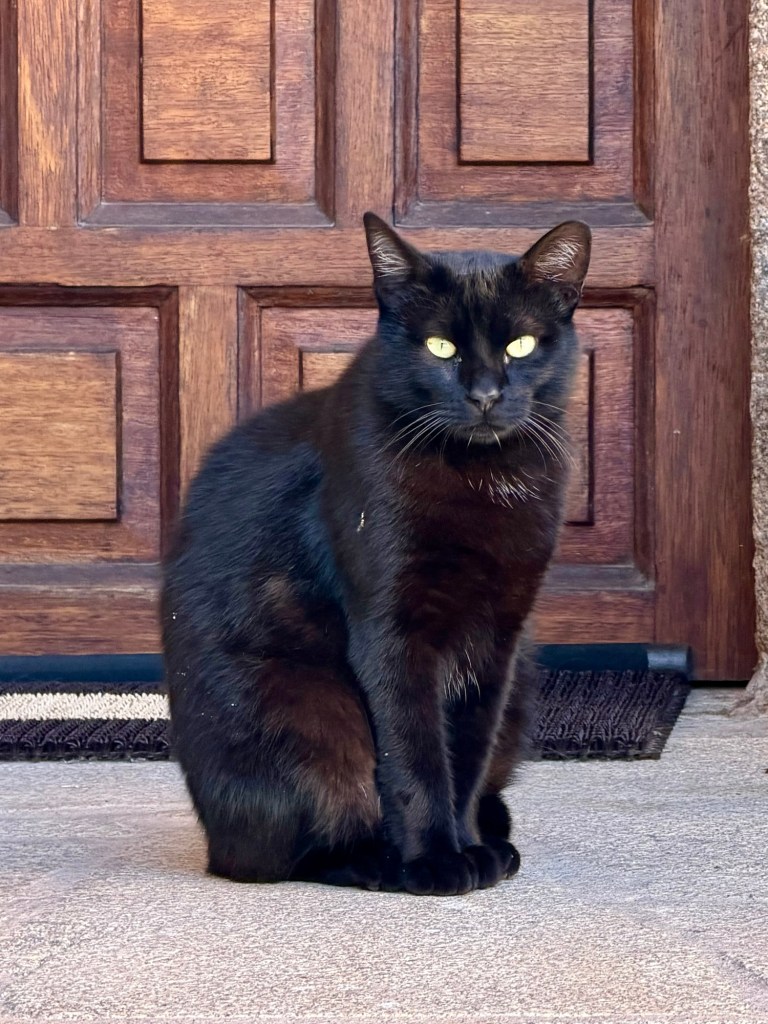
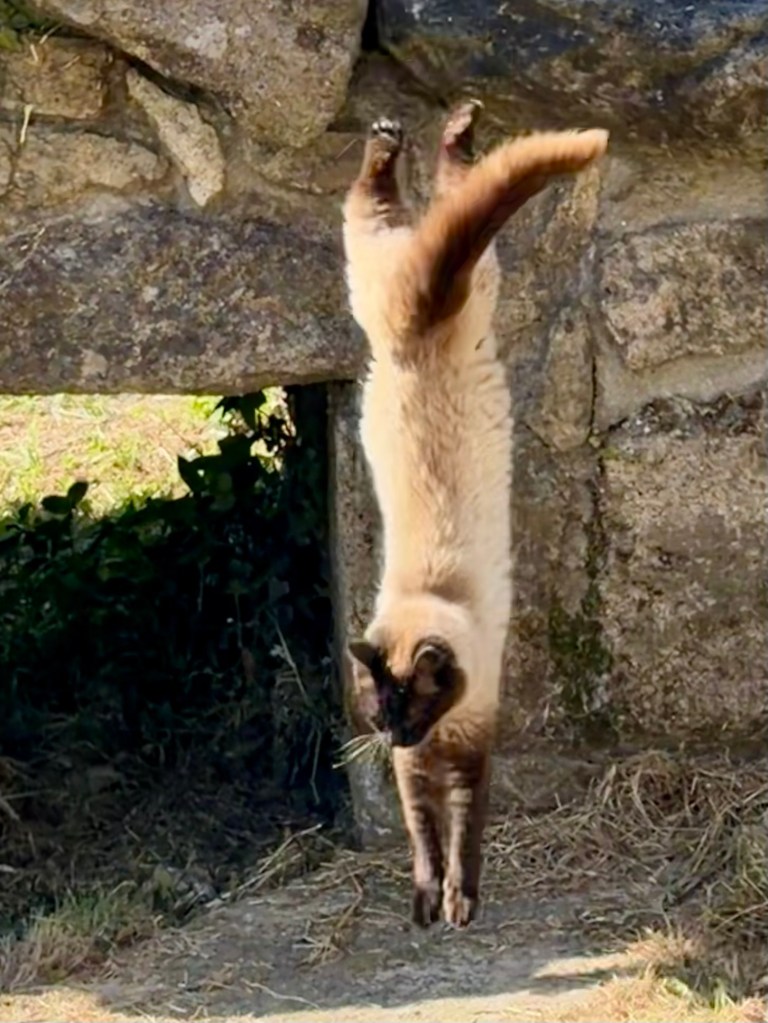
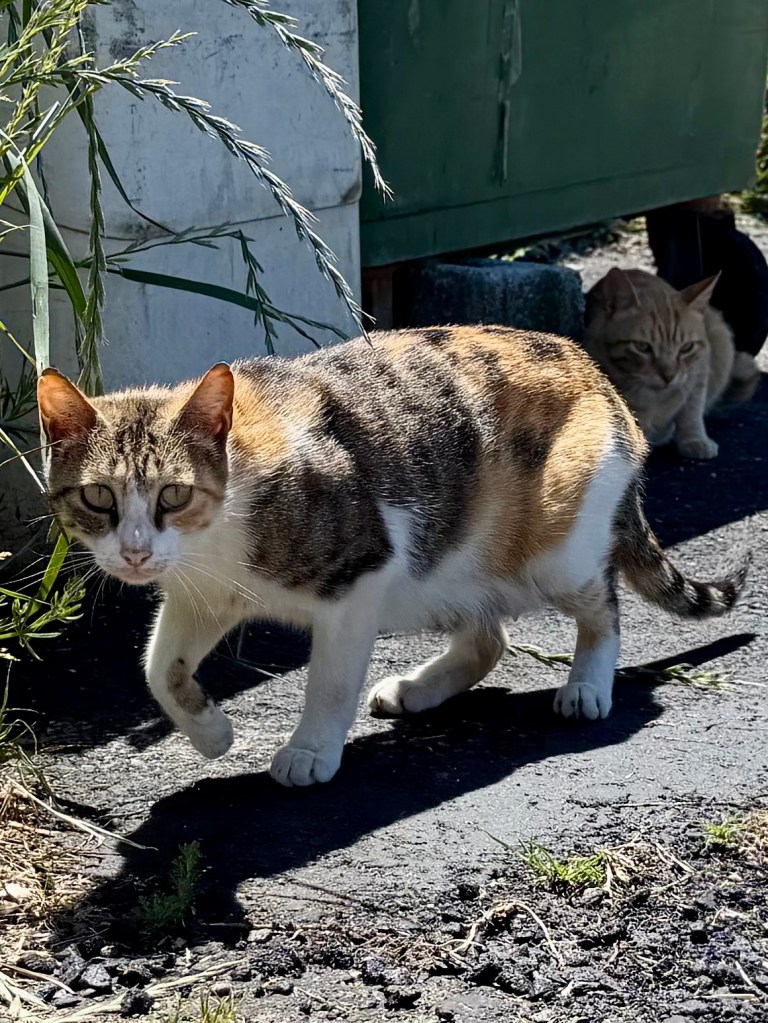
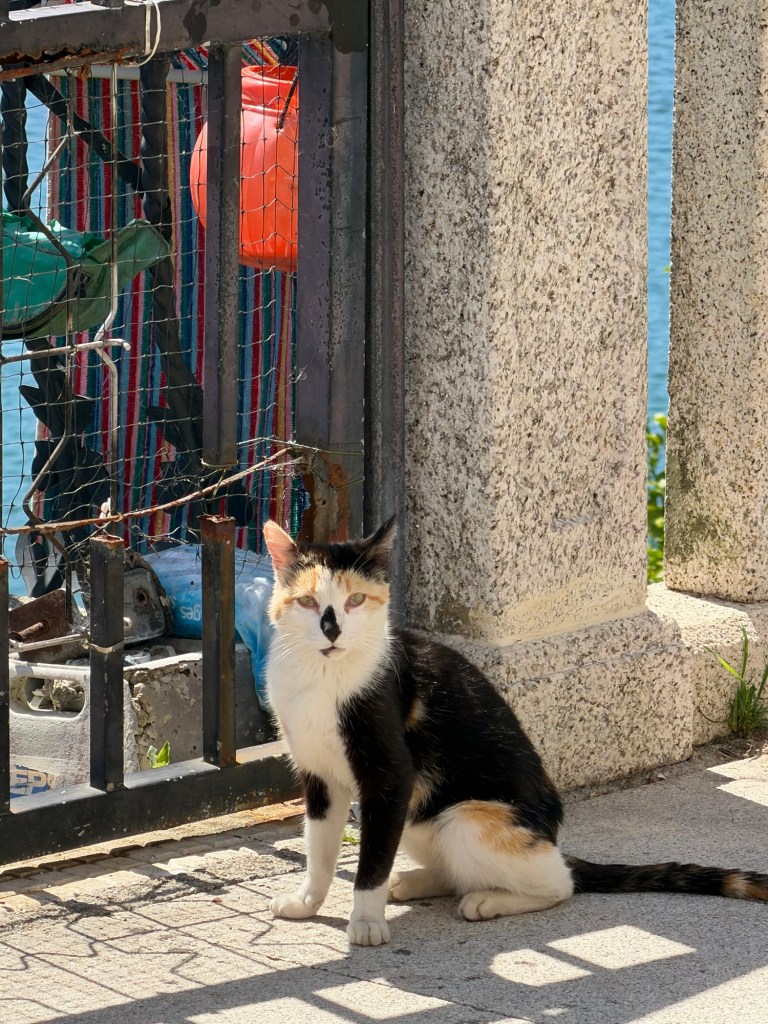


Very sneaky, I thought it was all done. See you soon.
thanks guys. I”ve had family on the French Camino during June-July. your blog was very timely.
take care.